Kapanlagi.com - Films inspired by poetry prove that literary works do not have to be in the form of novels to give birth to captivating cinematic stories. Although poetry is generally short and rich in meaning, many directors have succeeded in developing the symbols, emotions, and historical backgrounds contained within into feature-length films.
Adapting poetry clearly presents different challenges compared to novels. While novels already have a complete plot, poetry relies more on metaphor, atmosphere, and depth of meaning. Therefore, filmmakers are required to creatively interpret the content of the poetry without losing the essence of the original work.
The result is a variety of films that are not only entertaining but also introduce audiences to both classic and modern literary works. Here is a lineup of films that show how poetry can come to life through visual language on the big screen, Monday (20/7/2026)
1. 1. Braveheart (1995)

Braveheart (1995) - Image by imdb
Braveheart is one of the most famous examples of a film inspired by poetry. Directed and starred by Mel Gibson, this epic film takes inspiration from a 15th-century poem titled The Wallace by Blind Harry.
The story centers around William Wallace, a Scottish warrior who leads a rebellion against the power of King Edward I of England. In the film version, Wallace's struggle is triggered by the death of the woman he loves, igniting the spirit of the Scottish people to fight for independence.
Although some parts differ from historical records, Braveheart successfully presents an emotional heroic tale. The film also won five Academy Awards, including Best Picture and Best Director, making it one of the most successful poetry adaptations of all time.
2. Mulan (1998)
Many people know Mulan as a classic Disney animated film. However, not all viewers are aware that the story originates from an ancient Chinese poem titled The Ballad of Mulan.
The poem tells the story of Hua Mulan, a young woman who disguises herself as a man to take her father's place in battle during the Northern Wei Dynasty.
Disney developed this brief tale into an action-packed adventure, filled with humor and iconic songs. In addition to providing family entertainment, Mulan also raises themes of courage, honor, sacrifice, and the struggle against gender stereotypes.
To this day, Mulan is still considered one of the most popular poetry adaptations in the world of animation.
3. O Brother, Where Art Thou? (2000)
Directed by Ethan and Joel Coen, O Brother, Where Art Thou? shows that epic poetry can also be transformed into a unique adventure comedy.
This film is inspired by The Odyssey by Homer. However, its setting is moved from ancient Greece to Mississippi during the Great Depression of the United States.
The story follows three prisoners who escape from jail to search for treasure. Along the way, they encounter various eccentric characters and absurd events that are actually a modern reinterpretation of various episodes in Homer's poetry.
The creative approach of the Coen Brothers makes this film feel fresh while also paying homage to one of the greatest literary works in history.
2. 4. Troy (2004)
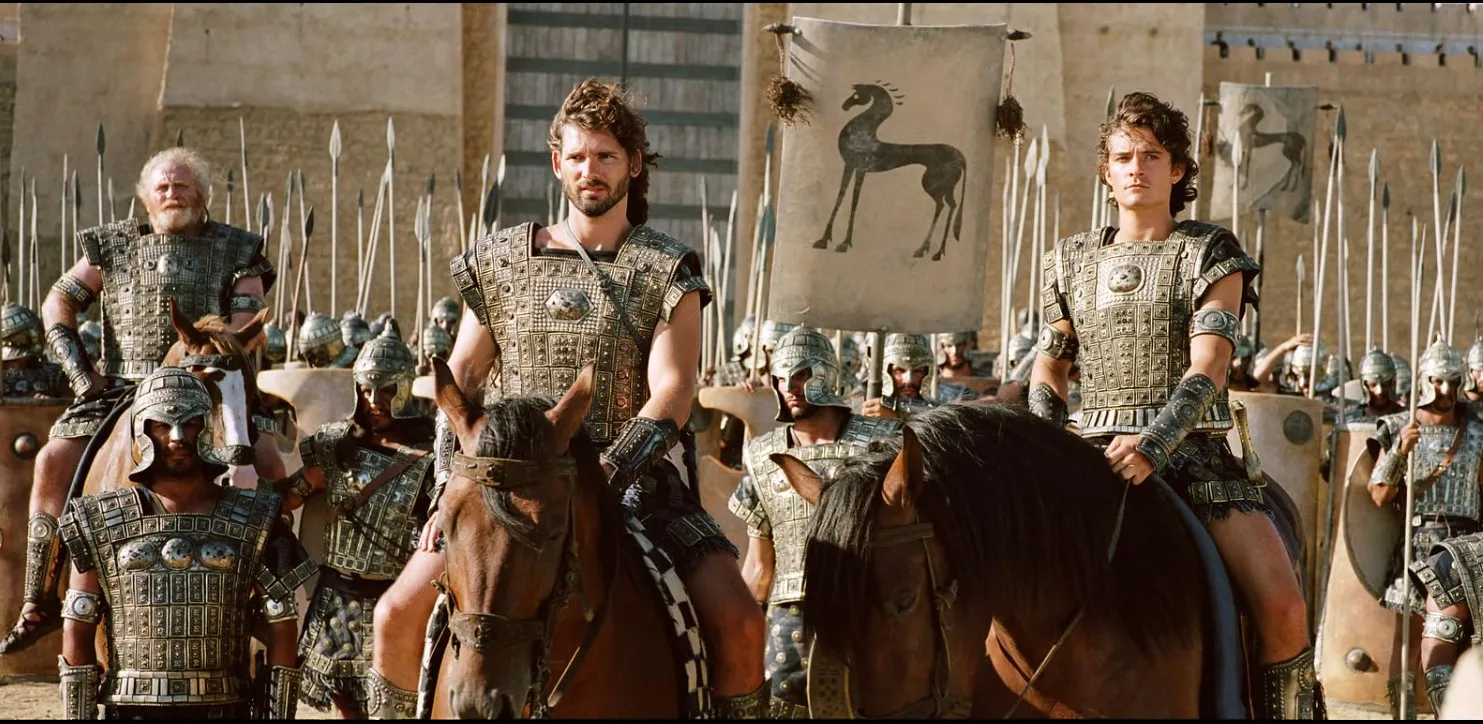
Troy (2004)
Still derived from Homer's work, Troy is adapted from the epic poem The Iliad. This film directed by Wolfgang Petersen features a lineup of famous actors such as Brad Pitt, Eric Bana, Orlando Bloom, and Brendan Gleeson.
The story focuses on the Trojan War triggered by Paris taking Helen away from Sparta. The conflict escalates into a massive war involving legendary heroes like Achilles and Hector.
Although it does not follow the entire content of the poem closely, Troy successfully presents a grand scale of warfare, impressive battle choreography, and spectacular production design.
For viewers who enjoy historical and action films, Troy remains one of the most interesting adaptations of poetry.
5.Bright Star (2009)
Bright Star takes inspiration from the famous poem by John Keats titled Bright Star, Would I Were Steadfast as Thou Art.
Directed by Jane Campion, this film focuses more on the last three years of the romantic poet's life, particularly his love relationship with Fanny Brawne.
Instead of merely recounting Keats’ biography, Bright Star shows how experiences of love, suffering, and the poet's health conditions influence his creative process.
With beautiful visuals and performances by Ben Whishaw and Abbie Cornish, this film becomes one of the best romantic dramas highlighting the life of a poet.
6.Howl (2010)
Howl is a biographical film inspired by the legendary poem by Allen Ginsberg of the same name.
This film tells the story of the creation of the poem "Howl" and the controversy that followed. When it was first published, the poem was considered too vulgar, sparking a trial related to freedom of expression.
Through a blend of drama, documentary, interviews, and animation, Howl presents a cinematic experience that differs from typical biographical films.
This film also shows how poetry can serve as a tool for social criticism and a catalyst for cultural change.
3. 7. Beowulf (2007)

Beowulf (2007) (Source: IMDb)
Robert Zemeckis adapted the ancient English epic poem Beowulf into an ambitious motion capture animated film.
The story follows Beowulf, a Geat warrior who comes to help King Hrothgar defeat the monster Grendel. After succeeding, he still has to face a greater threat from Grendel's mother.
Upon its release, Beowulf received mixed responses. However, the film was praised for its innovative motion capture technology at the time and its boldness in bringing one of the oldest poems in English literature to life.
8. The Wind Will Carry Us (1999)
This film by Abbas Kiarostami takes its title and inspiration from a poem by Iranian poet Forough Farrokhzad.
Instead of directly adapting the content of the poem, the film translates themes of life, death, time, and humanity's relationship with nature into a contemplative drama.
With Kiarostami's characteristic minimalist style, The Wind Will Carry Us invites viewers to enjoy silence while reflecting on the meaning of life through the experiences of its main character in a remote village.
This film serves as proof that poetry can be translated into visual language without losing its philosophical depth.
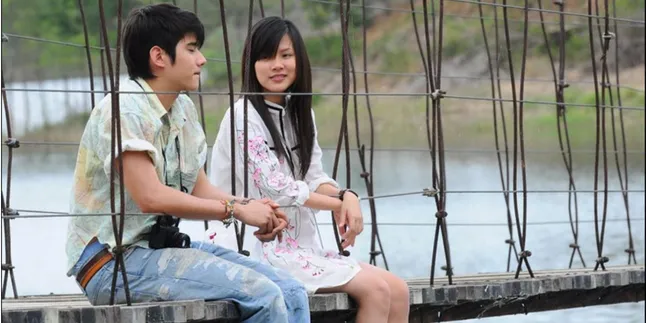
9. Hujan Bulan Juni (2017)
Indonesia also has a film inspired by poetry that is very well-known, namely Hujan Bulan Juni.
This film is adapted from a legendary anthology of poems by Sapardi Djoko Damono. The story follows Sarwono, an Anthropology lecturer from Solo, and Pingkan, a Japanese Literature lecturer of Manado-Javanese descent, who undergo a love relationship full of trials due to cultural differences and distance.
Directed by Reni Nurcahyo Hestu Saputra, this film utilizes nine of Sapardi's poems as part of the dialogue and visuals, including the iconic poem Aku Ingin.
The filming locations, which include Jakarta, Solo, Manado, Gorontalo, and Sapporo in Japan, further enhance the romantic and poetic atmosphere that characterizes Sapardi's work.
4. 10. Rest in Words (2016)

Rest in Words
Another Indonesian film that is closely related to the world of poetry is "Istirahatlah Kata-Kata" by Yosep Anggi Noen.
This biographical film portrays the life of poet and activist Widji Thukul while he was in hiding after the political events of 1996.
Unlike ordinary biographical films, this work uses Wiji Thukul's poems as an emotional foundation to depict feelings of fear, loneliness, longing for family, and criticism of the political situation during the New Order era.
The calm and reflective tone of the film makes each stanza of poetry feel even more powerful. Through a simple visual approach, the audience is invited to understand that poetry can be a form of resistance that has a significant impact on society.
Why is Adapting Poetry into Film So Interesting?
The uniqueness of poetry adaptation lies in the freedom of interpretation. The director does not merely transfer the story to the screen but also translates symbols, metaphors, emotions, and atmospheres into a cohesive series of scenes.
That is why films inspired by poetry often have an artistic visual style, poetic dialogue, and a narrative that relies more on atmosphere than on conventional plot. Some even choose to take only the theme or spirit of the poem, rather than adapting every detail literally.
From epic poems like The Iliad and The Odyssey, to romantic poetry by John Keats, and works by Indonesian poets like Sapardi Djoko Damono and Widji Thukul, all demonstrate that poetry can be a rich source of inspiration for the film world.
5. Questions and Answers About Films Adapted from Poetry
1. Do all films adapted from poetry follow the content of the poem in its entirety?
No. Most only take inspiration from the themes, characters, or main messages of the poem, then develop it into a longer story to fit the film format.
2. Why is adapting poetry more difficult than novels?
Poetry generally does not have a complete plot. Directors must interpret the meaning, symbols, and atmosphere of the poem to build a cohesive narrative without losing the essence of the original work.
3. What are examples of Indonesian films inspired by poetry?
Some examples include Hujan Bulan Juni which is adapted from a poem by Sapardi Djoko Damono and Rest in Words which highlights the life and works of poet Widji Thukul.
4. Are films like Troy and O Brother, Where Art Thou? based on poetry?
Yes. Troy is inspired by the epic poem The Iliad, while O Brother, Where Art Thou? takes inspiration from The Odyssey, both works by Homer.
5. Why are films inspired by poetry worth watching?
In addition to offering a different cinematic experience, these films also help audiences learn about history, culture, and both classic and modern literary works through a more easily enjoyable medium.
(kpl/yni)
Disclaimer: This translation from Bahasa Indonesia to English has been generated by Artificial Intelligence.


 Follow

 Rekomendasi