

 Follow
 Rekomendasi

7 Sad Indonesian Films About Firstborn Children, Proving That Eldest Children Must Be Strong
Discover 7 touching Indonesian films about firstborn children, depicting their struggles and strength in facing various challenges.
Kapanlagi.com - The world of journalism is not always synonymous with a quiet newsroom and news writing activities. There is a long process behind a report, starting from sourcing, fact-checking, chasing documents, facing pressure, to being accountable for the information to the public. Therefore, recommendations for movies about journalists are interesting to watch not only for media workers but also for anyone who wants to see how a news story is fought for before it reaches readers or viewers.
The stories of journalists also offer many conflicts. They may face governments, large corporations, religious institutions, and even pressure from their own media organizations. In several films, these issues become even more complicated as journalists must choose between upholding principles, protecting sources, pursuing the truth, or maintaining their careers.
Interestingly, several journalistic films draw inspiration from real events. These films do not always depict reality in its entirety because true stories need to be simplified to work as drama. However, as seen in various films about journalism, the main attraction remains in the perseverance to seek the truth, the immense responsibility, and the risks that can arise when a report touches the interests of those in power, Monday (10/8/2026).
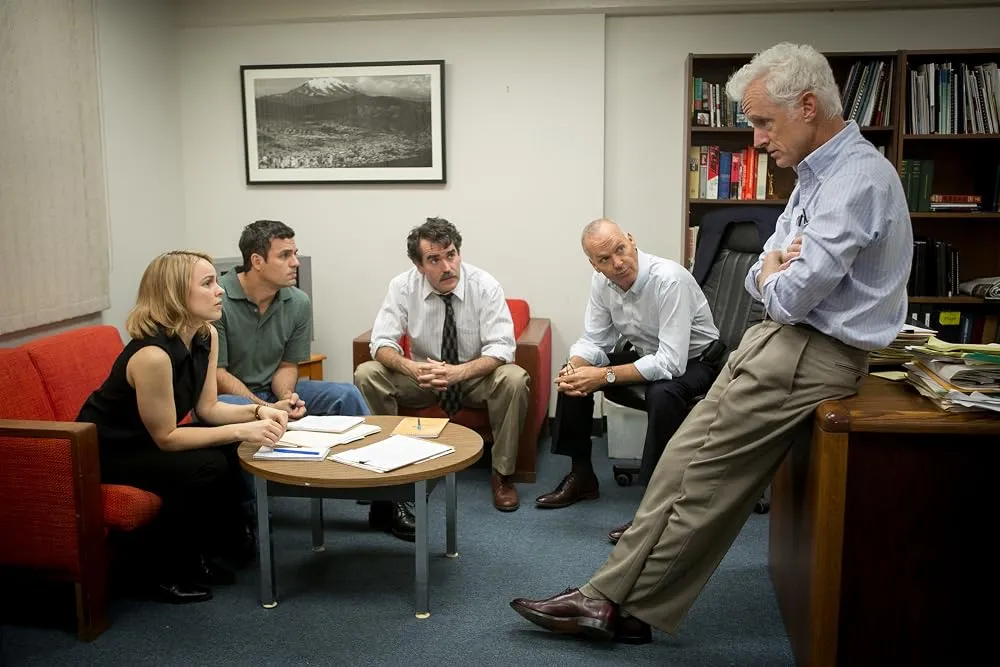
Spotlight (2015)/ Film about the Investigation Process and Fact-Finding
If you want to understand how serious and systematic journalistic investigations are conducted, Spotlight is one film that deserves to be on your watch list. This film follows the investigative team of The Boston Globe as they uncover a case of child sexual abuse by several priests and the alleged cover-up of the case by the Catholic Church institution.
The strength of Spotlight lies in its unhurried process. The journalists do not suddenly get all the answers. They have to visit sources, read old documents, check court records, connect various testimonies, and continuously pursue information that was previously hidden.
This film shows that major investigations often start from something that seems small. Initial suspicions must be tested repeatedly before they can turn into a report with a strong foundation. The Spotlight team also faces various obstacles when trying to obtain important documents.
Reference material regarding this film emphasizes that the investigative process takes months, with exhausting and repetitive work before the bigger picture begins to emerge.
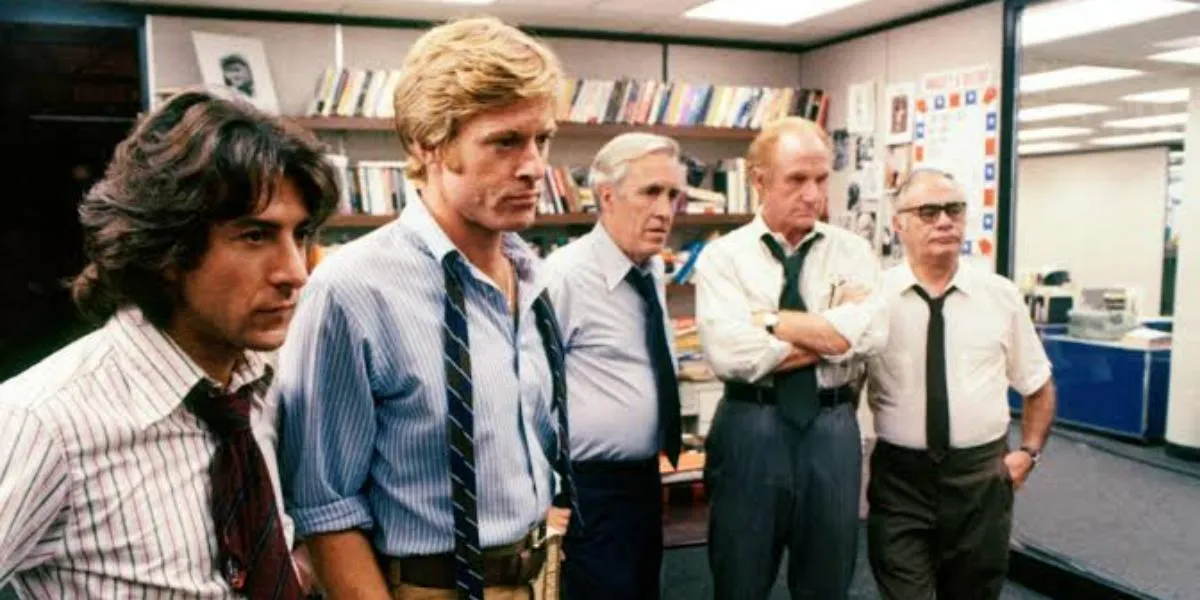
All the President's Men is a classic film about investigative journalism. The story centers on The Washington Post reporters, Bob Woodward and Carl Bernstein, who investigate the Watergate scandal.
The film is interesting because it does not portray journalism as a job always filled with spectacular scenes. Many parts actually show simple activities like calling sources, searching for names in the phone book, taking notes, and trying to get confirmation from people who are reluctant to talk.
From this process, the audience can see that an investigation requires perseverance. Reporters must be willing to face dead ends repeatedly before finding connections between one fact and another.
The film then became one of the most influential depictions of investigative journalism. However, reference sources also remind us that the film tends to simplify the work of a newsroom into the story of two reporters, whereas major investigations actually involve many reporters, editors, and other support staff.
State of Play offers a blend of journalism, politics, and criminal investigation. The story follows reporter Cal McAffrey as he investigates the death of a woman who had a connection with a congressman.
The case slowly develops into a much larger issue. McAffrey must connect various pieces of information while also facing the political interests behind the case.
This film is suitable for viewers who enjoy investigative stories with a faster pace. Within it, the reporter's job is not only about writing news but also pursuing sources, gathering information, meeting deadlines, and making decisions when the information obtained is not yet fully clear.

Shattered Glass (2003) (Source: IMDb)/ Film about Ethics, Credibility, and Pressure in the Newsroom
Shattered Glass presents another side of the journalistic world. While many films depict reporters as figures fighting to uncover lies, this film shows what happens when journalists themselves create lies.
The film tells the story of Stephen Glass, a young journalist whose career was destroyed after it was discovered that he fabricated several news stories. This case serves as a reminder that the ability to write and create engaging stories can never replace fact verification.
One of the strengths of this film is its depiction of the fact-checking mechanism and how trust within the newsroom can be abused. When a news story is examined more closely, various sources, companies, and details written by Glass turn out to be unverifiable.
This film is highly relevant for understanding the importance of credibility. A journalistic error does not only affect one article but can destroy a reporter's reputation and raise questions about the editorial system that allowed the mistake to occur.
The Insider showcases a different conflict. The threat to journalism in this film comes not only from those who are the subjects of reporting but also from the interests of the media companies themselves.
The story revolves around Jeffrey Wigand, a former tobacco company executive who revealed information about the practices of the tobacco industry. This information then became a crucial part of an investigation by 60 Minutes.
Problems arose when the media company faced legal and financial pressures. The publication of this very important report could have significant consequences for the media organization.
The film shows that maintaining the truth is not always easy, even when a media outlet has evidence. Business interests, legal pressures, corporate reputation, and financial considerations can influence editorial decisions.
Kill the Messenger takes the audience through the story of Gary Webb, an investigative journalist who investigates alleged connections between the CIA, cocaine trafficking, and rebel groups in Nicaragua.
Webb's journey shows that journalists who expose controversial issues do not always receive support. After the report gained attention, Webb faced attacks on his credibility, including from major media outlets.
The film is compelling because it illustrates that pressure on journalists can occur through a process of delegitimization. Instead of merely disputing the content of the news, parties who feel aggrieved can question the competence, sources, or motives of the reporter.
Reference sources also describe Kill the Messenger as a story about the risks when a journalist confronts political interests and larger media institutions.
Bombshell presents journalism issues from a different perspective, namely the experiences of women in the media environment and the problem of sexual harassment in the workplace.
This film tells the story of several women at Fox News who confront Roger Ailes, the head of the media company. The story is inspired by real events and focuses on the courage of the victims to reveal their experiences.
In addition to showing life behind the scenes of television media, Bombshell also demonstrates that media institutions are not spaces free from issues of power and gender inequality.
This film is suitable for viewers who want to see how professional issues, power, corporate reputation, and personal courage can converge in one story.
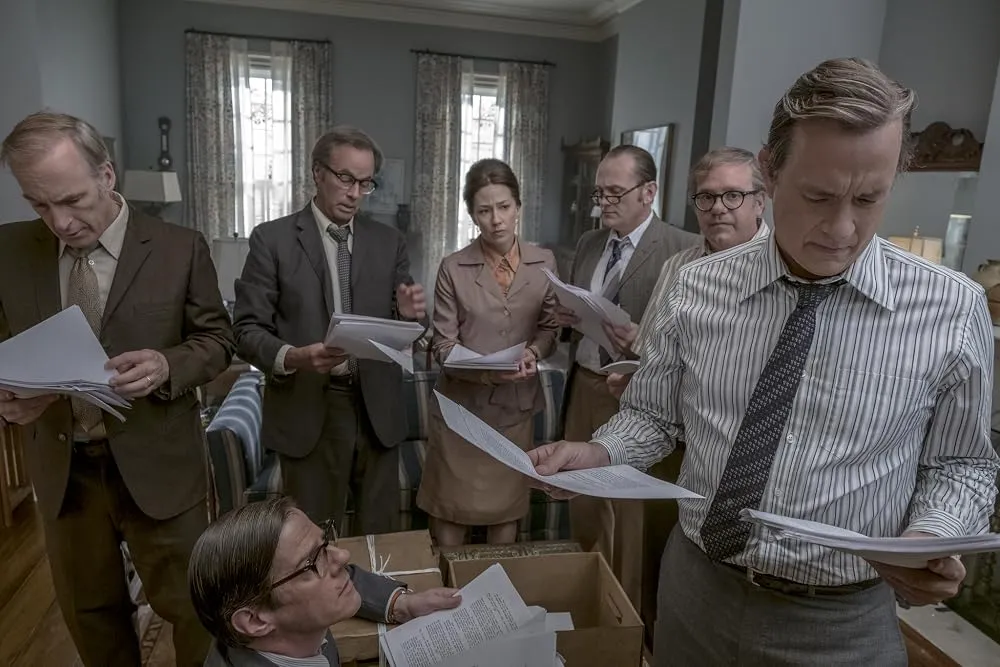
The Post (2017)/ Film about Journalists, Power, and Danger in the Field
The Post brings journalistic conflict to a larger level as it directly confronts the government. This film focuses on the decision of The Washington Post to publish secret documents known as the Pentagon Papers.
For the media, this decision is not a simple matter. Publishing the documents can strengthen the role of the press as a watchdog of power, but it also carries legal and political risks.
This film directed by Steven Spielberg illustrates the dilemma when public interest meets government pressure. The character Kay Graham also provides an interesting perspective as significant decisions regarding reporting must be made under pressure that can affect the future of the media company.
For viewers interested in the relationship between the press and political power, The Post is an intriguing choice.
A Private War tells the story of Marie Colvin, a war journalist known for her bravery in covering various conflict areas. Rosamund Pike plays Colvin as someone who continually strives to be as close as possible to the communities affected by war.
This film not only showcases the courage of a journalist in conflict zones. Viewers are also invited to see the emotional impact of the work. The experience of witnessing violence and human suffering leaves a burden that does not automatically disappear after a reporter leaves the reporting location.
Reference materials describe this film as a story about the personal costs of journalistic work in war zones. Colvin's courage is displayed alongside issues of trauma, personal relationships, and escalating risks.
The Killing Fields takes viewers to Cambodia during the Khmer Rouge regime. The film follows New York Times reporter Sydney Schanberg and his assistant, Dith Pran, as they cover the fall of Phnom Penh in 1975.
This film serves as one of the powerful depictions of the risks of journalism in conflict areas. The work of a reporter not only presents the risk of being caught in wartime situations but also the possibility of becoming a target due to being perceived as a threat by those in power.
The relationship between Schanberg and Pran also demonstrates that war reporting never stands solely on one foreign reporter. There are local journalists, translators, fixers, and people who have knowledge about the region and the local community.
What is most powerful about this film is the question of what it means to be a witness. Journalism cannot always stop wars or bring perpetrators to justice. However, documentation and reporting can ensure that a tragedy does not completely fade from public memory.
Various film recommendations about journalists above show that journalistic work has many faces. There are reporters who spend months examining documents, some confront corporations and governments, and others must work in conflict zones with safety risks.
These films also highlight one important thing: journalism is not just about the courage to speak out, but also about the meticulousness in searching for and verifying facts. Shattered Glass, for example, illustrates the destruction that can occur when that principle is ignored. Meanwhile, Spotlight shows how perseverance in fact-checking can lead to impactful reporting.
At the same time, journalistic films need to be viewed as cinematic works, not documentation that is always identical to reality. Films can combine several events, simplify characters, or create dramatic scenes to make the story stronger. Reference sources even emphasize that films about journalism can shape the way the public remembers an event, even though the big-screen version is not always fully aligned with actual history.
For viewers, that is precisely where the appeal lies. These films can serve as a gateway to understanding how news is produced, how power operates, and why credibility is an important part of the journalistic profession.
The main duty of a journalist is to seek, verify, process, and convey information to the public. The process is carried out with consideration of accuracy, public interest, and the principles of journalistic ethics.
Courage can indeed be necessary, especially when conducting investigations or reporting in dangerous areas. However, courage does not mean disregarding safety. Journalists still need to assess risks, prepare themselves, and follow safety procedures while carrying out their duties.
Verification is necessary to ensure that the information presented has a verifiable basis. Without verification, news can turn into false information and damage public trust as well as the reputation of the media.
Investigative journalism is a process of in-depth reporting to uncover information or issues that are not easily visible on the surface. The process may involve document searches, interviews with multiple sources, data examination, and repeated verification.
Not always. Some films are inspired by real events, while others are fictional stories. Even films based on true stories can simplify or dramatize to fit cinematic needs. Therefore, journalistic films should be viewed as a cinematic interpretation of an event, not always as a complete historical record.
(kpl/yni)
Cobain For You Page (FYP) Yang kamu suka ada di sini,
lihat isinya
Discover 7 touching Indonesian films about firstborn children, depicting their struggles and strength in facing various challenges.

Explore a lineup of the most iconic alien invasion films, from chilling horror stories to epic battles for humanity's survival on Earth.

From Unfaithful to Anna Karenina, here are 7 films about wives' infidelity that deeply portray the dark side of marriage.

Dividing the audience, check out movies that evoke sympathy for villains through their stories, traumas, and reasons.

Some classic stories have a universal appeal that makes them continuously adapted for the big screen, presenting new interpretations for audiences across generations.
Experience the thrill of being a true detective. Check out the recommended mystery films that invite viewers to analyze clues and solve cases alongside the characters.

A collection of heartwarming movie recommendations themed around the journey home that explores family conflicts, self-discovery, and healing deep past wounds.

The stories of canvas maestros are always interesting to review. Check out the reviews of recommended films themed around artists and painters that are full of turmoil, easily understood by the general public.

Recommendations for movies featuring good and evil twin children present stories full of mystery, horror, and thrill with unpredictable plots that are sure to keep viewers tense until the end.

Make your dream of exploring the fantasy world and iconic settings of your favorite films come true through popular movies with visitable filming locations.

A list of 10 movies where the main character dies, complete with synopses and reasons why you must watch them.
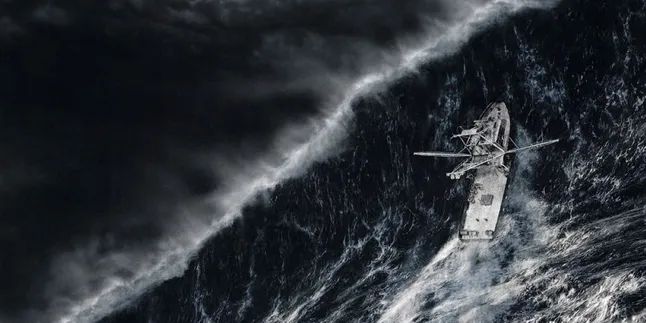
Recommendations for sailor-themed and ocean adventure movies, from true stories to exciting sea fantasies.
