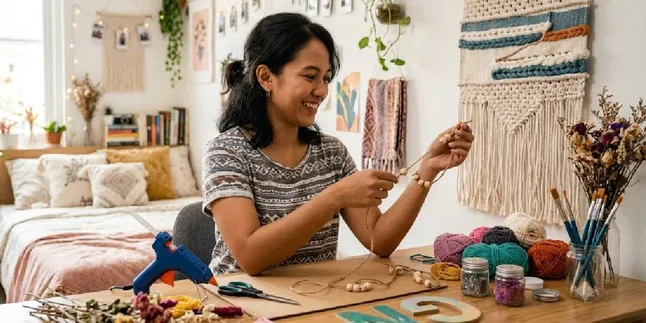
Kapanlagi.com - DIY recycled items for rooms has become one of the increasingly popular creative activities as it can present unique decorations without having to spend a lot of money. Cardboard, glass bottles, cans, and leftover fabrics that are often considered useless can actually be transformed into various functional decorations while beautifying the space.
In addition to making the room feel more personal, this activity also aligns with a more environmentally friendly lifestyle. With relatively small capital, anyone can start creating at home, even utilizing the results as a business opportunity through selling products or creative content on social media.
The trend of crafts based on recycled items continues to evolve. Amid rising prices of various decorative supplies, utilizing materials already available at home becomes a more economical alternative while giving new value to items that were previously unused.
1. DIY Upcycled Items Are Increasingly Popular Because They Are Cheap and Valuable
The public's interest in crafts based on upcycled items has been steadily increasing in recent years. Many people have started turning plastic bottles, cardboard, and tin cans into decorative products or household items that have resale value.
A report by Fortune Business Insights estimates that the global handmade crafts market will reach around 1.2 trillion US dollars by 2025 and is projected to increase to 2.9 trillion US dollars by 2034. In Indonesia, various DIY upcycled content also regularly receives high attention on platforms like TikTok and Lemon8.
This momentum is supported by the rising prices of ready-to-use decorations. Meanwhile, primary materials such as cardboard, bottles, or cans are often available for free in many homes. This situation makes DIY activities a more economical choice while also supporting the concept of reusing upcycled items.
Additionally, this hobby is relatively easy for beginners to undertake. The tools required are simple, do not need a special workspace, and can be done indoors with flexible timing, ranging from about 30 minutes to two hours for each project.
DIY is also suitable for various weather conditions because the entire process can be done indoors. During the rainy season, users just need to allow for longer drying times when using paint or glue.
2. How to Benefit from DIY Hobbies with Recycled Items
DIY recycled items not only create attractive decorations for your room. This activity also provides benefits for mental health as it encourages individuals to focus more, relax, and enjoy the creative process.
A survey published in the journal Frontiers in Public Health in 2024 involving over 7,000 adults showed that arts and crafts activities can increase life satisfaction while making individuals feel that their lives are more meaningful. The impact is even said to be comparable to the benefits experienced from having a job.
Another study by Kaimal and colleagues in the journal Art Therapy (2016) also found that about 45 minutes of engaging in creative activities can help lower cortisol levels, or stress hormones. These benefits can be felt without having a background as a professional artist.
In addition to helping reduce stress, creative activities are also known to stimulate the release of dopamine and serotonin, which are often associated with feelings of happiness. This activity also trains concentration, problem-solving skills, and patience during the crafting process.
From a social perspective, DIY hobbies open opportunities to join creative communities as well as waste bank activities in the surrounding environment. If the creations are of good quality, decorations made from recycled items also have the potential to be sold, providing additional income.
3. 7 DIY Ideas for Upcycling to Beautify Your Room
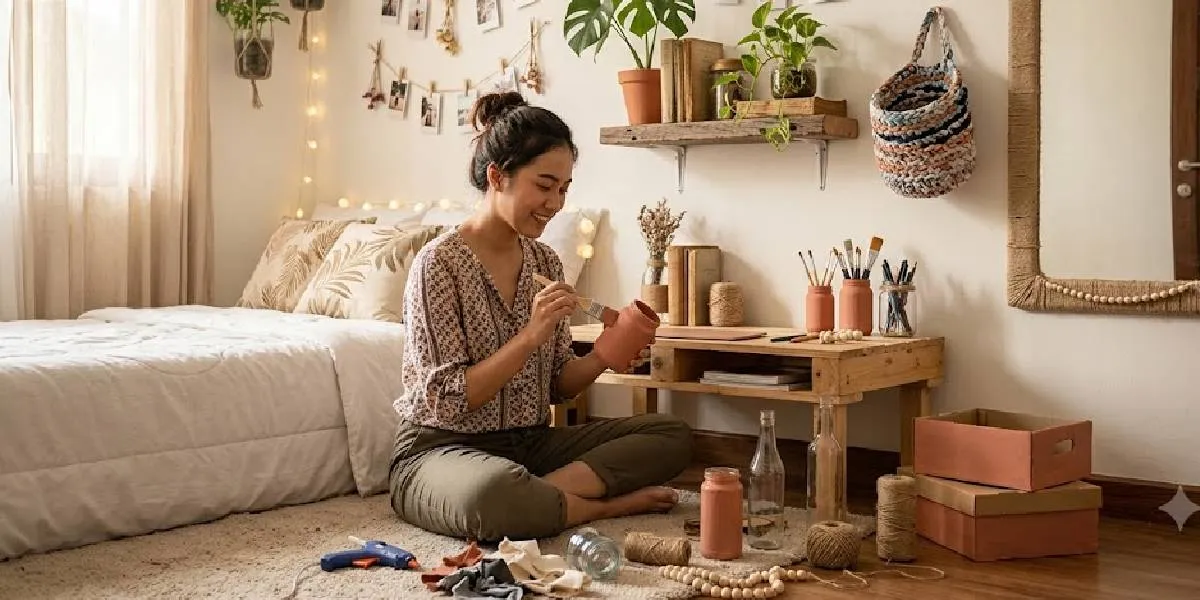
Before starting, prepare some basic supplies such as a glue gun, acrylic paint, scissors or a cutter, brushes, fine sandpaper, jute twine, and various used items available at home. The initial capital ranges from Rp50,000 to Rp160,000, and the supplies can be reused for various projects.
One easy project to try is making a wall shelf from used cardboard. Shoe boxes or package boxes can be cut into several equal-sized pieces, then covered with wrapping paper or fabric before being assembled into a shelf. This project generally takes about one to two hours with a cost of around Rp15,000 to Rp30,000.
Used glass bottles can also be repurposed into decorative lamps. After being cleaned and dried, the bottles can simply be filled with LED string lights and then decorated with jute twine or fabric ribbons. This simple decoration only takes about 30 to 45 minutes with a cost ranging from Rp20,000 to Rp40,000.
Used cans from milk or food can be transformed into storage for stationery, makeup brushes, or mini plant pots. To ensure safety, the edges of the cans should be sanded down before being painted according to the room's decor theme. This project requires a budget of around Rp10,000 to Rp25,000.
Old magazines or newspapers can also be used to create decorative fan-shaped wall art. Additionally, popsicle sticks can be assembled into a simple photo frame suitable for displaying family photos or favorite memories.
Meanwhile, used plastic bottles can be transformed into flower vases by wrapping jute twine around their entire surface. There are also storage boxes made from used cardboard covered with leftover fabric, making them neater for storing accessories, stationery, or skincare products on a vanity table.
4. Steps to Start DIY and Potentially Make Money
For beginners, there is no need to rush into complex projects. Start with simple crafts like storage containers made from used cans or photo frames made from ice cream sticks. Once you are accustomed to using various tools and basic techniques, gradually move on to more complex projects.
In the first month, a realistic target is to complete about three projects while starting to experiment with color choices, finishes, and material combinations. After a few months, these various creations can be combined into a cohesive set of room decorations, such as wall shelves, decorative lamps, and storage boxes with a uniform theme.
If you consistently practice and document the creation process, DIY works can also be promoted through social media or marketplaces. After about six months, opportunities for receiving custom orders and selling products regularly begin to open up.
To achieve the best results, there are several mistakes to avoid. Make sure all used items are cleaned first before use so that the final result looks neat. Avoid excessive decorations so that the room remains comfortable, use the appropriate type of glue for the material, and wait for each layer of paint or glue to dry completely before proceeding to the next step.
Making a simple sketch before starting to work can also help determine the composition of colors, sizes, and material needs, making the work more directed while minimizing mistakes.
5. Safety Tips and Initial Capital Calculation for Upcycling Projects
Although it is a relatively safe activity, the use of some equipment still requires attention. Hot glue has a high temperature, so it should be used carefully and placed on a stand when not in use. If using spray paint or solvent-based glue, ensure that the room has good air circulation.
All sharp edges on cans or plastic bottles that have been cut also need to be sanded first to avoid injuring hands. When DIY activities are done with children, choose low-temperature glue and always supervise when using scissors or cutting tools.
The monthly operational costs for making this craft are relatively affordable. Needs such as hot glue sticks, additional acrylic paint, LED lights, jute twine, and ribbons generally range from Rp50,000 to Rp95,000 per month, while the main materials like cardboard, bottles, or used cans can be obtained at no cost.
With a working time of about three to four hours each week, one can potentially produce four to eight products each month. The selling price range is also quite diverse, starting from cardboard wall shelves priced at Rp35,000–Rp75,000, decorative bottle lamps Rp50,000–Rp120,000, storage sets Rp60,000–Rp150,000, to custom photo frames Rp25,000–Rp50,000.
If able to sell four to six products each month, the estimated net income at the initial stage can reach around Rp200,000 to Rp500,000. This value can still grow as the quality of the products improves, consistency in promotion increases, and customer trust builds.
After mastering basic projects, business development can be done by making shelves from wooden crates, transforming old tables into nightstands, utilizing old doors as headboards, and creating hanging shelves from wooden ladders. In addition to selling finished products, other opportunities that can be explored include offering complete DIY packages, creating tutorial content, opening craft classes, or holding offline workshops. It is estimated that one can start earning income from these activities about two to three months after consistently marketing their work and building an audience.
(kpl/mda)
Disclaimer: This translation from Bahasa Indonesia to English has been generated by Artificial Intelligence.


 Follow
 Rekomendasi