

 Follow
 Rekomendasi
8 Movies About Single Fathers That Are Touching, Full of Love and Struggles
A series of touching and emotional films about single fathers, especially when a father has to take on the role of a single parent.
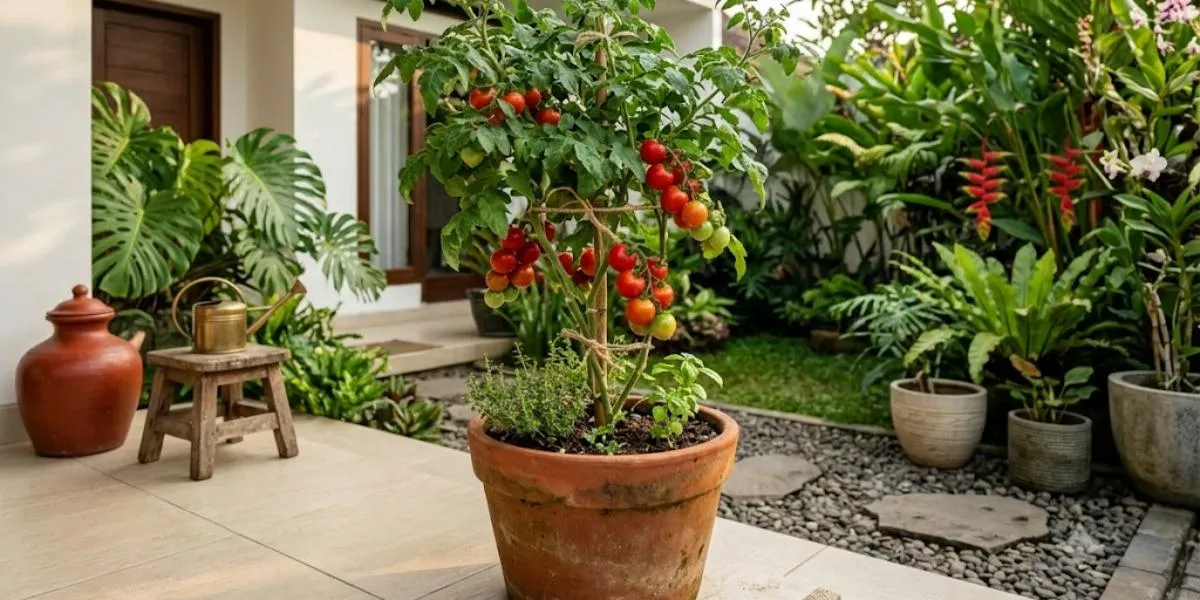
Kapanlagi.com - How to grow tomatoes in small pots is a practical solution for anyone who wants to harvest fresh tomatoes even with only a terrace, balcony, or limited yard space. By choosing the right variety and applying appropriate cultivation techniques, a single pot can produce healthy and productive tomato plants.
Growing tomatoes in pots also makes maintenance easier because the planting media is easier to control, from watering, fertilizing, to pest management. Additionally, pots can be moved to locations that receive optimal sunlight according to the plant's needs. Various horticultural institutions such as the Royal Horticultural Society (RHS) and the University of California Agriculture and Natural Resources (UC ANR) state that tomatoes are very suitable for container cultivation as long as they receive adequate sunlight, planting media, water, and nutrients.
Although it seems simple, the success of growing tomatoes in pots is actually determined by several important steps from the start. Mistakes in choosing pots or planting media often lead to stunted growth, wilting, or even failure to bear fruit. Therefore, each stage needs to be done correctly so that the plants can develop optimally, Tuesday (28/7/2026)
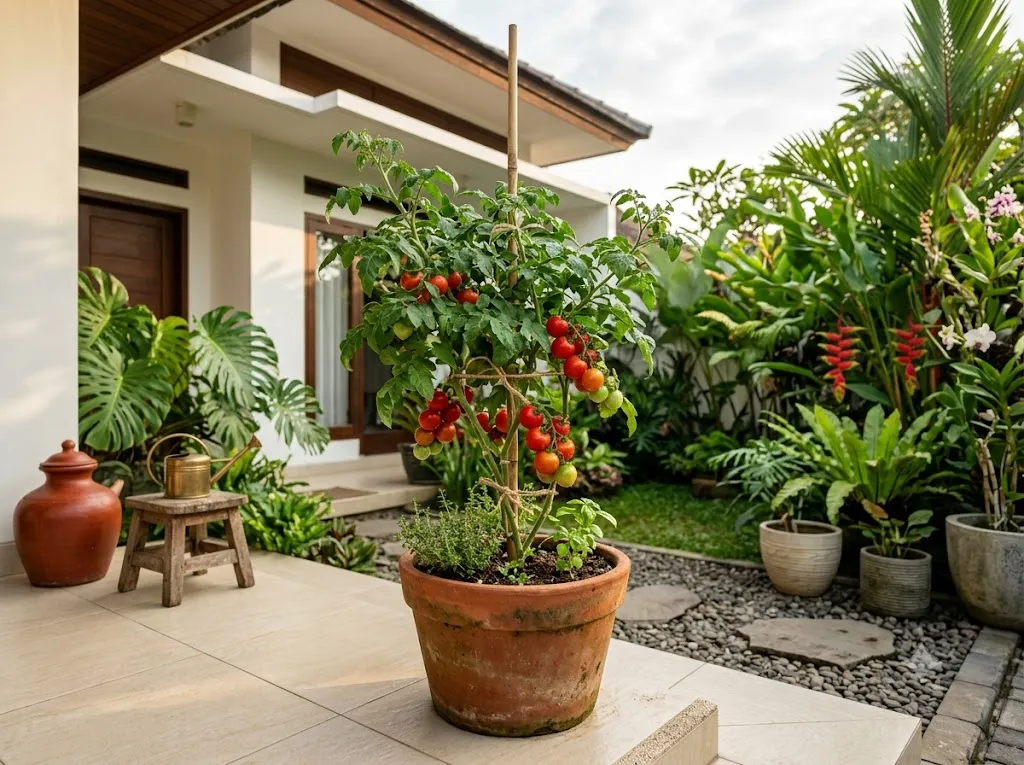
Choose a tomato variety suitable for small pots (AI generated)
The first step in how to grow tomatoes in small pots is to choose a variety that is indeed suitable for limited growing space. According to the Royal Horticultural Society (RHS), bush-type tomatoes, cherry tomatoes, or trailing varieties are the best choices because their plants are more compact compared to climbing tomatoes.
Some recommended varieties by RHS include 'Tumbling Tom Red', 'Tumbling Tom Yellow', and 'Hundreds and Thousands'. All three can produce many small, sweet fruits and look attractive when planted in pots or hanging baskets.
Meanwhile, the University of California Agriculture and Natural Resources (UC ANR) also recommends choosing determinate, dwarf, or cherry tomato types. These varieties tend to have shorter growth, so they do not require too much space. However, some types still need stakes or supports to prevent the stems from collapsing when they start to bear fruit.
Many people think that tomatoes can grow well in any small pot. In fact, the size of the container greatly affects root development and the plant's ability to absorb water and nutrients.
According to RHS, ideally one tomato plant should be planted in a pot with a diameter of about 30 cm. If using a long planting box (trough or window box), each plant should be spaced about 35–45 cm apart to avoid competing for nutrients.
UC ANR also explains that the larger the volume of the growing medium, the easier it is to maintain soil moisture and nutrient stability. Some varieties can still grow in containers with a capacity of about five gallons, but plants will thrive better if they have more root space.
Equally important is ensuring that the bottom of the pot has drainage holes. These holes serve to drain excess water so that the roots do not stay submerged for too long. A constantly wet medium can trigger root rot and various fungal diseases.
If using used pots, UC ANR recommends cleaning them first with a bleach solution at a ratio of 1 part bleach to 9 parts water to reduce the risk of disease transmission from the previous growing season.
The growing medium is the main foundation for successful tomato cultivation in pots. Unlike plants in open fields, tomato roots in containers rely solely on the nutrients available in that growing medium.
UC ANR recommends using a quality potting mix rather than regular garden soil. Potting mix is specially designed for container cultivation, providing good aeration while retaining moisture. Many products also contain ingredients such as cocopeat or coconut fiber that help retain water without making the medium soggy.
Meanwhile, RHS recommends adding mature compost or slow-release fertilizer to the planting medium. The addition of this organic material allows nutrient reserves to last longer, enabling plants to receive nutrients gradually during their growth period.
A loose planting medium also facilitates the roots to spread wider. Healthy roots will support the formation of a sturdy stem, green leaves, and flowers that will eventually develop into fruit.
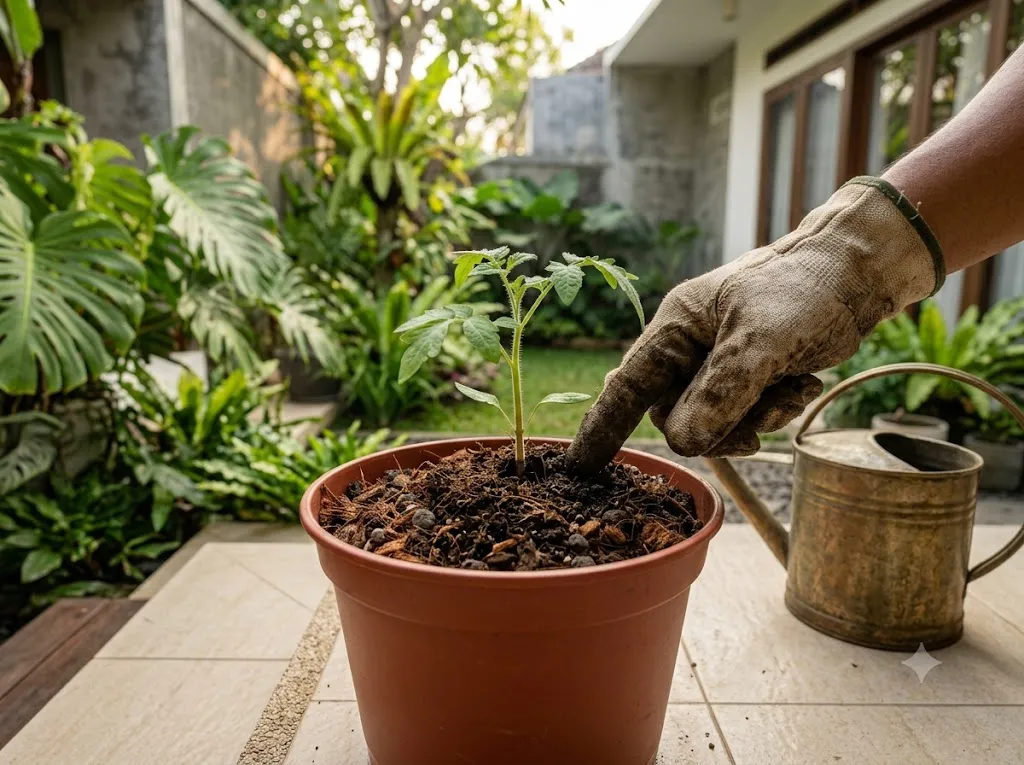
Plant seedlings deeper to strengthen the roots (AI generated)
One technique that is often overlooked in how to plant tomatoes in small pots is to plant seedlings deeper than other vegetable plants.
RHS explains that tomato stems can form new roots when buried in the planting medium. Therefore, seedlings should be planted up to near the first leaves or cotyledons. This method increases the root system, making it more abundant and stronger.
Similar recommendations are also given by UC ANR. Planting deeper will increase the number of roots formed along the stem, allowing the plants to absorb water and nutrients more effectively. As a result, the plants become sturdier and more resilient to hot weather.
Once the seedlings are placed in the correct position, gently compact the planting medium so that the roots have good contact with the soil. Next, water until the medium is sufficiently moist, ensuring that no air pockets remain around the roots.
In the early stages of growth, place the pot in a location sheltered from strong winds. If the weather suddenly becomes too cold, especially in highland areas, young plants may be given temporary protection to avoid stress.
Tomatoes are plants that require a lot of sunlight to produce flowers and fruit. Therefore, the placement of the pot is an important factor that should not be overlooked.
According to the University of California Agriculture and Natural Resources (UC ANR), tomato plants should receive 6–8 hours of direct sunlight each day. Adequate sunlight helps the photosynthesis process to occur optimally, allowing the plants to produce energy for the growth of stems, leaves, flowers, and fruit.
If planted on a terrace or balcony, choose an area that is not blocked by walls or trees in the morning to afternoon. If using a pot, you have the advantage of being able to move the plants to follow the direction of the sunlight.
In addition to light, the Royal Horticultural Society (RHS) also recommends placing pots in bright locations but sheltered from strong winds. Strong gusts of wind can damage stems, drop flowers, or cause the growing medium to dry out more quickly.
Watering is one of the key elements in how to grow tomatoes in small pots. Unlike plants that are planted directly in the ground, the growing medium in pots has a limited volume, causing it to lose water more quickly.
RHS explains that the growing medium should be kept consistently moist. When the weather is hot and the plants start to grow, watering can even be done at least once a day.
UC ANR adds that the best time to water is in the morning when the air temperature is still cool. During the dry season or when the wind is blowing hard, plants may require watering twice a day because water evaporates more quickly.
Make sure to water directly at the base of the plants, not on the leaves. This method helps reduce moisture on the leaf surface that can trigger the development of fungal diseases.
If using plastic pots, the moisture in the medium usually lasts longer compared to clay pots. Conversely, clay pots have pores that cause water to evaporate more quickly, so they need to be checked more often.
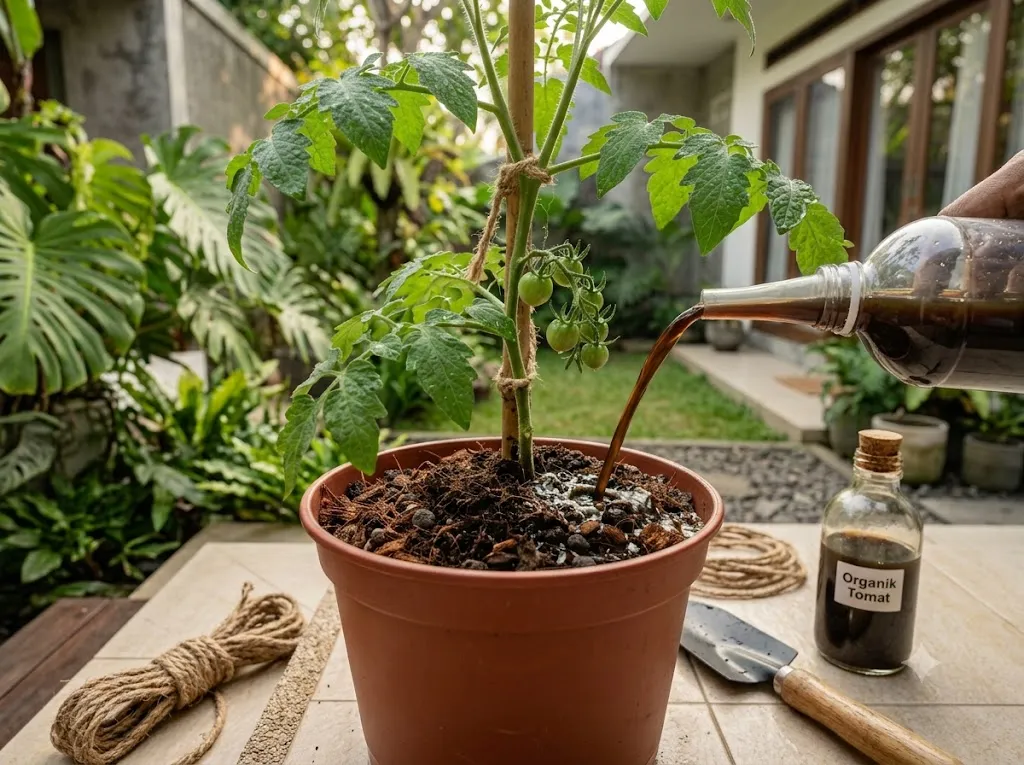
Fertilize regularly to keep the plants productive (AI generated)
Tomatoes are known as plants that require a lot of nutrients during their growth until fruit formation.
According to RHS, once the fruit starts to appear, the plants should be given a special liquid fertilizer for tomatoes regularly according to the instructions on the packaging. Fertilizing during this phase helps support fruit development, making them larger and sweeter.
Meanwhile, UC ANR refers to tomatoes as heavy feeders, which means they require a relatively high supply of nutrients. If the growing medium does not contain fertilizer, use organic liquid fertilizer or a general-purpose liquid fertilizer suitable for fruit plants.
In addition to liquid fertilizer, the use of slow-release fertilizer from the beginning of planting can also help maintain nutrient availability in the medium. The combination of both allows the plants to obtain nutrients gradually throughout the growing season.
However, avoid giving excessive nitrogen fertilizer. This nutrient does stimulate leaf growth, but if the amount is too much, the plants tend to produce lush leaves with fewer fruits.
Tomato care does not stop once the plants start to flower. Regular inspections become even more important to keep the plants healthy until harvest.
RHS recommends removing old leaves that start to yellow at the bottom of the plants. This step helps improve air circulation while allowing sunlight to reach the fruit better.
If the plants start to be filled with fruit, install stakes or supports to prevent the stems from breaking under the weight. For taller-growing varieties, loosely tie the stems with raffia or plant ties to keep them upright.
Regularly check the plants for potential attacks from aphids, caterpillars, or fungal diseases. Leaves showing signs of disease should be cut and disposed of immediately to prevent further spread.
Keeping the area around the pots clean also helps reduce the risk of pests breeding.
One of the advantages of growing your own tomatoes is that you can harvest the fruit at its best ripeness.
According to the RHS, tomatoes should be picked after their color has changed perfectly according to their variety and their texture has started to feel slightly soft when gently pressed. Fruits harvested in a fully ripe condition generally have a sweeter taste and a stronger aroma compared to tomatoes picked too early.
Under good growing conditions, the first fruits are usually ready to be harvested around the end of the growing season or about two to three months after planting, depending on the variety, weather, and growing environment.
Even though harvesting has begun, watering and fertilizing should continue as the plants can still produce subsequent fruits as long as they remain healthy.
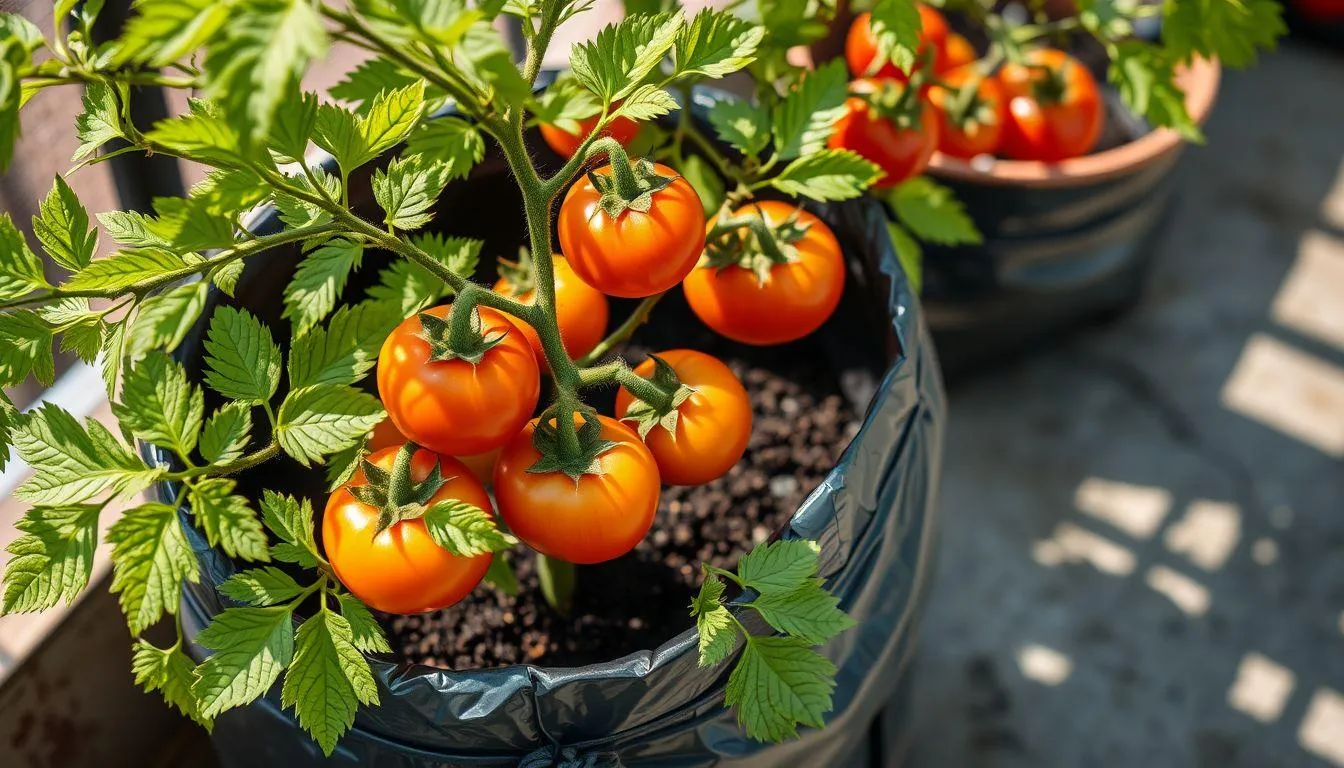
Additional tips for making tomatoes in small pots more fertile
In addition to following the main steps above, there are several simple ways that can help improve the success of growing tomatoes in pots.
By understanding the basic needs of the plants from variety selection, pot size, planting medium, watering, to fertilization, the method of planting tomatoes in small pots can be easily done even by beginners. Consistent care will help the plants grow healthy and yield abundant harvests even when planted in limited spaces.
The recommended size is a pot with a diameter of about 30 cm for one plant. A larger pot will provide more root space, making it easier for the plant to grow vigorously.
Yes. Make sure the balcony receives direct sunlight for at least 6–8 hours every day and has good air circulation.
Watering should be done daily when the weather is hot or when the media begins to dry out. During the dry season, the plants may require watering twice a day.
Fertilizer can be applied from the beginning of planting if the media does not contain nutrients. After the plants start to bear fruit, use a special liquid fertilizer for tomatoes regularly according to the usage instructions.
Tomatoes are ready to be harvested when the color of the fruit has changed perfectly according to its variety, the texture is slightly soft, and it feels firm and full. Ripe fruit on the plant generally has the sweetest taste.
References
(kpl/yni)
Cobain For You Page (FYP) Yang kamu suka ada di sini,
lihat isinya
A series of touching and emotional films about single fathers, especially when a father has to take on the role of a single parent.

Discover 10 recommendations for heartwarming pet-themed movies that teach us to care more for our pets.

A series of Korean films themed around school and bullying that present stories full of conflict, struggle, and deep emotions.

Movies without villains often offer a different viewing experience, yet still manage to deliver deep tension and excitement.

Discover recommendations for Indian films with social themes and caste critiques that hit hard, from true stories to inspiring dramas that raise issues of discrimination and the struggle for justice.

Villain characters in films are often more captivating and memorable than the main characters. Dive into the reasons behind the complexity, charisma, and unique motivations that make them pop icons.

Discover recommendations for movies about aliens living on Earth with unique stories, from disguises, friendships, to exciting and action-packed science fiction dramas.

Bored with straightforward storylines? Here are recommendations for time-themed films that play with non-linear plots that are the most intriguing.

These Korean dramas present heartbreaking endings, where the main characters must depart. Check out the list of dramas with tragic endings that drain emotions.
Curious about the viral Chinese dramas featuring rich people pretending to be poor? Here are some selected titles ranging from TV series to TikTok mini-dramas that you must watch.

Korean fantasy comedies that make you laugh offer unique stories, quirky characters, and fresh humor ready to entertain during your leisure time.

Explore the mystical world of Japan with recommendations for supernatural and yokai films that are ready to test your courage. From cursed video tapes to vengeful ghosts, prepare yourself for an unforgettable chilling sensation.
