

 Follow
 Rekomendasi
8 Recommendations for Heartwarming Homecoming-Themed Movies
A collection of heartwarming movie recommendations themed around the journey home that explores family conflicts, self-discovery, and healing deep past wounds.
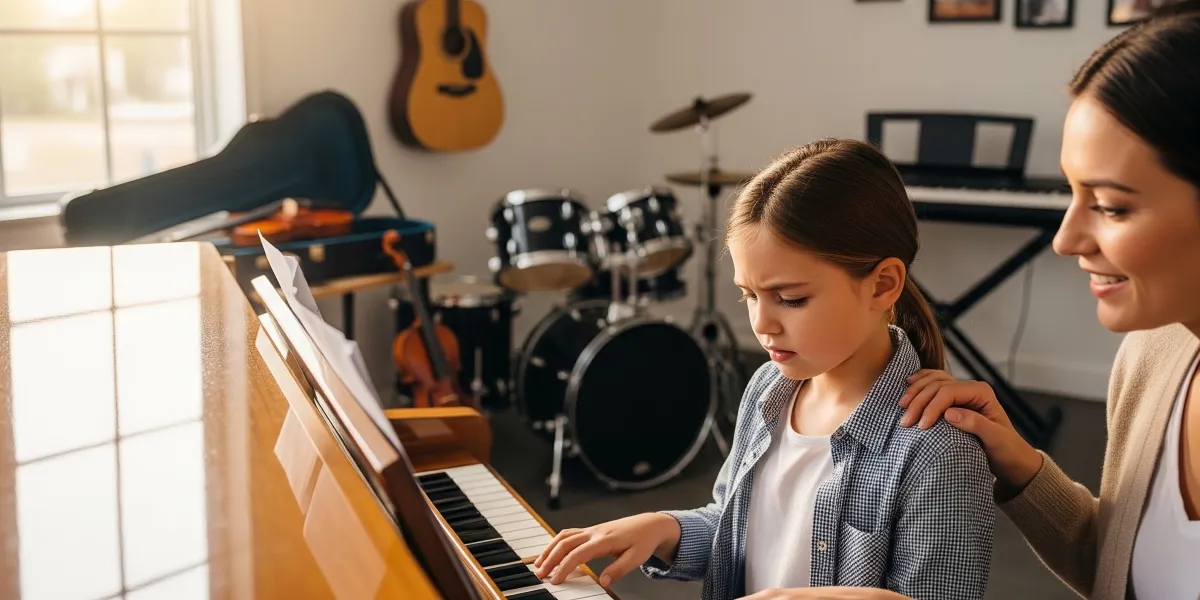
Kapanlagi.com - Hobbies and physical activities outside of school often serve as a great platform for children to develop social skills and fine motor skills. Among the many positive activity options, learning to play a musical instrument stands out as one of the best recommendations. More than just recognizing notes and rhythms, this activity actually holds a wealth of positive impacts that are essential for the mental and character development of children in the future.
Recently, several psychology experts revealed interesting facts about the importance of music education at an early age. It's not just about pursuing proficiency to a professional level or producing world-class musicians; the process of practicing an instrument provides exceptional cognitive stimulation. In fact, these benefits can be felt significantly into adulthood, ranging from sharpening memory, enhancing creativity, to slowing down cognitive function decline as one ages.
So, what are the most crucial benefits agreed upon by the experts? The answer goes beyond mere academic intelligence. Dedicating oneself to a musical instrument from a young age has proven to be very effective in shaping a resilient mental character to face the challenges of modern times that are all about instant gratification. Check out the complete review below, summarized by Kapanlagi.com from various sources on Friday (7/8/2026).
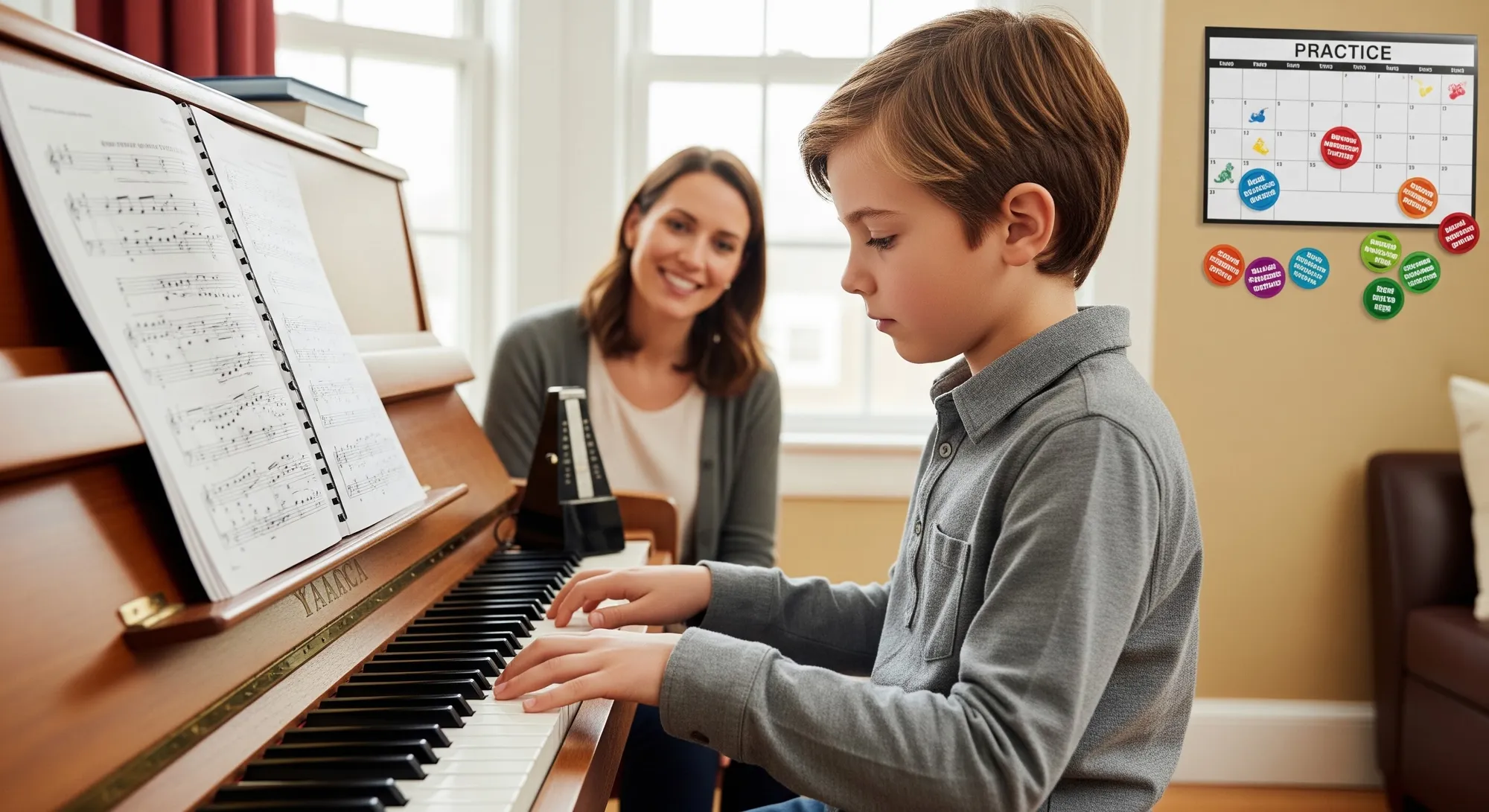
Child is Learning Music. (AI Generated)
Three psychology experts agree that the greatest benefit of learning a musical instrument is fostering perseverance. In an era where everything can be obtained instantly, music teaches children the value of struggle.
Dr. Amy Vigliotti, a licensed psychologist from New York, explains that when children learn music, they face difficulties, make mistakes, and experience phases of stagnation. From there, they glean valuable life lessons that true success comes from consistent practice, not instant results.
Dr. Joseph Jones, a pediatric neuropsychologist, adds that musical instruments provide tangible evidence of progress. The feeling of pride when a child realizes, "Last month I couldn't play this song, and now I can!" will build a sense of self-discipline that feels satisfying, rather than a boring task burden.
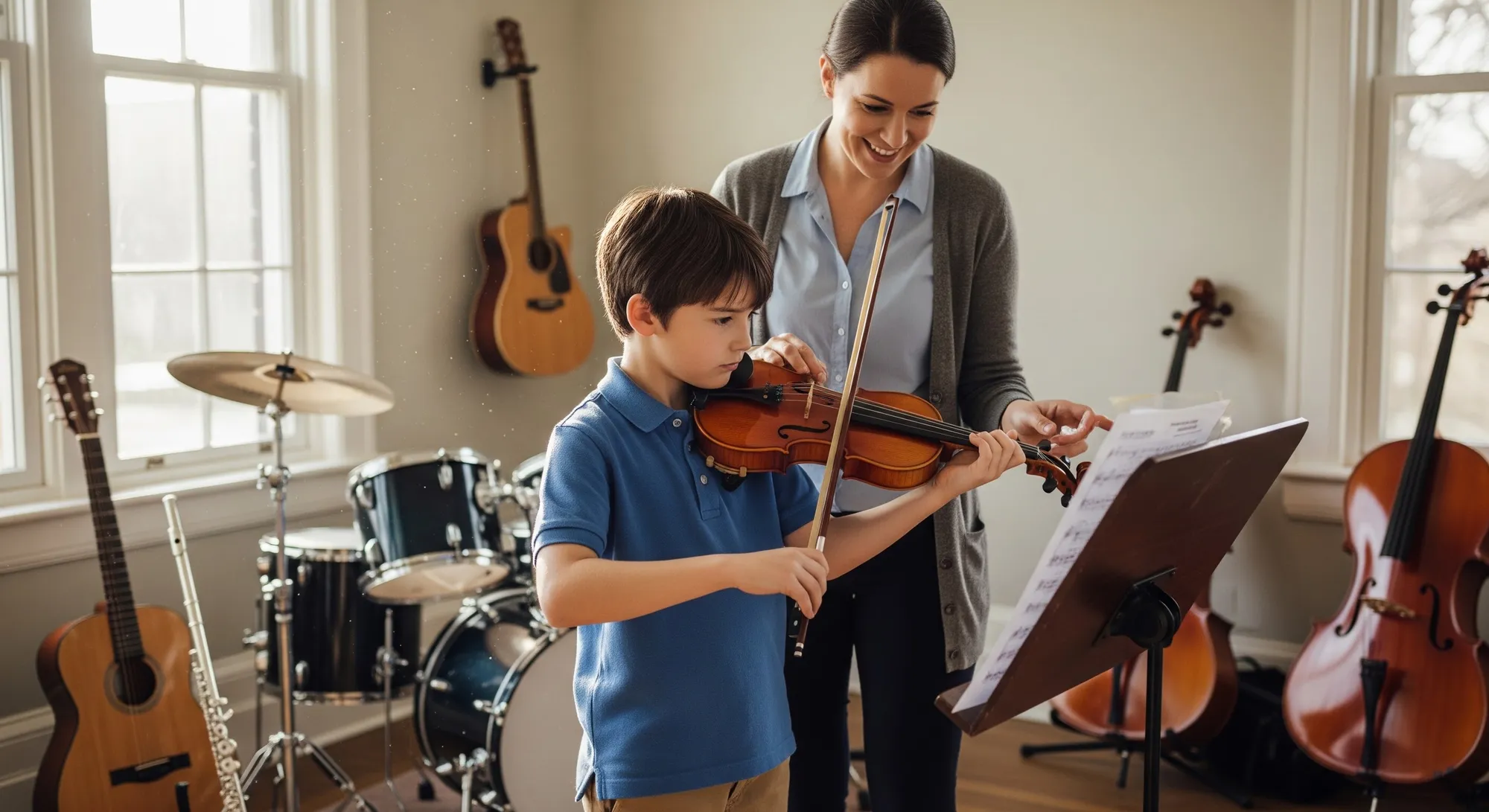
Child is Playing the Violin. (AI Generated)
Music and child brain development are two inseparable things. Dr. Heather Liebert from Kaiser Permanente revealed that playing music is one of the few activities that can activate many areas of the brain simultaneously.
This not only accelerates cognitive development but also significantly helps children train their focus, control impulses, manage working memory, and enhance their cognitive flexibility.
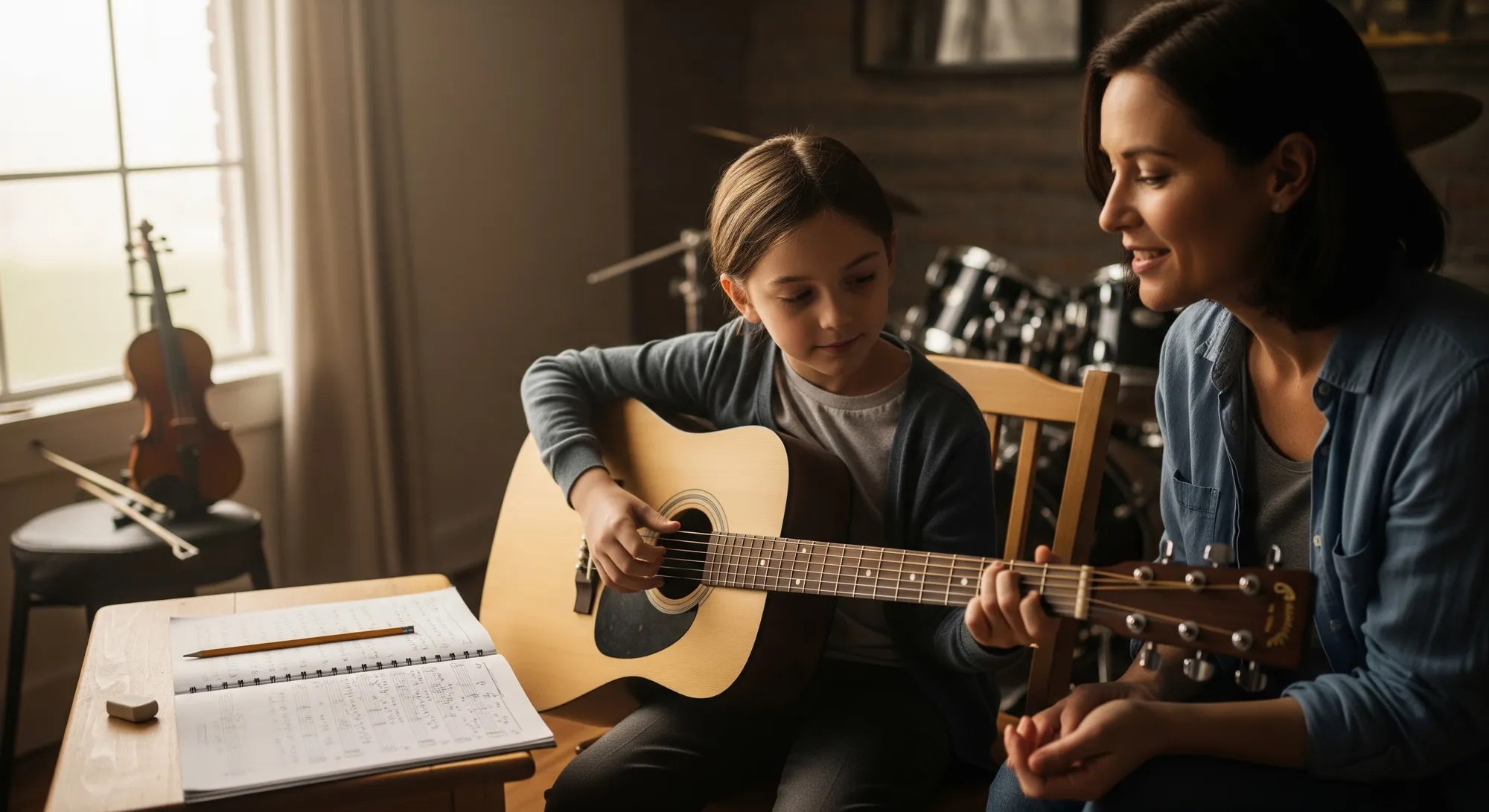
Children Learning Music. (AI Generated)
Learning a musical instrument makes children feel capable and intelligent. They learn that any obstacle can be overcome if they are willing to put in the effort. Additionally, music serves as a very healthy outlet for emotions.
Dr. Max Doshay, a clinical psychologist, stated that when children sit still facing frustration when they fail to play the right note, they are indirectly learning to manage anger and control stress in a positive way.
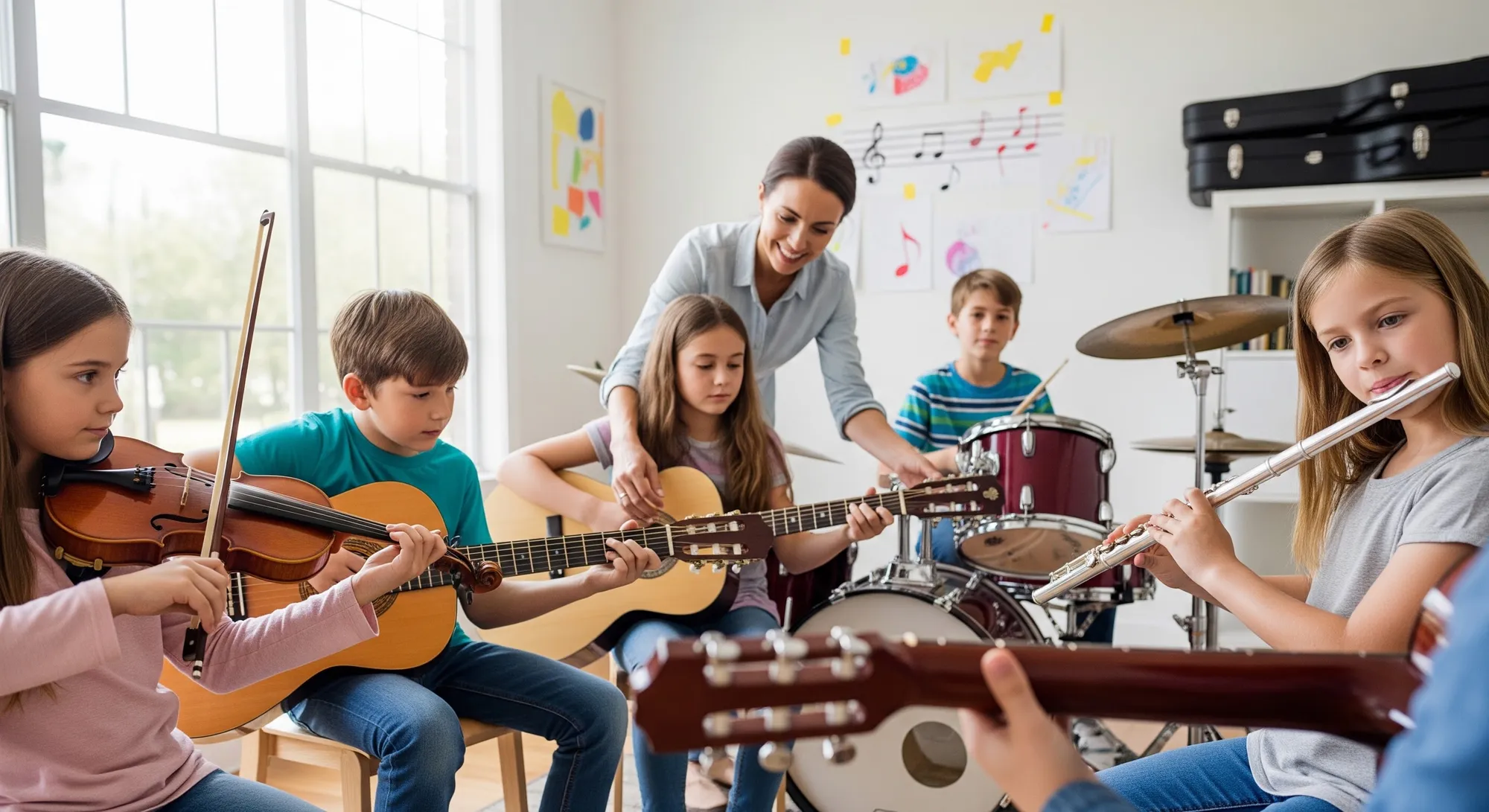
Honing Motor Skills and Social Connections. (AI Generated)
Not only does it impact mental health, but instruments that require finger dexterity (such as the piano or guitar) are very effective for training children's fine motor skills.
On the other hand, Dr. Jenna Rudo-Stern highlights its social benefits. Playing music in groups, such as a marching band or orchestra, gives children a sense of belonging and builds strong connection bridges with peers.
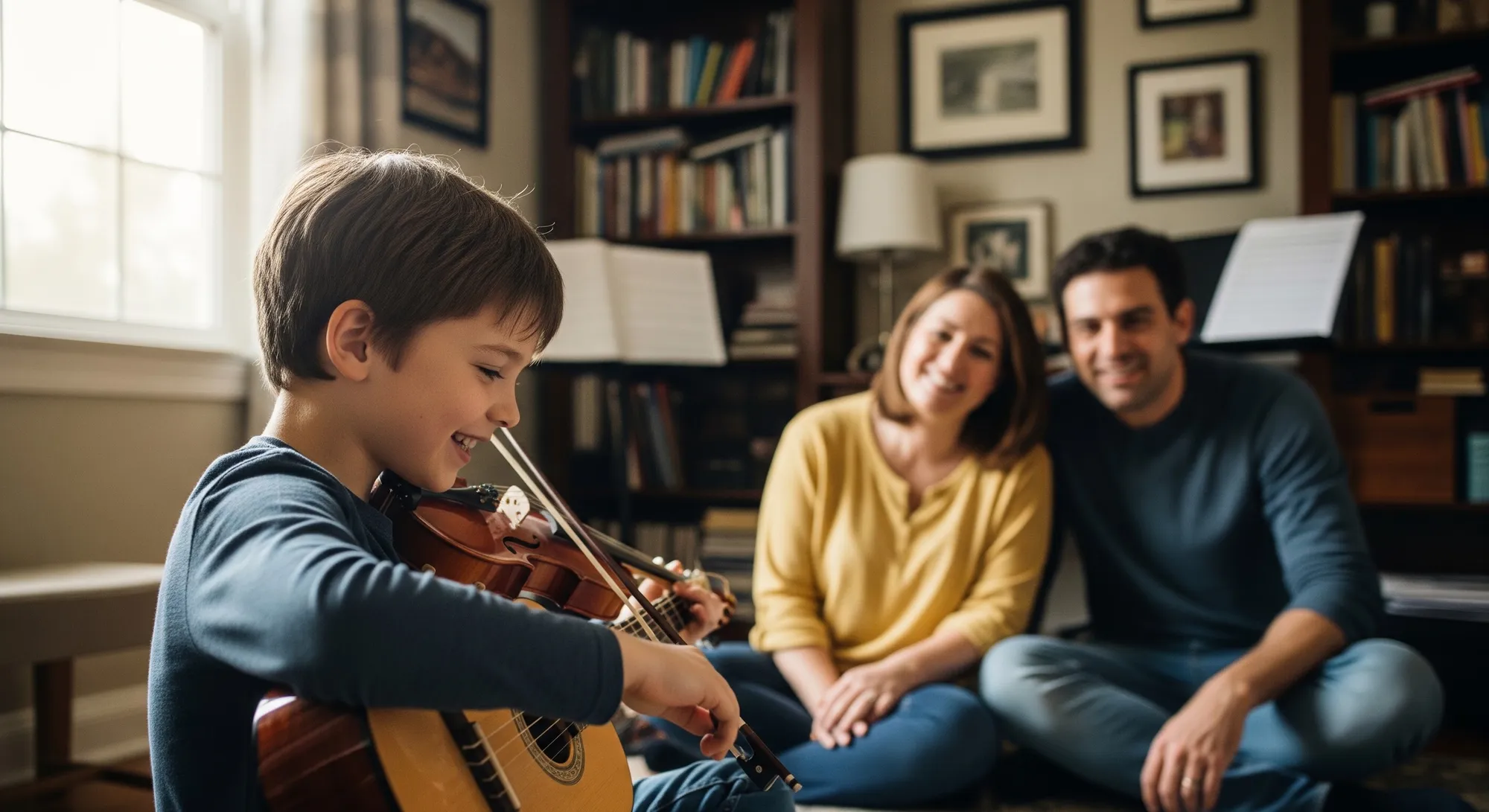
Parents Are Watching Their Child Play Music. (AI Generated)
Behind the myriad of benefits, there is one thing that parents must be wary of. Dr. Doshay reminds us that the negative impact of learning music usually does not come from the instrument itself, but rather from the pressure of overly demanding parents.
Forcing children to perform perfectly will only make them associate music with stress and the fear of disappointing.
Therefore, let children explore with joy and ensure their schedule is not too packed so they still have time for free play.
1.Should a child have an innate artistic talent to start learning a musical instrument?
No. Dr. Rudo-Stern emphasizes that essentially every human has innate musicality, as evidenced by how babies respond to rhythm. Learning a musical instrument is about exploration and joy, not about demanding perfection or genius talent from birth.
2.What are the negative impacts if parents force their children to excel in music?
Children may associate musical instruments with stress, anxiety, and fear. Instead of being a positive outlet for emotions, music classes can become a mental burden for children because they feel they must be perfect to avoid disappointing their parents.
3. What are the benefits of learning music at a young age that can still be felt when children grow up?
Absolutely! Adults who learned to play musical instruments as children tend to have stronger auditory processing abilities and better working memory. They also grow into creative problem solvers because they are accustomed to tolerating discomfort during the learning process.
4. What musical instruments are best for training a child's fine motor skills?
Almost all musical instruments, such as the piano, violin, or guitar, require high dexterity and finger coordination. Regular practice on these instruments will automatically stimulate and strengthen a child's fine motor skills.
5. What is the best way to support a child learning a musical instrument?
Focus on support and appreciation for the process, not just the end result or ideal performance. Parents can also learn to play an instrument alongside their child to create enjoyable moments of togetherness (family time) and motivate each other.
(kpl/rao)
Cobain For You Page (FYP) Yang kamu suka ada di sini,
lihat isinya
A collection of heartwarming movie recommendations themed around the journey home that explores family conflicts, self-discovery, and healing deep past wounds.

The stories of canvas maestros are always interesting to review. Check out the reviews of recommended films themed around artists and painters that are full of turmoil, easily understood by the general public.

Discover vintage cooking tools that are irreplaceable due to their durability, versatility, and effectiveness still in use today.

Recommendations for movies featuring good and evil twin children present stories full of mystery, horror, and thrill with unpredictable plots that are sure to keep viewers tense until the end.
Discover 15 Korean dramas that remain exciting even when you know the ending. The storyline, acting, and emotions make you want to rewatch them multiple times.
Korean dramas not only present romantic stories but also bravely raise crucial social issues. Check out the list of dramas that successfully insert sharp critiques of reality.

Make your dream of exploring the fantasy world and iconic settings of your favorite films come true through popular movies with visitable filming locations.

Check out the complete guide to planting lychee for quick fruiting, from selecting superior seeds to optimal care for abundant results.
Korean dramas that made their actors instantly famous prove that one iconic role can change a star's career.

Discover various low-maintenance hair coloring techniques such as French Highlights to Balayage that offer stunning looks and save time.

A list of 10 movies where the main character dies, complete with synopses and reasons why you must watch them.
Korean dramas with villains that are hard to hate feature antagonistic characters with strong backgrounds, captivating charisma, and life stories that evoke sympathy. Check out the recommendations here.
