Kapanlagi.com - Dystopian films always have their own allure because they present a vision of the future filled with various social, political, technological, and environmental issues. Although packaged in a science fiction format, many stories feel increasingly close to our current lives. That is why recommendations for dystopian-themed films that feel more real in today's era are highly sought after by viewers who want to enjoy entertainment as well as reflective material.
In addition to providing entertainment, recommendations for dystopian-themed films that feel increasingly real in today's era can invite viewers to consider possible futures if various current issues are not handled wisely. Many dystopian films present social critiques cleverly packaged through characters, conflicts, and fictional worlds that provoke thought after the film ends.
If you enjoy films that offer meaningful stories while sparking discussion, the following list of recommendations for dystopian-themed films that feel increasingly real in today's era is worth adding to your watchlist.
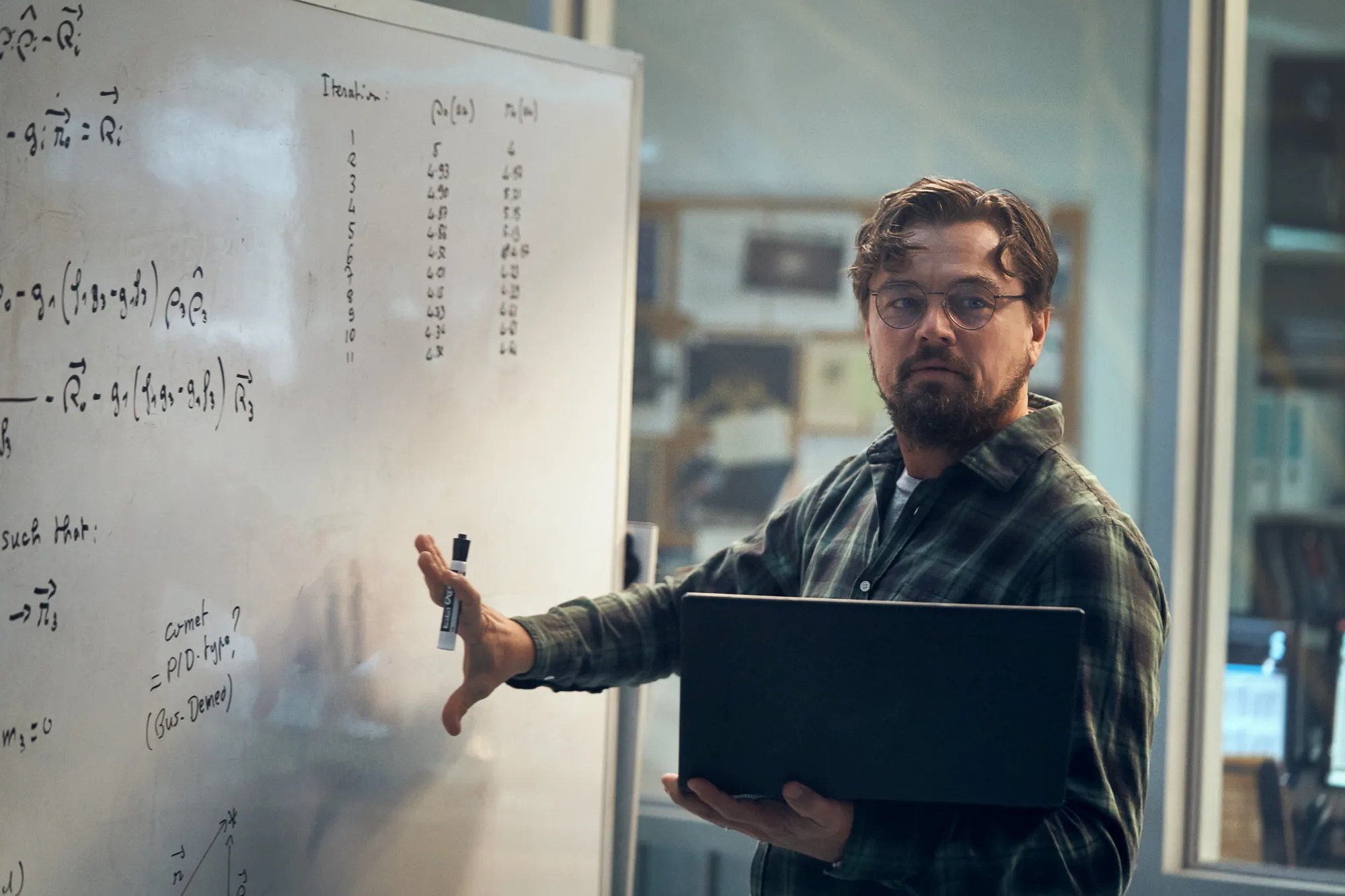
1. 1. Don't Look Up (2021)
Credit: IMDb
Directed by Adam McKay, this film tells the story of two astronomers who discover a giant comet that will hit Earth, but struggle to convince the public and the government to take action. Instead of focusing on the real threat, the media and politicians are busy with spin, entertainment, and personal interests. This film is a sharp satire of how modern society denies the climate crisis, spreads misinformation, and is divided by polarized opinions on social media, a near-perfect reflection of today's public debate.
2. The Circle (2017)
Adapted from the novel by Dave Eggers, this film follows a new employee at a giant technology company called "The Circle" that promotes total transparency as the solution to the world's problems. However, the deeper he gets involved, the clearer it becomes that the slogan "privacy is theft" actually leads to mass surveillance and the loss of personal freedom. This theme feels very close to our reality, where large tech companies collect user data massively in the name of "connectivity" and "openness".
2. 3. Snowpiercer (2013)

Credit: IMDb
Directed by Bong Joon-ho, this film is set on a train that moves continuously, where the remnants of humanity survive after the Earth has frozen due to a failed experiment to combat global warming. Inside the train, a strict social class system is enforced, ranging from the squalid cars at the back to luxury in the front cars. This film serves as a powerful metaphor for extreme economic inequality and how climate crises are often felt most acutely by those who are least able to cope.
4. Elysium (2013)
Directed by Neill Blomkamp, this film depicts a future world sharply divided between a damaged and impoverished Earth and a luxurious space station called Elysium, where the elite live with full access to advanced health technology. The disparity in access to healthcare and technology in this film explicitly illustrates how economic privilege can determine who lives and who suffers, making this issue increasingly relevant amid discussions of global health access inequality.
3. 5. Her (2013)

Credit: IMDb
Directed by Spike Jonze, this film tells the story of a lonely man who falls in love with an artificial intelligence-based operating system designed to understand and respond to his emotions. While packaged as a tender love story, the film is actually a deep reflection on the social alienation of modern humans and emotional dependence on technology, a theme that is becoming increasingly real with the rise of AI chatbots and virtual assistants designed to feel "personal".
6. WALL-E (2008)
Although packaged as a family animated film by Pixar, WALL-E contains sharp social criticism. Earth has been abandoned by humans due to being covered in trash from excessive consumerism, while humans themselves live in a spaceship with a passive lifestyle, completely dependent on technology. The messages about environmental destruction, consumer culture, and digital dependence feel increasingly relevant as awareness of the plastic waste crisis and sedentary lifestyles due to gadgets rises.
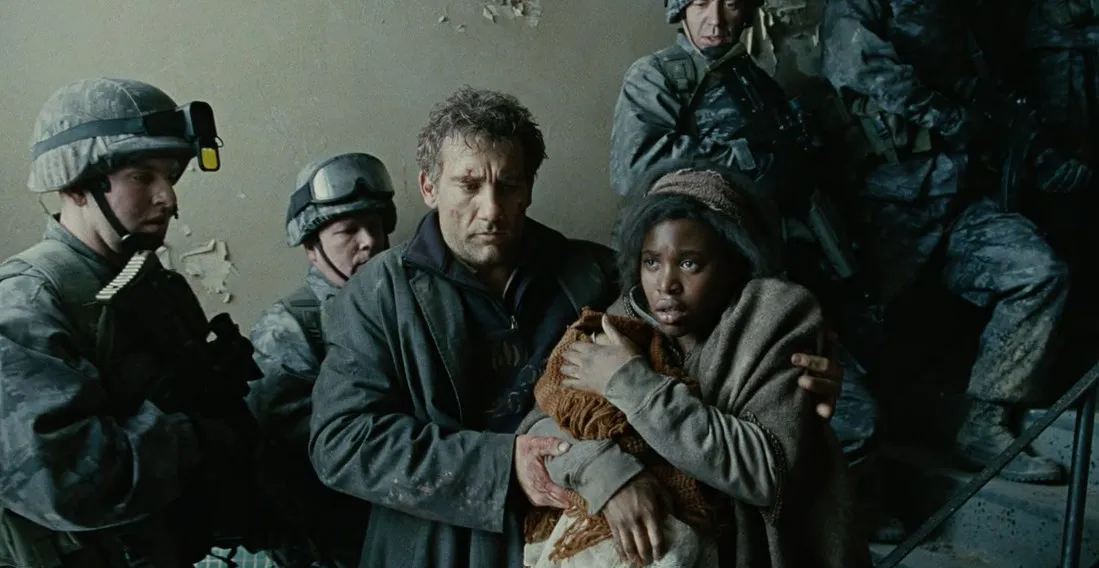
4. 7. Children of Men (2006)
Credit: IMDb
Directed by Alfonso Cuarón, this film is set in the year 2027, when humanity is experiencing a global fertility crisis and no babies have been born for nearly two decades.
The world has fallen into chaos, with England being one of the last functioning countries, yet with very repressive immigration policies against refugees. The film starkly depicts how a global crisis can trigger xenophobia, border militarization, and the collapse of human solidarity.
8. Idiocracy (2006)
Directed by Mike Judge, this satirical comedy tells the story of an ordinary man who wakes up 500 years later and finds himself to be the smartest person in the world — not because he is a genius, but because society has experienced intellectual decline due to the consumption of shallow entertainment and anti-intellectualism. Although initially considered exaggerated, many call this film "prophetic" because it depicts social media culture, hoaxes, and the loss of trust in science with startling accuracy.
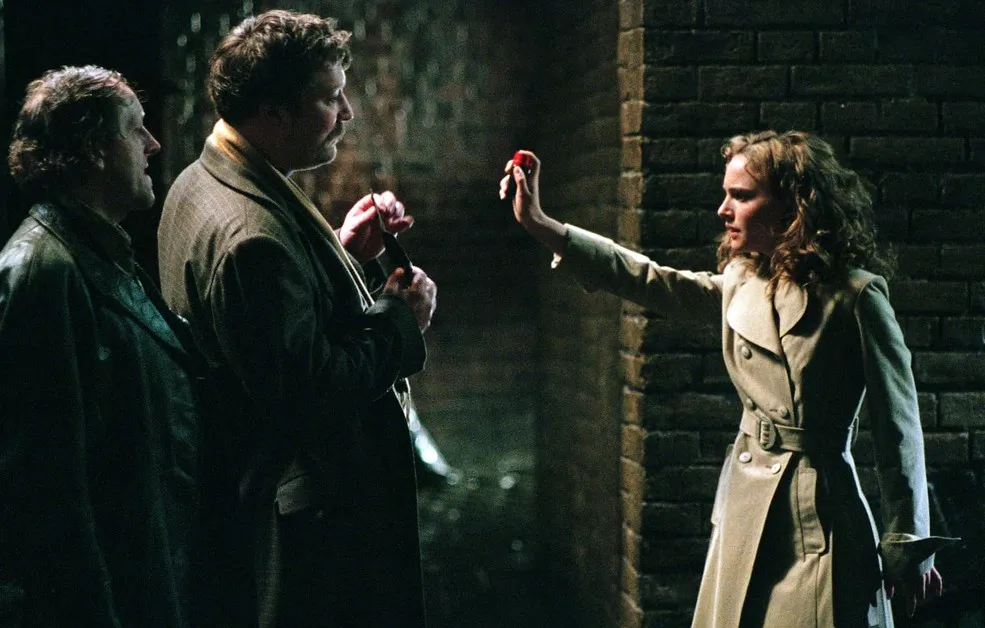
5. 9. V for Vendetta (2005)
Credit: IMDb
Adapted from the graphic novel by Alan Moore, this film is set in a future England ruled by a fascist authoritarian regime. A mysterious masked figure named "V" fights against the government's oppression of freedom of speech, the press, and individual identity. Themes of state censorship, propaganda, and information control in this film continue to be referenced in discussions about civil liberties and protest movements around the world.
10. Minority Report (2002)
Directed by Steven Spielberg and adapted from a short story by Philip K. Dick, this film depicts a future police system capable of apprehending criminals before crimes occur, based on predictions from humans with precognitive abilities. The concept of "pre-crime" raises ethical questions about justice, freedom, and the potential for system errors, which is highly relevant to the current debates regarding the use of AI in predictive policing and algorithm-based surveillance.
6. 11. The Matrix (1999)
Directed by Lana and Lilly Wachowski, this film tells the story of a world where the reality experienced by humans is actually a computer simulation created by machines to subjugate humanity. The concept of "comfortable false reality" is now often associated with discourse about addiction to the digital world, filter bubbles on social media, and the development of the metaverse and generative AI that blur the lines between the real and the artificial.
12. Gattaca (1997)
Directed by Andrew Niccol, this film is set in a future where genetic engineering is the norm, and individuals are judged based on their genetic perfection from birth, rather than their abilities or efforts.
The main character, who is born naturally without genetic modification, must struggle against a system that discriminates against him. As CRISPR technology and reproductive biotechnology advance, the issues of genetic discrimination and "modern eugenics" in this film become increasingly close to reality.
7. Questions About Dystopian Films
1. What is meant by dystopian films?
Dystopian films are films that depict life in the future or an alternative world with a society full of crises, oppression, inequality, or destruction due to various factors.
2. What is the difference between dystopian films and post-apocalyptic films?
Dystopian films focus on problematic social systems or governments, while post-apocalyptic films are usually set after a major disaster that destroys civilization.
3. Why are dystopian films so popular?
Because dystopian films present thrilling stories while also raising social, political, environmental, and technological issues that feel relevant to current life.
4. What themes often appear in dystopian films?
Common themes include artificial intelligence (AI), digital surveillance, climate change, social inequality, authoritarian governments, pandemics, wars, and information manipulation.
(kpl/ses)
Disclaimer: This translation from Bahasa Indonesia to English has been generated by Artificial Intelligence.


 Follow

 Rekomendasi