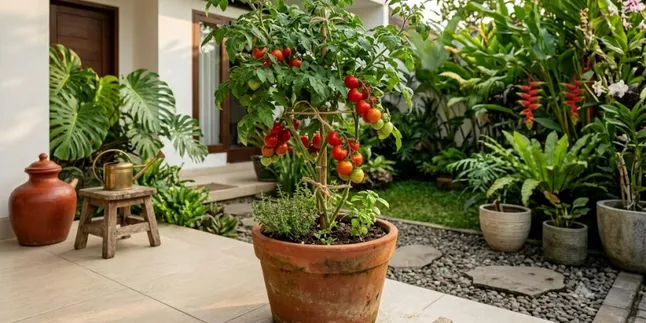
Kapanlagi.com - The method of growing longan for abundant fruit actually does not require special skills, but rather patience in understanding the basic needs of the tree. The key lies in selecting superior seeds from vegetative propagation and providing targeted nutrition at every phase of plant growth.
Many beginners fail because they neglect to prepare ideal planting holes, while loose soil rich in organic materials is the foundation for roots to absorb "food" maximally. In addition, the technique of pruning branches, which is rarely known to the general public, also determines whether the tree will only be lush with leaves or will instead produce an abundant harvest of fruit.
Providing boosters or fruit stimulants at the right time is the ultimate secret to ensuring that longan bears fruit out of season with heavy clusters. Here, KapanLagi.com reviews how to grow longan for abundant fruit, from various sources, Tuesday (28/7/2026).
1. Choose Grafted or Air-Layered Seedlings
How to Plant Longan for Abundant and Sweet Fruit (AI Generated)
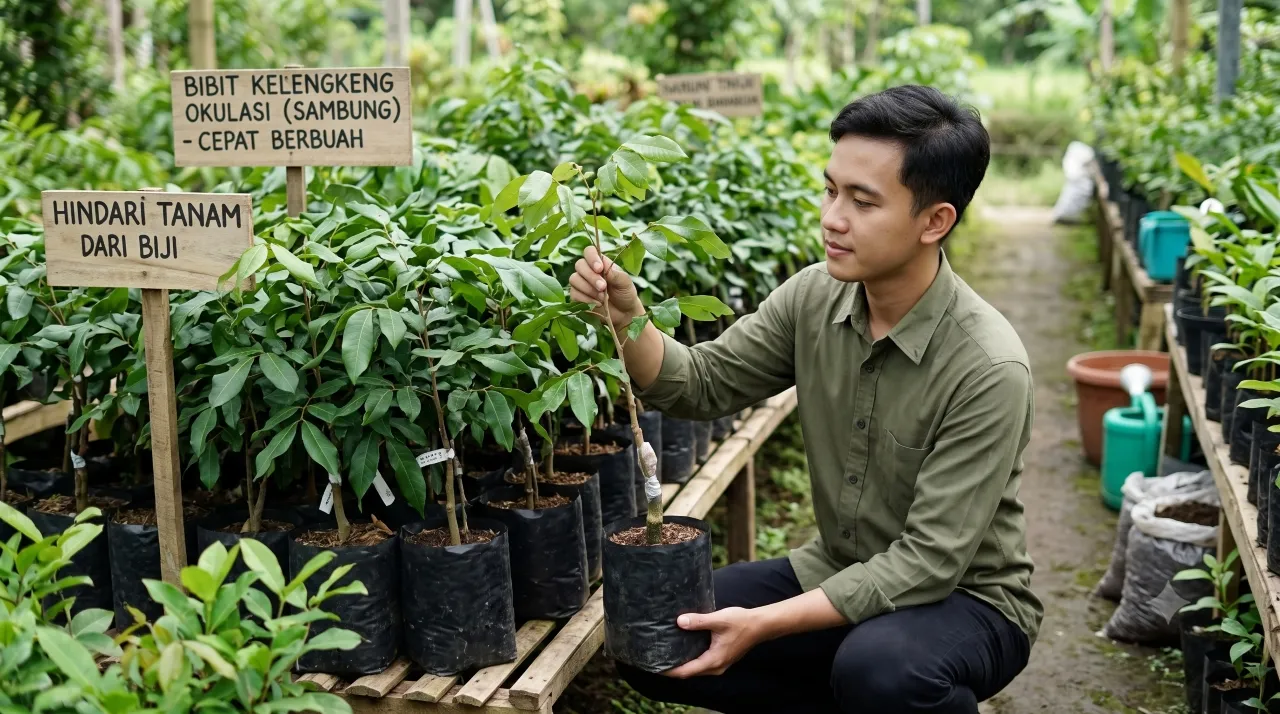
The first and most crucial step is to avoid planting from seeds if the main goal is a quick and abundant harvest. Seed-grown plants can take 7–10 years to bear fruit, and the quality of the fruit may not necessarily be the same as that of the parent tree.
- Choose Grafted or Air-Layered Seedlings: Seedlings that come from grafting or budding techniques have a biological "memory" from the mature parent tree. They can start learning to bear fruit as early as 8–12 months to 2 years after planting.
- Characteristics of Healthy Seedlings: Ensure the seedling stem is sturdy, the leaves are dark green and shiny, and free from pest bite marks. Avoid seedlings with curled or yellowing leaves.
2. Prepare the Planting Medium with the Right Mixture
How to Plant Longan for Abundant and Sweet Fruit (AI Generated)
Don't rush to plant the seedlings as soon as you arrive at the site. The soil needs to be "prepared" first so that its nutrients are ready to serve.
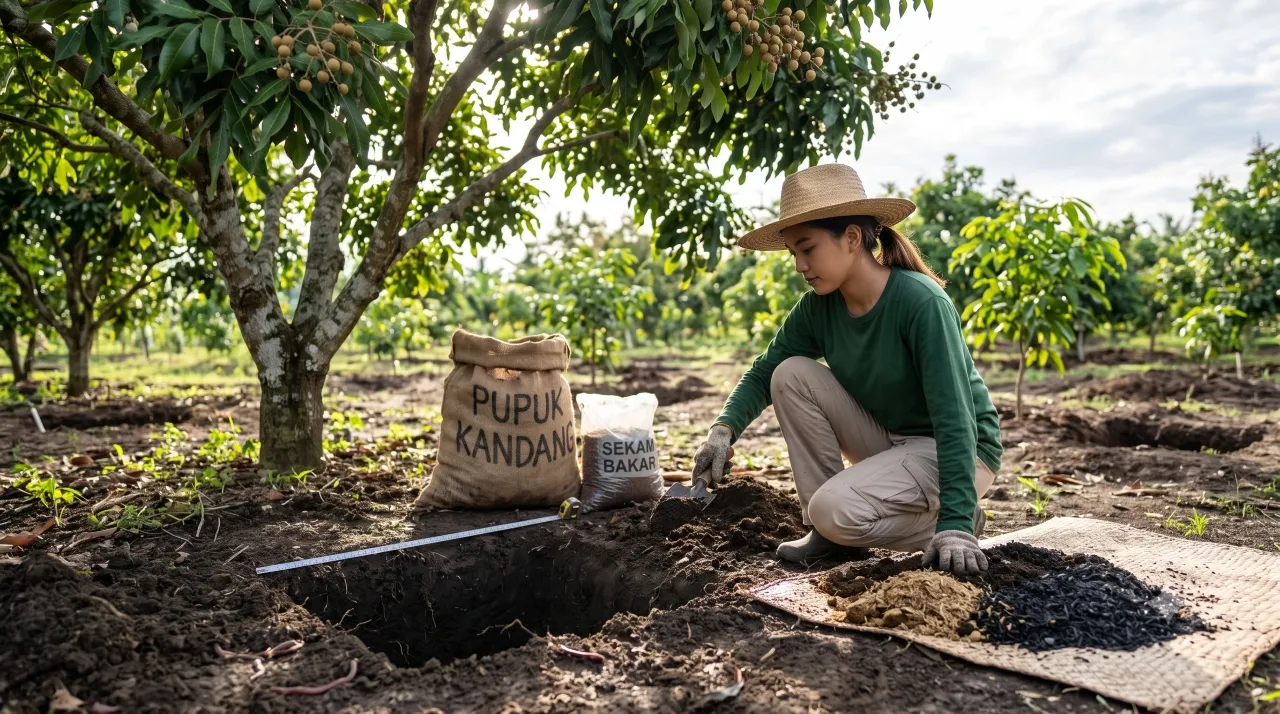
- Hole Size: Create a planting hole measuring 60x60x60 cm. This size allows young roots to easily penetrate the soil.
- Let the Soil Rest: After digging, leave the hole open to sunlight for 3–7 days. This helps to kill harmful bacteria and toxic gases in the soil.
- Planting Media Mix: Mix the excavated soil with well-composted manure (fermented) and burned rice husks. The ratio can be 1:1:1. Manure provides long-term nutrients, while rice husks keep the soil loose.
3. Correct Planting Techniques
How to Plant Longan for Abundant and Sweet Fruit (AI Generated)
The best time to apply the method of planting longan for abundant fruit is at the beginning of the rainy season or in the afternoon when the sun is not too harsh.
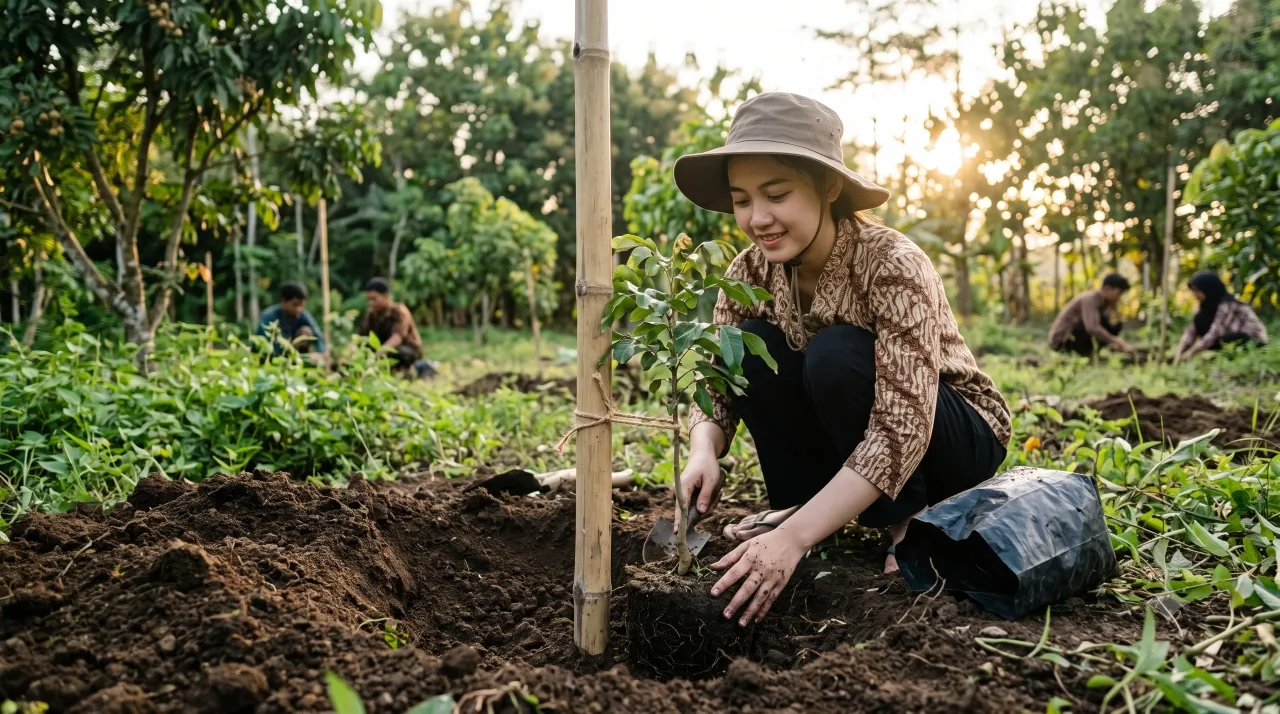
- Carefully Remove the Polybag: Tear the polybag of the seedling with a razor or sharp knife so that the soil attached to the roots does not break. Stressed or broken roots will hinder growth for months.
- Planting Position: Insert the seedling upright. Ensure the root collar (the boundary between the stem and roots) is level with the soil surface. Do not plant too deep as the stem may rot.
- Install Support Stakes: Tie the seedling's stem to a wooden or bamboo stake (support) to prevent it from swaying in the wind. Young roots need stability to be able to grip the new soil.
4. Routine Care: The Key to Harvest
How to Plant Longan for Abundant and Sweet Fruit (AI Generated)
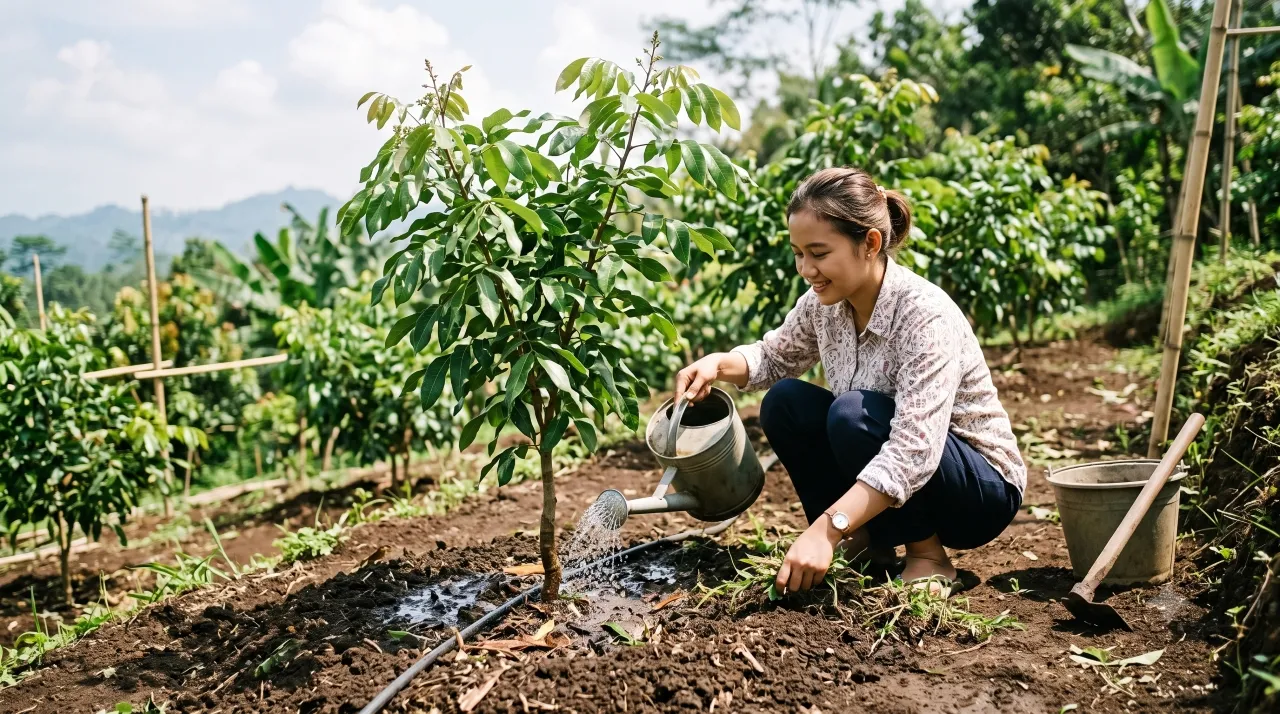
Planting is only 20% of success, the remaining 80% is care.
- Watering: Water the plants 1-2 times a day, especially during the dry season. Longan likes water but hates puddles. Ensure that water absorbs quickly and does not pool, which can trigger root rot.
- Weeding: Clean the weeds around the base of the tree. Weeds are "thieves" of the nutrients that should be absorbed by the longan.
5. Pruning to Maximize Fruit
How to Plant Longan for Abundant and Sweet Fruit (AI Generated)
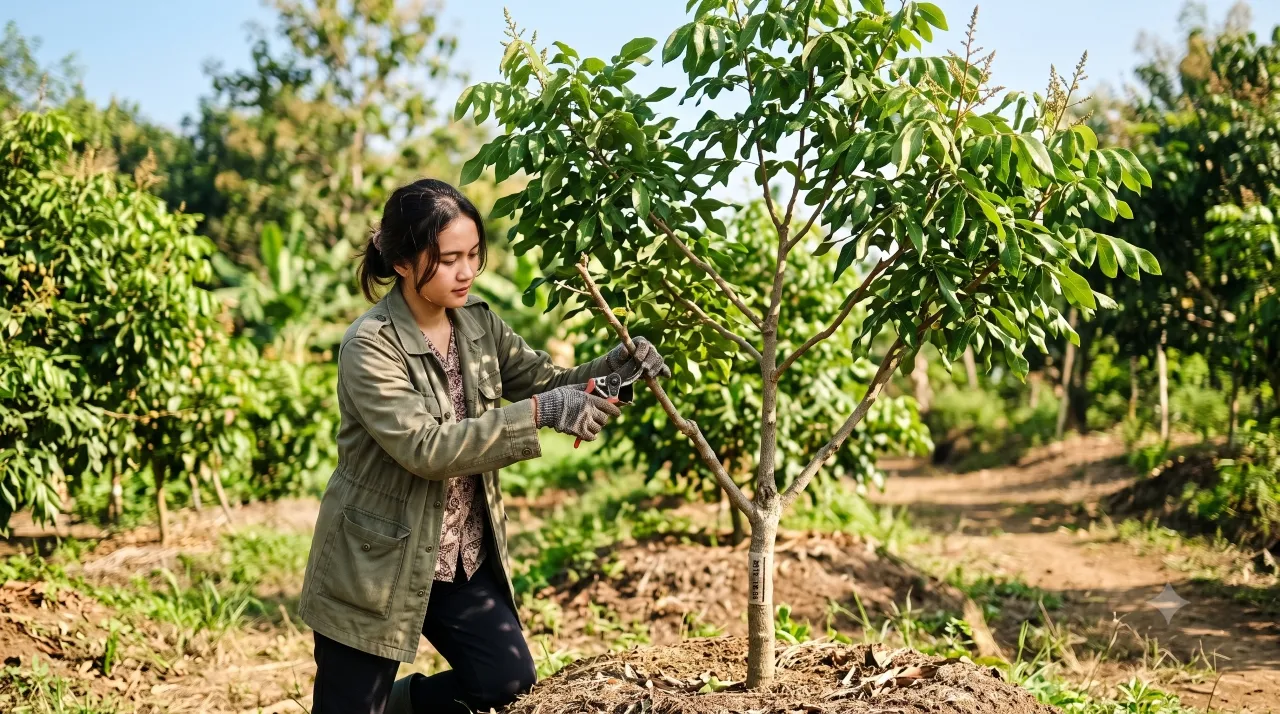
This is a secret rarely practiced by beginners. Longan trees left to grow wild expend their energy on growing the trunk, not the fruit.
- Shape Pattern 1-3-9: Allow one main trunk to grow to a height of 70-100 cm, then prune the tip to encourage 3 primary branches. After the primary branches extend, prune again so that each produces 3 secondary branches. This branching pattern will become the "hanging" spots for the fruit.
- Check Sunlight: Ensure that sunlight can penetrate to the inner/middle part of the tree. Sunlight is the fuel for photosynthesis. If the inside of the tree is dark, mold will grow and flowers will be reluctant to appear.
6. Secrets of Fertilization and Boosters
How to Plant Longan for Abundant and Sweet Fruits (AI Generated)
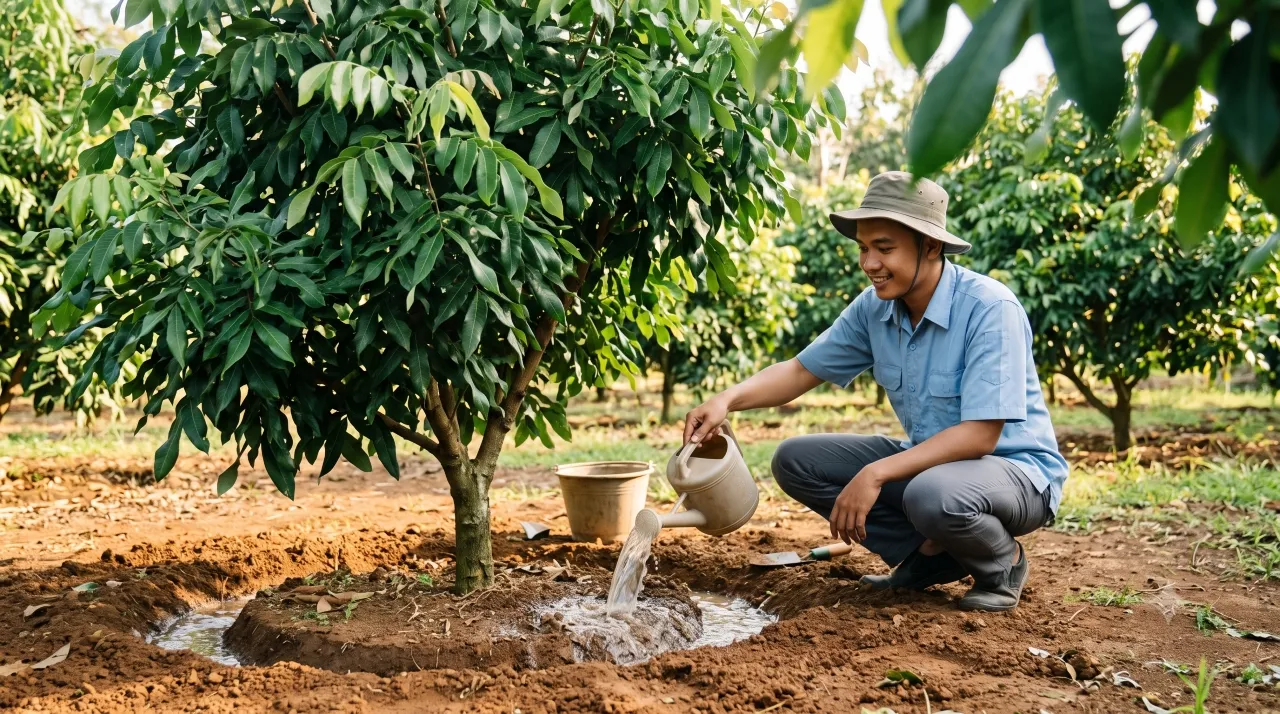
To make the tree "surprised" and respond by producing flowers, nutrients must be played with.
- Growth Fertilizer (Vegetative): When the tree is still small (not yet time to bear fruit), focus on balanced NPK fertilizer (such as 15-15-15) every 3 months. This is to stimulate the growth of leaves and stems.
- Booster Application (KClO3): For lowland longan varieties that are "lazy" to bear fruit (such as Itoh or New Kristal), the use of boosters (usually with the active ingredient Potassium Chlorate) is very effective.
- Conditions: Make sure the leaves are in old condition (dark green) and there are no young leaves (shoots) growing.
- How to do it: Dissolve the booster according to the package dosage (usually 250g for 3-4 year old trees) with water, then water it in the root area or make a small trench around the tree.
- Effect: Usually 40–60 days after applying the booster, flowers will start to appear simultaneously.
7. Fruit Protection from Pests
How to Plant Longan for Abundant and Sweet Fruits (AI Generated)
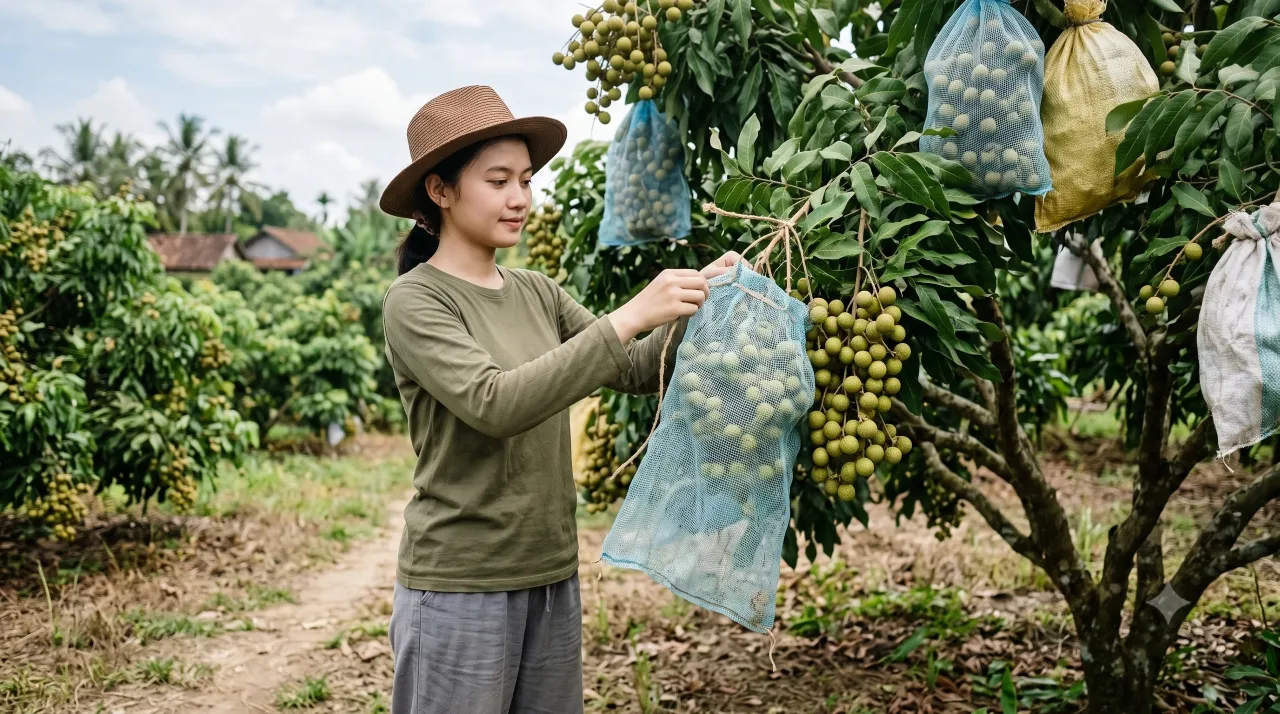
When the fruit starts to grow larger and emits a sweet aroma, the main enemies are bats (codot) and fruit flies.
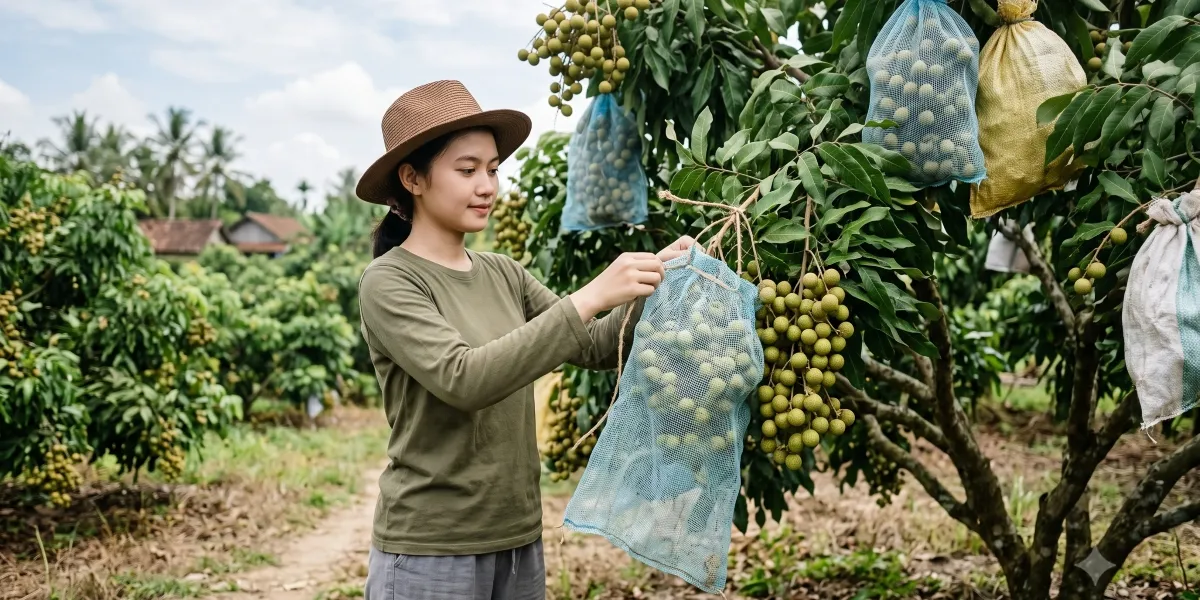
- Wrapping: Wrap the clusters of fruit using nets or old onion sacks when the fruit is the size of marbles. This is the most effective and environmentally friendly way to prevent fruit from being eaten by codot.
8. Questions About Planting Longan
When is the best time to give a booster to the longan tree?
The application of boosters is most effective when the leaves of the plant are old and stiff (dormant phase), with no young leaf shoots growing. This condition usually indicates that the plant is ready to transition from the growth phase to the fruiting phase, allowing chemical stimulation to work optimally to produce flowers.
Why is the longan tree large but not bearing fruit?
The main cause is often because the longan variety requires cooler temperatures (subtropical) while being planted in hot lowland areas. Other factors could be a lack of sunlight (blocked by other trees), excess nitrogen (the plant is too lush in foliage), or the plant originated from seeds that take years to produce.
Can longan bear abundant fruit if planted in a pot (Tabulampot)?
Absolutely. The key is to keep the planting medium porous (not compact), routinely prune the roots and canopy to keep the plant short (dwarf), and be disciplined in providing fruit fertilizers with high phosphorus (P) and potassium (K) content. Using grafted seedlings is mandatory for the tabulampot method to ensure quick harvest.
(kpl/ibr)
Disclaimer: This translation from Bahasa Indonesia to English has been generated by Artificial Intelligence.


 Follow
 Rekomendasi