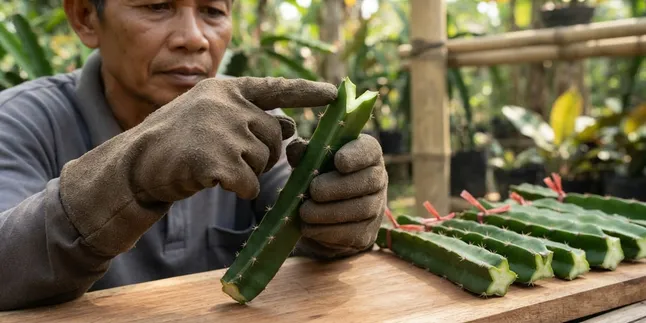
Kapanlagi.com - Chili, an important commodity that is always a favorite in the kitchens of the archipelago, is unfortunately very vulnerable to pest attacks. The presence of these pests can drastically reduce plant productivity, even leading to crop failures that are detrimental. Therefore, appropriate control strategies are essential to ensure that chili farming remains profitable and sustainable.
Understanding the types of pests and how to address them is the key. Integrated Pest Management (IPM) offers a holistic solution that integrates various methods, ranging from technical culture to the use of chemical pesticides as a last resort. This approach aims to keep pest populations below economic thresholds while minimizing negative impacts on the environment and human health.
Some of the main pests that often attack chili plants in Indonesia include aphids, thrips, whiteflies, fruit flies, mites, and caterpillars. Recognizing the symptoms of attacks early is the first step for effective management, ensuring that chili plants remain healthy and ready for harvest.
1. Conduct Routine Monitoring and Identification of Pests
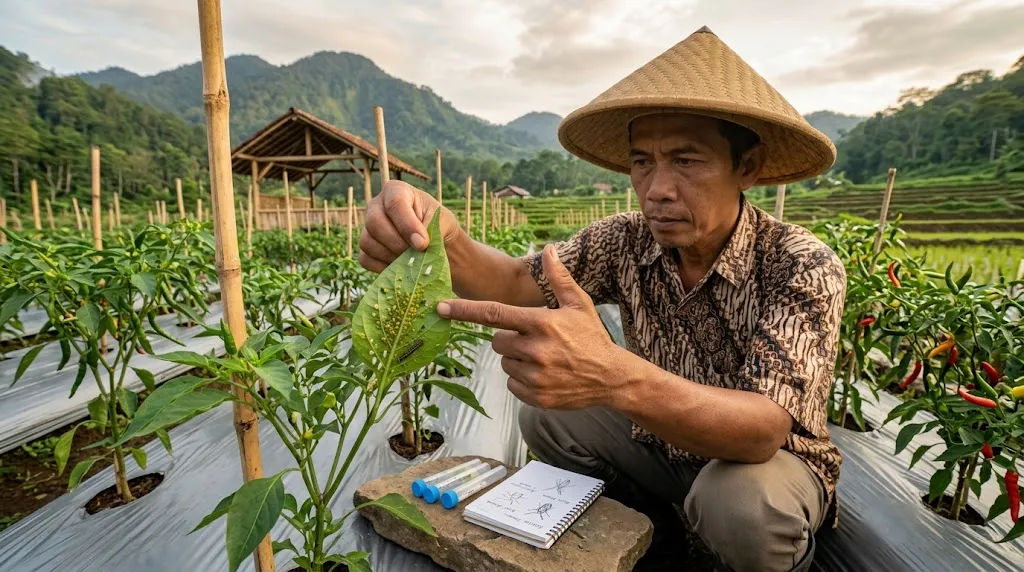
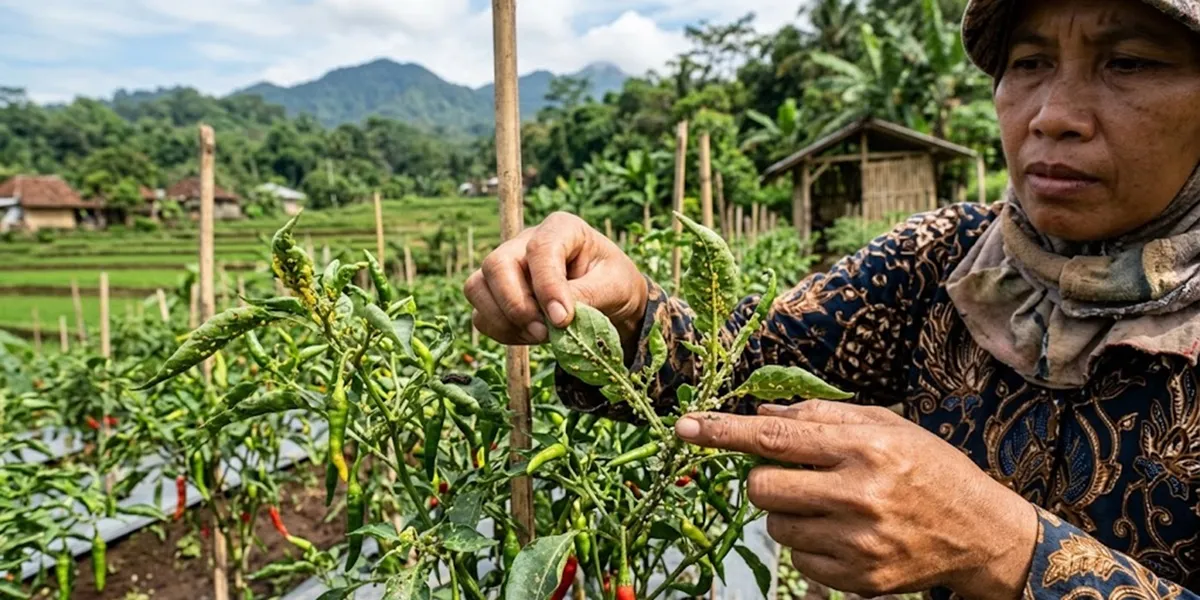
Pests on chili plants. [AI Generated]
Check chili plants regularly, especially the leaves, shoots, flowers, and fruits. Look for signs such as yellowing leaves, curling, silver spots, holes in the fruit, or the presence of small insects.
Early detection helps determine the type of pest and the appropriate control methods before the infestation spreads and disrupts plant growth.
2. Maintain Sanitation and Cleanliness of the Land
Land cleanliness plays an important role in preventing pest breeding. Regularly remove weeds as they can serve as hiding places or hosts for pests.
Dispose of and destroy infected leaves, fruits, or plant parts. Rotten and fallen fruits should also be collected immediately to prevent them from becoming breeding grounds for fruit flies.
3. Apply Crop Rotation and Technical Culture
Crop rotation can help break the life cycle of pests that attack chili peppers. In addition, use varieties that are resistant or tolerant to certain pests, adjust planting patterns, and choose the right nursery location.
Under certain conditions, the land can also be temporarily vacated to reduce the population of pests that may still survive in the planting area.
4. Use Traps to Reduce Pest Populations
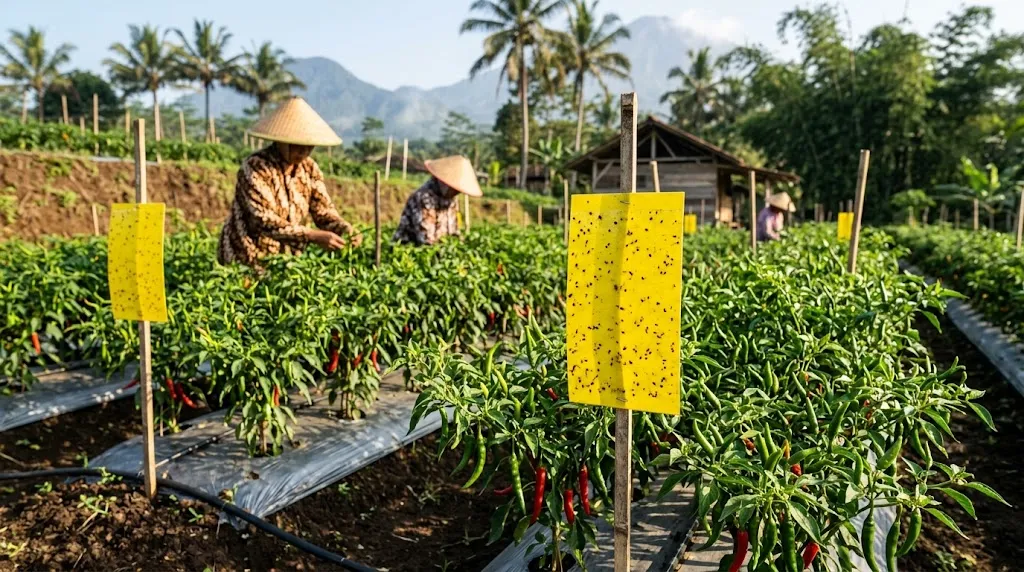
Pests on chili pepper plants. [AI Generated]
Traps can help reduce the number of pests while also monitoring the level of infestation. Yellow sticky traps can be used to catch aphids and thrips, while pheromone traps can help control fruit flies or caterpillars.
Install traps as needed and place them evenly to be more effective in the chili pepper planting area.
5. Utilize Natural Enemies of Pests
Biological control is carried out by protecting and utilizing organisms that naturally prey on or attack pests. Predators such as ladybug beetles, parasitoids, and certain pathogens can help suppress pest populations.
Avoid excessive use of pesticides to maintain the presence of natural enemies and ensure the ecosystem balance in chili fields is not disrupted.
6. Use Plant-Based Pesticides or Natural Materials
Plant-based pesticides can be an alternative to help control pests by utilizing natural materials. Some of the materials mentioned in the article include garlic extract, neem leaves, soursop leaves, and pyrethrum.
Soap solutions can also be used for certain pests. Their use still needs to pay attention to concentration and application methods to avoid damaging the plants.
7. Use Physical and Mechanical Methods
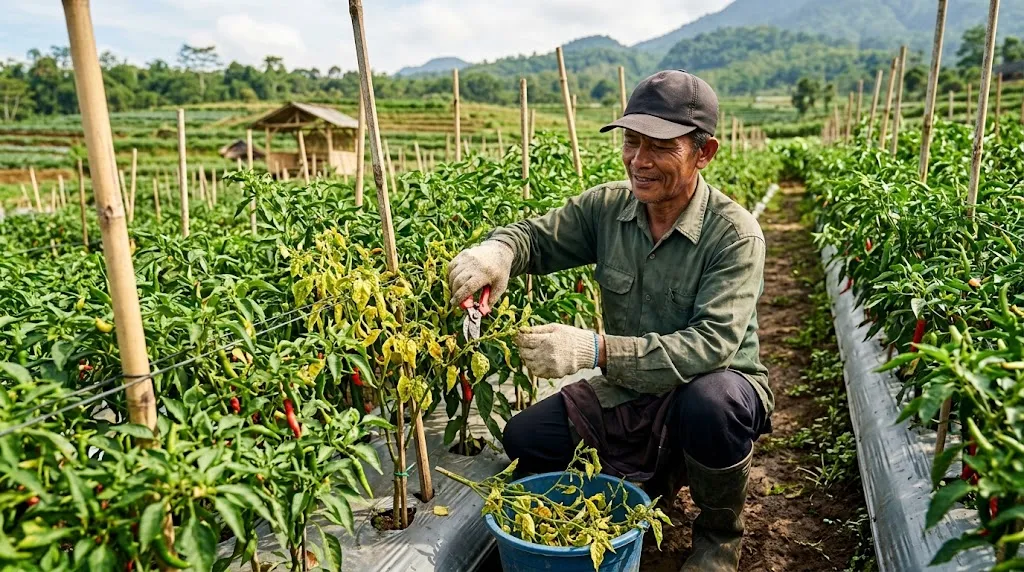
Pruning chili plants. [AI Generated]
Physical and mechanical control can be carried out without relying on chemicals. The affected parts of the plant can be pruned and destroyed, while caterpillars can be collected manually, especially at night when they are more active.
Reflective mulch can also help disrupt some pests, while infected plants can be isolated to prevent the spread of the attack.
8. Use Chemical Pesticides Wisely
Chemical pesticides should be used as a last resort when pest populations are high and other control methods have not been effective. Use products according to the dosage and instructions on the label.
Avoid using the same active ingredients continuously as this can increase the risk of pest resistance. Proper use also helps reduce the impact on plants, the environment, and beneficial organisms.
9. Questions About Managing Chili Plant Pests
What is Integrated Pest Management (IPM) for chili plants?
Integrated Pest Management (IPM) is a pest control strategy that integrates various methods, such as technical culture, physical/mechanical, biological, botanical pesticides, and chemical pesticides, to suppress pest populations below economic thresholds, while minimizing negative impacts on the environment and human health.
What pests commonly attack chili plants?
Common pests that often attack chili plants include aphids, thrips, whiteflies, fruit flies, mites, and caterpillars.
How to naturally control aphids on chili plants?
To naturally control aphids, you can use a solution of liquid dish soap (1-2 tablespoons in 4.5 liters of water) or plant extracts such as garlic, neem leaves, and soursop. Additionally, utilize natural enemies like ladybug families.
(kpl/ini)
Disclaimer: This translation from Bahasa Indonesia to English has been generated by Artificial Intelligence.


 Follow
 Rekomendasi