

 Follow
 Rekomendasi
7 Celebrity Styles for Winter Vacation in Korea, Stylish and Stunning
Many Indonesian celebrities look fashionable while enjoying their winter vacation in South Korea. Let's take a look at their cool photos, KLovers!

Kapanlagi.com - Beef empal is a traditional Indonesian dish known for its tender texture and distinctive sweet-savory flavor. This dish originates from Java and Sunda, featuring a unique cooking technique called pounding or flattening the meat.
The key to how to cook tender beef empal lies in selecting the right cut of meat and the boiling process with spices. The technique of pounding the meat after boiling also distinguishes empal from other meat preparations.
This dish is perfect as a side dish with warm rice, sambal, and fresh vegetables. Beef empal also has a long shelf life, making it a popular choice for meal prep for several days or as a special dish during festivities.
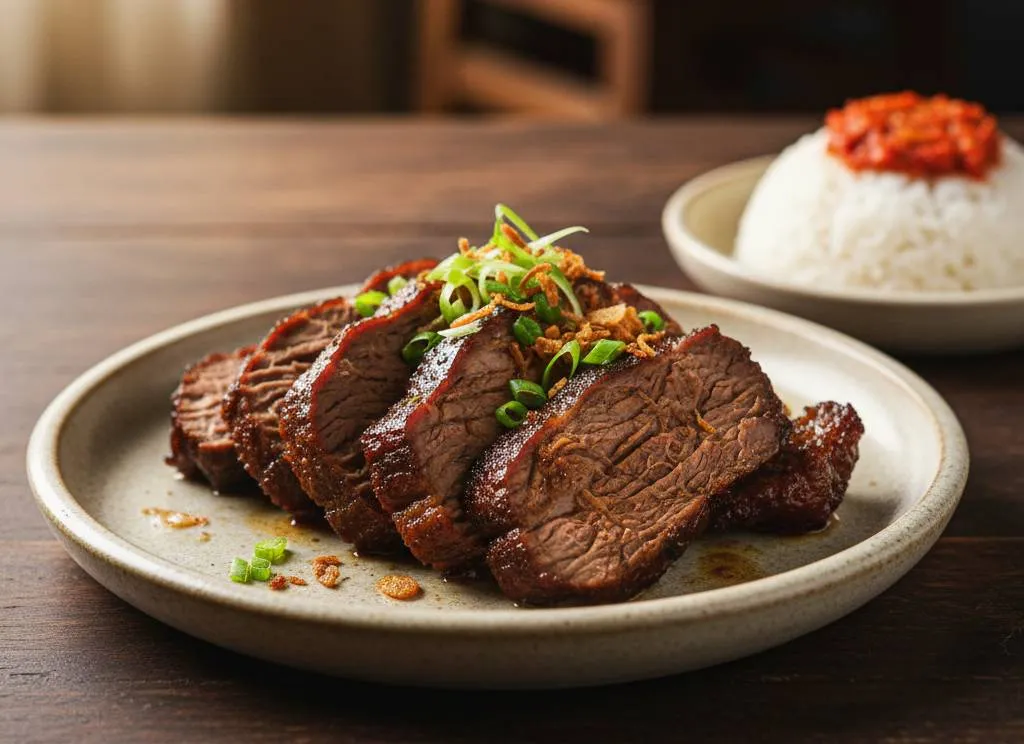
Beef empal is a traditional Indonesian dish made by boiling the meat with spices until tender, then the meat is pounded flat and fried until golden brown. The pounding process is what makes this dish unique and gives it its name. The tender yet intact texture of the meat with the perfectly absorbed spices is the main attraction of this traditional cuisine.
The empal dish has a long historical root in the culinary tradition of the archipelago. The Sundanese people have known this dish since the 15th century AD, as recorded in the books Sanghyang Siksa Kandang Karesian and Sanghyang Swawarcinta that discuss Sundanese culinary traditions. The technique of pounding or flattening the meat originates from the Priangan region in East Java, where the meat is pounded to create a softer texture.
Beef empal has now spread to various regions in Indonesia with diverse spice variations and serving methods. In Central and East Java, empal is often served as a side dish with nasi rames or nasi langgi with a tendency towards sweet spices. Meanwhile, in West Java, gepuk empal becomes the perfect companion to timbel rice and sayur asem with a more savory taste.
The popularity of beef empal is not only due to its delicious taste but also because of its relatively long shelf life. This dish can be stored for several days in the refrigerator and remains delicious when reheated. This characteristic makes empal a favorite choice for family side dish stock or special dishes when welcoming guests and important days like Eid.
The selection of beef cuts is a determining factor for success in the method of cooking tender beef empal. Not all parts of the beef are suitable for making empal due to differences in texture and fiber content in each cut. The ideal meat part for empal is one that has fibers that are not too tough but still dense enough so that it doesn't easily crumble when beaten.
The tenderloin or tenderloin is the best choice because of its very tender texture and minimal fat. The sirloin or sirloin is also a good alternative with a slightly chewier texture but still tender when cooked properly. The shank or flank can be used for empal with the note that it requires a longer boiling time to become truly tender.
In addition to choosing the right cut, the freshness of the meat is also very important. Fresh beef has a bright red color, does not smell fishy, and its texture is firm when pressed. Avoid meat that is pale or brownish as it indicates that the meat is no longer fresh. Fresh meat will be more tender when boiled, and the spices will penetrate the meat fibers more easily.
The technique of cutting meat also affects the final result of empal. Cut the meat across the grain or against the direction of the meat fibers. This cutting technique will break the meat fibers, making it tender more quickly when boiled. The ideal thickness of the cuts is about 1-2 cm so that the spices can fully penetrate, but the meat does not easily fall apart when pounded.
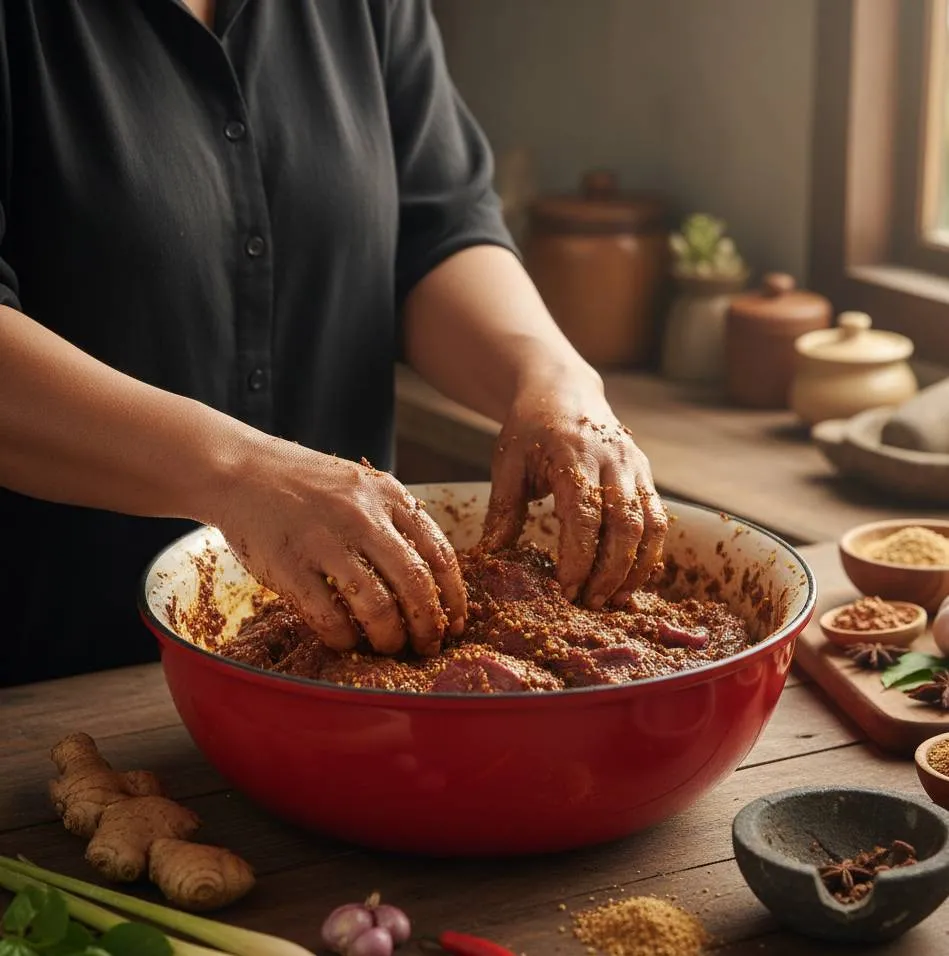
how to make empal - image by AI
Spices are a crucial element that determines the deliciousness of beef empal. The basic spice composition for empal generally consists of shallots, garlic, candlenuts, coriander, and pepper that are ground together. Complementary spices such as galangal, ginger, lemongrass, bay leaves, and lime leaves provide a distinctive fragrant aroma and enrich the flavor of the dish.
Brown sugar is an important component in the empal seasoning that adds a characteristic sweet-savory flavor. The use of brown sugar not only enhances the sweetness but also aids in the caramelization process when frying the meat, resulting in an attractive brown color. The amount of brown sugar can be adjusted to taste, but it generally ranges from 50-100 grams for 500 grams of meat.
Coconut milk is often used in traditional empal recipes to create a softer texture and richer flavor. However, empal can also be made without coconut milk by relying on broth from boiling the meat. The version without coconut milk tends to be lighter and is suitable for those avoiding high-coconut milk dishes.
Tamarind water adds a touch of fresh sourness that balances the sweet and savory flavors of the other spices. In addition, tamarind also helps to tenderize the meat fibers, making the texture softer. The use of salt and mushroom broth or chicken broth as natural flavor enhancers will perfect the taste of empal without the need to add artificial flavorings.
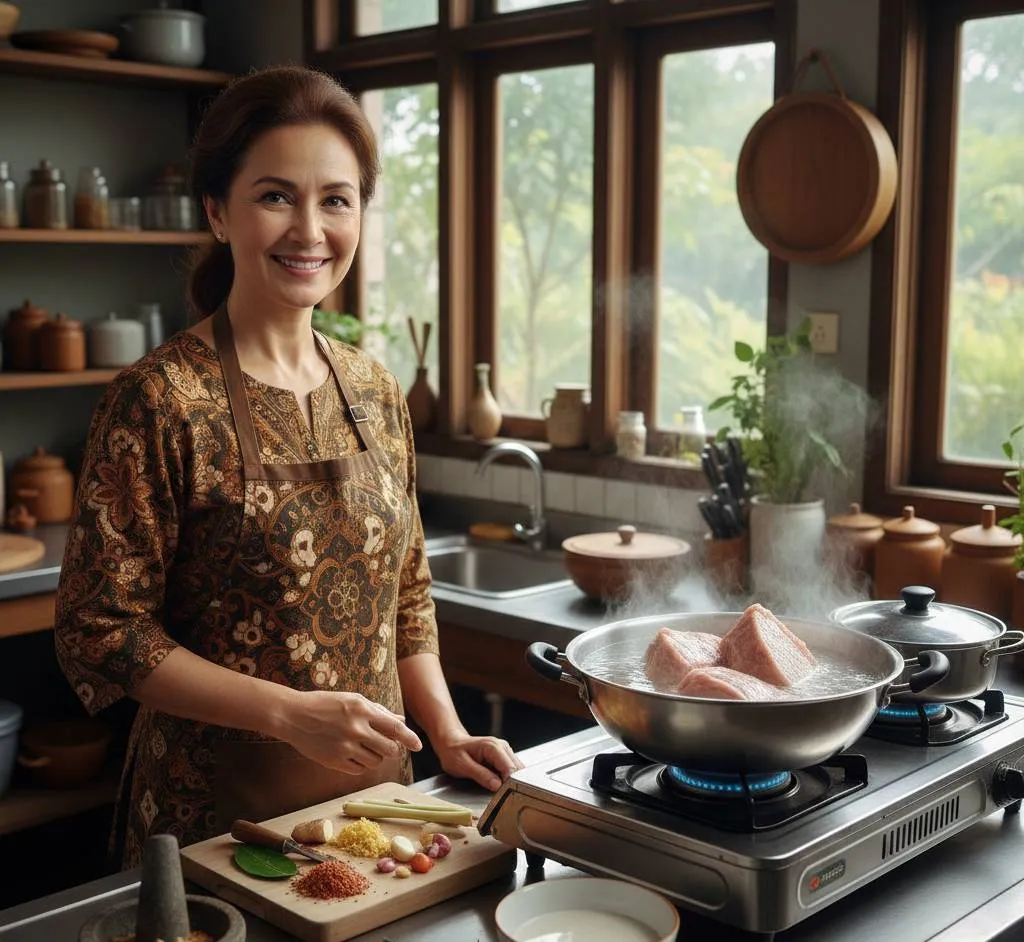
The boiling process is the most important stage in the method of cooking tender beef empal. Boil the meat in boiling water along with ground spices and herbs until the meat reaches three-quarters or half-tender doneness. The boiling time varies depending on the type and size of the meat cuts, generally requiring 45-60 minutes over medium heat.
Using a pressure cooker can speed up the boiling process to just about 10-15 minutes. However, caution is needed in timing so that the meat does not become too tender and fall apart when pounded. A pressure cooker is very helpful, especially when using tougher cuts of meat like shank or brisket that require longer boiling times.
The water level during boiling needs to be monitored so that the spices can infuse perfectly. If the water reduces too quickly while the meat is not yet tender, add enough water to keep the meat submerged. Conversely, if the meat is tender but there is still a lot of water, continue cooking over medium heat until the broth reduces and the spices thicken to coat the meat.
Once the meat is tender, remove it and let it cool slightly before pounding. Meat that is still too hot will easily fall apart when pounded. Save the leftover broth as it still contains spices and can be used to cook the meat again after pounding to allow the spices to penetrate further.
Tenderizing or pounding meat is a distinctive technique that differentiates empal from other meat preparations. After the meat is boiled until tender, remove and drain it, then let it cool for a moment. Use a meat mallet, a mortar and pestle, or the back of a knife to gently and evenly pound the meat until it becomes flat, about half the original thickness.
The pounding process must be done carefully to avoid crushing or tearing the meat. Pound the meat with moderate pressure evenly over the entire surface. The goal of tenderizing is not to destroy the meat, but to flatten and soften the meat fibers so that the texture is more tender and the spices can penetrate more easily.
The right tenderizing technique will produce empal with a soft texture that remains intact when bitten. Meat that is pounded too hard will break apart and lose its texture, while meat that is not pounded enough will not achieve the characteristic texture of empal. Experience and sensitivity in tenderizing will develop as one practices making empal more frequently.
After tenderizing, return the meat to the pan with the remaining spices and broth. Cook again over medium to low heat while occasionally turning it to ensure the spices are evenly absorbed on both sides of the meat. This process also helps reduce the moisture content in the meat, so that when fried, it will achieve a dry and crispy texture on the outside while remaining tender on the inside.
The final stage in how to cook tender beef empal is frying until golden brown. Heat enough cooking oil in a pan over medium heat. Fry the empal meat that has been marinated until the spices are absorbed, turning occasionally to ensure even cooking on both sides. The frying process does not take long, just until the surface of the meat turns golden brown.
Avoid frying over high heat as it will cause the surface of the meat to burn quickly while the inside is not fully cooked. Medium to low heat is the best choice to achieve empal with a crispy outer texture and a tender, juicy inside. Do not fry for too long as it will make the meat tough and chewy.
After frying, remove the empal and drain it on paper towels to reduce excess oil. The beef empal is ready to be served warm with hot white rice, fresh vegetables, and your favorite sambal. A popular classic combination is empal with sambal terasi, sambal tomat, or fresh spicy sambal dadak.
Beef empal can be stored in a closed container in the refrigerator for up to 3-4 days. For longer storage, empal can be kept in the freezer for up to a month. When ready to eat, simply reheat by frying briefly or warming in the microwave. Cooked empal can also be varied into shredded empal or mixed with serundeng for a different serving variation.
The tenderloin or inner loin is the best choice because its texture is very tender and low in fat. Another good alternative is the outer loin or sirloin, which is also tender. For a more economical option, you can use the shank or brisket, with the note that it requires a longer boiling time to become truly tender.
Boiling time varies depending on the type and size of the meat cut. Using a regular pot, it generally takes 45-60 minutes over medium heat. If using a pressure cooker, the time can be shortened to just 10-15 minutes. Make sure the meat reaches the desired tenderness level before proceeding to the pounding stage.
It doesn't have to; empal can be made with or without coconut milk according to taste. Empal with coconut milk has a softer texture and a richer flavor. Meanwhile, empal without coconut milk is lighter and suitable for those avoiding coconut-based dishes. Both are equally delicious with slightly different flavor characteristics.
The key to pounding meat is to do it with moderate and even pressure, not with hard blows. Use a meat mallet or pestle, and gently pound the entire surface of the meat until it is flattened. Make sure the meat is somewhat cool after boiling so it doesn't easily fall apart. The goal is to flatten and soften the fibers, not to destroy the meat.
Cooked empal can be stored in a sealed container in the refrigerator for 3-4 days. For longer storage, keep it in the freezer for up to a month. When ready to consume, simply reheat it by frying it briefly or using a microwave. Make sure the empal is stored in a dry condition and tightly sealed.
Empal meat becomes tough usually because it is fried for too long or over high heat. The frying process should only be brief, just until the surface is browned. Also, ensure that the meat is completely tender when boiled before pounding and frying. Use medium to low heat when frying.
Traditionally, empal is made from beef or buffalo meat. However, the same technique can be applied to chicken or goat meat with adjustments in boiling time and seasoning. Chicken requires a shorter time, while goat needs stronger spices to eliminate the gamey smell. The result will differ from traditional beef empal but will still be delicious.
(kpl/fed)
Cobain For You Page (FYP) Yang kamu suka ada di sini,
lihat isinya
Many Indonesian celebrities look fashionable while enjoying their winter vacation in South Korea. Let's take a look at their cool photos, KLovers!

Find the synopsis of Record of Ragnarok, watching order, and links to watch the exciting anime with Indonesian subtitles!

In Gilang's eyes, his father was an incredibly great man even though the late one was not a perfect human being. Check out the complete information about Wendy Indra here!

Many Indonesian celebrity families choose Korea as their vacation destination and try on hanbok. Let's take a look at some of the photos!

Ecchi is an anime that highlights fanservice featuring sexy characters to attract viewers' interest. However, it's not just that; an exciting storyline is also a reason why these hard ecchi anime recommendations are highly sought after.

The tears in One Piece are not just drama, but an important part of the journey to becoming stronger.

Many anime MCs are underestimated based on their appearance, even though they actually possess incredible powers. Therefore, the recommendations for underrated anime MCs are quite unexpected. Check it out here, KLovers.

Tasya Farasya, a famous influencer, welcomes the New Year 2026 by going for umrah to the Holy Land. She shares her departure moments on her personal Instagram. Check out more details below!
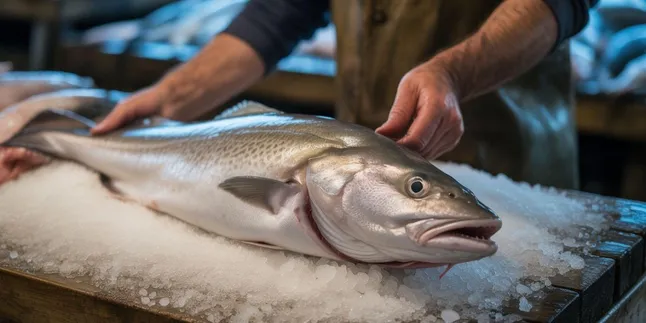
A complete guide on how to choose fresh fish by paying attention to the eyes, gills, scales, flesh, aroma, and texture of the fish to obtain the best quality for family health.

Dita Karang, former member of the K-Pop group SECRET NUMBER from Indonesia, just celebrated her 29th birthday on Christmas Day, December 25, 2025. Check out her special moments in the following photos!

Recommendations for Chinese dramas featuring handsome CEOs with career conflicts and love that influence the characters' life journeys

The isekai world and overpowered characters are two elements that often serve as the main attractions in anime stories. Here are some recommendations for overpowered isekai anime.
