Kapanlagi.com - Brazilian spinach (Alternanthera sissoo), also known as samba lettuce, is an interesting choice for those who want to start gardening at home. This perennial plant is known to be easy to care for, resistant to tropical weather and pests, and can be harvested repeatedly without the need to replant from scratch. Its thick green leaves are not only fresh in taste but also rich in beta-carotene, iron, and calcium, making it a perfect nutritional addition to your daily diet.
The most effective method of propagating Brazilian spinach is through stem cuttings. This is because the plant does not produce fertile seeds or its seeds are often non-functional (sterile). This stem cutting technique is even considered the most powerful and quickest way for beginners to grow Brazilian spinach.
1. Starting Cultivation: Preparation of Brazilian Spinach Cuttings
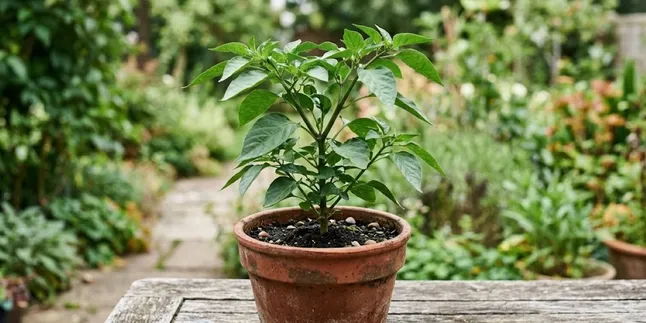
How to plant Brazilian spinach using stem cuttings. [AI Generated]
To start, select healthy stems from a fertile mother plant, ensuring they are not too old or too young. Stems that are slightly older, with a brownish or dark green sturdy color, are generally recommended over young shoots that are still soft.
Cut the cuttings to a length of 10-15 cm; some sources also suggest a length of 4-7 cm or even 15-20 cm for optimal results. Ensure that each cutting has at least 2-3 nodes, which is where leaves typically grow, as this is where the roots will emerge.
After cutting the stems, remove the leaves at the bottom of the stems. Leave only 2-3 leaves at the top to reduce excessive evaporation. This will help focus the plant's energy on root formation, making the initial growth process more efficient.
2. Preparing a Growing House: Ideal Media and Containers
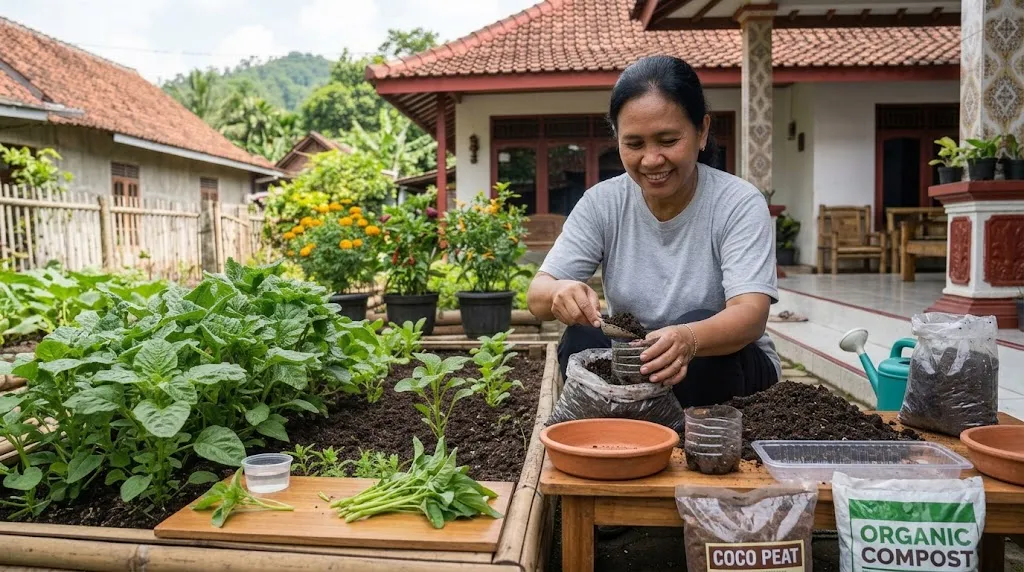
Preparing the ideal medium and container for Brazilian spinach. [AI Generated]
The key to successfully planting Brazilian Spinach lies in preparing the right planting media. This plant thrives in fertile soil, rich in organic matter, and with good drainage. Soil that is too dense or clayey can inhibit root growth and lead to failure.
For the planting media mix, you can use a combination of soil, manure or compost, and burned rice husks in a ratio of 1:1:1. An alternative is a mixture of soil with compost or organic fertilizer, such as manure or vermicompost, in a 3:1 ratio of soil to fertilizer.
The soil serves as an anchor for the roots, while manure or compost provides long-term nutrients. Make sure the manure used is well-aged and not hot, to avoid damaging the cuttings.
Adding burned rice husks to the planting media mix is very important for maintaining soil porosity. This ensures that water can flow easily and prevents the soil from becoming compacted, which is the ideal condition for Brazilian Spinach roots to breathe and grow.
This plant can be grown in various containers, ranging from pots, polybags, to directly in the ground. If using a pot, a diameter size of 15-30 cm with a height of 15 cm is sufficient. Ensure that the container you choose has adequate drainage holes to prevent waterlogging that can cause root rot.
3. Planting Steps
Once the planting medium is ready, fill the pot or polybag until about 3/4 full. Before inserting the cuttings, water the planting medium first until it is evenly moist. The moist condition of the medium will help the cuttings adapt more quickly and stimulate root growth.
Insert the cuttings 3-5 cm deep. It is important to ensure that at least one node of the stem is buried in the soil, as this is where new roots will emerge and develop. The advantage of Brazilian spinach is that its cuttings have strong growth capabilities, so they can be directly planted into the soil or other planting media without the need for soaking in water first.
If you are planting in a pot with a diameter of 20 cm, you can plant 3-4 cuttings at once for a fuller appearance. However, if planting directly in the field, provide a spacing of about 20 cm between plants. This spacing is important to ensure optimal air circulation, which supports the healthy growth of Brazilian spinach.
4. Early Adaptation
After the planting process, do not immediately expose the pot to direct sunlight. Place the pot in a shaded area, such as under a tree or on a terrace, for 5-7 days. A sign that the cuttings have successfully adapted is that the remaining leaves at the tip do not wilt and small buds begin to appear in the leaf axils.
After the first week, gradually introduce the plants to sunlight. Brazilian spinach is indeed tolerant of shade, but morning sunlight will make its leaves brighter green and its stems sturdier. Avoid exposure to intense light to prevent the leaves from becoming bitter and yellowing.
5. Routine Care
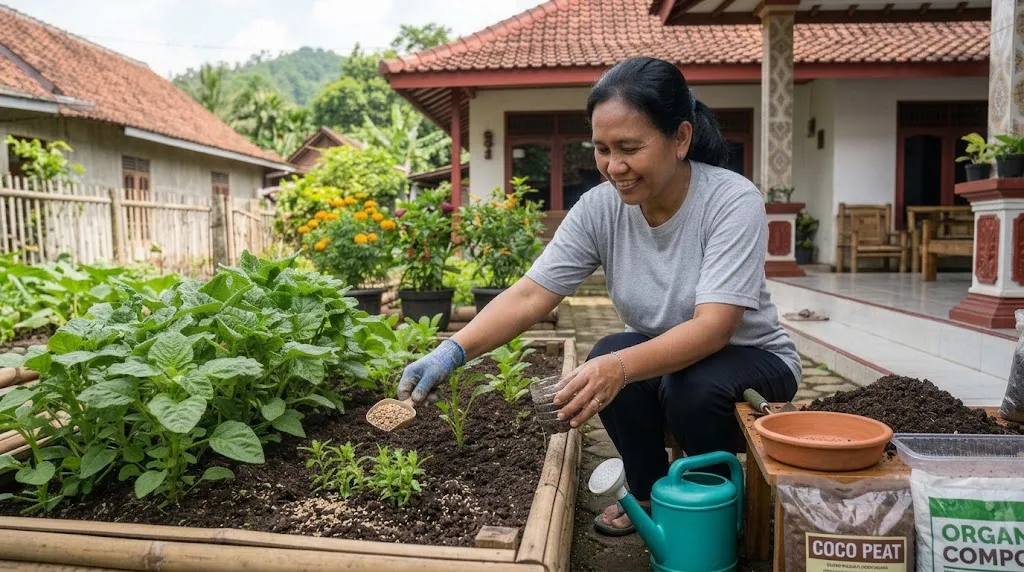
Routine care for Brazilian spinach. [AI Generated]
Routine care is the key to achieving abundant harvests of Brazilian spinach. Water the plants every morning and evening, but make sure there is no standing water that can cause root rot. The soil should remain moist, but not too wet to prevent the roots from being submerged.
To ensure the plants receive adequate nutrition, add organic fertilizer every two weeks. Vermicompost is highly recommended for vegetables; simply provide a handful every two weeks. If choosing chemical fertilizers, use green NPK 15-15-15 at a rate of one tablespoon every two weeks.
6. Pruning
Pruning or trimming old leaves periodically is also very important. When the plants start to grow taller than 20 cm, prune them down to 5-10 cm from the base, leaving a height of about 10-15 cm. The more often you prune, the bushier Brazilian spinach will become. Fertilize after the pruning process to support the growth of new shoots.
Brazilian spinach is generally known to be pest-resistant, but it is still important to occasionally check your plants for potential infestations. With consistent care, this plant will thrive and be ready for harvest.
7. Sustainable Harvesting
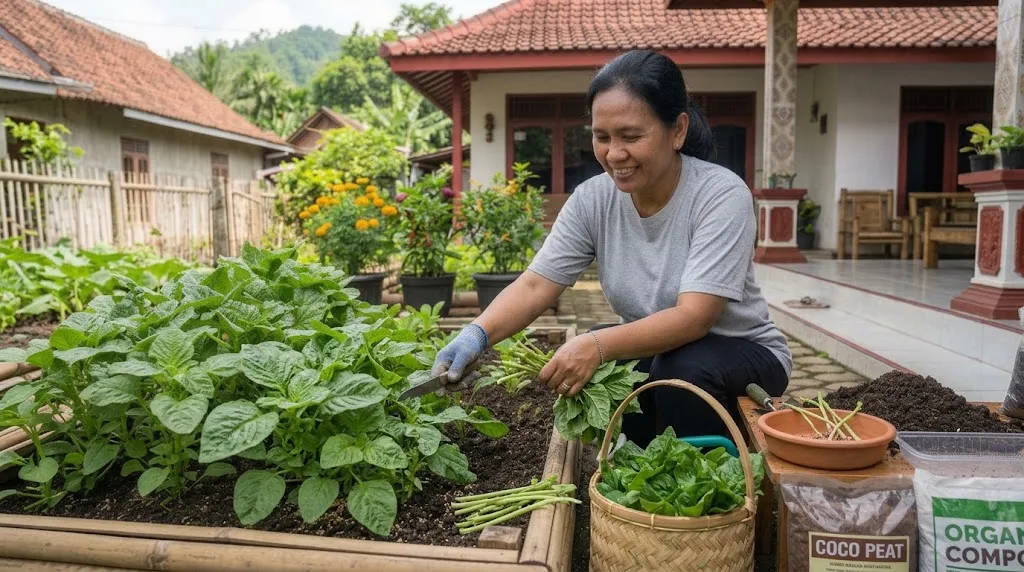
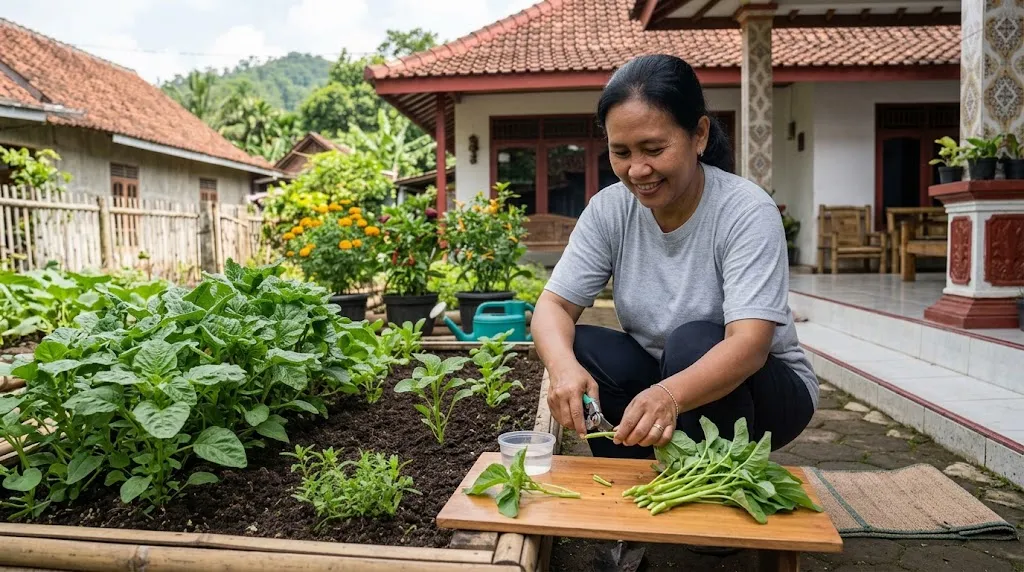
Brazilian spinach harvest. [AI Generated]
Brazilian spinach can be harvested after 1-2 months or 40-45 days after sowing. If propagated from cuttings, harvesting can be done at 30 days or 4-6 weeks after planting the cuttings.
The correct harvesting technique is to prune the stems, not to uproot them. Cut the leaf tips about 10-15 cm from the end or cut the stems above the leaf nodes, leaving 2-3 nodes from the bottom part of the plant, about 10-15 cm from the soil surface.
This pruning technique during harvesting will stimulate the growth of more and denser new shoots. Avoid taking more than 30% of the leaves during harvest to keep the plants healthy and productive. Under optimal conditions, Brazilian spinach can even be harvested every week, or even every three days if it has grown very dense.
8. Questions About How to Grow Brazilian Spinach
How to propagate Brazilian Spinach?
Brazilian spinach is most effectively propagated through stem cuttings because it does not produce fertile seeds or its seeds are often non-functional (sterile).
What kind of growing medium is suitable for Brazilian Spinach?
Brazilian spinach prefers fertile soil, rich in organic matter, with good drainage. A mixture of soil, manure/compost, and burned rice husk in a ratio of 1:1:1 is highly recommended.
When can Brazilian Spinach be harvested?
Brazilian spinach can be harvested after 1-2 months or 40-45 days after sowing. If propagated from cuttings, harvesting can be done at 30 days or 4-6 weeks after planting the cuttings.
What is the correct harvesting technique for Brazilian Spinach?
Harvest Brazilian spinach by trimming its stems, not by uprooting them. Cut the leaf tips about 10-15 cm from the end or cut the stem above the leaf nodes, leaving 2-3 nodes from the bottom part of the plant, about 10-15 cm from the soil surface.
Is Brazilian Spinach resistant to pests?
Brazilian spinach is generally resistant to pests, but it still needs to be monitored and checked periodically.
(kpl/ini)
Disclaimer: This translation from Bahasa Indonesia to English has been generated by Artificial Intelligence.


 Follow
 Rekomendasi