Kapanlagi.com - Chili plants that are reluctant to bear fruit often become a puzzle for gardeners, whether they are beginners or experienced. This condition can be frustrating, especially when seeing lush green leaves but no results. Understanding how to address chili plants not bearing fruit is an important step to ensure your garden yields optimal harvests.
The phenomenon where chili plants grow vigorously with sturdy stems and dense leaves, yet do not produce flowers or fruit, is indeed confusing. All care efforts seem futile without the expected fruit. This situation demands special attention and a systematic approach to handling it.
To help you achieve a bountiful chili harvest, we have summarized ten effective strategies. Check out the complete explanation below so that your chili plants can bear abundant fruit, as summarized by KapanLagi.com from various sources, Friday (14/8/2026).
1. Optimize Sunlight
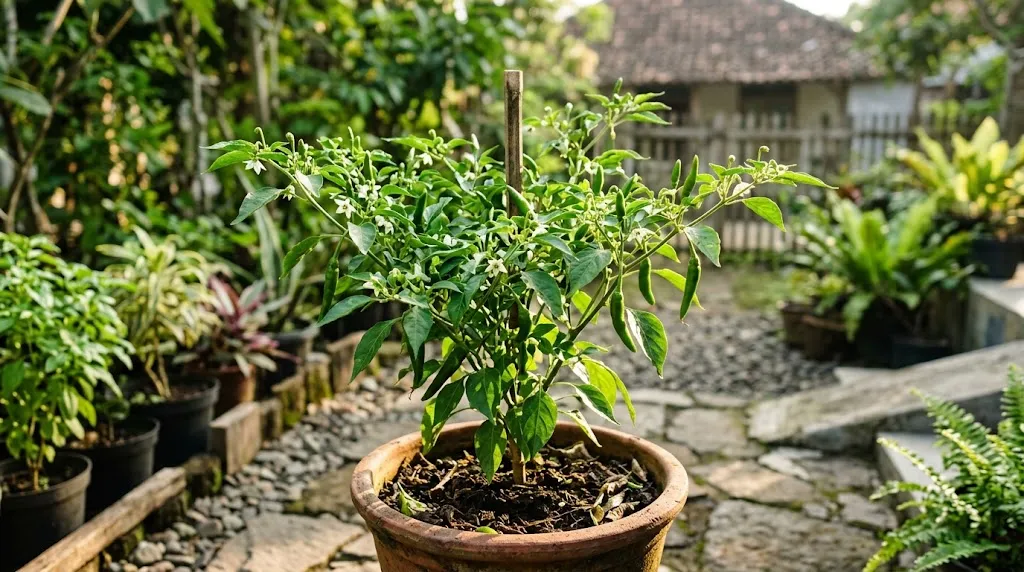
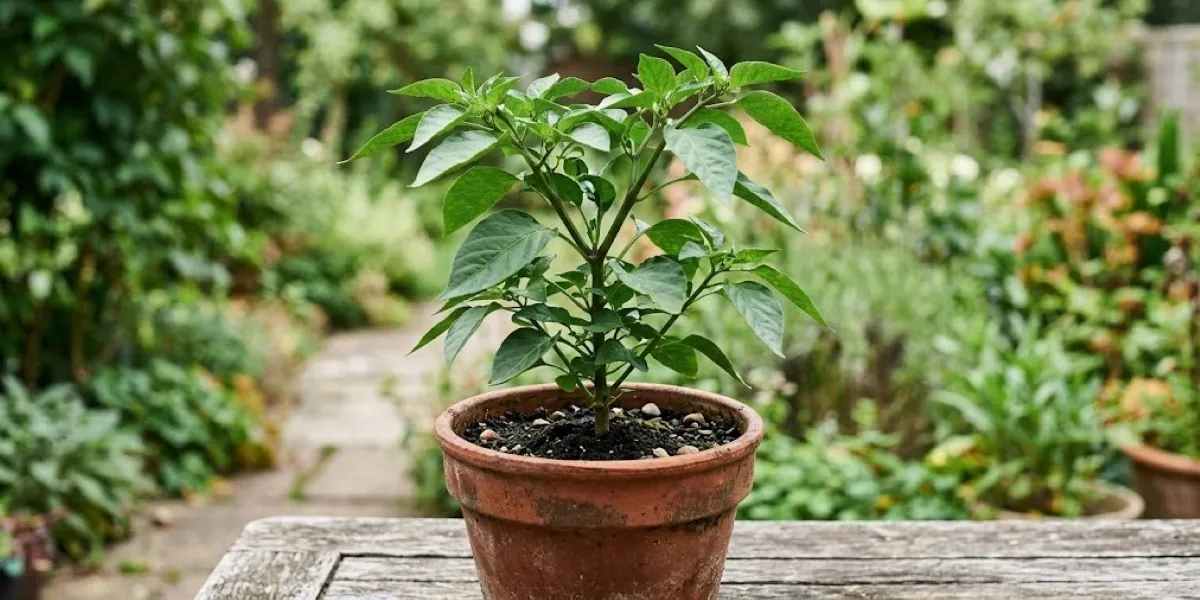
Optimize Sunlight. (Image: AI Generated)
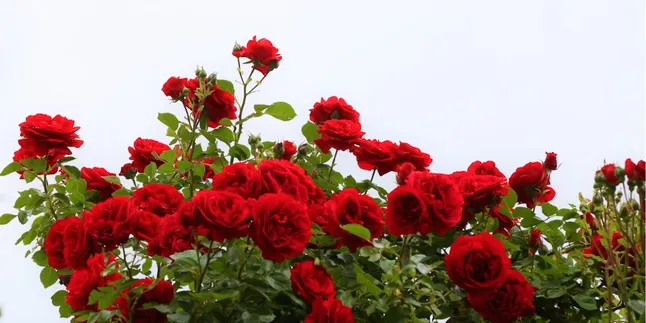
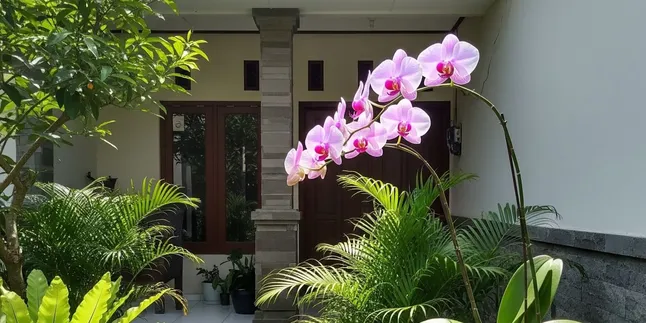
Chili plants require adequate exposure to sunlight for the photosynthesis process and fruit formation. A lack of light can hinder generative growth, causing the plant to focus more on leaf development. Ideally, chili plants need six to eight hours of full sunlight each day to fruit optimally.
Ensure that your chili planting location receives adequate light intensity throughout the day. If planting in pots, move them to a brighter area. For plants in open land, avoid planting under the shade of large trees or buildings that block direct sunlight.
Sufficient sunlight helps the plants produce essential energy for flower and fruit formation. Without this energy, flowers may not form or may drop off before becoming fruit. Proper placement supports plant health and enhances harvest potential.
2. Set the Right Watering
The availability of water in the growing medium greatly affects the productivity of chili peppers. Excessive watering can cause root rot and stress the plants. Meanwhile, a lack of water makes the plants focus only on surviving rather than producing fruit. Maintaining soil moisture balance is key to preventing flower drop.
Water regularly, once or twice a day, adjusted to the weather and soil moisture. Check the moisture of the growing medium before watering. Ensure it is not too wet or too dry. A growing medium with good drainage will prevent harmful waterlogging of the plant roots.
Irregular watering can stress the plants and hinder nutrient absorption. Healthy roots require air space, so the growing medium should not be continuously waterlogged. Proper watering management supports root function and optimal nutrient absorption.
3. Balance Nutrition and Fertilization
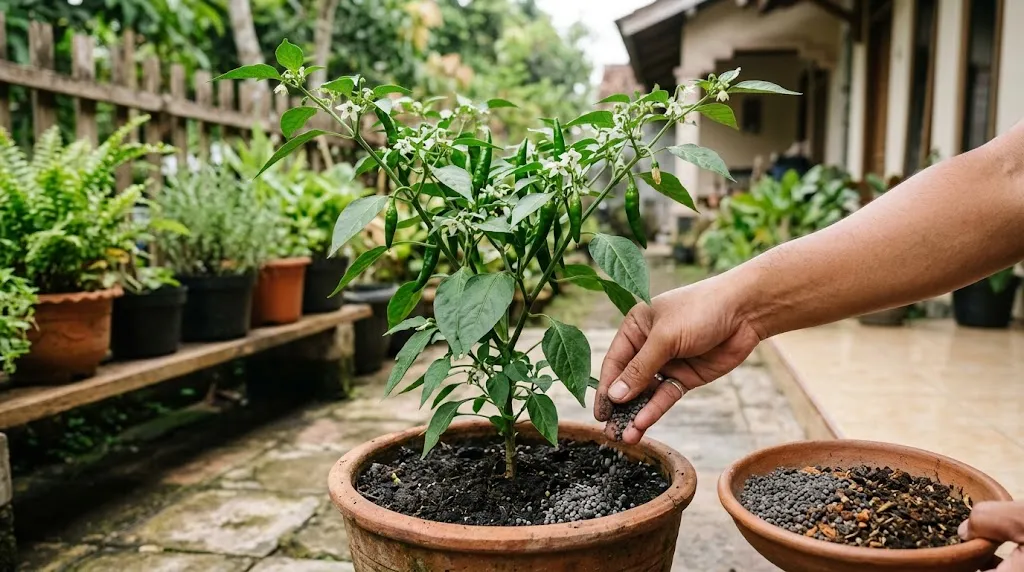
Balance Nutrition and Fertilization. (Image: AI Generated)
Excess nitrogen can encourage lush leaf growth, but it inhibits the formation of flowers and fruit. Chili plants require sufficient phosphorus and potassium to enter the reproductive phase. This nutrient imbalance is often the main cause of chili plants not bearing fruit.
Use fertilizers with high phosphorus and potassium content when the plants begin to flower. Balanced formulation NPK fertilizers or liquid organic fruit fertilizers can stimulate the formation of flowers and fruit. Avoid excess nitrogen fertilizers during the generative phase to prevent flower drop.
Manure or compost is also important for maintaining long-term soil fertility. Micronutrients such as calcium and magnesium also play a role in strengthening plant cell walls and preventing flower drop. Timely and balanced fertilization will support plant productivity.
4. Maintain Optimal Temperature and Humidity
Extreme temperatures, whether too hot (above 32°C) or too cold (below 16°C), can inhibit flowering and cause flowers to drop. Chili plants grow optimally at daytime temperatures of 21-29°C and nighttime temperatures of 15-21°C. Drastic temperature fluctuations can also trigger stress in plants.
If the temperature is too hot, provide shade using shade cloth to reduce the intensity of direct sunlight. In cold temperatures, protect the plants with covers or move them to a warmer location. Maintaining the humidity around the plants is also important to prevent flowers from drying out and dropping.
Stable environmental conditions support the physiological processes of plants, including flower and fruit formation. Inappropriate temperature and humidity can disrupt pollination and fruit development. A controlled environment will increase the chances of the plants producing abundant fruit.
5. Perform Optimal Pollination
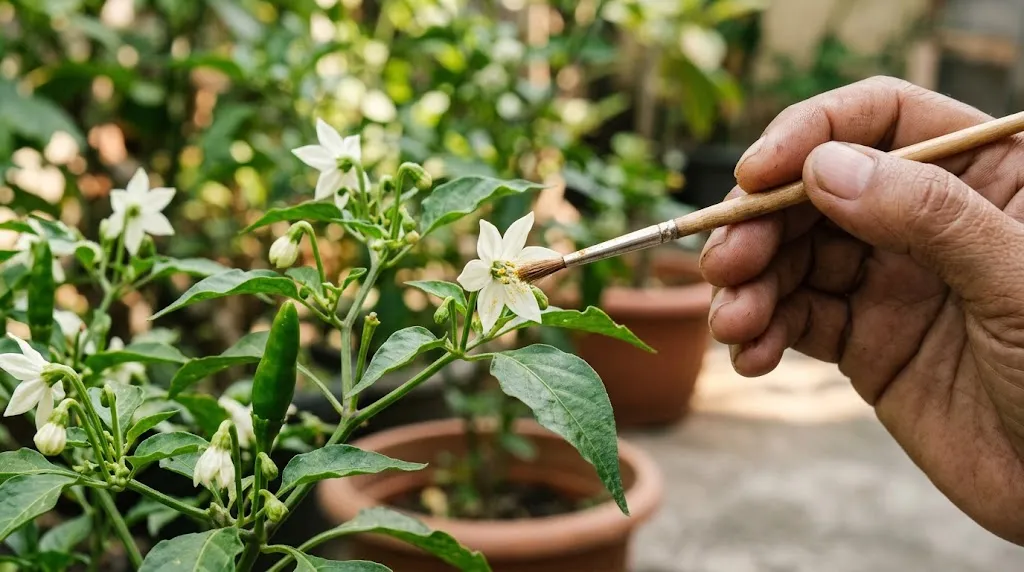
Perform Optimal Pollination. (Image: AI Generated)
The lack of pollination is a common cause of chili flowers not becoming fruit. Chili plants can self-pollinate, but cross-pollination by insects such as bees or wind can enhance yields. In enclosed environments or in the absence of insects, pollination may be insufficient.
To assist with pollination, gently shake the plants in the morning when the flowers are blooming. You can also perform manual pollination using a small brush to transfer pollen from one flower to another. Planting other flowers around the chili can attract pollinating insects.
Successful pollination is marked by the formation of fruit buds after a few days. If pollination does not occur, the flowers will drop. Ensuring the presence of pollinators or assisting this process manually will increase the chances of fruit formation.
6. Control Pests and Diseases
Pest attacks such as thrips, whiteflies, mites, and fruit flies can damage flowers and young fruits. This causes dropping or failure in fruit formation. Diseases such as fusarium wilt, anthracnose, or yellow virus also hinder plant productivity. Early identification and management are very important.
Conduct regular inspections of the plants to detect signs of pest or disease attacks. Use botanical pesticides or insecticides as needed to control pests. For diseases, remove severely infected plants and use fungicides if necessary.
Sanitizing the planting environment and crop rotation can help prevent the spread of pests and diseases. Planting disease-resistant chili varieties is also an effective preventive measure. Good management will maintain plant health and ensure fruit formation.
7. Improve Soil pH
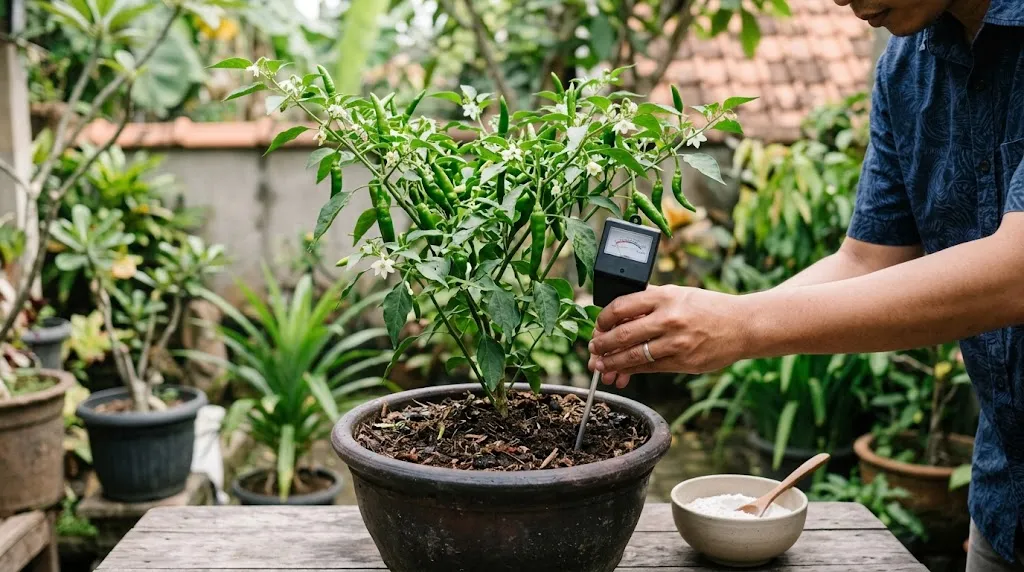
Improve Soil pH. (Image: AI Generated)
Soil pH that is not suitable can hinder the absorption of nutrients by plant roots. Chili peppers grow optimally in soil with a pH of around 6.0–6.8. Soil that is too acidic or too alkaline prevents essential nutrients from being absorbed effectively, disrupting the flowering phase.
Conduct regular soil pH tests to assess its condition. If the soil is too acidic, add dolomite lime to neutralize the pH. Dolomite lime also provides calcium and magnesium, which are important for plants. The application of dolomite can prevent fusarium wilt.
Dolomite lime should ideally be spread around the base of the stem after the rain has subsided or used as a base fertilizer. Dolomite helps improve soil structure and increases the availability of water and oxygen. Soil with a balanced pH will support nutrient absorption and plant growth.
8. Perform Proper Pruning
Pruning unnecessary water shoots or leaves can direct the plant's energy towards the formation of flowers and fruits. Water shoots that grow in the leaf axils often compete for nutrients with flowers and fruits. Pruning also helps with air circulation and light penetration.
Trim water shoots that appear below the main branches or overly dense leaves. Light pruning of leaves and branches can also stimulate the growth of new flowers. Prune carefully to avoid damaging the productive parts of the plant.
Regular pruning will maintain the shape of the plant, reduce excess moisture around the leaves, and minimize the risk of disease. By redirecting energy away from unproductive vegetative growth, the plant will focus more on fruit formation.
9. Choose Superior Seeds
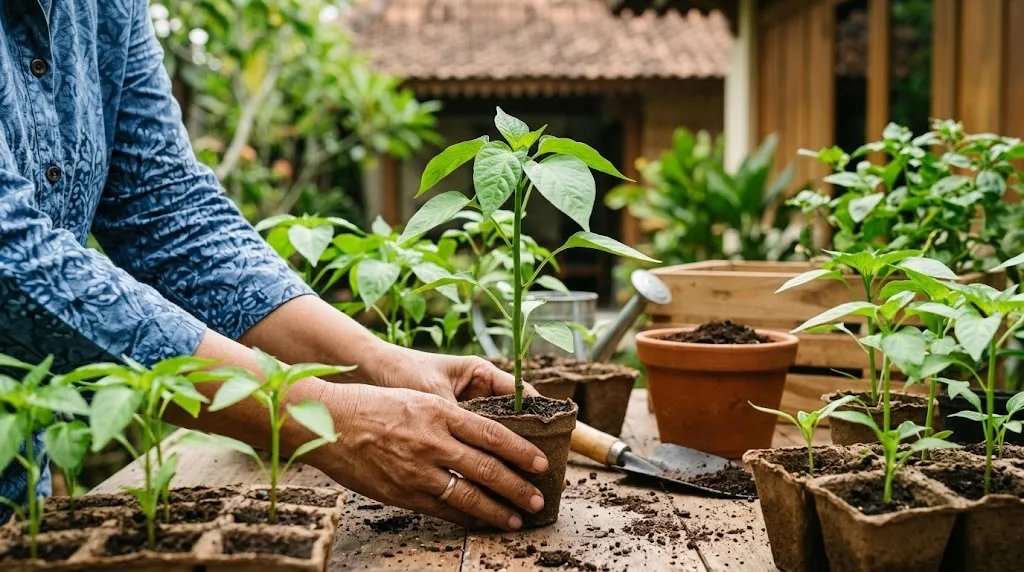
Choose Superior Seeds. (Image: AI Generated)
The quality of seeds greatly determines the potential harvest yield. Seeds from superior varieties tend to be more resistant to diseases and have high productivity. Low-quality seeds may have genetic issues that hinder fruit formation from the start.
Choose chili seeds from trusted sources that guarantee quality and resistance to pests and diseases. Ensure that the seeds are not defective and come from healthy and productive parent plants. Superior seeds will grow faster and have a strong root system.
A strong root system helps the plant absorb nutrients maximally from the growing medium. With superior seeds, the care process also becomes easier as the plants are more resistant to various issues. The fruit yield is also likely to be greater and more uniform.
10. Use Fertile and Loose Planting Media
Dense planting media, low in nutrients, or with poor drainage can hinder root growth and nutrient absorption. These conditions cause stress to the plants and make it difficult for them to bear fruit. The ideal planting media should be able to provide sufficient nutrients, water, and aeration.
Use a mixture of loose soil, compost or manure, and rice husk in a balanced ratio. Ensure that the planting media has good drainage so that the roots do not rot. Organic materials help improve soil structure and increase the availability of nutrients.
Good planting media allows roots to develop freely, absorbing water and nutrients more efficiently. For potted plants, ensure there are enough drainage holes. Optimal planting media conditions are the foundation for healthy and fruit-bearing chili plants.
11. Frequently Asked Questions About Chili Plants That Are Difficult to Bear Fruit
Why do chili plants flower but not fruit?
This is usually caused by a lack of nutrients, unbalanced water supply, or insufficient sunlight. Additionally, extreme temperatures and a lack of pollination are also important factors that cause flowers to drop before they can turn into fruit.
What fertilizer is good for abundant chili fruit?
NPK fertilizer and organic fertilizer are very effective in stimulating fruit formation. Fertilizers with high phosphorus and potassium content are highly recommended when the plants start to flower.
How many times should chili be watered in a day?
Chili should be watered once or twice a day depending on the weather conditions. It is important to check the moisture of the growing medium before watering, to avoid it being too wet or too dry.
Is pruning important for chili plants?
Pruning unnecessary shoots and leaves can direct the plant's energy towards flower and fruit formation. Pruning also helps with air circulation and light penetration, reducing the risk of disease.
How to deal with falling chili flowers?
It is important to keep the soil moist, provide adequate sunlight, and manage proper fertilization, especially avoiding excess nitrogen fertilizer during flowering. Additionally, control thrips pests and maintain stable temperature and humidity around the plants.
(kpl/bim)
Disclaimer: This translation from Bahasa Indonesia to English has been generated by Artificial Intelligence.


 Follow
 Rekomendasi