

 Follow
 Rekomendasi
6 Levels of Boiling Eggs, from Soft-Boiled to Perfectly Cooked
A guide to 6 levels of boiling eggs, from runny yolk to perfectly cooked, to achieve the desired texture.

Kapanlagi.com - The way to make roses bloom frequently is actually not difficult as long as the basic needs of the plant are met. Roses require a combination of light, water, nutrients, air circulation, and proper pruning for optimal growth.
Roses that look lush do not necessarily bloom frequently. Sometimes, the plants end up growing too many leaves and stems due to excess nitrogen, lack of light, or improper pruning. Therefore, care needs to be balanced. Below is a guide on how to make roses bloom frequently, as reported by KapanLagi.com from various sources, Friday (14/8/2026).
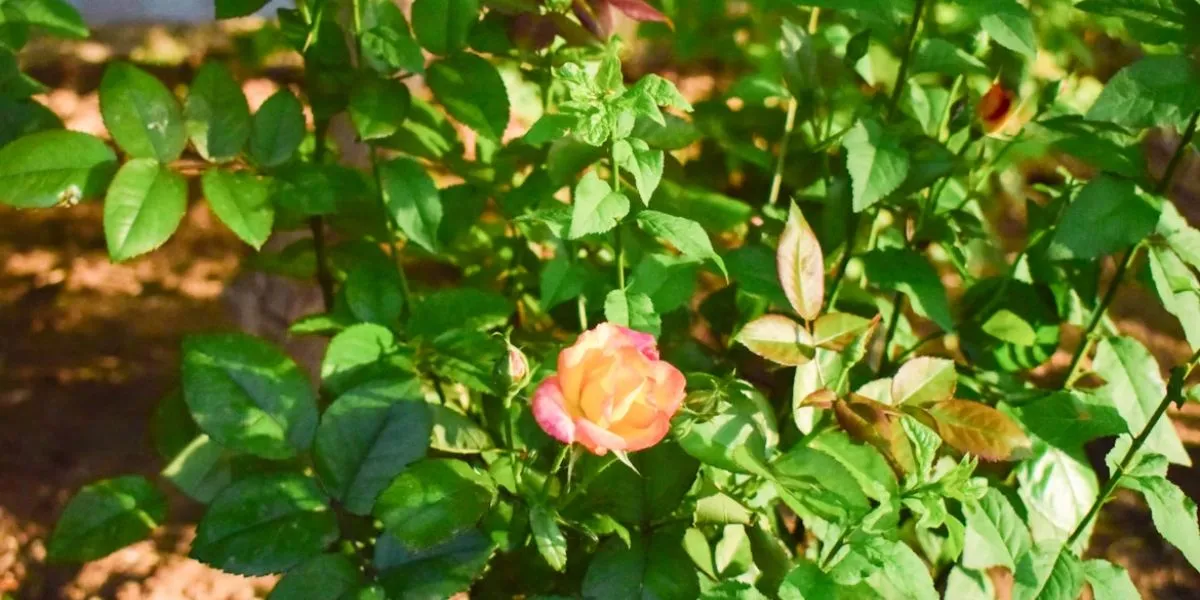
Illustration of a Rose/Photo by Hossein Bagheri on Unsplash
Lighting is a crucial factor in how to make roses bloom abundantly. Roses require full sunlight, at least 6 hours of direct sunlight each day, and ideally between 6 to 8 hours for optimal blooming.
Morning sunlight is very important as it aids the photosynthesis process and dries moisture from the leaves, which can reduce the risk of disease. A lack of sunlight can hinder plant growth, make the leaves appear pale, and increase susceptibility to diseases. However, excessive exposure to sunlight without sufficient water can also have negative effects, causing dehydration, yellowing leaves, flower drop, burning, and wilting.
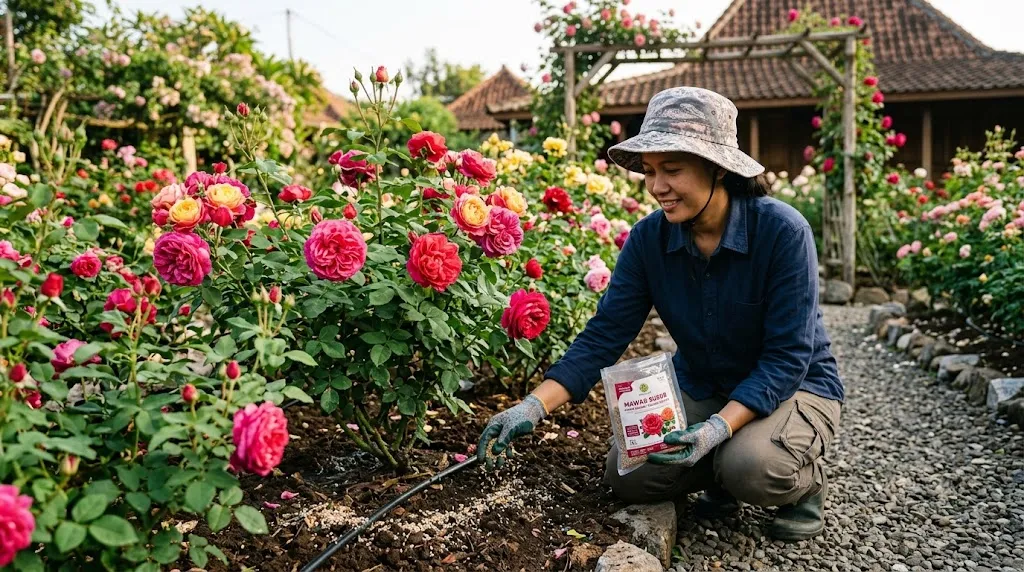
Fertilization Illustration/AI Generated
Fertilization is one way to encourage roses to bloom regularly by ensuring the availability of sufficient nutrients. The nutrients present in the soil may sometimes not be enough to meet the nutritional needs of roses. You can fertilize 2 times a month or once every 2 weeks.
You can use manure, compost, or NPK fertilizer. Pearl NPK fertilizer, for example, contains complete nutrients such as phosphorus, nitrogen, and potassium that support blooming, enhance plant immunity, and fertility. Phosphorus is particularly an important element in flower formation. Fertilization can be done every 4-6 weeks during the growing season.
Additionally, the use of Plant Growth Regulators (PGR) such as Gandasil B or Atonik, which are rich in potassium, can stimulate the blooming process more quickly. Rice washing water can also be used to improve soil fertility, as long as it does not touch the leaves or flowers. Banana peels can also be utilized as fertilizer.
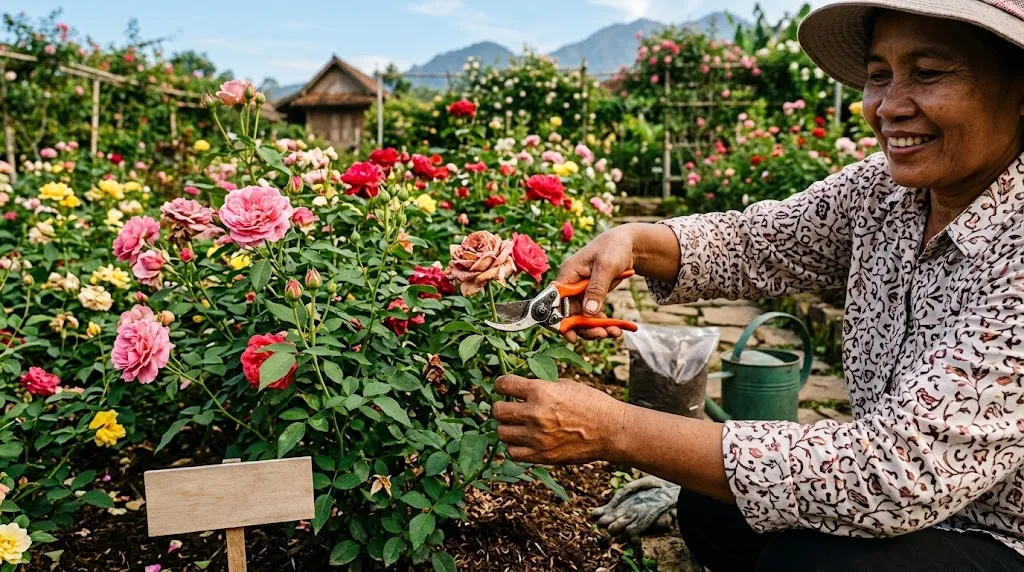
Illustration of Watering/AI Generated
Regular and proper watering is another key to making rose flowers bloom abundantly. Water is essential for all processes in plants. It is important to ensure the soil remains moist; you may need to check the soil moisture daily.
During the summer, watering can be done daily as high temperatures cause the soil to dry out quickly. Meanwhile, in winter, the watering schedule can be reduced to once or twice a week, depending on the temperature and humidity of the environment. Consistency in watering will greatly affect the health and productivity of your roses.
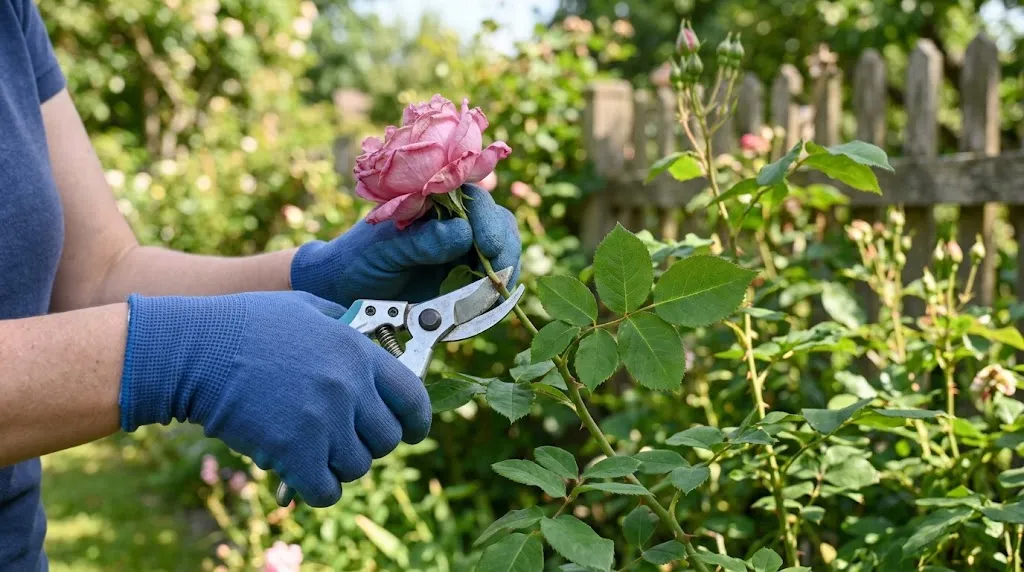
Pruning Illustration/AI Generated
Pruning is an important technique to stimulate the growth of new flowers and is a way to make roses bloom regularly. This technique helps remove old or dead branches, allowing the plant to focus on the growth of healthier and more productive new branches.
Perform pruning in early spring before new buds appear, or at the end of winter. Cut above the outward-facing buds at an angle of about 45 degrees. It is also important to remove wilted or dead flowers (deadheading) so that the plant does not divert its energy to seed formation.
Additionally, remove dead petals and leaves to reduce the spread of diseases and attract pests. Prune dead wood that is light brown to dark brown back to the green living wood.
Crossing branches and branches that are smaller in diameter than a pencil should also be cut as they usually do not produce flowers. Pruning also maintains the shape of the plant, its health, and improves air circulation.
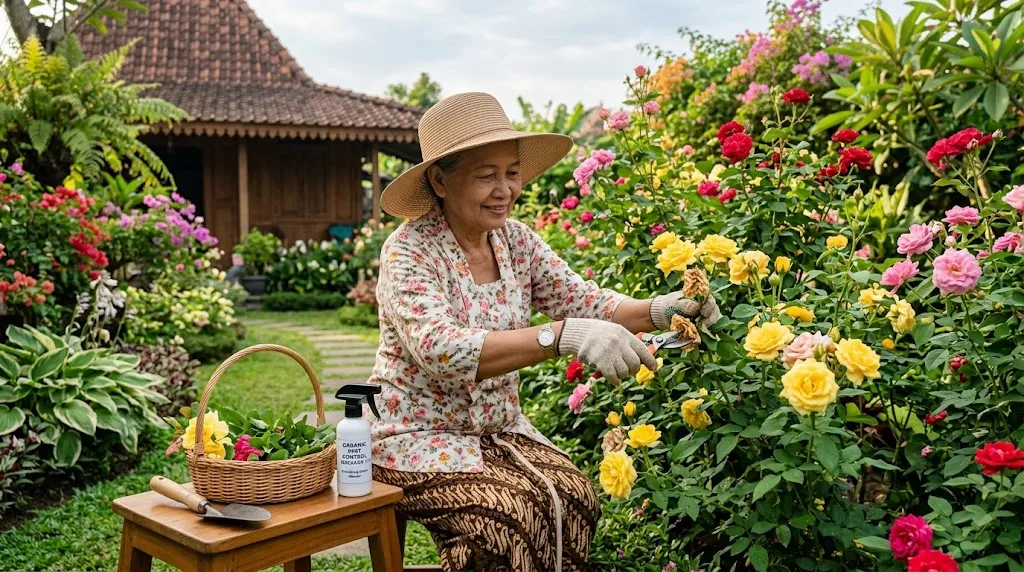
Illustration of Caring for Roses/AI Generated
Roses are vulnerable to pest and disease attacks, which can hinder growth and flowering. Effective control is an important part of how to make rose flowers bloom regularly.
Common pests that attack roses include leaf caterpillars, thrips, termites, aphids, beetles, and mites. Common diseases include leaf spots. To control pests, remove affected parts of the plant, spray with appropriate insecticides (such as carbofuran for leaf caterpillars, abamectin for thrips), or use natural insecticides like a mixture of water and dish soap for aphids.
Conduct regular inspections and act quickly when the first symptoms appear. Weeds growing around rose plants can also compete for nutrients and water, thus hindering growth and flowering. Therefore, regular weed control is very important.
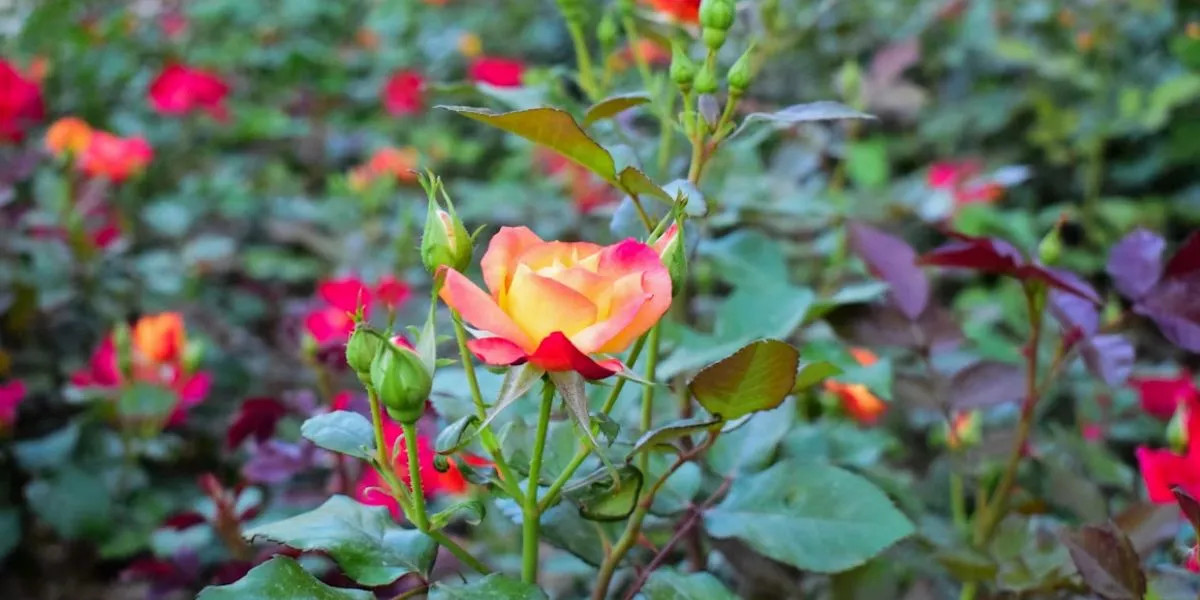
Illustration of Roses/Photo by Hossein Bagheri on Unsplash
In addition to knowing how to care for them, you also need to avoid several common mistakes, such as:
How long do roses need sunlight each day to bloom regularly?
Roses need direct sunlight for at least 6 hours a day, ideally 6 to 8 hours, for optimal blooming.
What type of fertilizer is recommended to stimulate rose blooming?
NPK fertilizer rich in phosphorus is highly recommended, as well as manure or compost. Plant growth regulators like Gandasil B, which is high in potassium, can also accelerate blooming.
When is the best time to prune roses?
Pruning is best done in early spring before new buds appear, or at the end of winter.
Why is it important to remove wilted roses?
Removing wilted flowers (deadheading) prevents the plant from diverting its energy to seed formation, allowing that energy to be used for producing new flowers.
What pests and diseases commonly attack roses and how can they be generally addressed?
Common pests include leaf caterpillars, thrips, aphids, and leaf spot diseases. Control measures include removing affected parts, using appropriate insecticides, or natural insecticides.
(kpl/nti)
Cobain For You Page (FYP) Yang kamu suka ada di sini,
lihat isinya
A guide to 6 levels of boiling eggs, from runny yolk to perfectly cooked, to achieve the desired texture.

Make your home corners livelier! Discover a selection of plants with cascading shapes that are perfect for decorating home corners.
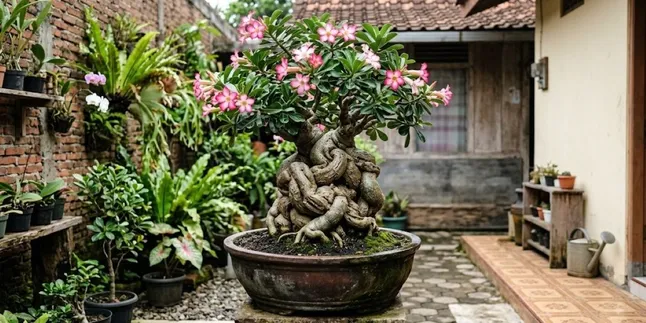
Bring an artistic touch to your home with a collection of uniquely-stemmed plants; this collection is not only beautiful but also easy to care for.
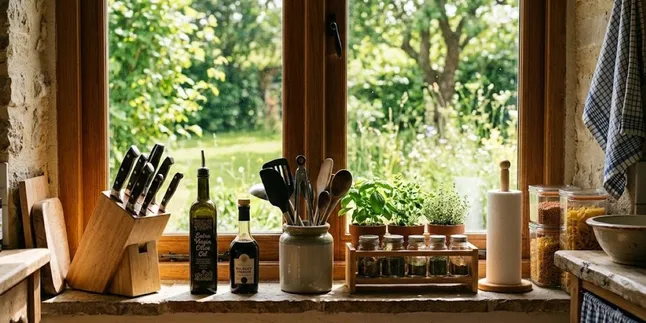
Maintaining the quality of food ingredients and equipment is important? Pay close attention, there are kitchen items that should not be placed near windows due to exposure to sunlight and temperature.

These tricks for organizing kitchen drawers help keep cooking utensils from getting messy and make them easier to find.
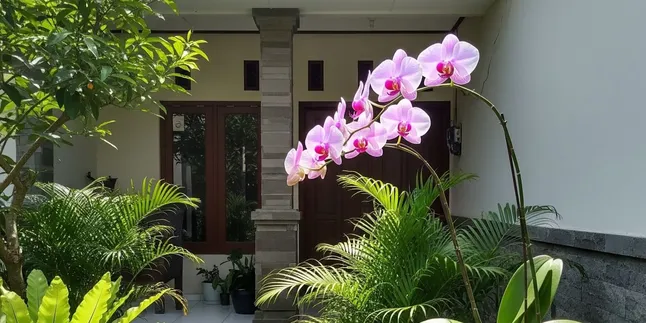
How to care for orchids to bloom quickly with a complete guide on lighting, watering, fertilizing, and the ideal temperature for maximum results.
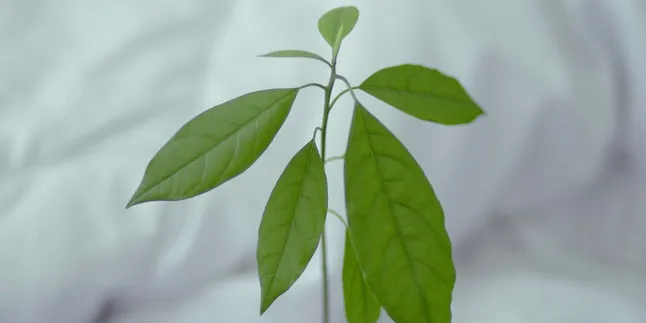
How to easily plant avocado from seed at home, starting from germination to being transferred to a pot.

Rust on home fences can be addressed without repainting. Learn practical guidelines for cleaning rust with natural materials, mechanical methods, and special products for a clean and well-maintained fence.
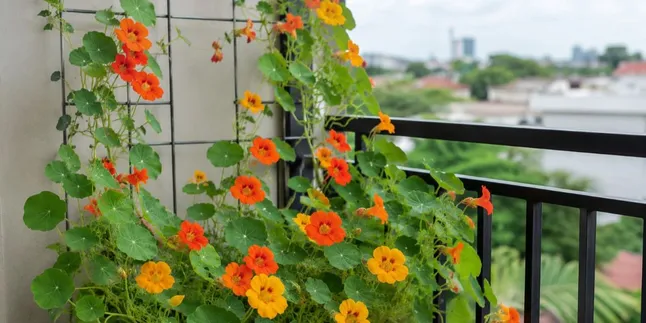
Describes climbing plants to beautify balconies, from variegated ivy to easy-care nasturtiums.
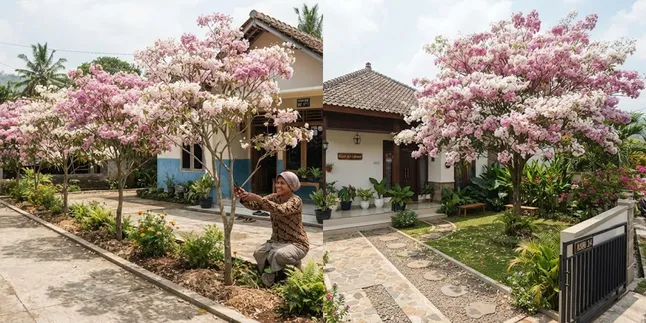
Discover effective ways to care for the Tabebuya tree to encourage frequent flowering with these eight easy steps.
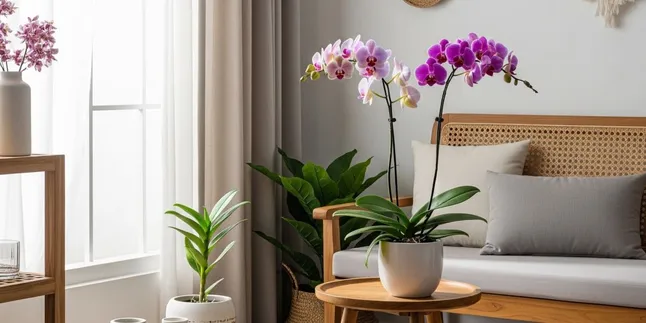
Recommendations for indoor plants that not only beautify the home but are also safe for children and pets.
