Plants with unique stem shapes worth collecting can be a choice to beautify your home with a different natural touch. The swollen, spiny, textured stems, or those resembling certain shapes can provide a strong character to the appearance of the plants.
Not only visually appealing, but plants with unique stem shapes worth collecting also have diverse growth characteristics. Some types even have stems that store water, allowing them to adapt to dry environmental conditions.
For plant lovers, uniquely-stemmed plants worth collecting can be placed on terraces, in yards, or in corners of the house. Their unique shapes can be the main attraction while also creating a more appealing green atmosphere.
1. Plants with Unique Stem Shapes Worth Collecting
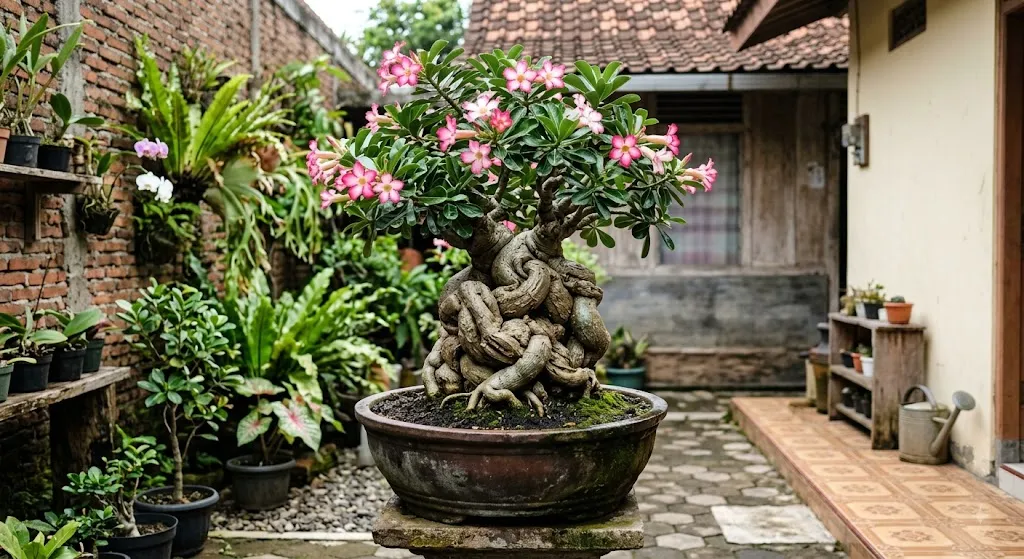
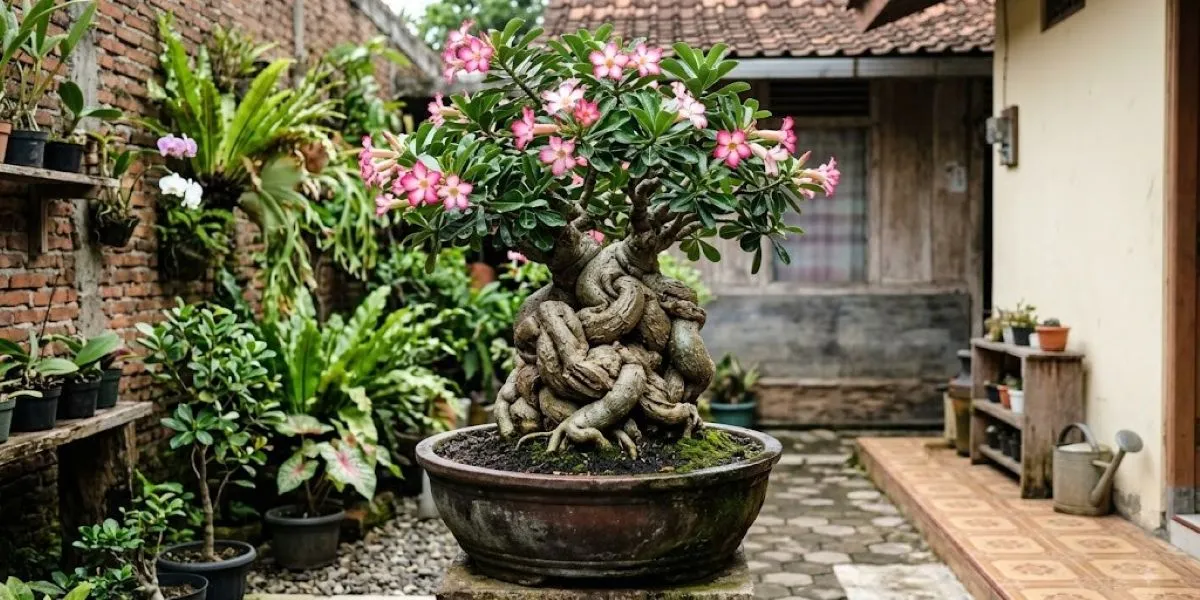
Adenium. (AI Generated)
1. Adenium
Adenium or Japanese frangipani is known for its swollen stem, especially at the base. This swelling is called a caudex and functions to store water reserves, allowing the plant to survive in dry conditions.
The shape of the stem can become even more interesting when the plant is cared for and shaped like a bonsai. Combined with brightly colored flowers, Adenium is a suitable collection plant that also beautifies the terrace.
2. Nolina Palm
Beaucarnea recurvata or Nolina Palm is actually not a true palm, but belongs to the Asparagaceae family. Its most striking feature is the thick stem that swells at the bottom and serves as a water storage place.
Long, thin, and curved leaves resembling a horse's tail grow from the top of the stem. Its care is relatively easy, making this plant appealing for beginner collectors.
3. Dioscorea elephantipes
Known as Elephant's Foot or Hottentot Bread, this plant has a large caudex with a woody surface and a shell-like pattern. Its shape makes the plant look like an elephant's foot, in line with its popular name.
Its growth is very slow, but this actually gives it a unique appeal for collectors. From the caudex, slender tendrils with heart-shaped leaves will emerge.
2. Plants with Unique Stem Shapes
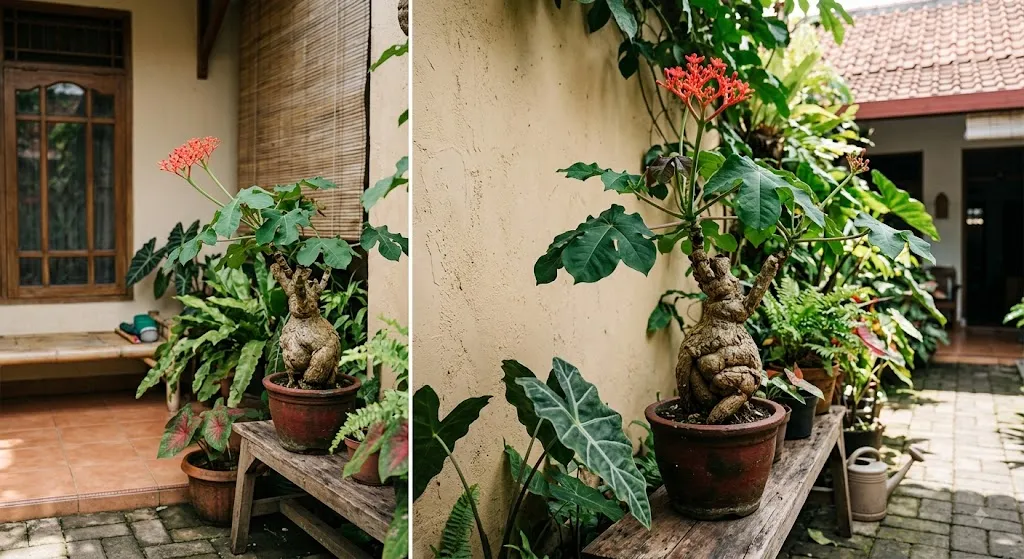
Jatropha podagrica. (AI Generated)
4. Jatropha podagrica
Jatropha podagrica, or Buddha Belly Plant, has a stem that swells in the middle, resembling a bottle or Buddha's belly. The stem is gray and can grow larger as the plant matures.
In addition to its distinctive stem shape, this plant also produces bright red flowers that grow in clusters. Its large, lobed leaves further enhance its attractive appearance.
5. Cyphostemma juttae
Cyphostemma juttae is a succulent native to South Africa and Namibia. This plant has a thick, swollen stem that resembles a small tree with peeling bark.
Its leaves are large, serrated, and have a unique bluish-green color. During the winter season, when the leaves fall, the shape of the stem becomes more pronounced, making it even more appealing as a collectible plant.
6. Pachypodium lamerei
Although commonly known as Madagascar Palm, Pachypodium lamerei is actually a succulent and not a member of the palm family. Its stem grows upright, thick, silver-gray in color, and is covered with quite sharp spines.
Long, narrow leaves typically grow at the top of the stem, giving it the appearance of a mini palm tree. Its exotic shape is perfect for a collection of tropical ornamental plants.
3. Plants with Unique Stem Shapes Worth Collecting
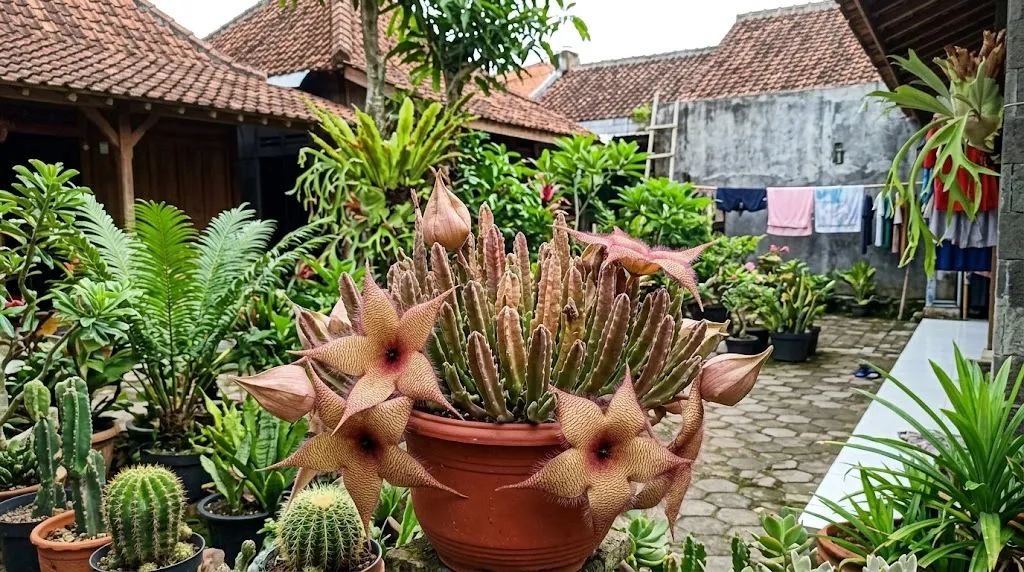
Stapelia gigantea. (AI Generated)
7.Stapelia gigantea
Stapelia gigantea is a succulent with fleshy stems and several sides that make its shape resemble a cactus, although this plant does not have thorns. The stems can grow to form clumps, making it look even bushier when mature.
Another uniqueness lies in its large star-shaped flowers. The flowers have a pale color with a maroon pattern and a distinctive aroma that attracts pollinating insects.
8.Cactus
Cacti should certainly not be overlooked when discussing plants with unique stem shapes. Their thick, fleshy stems serve to store water, while the thorns are one of their distinctive features.
Cacti come in a variety of shapes, ranging from round, elongated, branched, to column-like forms. Because they are relatively heat-resistant and do not require much water, cacti are suitable for collections on terraces or in dry gardens.
9. Euphorbia
Euphorbia has many species with interesting stem shapes, including some varieties that have thick stems covered in thorns. Its branching can also create unique silhouettes, making the plant look exotic even when placed in a simple pot.
Some species produce brightly colored flowers or plant parts that provide contrast with their stems. Its character, which is quite resistant to dry conditions, makes Euphorbia suitable for outdoor areas with minimal care.
4. Plants with Unique Stem Shapes Worth Collecting and Beautifying Your Home
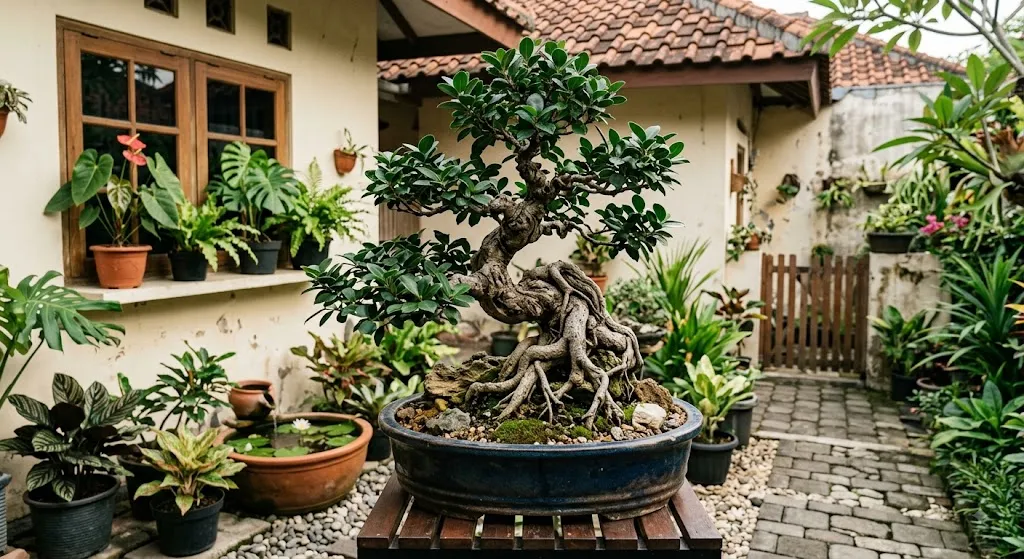
Mini Banyan. (AI Generated)
10. Mini Banyan
The mini banyan is an interesting choice for plant lovers who appreciate bonsai shapes. Its trunk and roots can be shaped to create an artistic and characterful appearance.
As it ages, its trunk can appear increasingly sturdy with a texture that gives the impression of an old plant. The mini banyan is suitable for placement in yards, terraces, or corners of the house as a collectible plant with strong aesthetic value.
11. Stem Sansevieria
Sansevieria, or mother-in-law's tongue, is better known for its upright leaves, but the stem structure in some varieties also offers its own appeal. The stem grows sturdy and becomes a support for neatly arranged leaves.
This plant can adapt to various lighting conditions and is relatively easy to care for. Therefore, Sansevieria can be a choice for collectors who desire unique plants without overly complicated maintenance.
12. Jambe Rose or Haji Fern
The Jambe Rose or Haji fern has a brown stem with a rough texture and a sturdy appearance. Its leaves grow elongated from the top of the stem and are arranged like palm leaves, providing a strong tropical vibe.
This plant can be planted in large pots or directly in the ground. As it grows taller and bushier, the Haji fern can become an attractive focal point in the yard or garden.
5. Questions About Plants with Unique Stem Shapes Worth Collecting
What is caudex in plants?
Caudex is the part of the plant stem that swells or thickens, serving as an organ for storing water and nutrients. Its unique shape often becomes the main attraction for plant collectors.
Are all plants with unique stems difficult to care for?
Not all. Many plants with unique stems, such as Nolina Palm, Cactus, Euphorbia, and Snake Plant, are known to be easy to care for and tolerant of various conditions, making them suitable for beginners.
Is the sap of Adenium obesum toxic?
Yes, the sap of the Adenium obesum plant is known to be toxic. It is important to be cautious when handling it, especially if you have pets or small children.
(kpl/sel)
Disclaimer: This translation from Bahasa Indonesia to English has been generated by Artificial Intelligence.


 Follow
 Rekomendasi