Kapanlagi.com - Hi Kl Lovers, have you ever panicked when seeing your beloved ornamental plant collection that was once lush green suddenly turn a sad yellow? Knowing how to address yellowing plant leaves is indeed essential knowledge that every plant parent should have to ensure that their "green children" at home do not wilt and die in vain.
This phenomenon that often causes headaches is actually the way plants communicate that something is wrong with their environment or intake, whether it's an issue with water, nutrition, or uninvited guests like pests. Don't rush to throw away the pot or overwater it, as improper handling can actually worsen the condition of the plants that are under significant stress.
Don't worry, this time we will thoroughly discuss solutions to save your plants based on scientific research that has been simplified for easy application at home. Here are ways to address yellowing plant leaves from various sources, Thursday (13/8/2026).
1. Understanding Plant Illness Through Chlorosis
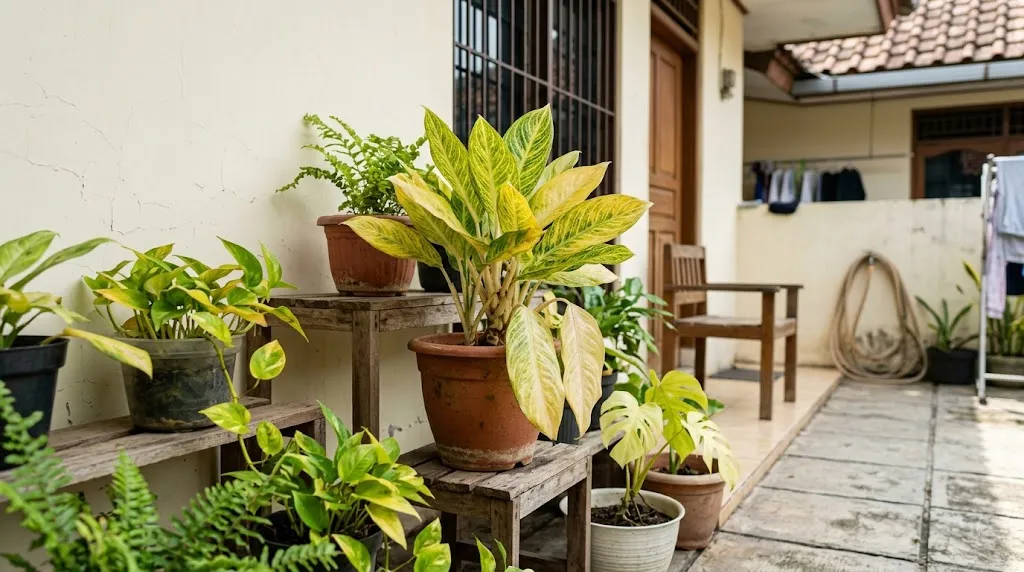
Before we dive into the healing steps, Kl Lovers need to get acquainted with the medical term: Chlorosis. Chlorosis is a condition when leaves do not produce enough chlorophyll, the green pigment that is crucial for photosynthesis. Without chlorophyll, plants are like humans who cannot eat; they will become weak, stunted, and eventually die.
The causes of yellowing leaves are not singular. Many laypeople jump to the conclusion of "lack of water," when in fact your plant might be "drowning" or even starving for specific nutrients. Let's break down the culprits one by one with accurate guidance.
2. Watering Issues: Between Thirst and Drowning
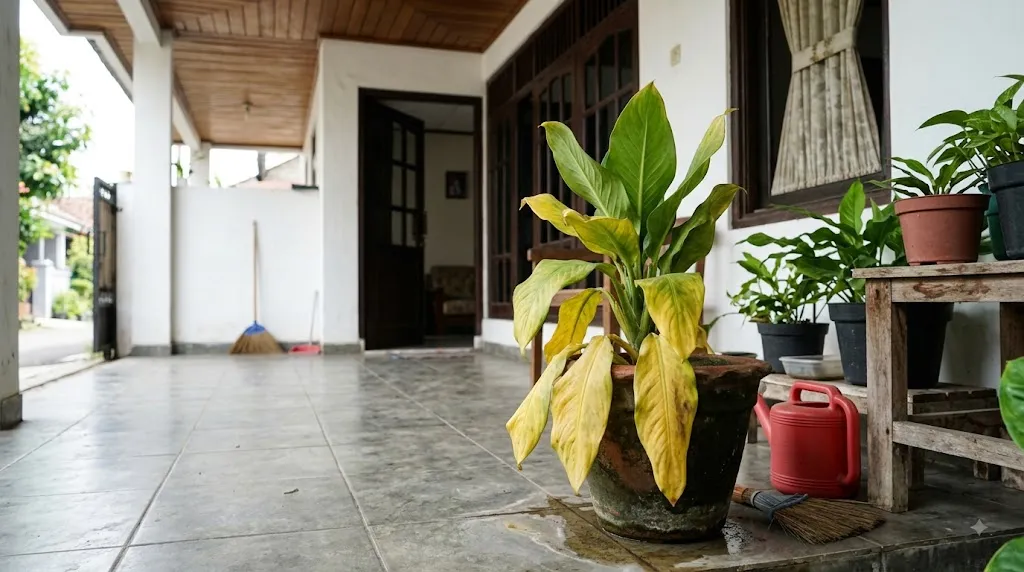
This is the most common cause and also the most frequently misdiagnosed.
Overwatering
Many beginners are too "loving" towards their plants, watering them every day without checking the soil condition. Research shows that waterlogged soil will experience hypoxia (lack of oxygen). Plant roots need oxygen to breathe; if the soil is too wet, the roots will rot (root rot).
- Typical Symptoms: Yellowing leaves starting from the bottom, often accompanied by soft or mushy leaf texture. If you smell a slightly sour or rotten odor from the soil, that’s a warning sign that the roots are starting to rot.
- Solution: Stop watering immediately! Check the drainage holes at the bottom of the pot to ensure water can escape. If conditions are severe, remove the plant, cut off the brown, mushy, smelly roots, and replant it in new dry and porous (well-draining) growing media.
Underwatering
Conversely, thirsty plants will sacrifice their leaves to conserve evaporation.
- Typical Symptoms: Yellowing leaves but with a dry, crispy texture, and the edges are often brown and burnt (crispy edges).
- Solution: Use the deep watering technique. Water the plant until water flows out from the drainage holes, or soak the pot in a basin of water for 10-15 minutes to allow the soil to absorb water maximally, then drain.
3. Signs of Nutrient Deficiency in Plants
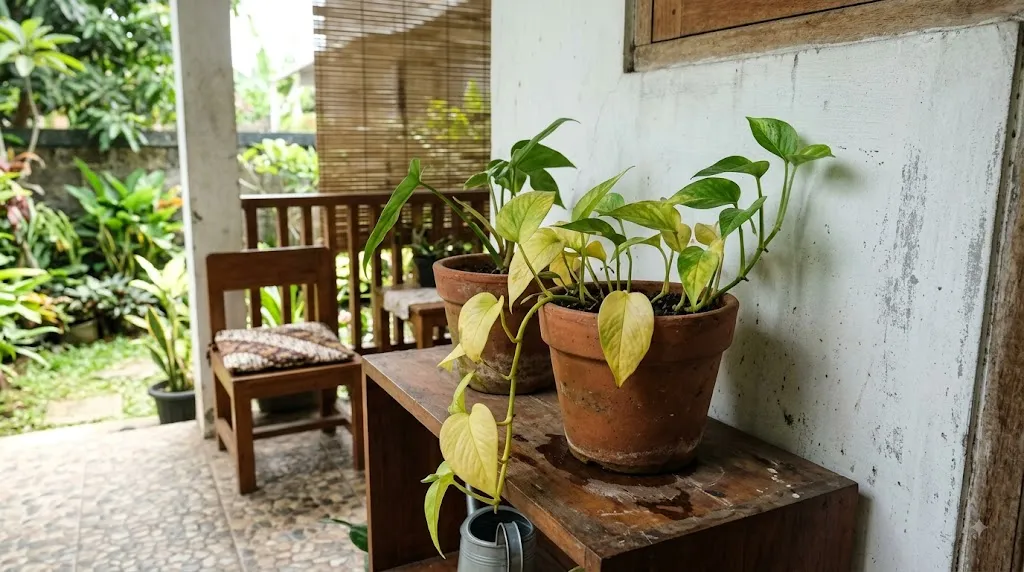
Now, this is the part that often confuses Kl Lovers. Nutrient deficiencies have different symptoms, depending on which element is lacking. In the legendary book Marschner's Mineral Nutrition of Higher Plants (3rd Edition, 2011) by Petra Marschner, it is explained that the location of the yellowing leaves can tell us which nutrient is deficient.
Nitrogen Deficiency (The Most Mobile Element)
Nitrogen is a nutrient that is mobile or can move within the plant's body. When a plant lacks Nitrogen, it will take Nitrogen reserves from older leaves to send to the younger leaves that are growing.
- Signs: The older leaves (located at the bottom) turn pale yellow overall, while the tips of the new leaves remain light green. The plant also appears stunted.
- How to Overcome: Provide fertilizer with a high Nitrogen content (high N). Well-matured manure or liquid organic fertilizer based on seaweed is very effective for providing an instant energy boost.
Magnesium Deficiency (The Bone of Green Leaves)
Like Nitrogen, Magnesium can also move from old leaves to young ones. But the pattern is unique.
- Signs: Interveinal chlorosis occurs on the old leaves. This means that the leaf blades are yellowing, but the veins of the leaves remain green firmly. This creates a pattern like a green spider web on the yellow paper.
- How to Overcome: The most popular and effective home remedy is Epsom Salt (Epsom Salt). Dissolve one teaspoon of Epsom salt in one gallon of water and use it to water the plants or spray it on the leaves.
Iron Deficiency (The Spoiled Child)
Unlike the two above, Iron is immobile (cannot move). So if the soil is deficient in iron, the new leaves will suffer.
- Signs: The young leaves at the tips of the plants grow bright yellow or even white, but the leaf veins remain thin green. The older leaves below look perfectly healthy. This often occurs in plants like Roses, Gardenias, or Oranges.
- How to Overcome: Use Chelated Iron fertilizer that can be purchased at agricultural stores. This chelated form is easier for plants to absorb compared to regular iron.
4. Soil pH: The Key to Nutrient Access
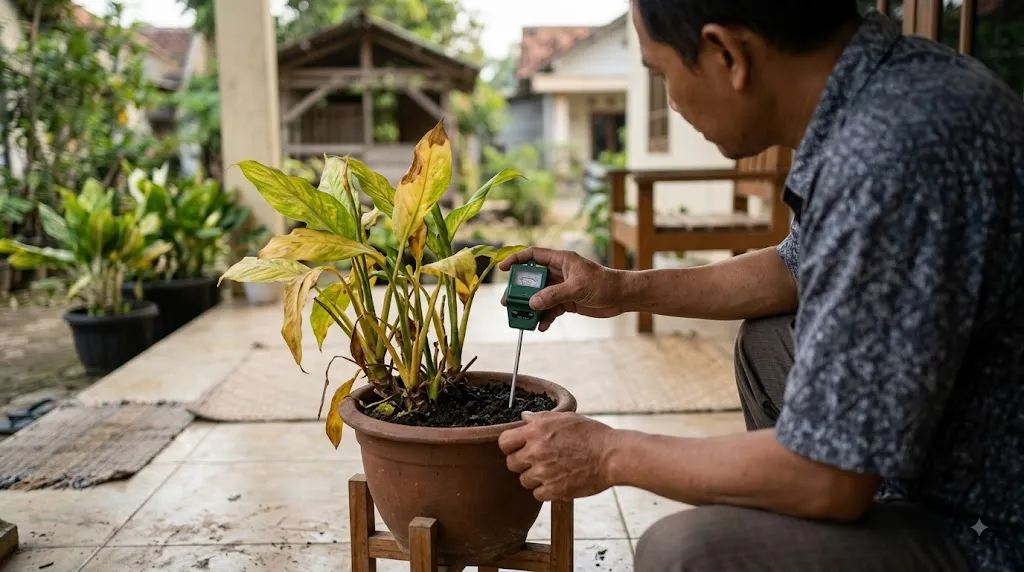
Plant lovers may have been diligent in fertilizing, but why are their plants still yellow? The problem might lie in the soil pH. Quoting the journal Influence of Soil pH on Nutrient Availability (2026), soil that is too alkaline (above 7.0) can "lock" certain nutrients like Iron and Manganese, making them unavailable for roots to absorb, even when fertilizers are abundant.
- Fact: Most tropical ornamental plants prefer slightly acidic soil (pH 6.0 - 6.5).
- Solution: Check the soil pH using a simple pH meter. If it is too alkaline (above 7), you can lower it by adding sulfur powder or using acidic fertilizers. If it is too acidic (below 5.5), sprinkle a little dolomite/lime.
5. Pest Attacks
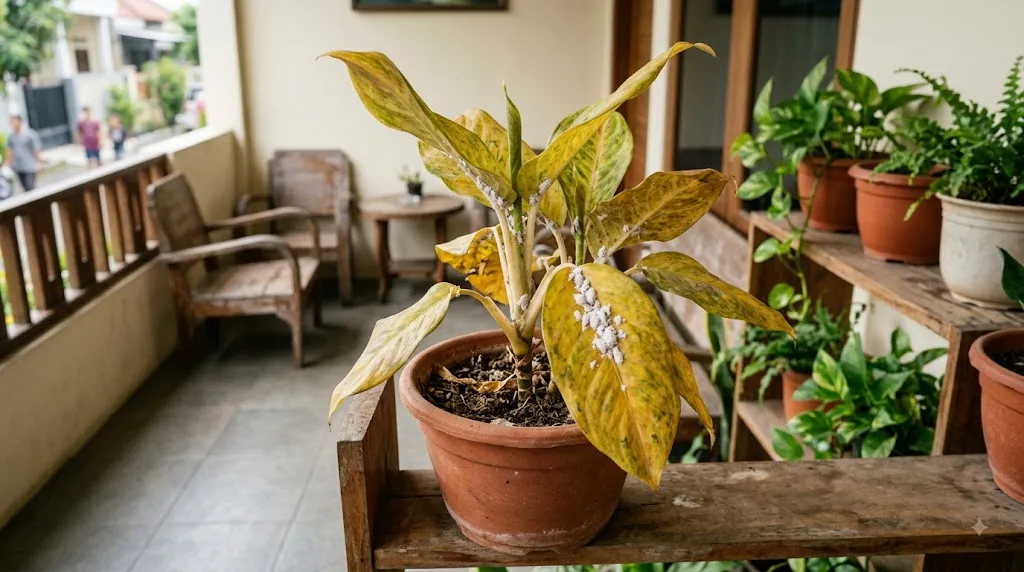
Sometimes the yellowing of leaves is not due to internal sickness but rather an external attack. Fluid-sucking pests are the main enemies that are often not visible to the naked eye.
- Spider Mites: These pests are very small and often hide under leaves. They suck plant cells, leaving fine yellow spots that eventually merge, causing the entire leaf to turn dull yellow.
- Mealybugs: They look like white cotton stuck in the leaf axils. They also suck the plant's sweet sap, causing the leaves to yellow and eventually drop off.
- Solution: For first aid, wipe the leaves with a mixture of water and a little gentle dish soap. For severe infestations, use Neem Oil, which is an effective organic pesticide to repel pests without poisoning the home environment.
6. Environmental Stress & Light
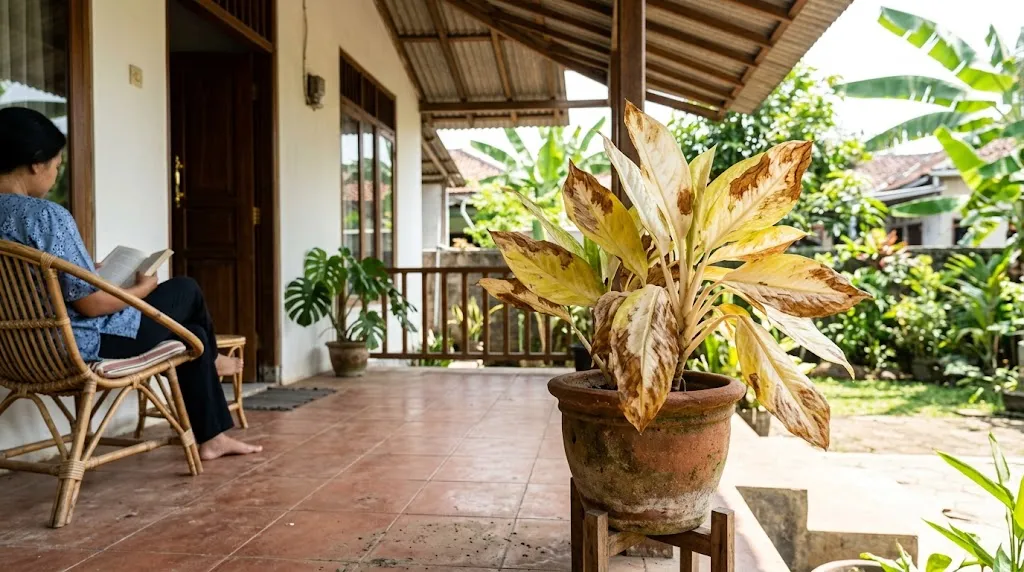
Plants have feelings too! They can get shocked (shock) if the environment changes drastically.
- Insufficient Light: Leaves that lack sunlight cannot perform photosynthesis effectively. As a result, the leaves will fade to pale green, then yellow, and eventually drop, especially the lower leaves that are shaded by other leaves.
- Sunburn: Conversely, shade plants that are suddenly exposed to intense sunlight will experience scorch or sunburn. Their leaves will turn white or yellow with dry brown spots that are rough.
- Draft: Placing tropical plants directly in front of an air conditioner or a strong draft can stress them due to extreme temperature changes, causing the leaves to yellow and drop suddenly.
7. Emergency Rescue Steps for Yellowing Leaves
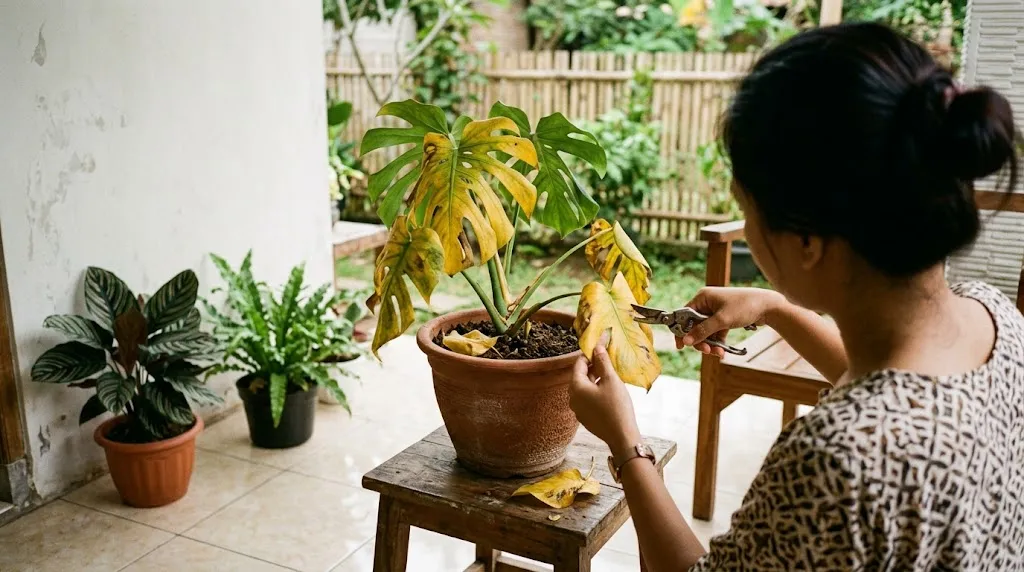
If you find a plant that has started to yellow, don’t panic. Follow these recovery steps:
- Isolate the Plant: Separate it from other plants to prevent spreading if the cause is pests or fungi.
- Prune Damaged Leaves: Leaves that have turned completely yellow cannot turn green again. Just cut them off using sterilized scissors so that the plant’s energy focuses on healthy young leaves.
- Check the Roots: If the soil is soggy, immediately replace it with dry planting media.
- Evaluate Fertilization: Remember when was the last time you fertilized? If it has been a while, provide balanced fertilizer. If you just fertilized, flush the soil with running water (flushing) to remove any leftover fertilizer salts that may have accumulated and burned the roots.
Caring for plants does require patience and sensitivity, Kl Lovers. Yellowing leaves are their way of "talking" to us. By understanding their language, you can become a skilled plant doctor in your own home. Good luck, and may the mini forest in your home become green and fresh again!
8. Questions and Answers About Yellowing Leaves
1. Can yellow leaves turn green again?
In general, leaves that have turned completely yellow cannot turn green again because their chlorophyll is permanently damaged. However, if the yellowing is only light spots due to nutrient deficiencies (such as magnesium or iron deficiency) and is addressed promptly, there is a possibility for the color to improve, although it rarely returns to 100% perfection. The best step is to prune the severely yellow leaves so that the plant can redirect its energy to grow new healthy shoots.
2. Can I fertilize immediately upon seeing yellow leaves?
Don't rush! Fertilizing a stressed plant (for example, due to root rot or drought) can actually kill it. Fertilizer is like vitamins, not medicine. First, make sure the cause of the yellowing is not due to water issues or pests. If the plant is yellow due to overwatering, applying fertilizer will only increase the salt levels in the soil and further harm the wounded roots.
3. Why are my plant's leaves yellowing and dropping after being moved to a new pot?
This condition is called transplant shock or post-planting stress. The plant's roots may be slightly damaged or have not yet adapted to the new growing medium. This is normal in the first 1-2 weeks. Place the plant in a shaded area, maintain soil moisture (but don't let it become soggy), and avoid fertilizing for the first month until you see new growth shoots.
(kpl/ibr)
Disclaimer: This translation from Bahasa Indonesia to English has been generated by Artificial Intelligence.


 Follow
 Rekomendasi