Kapanlagi.com - Cosmos flowers are known as relatively easy-to-grow flowering plants that can add bright colors to your home garden. These plants thrive in full sunlight, well-drained soil, and require relatively simple care.
In Indonesia, cosmos can be planted directly in the ground or in pots as long as their light, water, and growing medium needs are met. For optimal growth, the planting process should be done gradually, starting from selecting seeds to caring for the plants after they have grown.
For more on how to plant cosmos in your yard, KapanLagi.com presents this on Saturday (8/8).
1. Choose Quality Cosmos Seeds
How to Plant Cosmos in the Yard/AI Generated
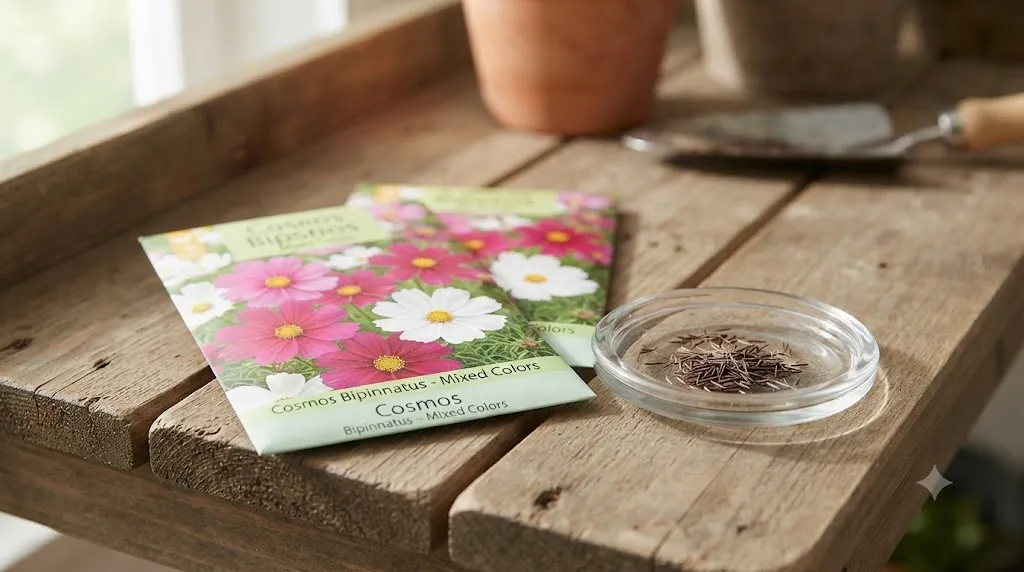
The first step in how to plant cosmos in the yard is to choose quality seeds that still have good germination power. The cosmos commonly planted as ornamental plants include Cosmos bipinnatus, which has flowers that are white, pink, to purple-red.
Choose seeds from packaging that is still good and has not passed the expiration date, or use seeds harvested from flowers that are fully mature and dried. Cosmos seeds are elongated and relatively easy to plant as they can be sown directly without special treatment like soaking.
If using seeds from your own harvest, ensure the seeds come from healthy plants and show no signs of disease. Store the seeds in a dry and cool place if not planted immediately to maintain their quality.
2. Determine Location with Sufficient Sunlight

How to Plant Cosmos in the Yard/AI Generated
Cosmos requires abundant sunlight to produce strong growth and good flowers. Therefore, choose a part of the yard that receives direct sunlight for most of the daytime, ideally around six hours or more per day.
In Indonesia, which has relatively high sunlight intensity, cosmos can still grow well as long as the soil is not constantly wet and the plants receive adequate air circulation. Avoid locations that are always shaded by buildings, large trees, or fences, as a lack of light can cause the stems to elongate and the plants to produce fewer flowers.
Also pay attention to the conditions around the location after rain, especially if planting during the rainy season. Areas that frequently become flooded should be avoided because cosmos roots do not like media that is waterlogged for long periods.
3. Prepare Soil or Planting Media That Is Not Too Fertile

How to Plant Cosmos in the Garden/AI Generated
Before planting, loosen the yard soil so that young roots can develop more easily. Cosmos do not require very fertile soil to grow and bloom well, but they still need media that has good drainage and does not easily become waterlogged.
If the yard soil tends to be compacted or retains water easily, improve its structure by adding sufficient mature organic matter. Avoid making the media too rich in nitrogen or applying fertilizer excessively, as these conditions can encourage excessive growth of leaves and stems, making flowering less optimal.
For planting in pots, use containers that have drainage holes at the bottom. The media should have a loose and porous structure so that excess water can drain out well after watering, without making the media too rich in nutrients.
4. Plant Cosmos Seeds in the Prepared Medium
How to Plant Cosmos in the Garden/AI Generated
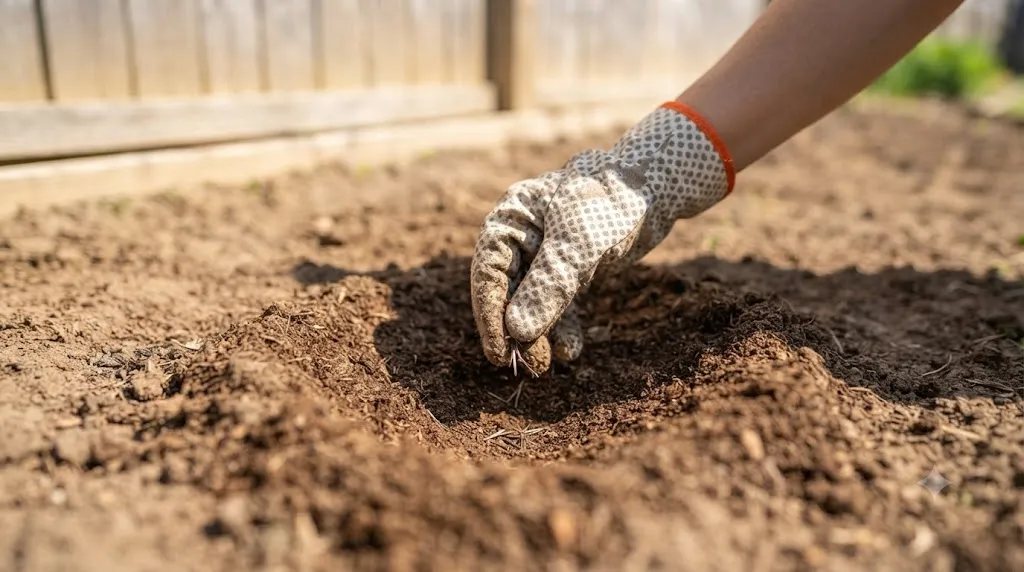
Cosmos seeds can be planted directly in the prepared location, so they do not always require a prior germination process. Make shallow planting holes, place the seeds, then cover lightly with soil or planting medium.
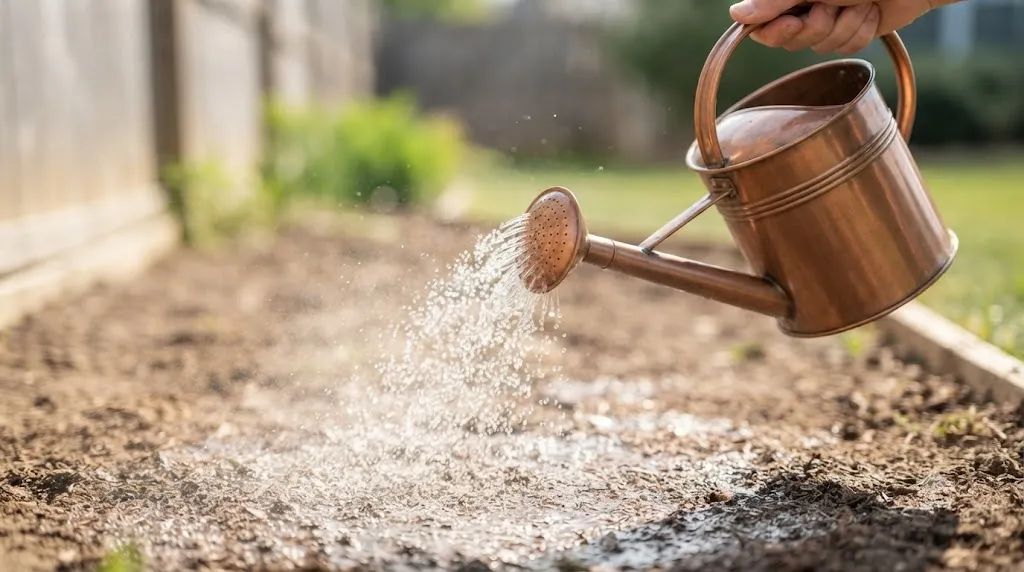
Do not plant the seeds too deep as this can hinder the germination process. After the seeds are planted, water them using a gentle flow of water so that the seeds do not wash away or shift from their original position.
Provide planting spacing according to the mature size of the variety and the instructions on the seed packaging. Avoid planting too closely so that each plant receives enough light and air circulation, especially for varieties that can grow tall and spread wide.
5. Maintain Moisture During the Germination Process
How to Plant Cosmos in the Garden/AI Generated
After the seeds are planted, maintain the medium in a moist condition but not soggy. Overwatering can actually cause problems for the seeds and young seedlings, especially if the garden soil has poor drainage.
Check the moisture of the medium periodically and adjust watering according to weather conditions. During hot and dry periods, the medium may require more frequent watering, while during rainy periods, additional watering can be reduced or temporarily stopped.
Cosmos seeds generally begin to germinate in about 7–21 days, although the timing may vary depending on the variety and environmental conditions. Once the seedlings emerge, continue to provide adequate light to prevent weak and elongated stem growth.
6. Care for the Plants and Install Support Stakes
How to Plant Cosmos in the Garden/AI Generated
As the plants begin to grow, water them adequately based on soil and weather conditions. Established cosmos are relatively tolerant of drier conditions but still require water, especially during hot weather and when there hasn't been rain for a considerable time. Also, remove weeds around the plants to prevent competition for water, light, and nutrients.
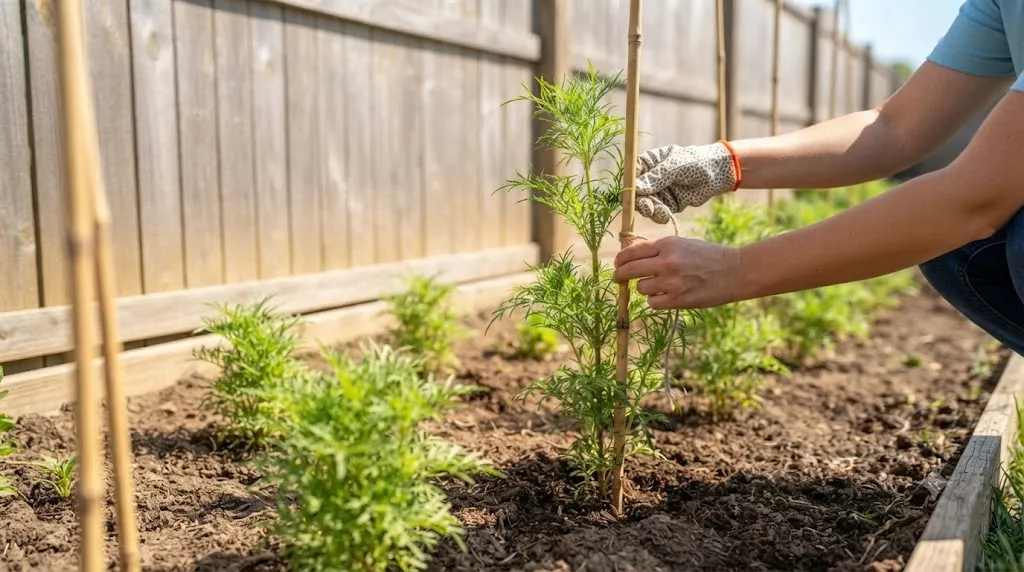
Some varieties of Cosmos bipinnatus can grow tall, making their stems prone to falling, especially when exposed to strong winds or heavy rain. For tall varieties, install stakes before the stems begin to fall to keep the plants upright and prevent damage.
Cosmos generally do not require routine fertilization or large amounts of fertilizer. If planted in soil or media that already has sufficient fertility, additional fertilization is usually unnecessary, while excessive fertilization can encourage vegetative growth and reduce flowering quality.
7. Prune Wilted Flowers and Harvest Seeds for Next Planting
How to Plant Cosmos in the Yard/AI Generated
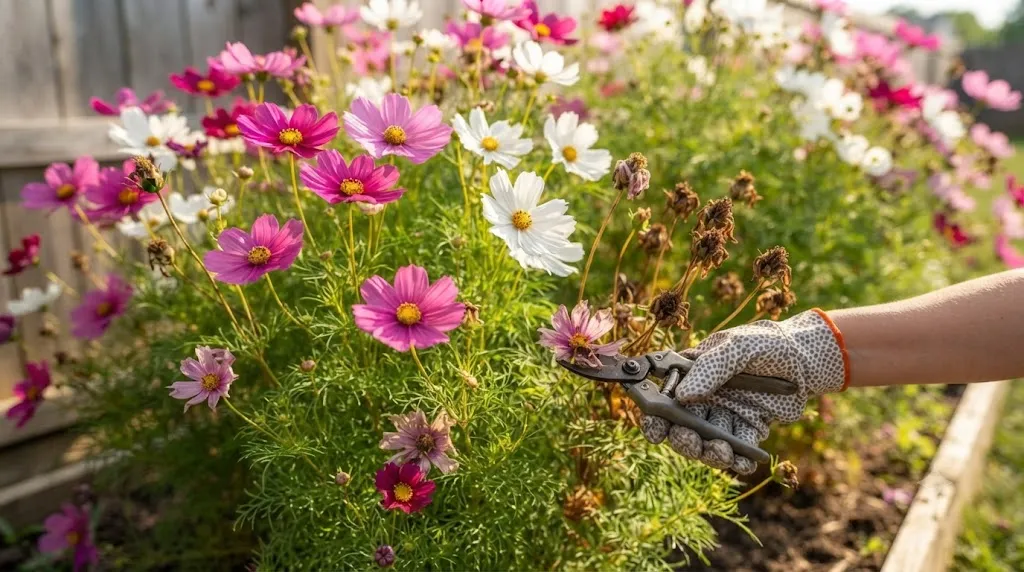
Once the cosmos starts to bloom, the wilted flowers can be cut or picked periodically (deadheading). This method helps keep the plant looking tidy while also encouraging it to produce more flowers as long as the growing conditions are favorable.
Provide enough spacing to ensure good air circulation between the plants. Conditions that are not too humid can help reduce the risk of certain diseases, especially when the weather is often rainy, while monitoring is still necessary to detect pests like aphids or snails early on.
Cosmos bipinnatus is an annual plant that completes one life cycle in a single growing season, after which the parent plant will die after producing flowers and seeds. If you want to plant it again, leave some of the wilted flowers on the plant until the flower heads and seeds mature and dry, then harvest and store the seeds in a dry and cool place until the next planting time.
8. Questions and Answers About How to Plant Cosmos in the Yard
1. Can cosmos flowers be planted directly from seeds?
Yes, cosmos can be planted directly from seeds in the yard soil or in pots. The seeds should be sown shallowly and covered lightly with soil, then keep the medium moist without waterlogging.
2. How long does it take for cosmos seeds to germinate?
Cosmos seeds generally start to germinate in about 7–21 days, depending on the variety and environmental conditions. During this process, the medium needs to be kept moist and the seedlings should receive adequate light once they emerge.
3. Do cosmos need a lot of fertilizer?
Cosmos generally do not require routine fertilization or large amounts of fertilizer. Soil with low to moderate fertility can already support growth, while excessive fertilization, especially nitrogen, can lead to more dominant leaf and stem growth, resulting in less optimal flowering.
4. Do cosmos plants need stakes?
Stakes are especially needed for tall-growing cosmos varieties or those planted in locations that are frequently exposed to wind and heavy rain. Install stakes before the stems start to droop to keep the plants upright and prevent damage.
5. How can I obtain cosmos seeds for replanting?
Allow some of the wilted flowers to remain on the plant until the flower heads and seeds mature and dry. Once dry, harvest the seeds and store them in a cool, dry place until the next planting time.
(kpl/rmt)
Disclaimer: This translation from Bahasa Indonesia to English has been generated by Artificial Intelligence.


 Follow

 Rekomendasi