Kapanlagi.com - Rice that is too soft can indeed diminish the enjoyment of eating. The way to fix soft rice to make it fluffy does not always require additional ingredients or throwing away rice that has already been cooked. With the right technique, excess moisture can be reduced so that the texture of the rice becomes just right.
Errors when cooking rice can happen to anyone, whether using a rice cooker or cooking manually. From the wrong water measurements to the condition of the equipment not working optimally, these can cause the rice grains to lose their fluffy texture and become too soft.
The good news is that most cases of soft rice can still be fixed. In addition to understanding how to address it, knowing the causes of rice becoming too wet is also important to prevent the same mistakes in future cooking processes. So, what are the ways to fix soft rice to make it fluffy again? As reported by KapanLagi from various sources, Thursday (6/8), here is the complete review.
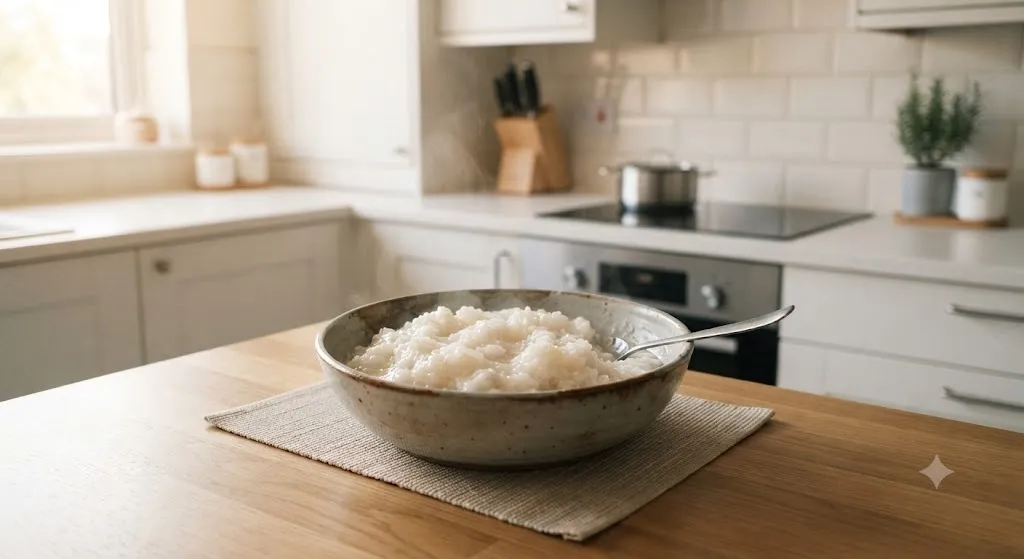
1. Why Can Rice Become Mushy?
Causes of Mushy Rice (AI Generated)
The texture of rice is influenced by the balance between the amount of water, the type of rice, and the heating process during cooking. According to the book On Food and Cooking: The Science and Lore of the Kitchen by Harold McGee, the starch in rice absorbs water and undergoes gelatinization when heated. If the available water is too much or the heating process is not optimal, the starch will absorb excess water, causing the rice to become too soft.
In addition to these scientific factors, cooking habits also play a significant role. Here are some common causes of rice becoming mushy.
- Using more water than necessary, causing the rice to absorb excess moisture.
- Choosing a type of rice that naturally has a softer character or a high amylopectin content.
- Not draining the rice well after washing, leaving residual water in the pot.
- Opening the rice cooker lid too often during the cooking process, causing the temperature inside the container to become unstable.
- The heating element or sensor of the rice cooker is starting to decline in performance, so the cooking process does not proceed as it should.
According to Rice Chemistry and Technology published by the American Association of Cereal Chemists, the characteristics of each rice variety are indeed different. Some types of rice produce firmer rice, while others tend to be softer and even become mushy if the water measurement is not adjusted. Therefore, understanding the characteristics of rice is as important as determining the right amount of water.
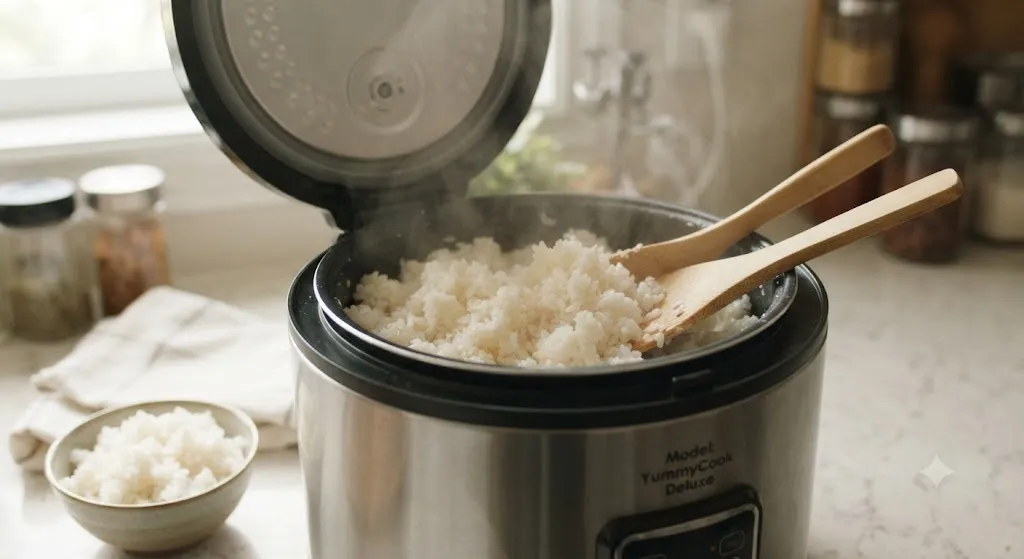
2. How to Fix Mushy Rice in a Rice Cooker
Fixing Rice in a Rice Cooker (AI Generated)
Rice that is too soft does not mean it cannot be salvaged. As long as the rice is not spoiled or has a sour smell, the excess moisture can still be reduced by utilizing the remaining heat in the rice cooker. According to Harold McGee in On Food and Cooking: The Science and Lore of the Kitchen, after the cooking process is complete, steam continues to move inside the container.
If that moisture can be released slowly, the texture of the rice will become drier, and the grains will feel more separated. Here are some methods that can be tried.
1. Stir the Rice After Cooking
Immediately after the rice cooker switches to warm mode, stir the rice gently with a rice spoon from the bottom to the top. This method helps release the trapped steam at the bottom of the pot while also allowing the heat to distribute more evenly.
Stirring the rice also prevents the bottom from becoming too mushy due to continuous exposure to steam. Do this just enough so that the grains do not break and maintain their shape.
2. Let the Rice Cooker Sit with the Lid Open for a Few Minutes
If the rice still looks too wet, open the lid of the rice cooker for about 5–10 minutes. This simple step allows excess steam to escape, reducing the moisture inside the pot.
After that, close the rice cooker again and let it stay on the warm mode for 10–15 minutes. This process helps the rice grains absorb the residual heat without being exposed to excess steam, resulting in a fluffier texture.
3.Reheat Without Adding Water
If the rice is still mushy after resting, reactivate the cooking mode for a few minutes without adding water. The additional heat will help evaporate the moisture that remains in the rice.
However, do not repeat this process for too long, as the bottom of the rice may dry out and even form a crust. A brief cycle is sufficient, then return to warm mode.
4.Place a Clean Cloth Under the Lid of the Rice Cooker
Another effective method is to place a clean cloth or a thin kitchen towel under the lid of the rice cooker. The cloth functions to absorb the steam that usually drips back onto the surface of the rice during the heating process.
Make sure the cloth does not touch the heating element or obstruct the closure of the rice cooker. Use a clean, dry, and lint-free cloth to maintain hygiene.
5. Add a Little Dried Rice as a Moisture Absorber
If the rice is only slightly soggy, some people utilize a small amount of raw rice wrapped in a thin cloth or placed in a small heat-resistant container inside the rice cooker. Dry rice can help absorb some moisture in the enclosed space without directly mixing with the cooked rice.
According to The Science of Good Cooking from America's Test Kitchen, controlling steam after the rice is cooked is one of the important factors in achieving fluffy and non-sticky rice texture. Therefore, do not rush to scoop the rice as soon as the rice cooker finishes cooking. Allowing it to rest for a few minutes actually helps the rice grains become firmer and separate well.
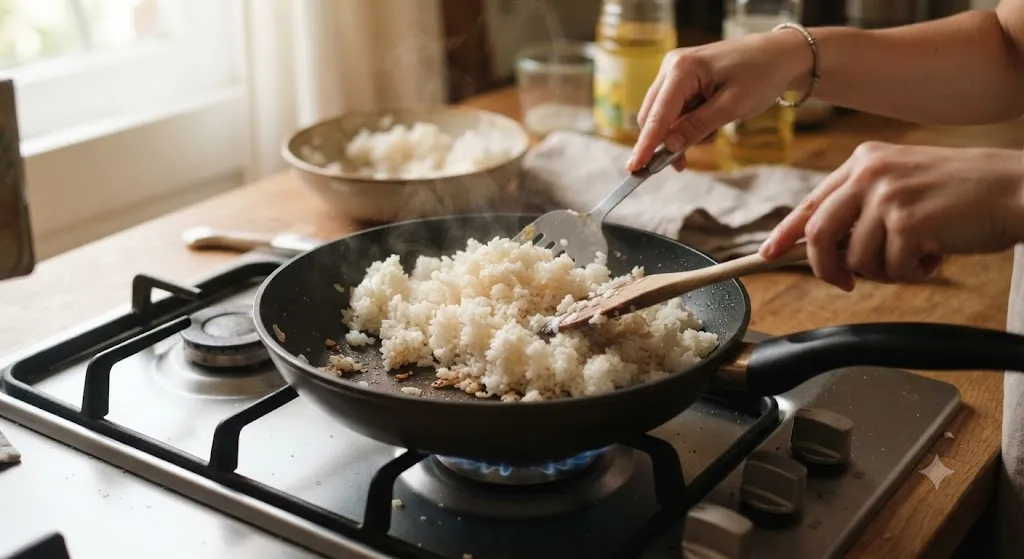
3. How to Fix Mushy Rice Without a Rice Cooker
Without a Rice Cooker (AI Generated)
Not everyone has a rice cooker or wants to rely on it when fixing rice that is too soft. Fortunately, there are several simple methods that can be done.
According to Harold McGee in On Food and Cooking: The Science and Lore of the Kitchen, the process of further heating can help evaporate the excess water remaining after the rice is cooked. As heat is applied slowly and not excessively, the grains of rice will become more separate without losing their natural moisture inside. Here are some methods that can be tried.
1. Steam the Rice Again Over Medium Heat
Re-cooking using a steamer is one of the safest ways to improve the texture of rice that is too soft. Spread the rice in a heat-resistant container or a thin baking tray so that the steam can reach the entire surface evenly.
Steam for about 10–15 minutes over medium heat. During this process, some excess water will evaporate, causing the texture of the rice to gradually become firmer. Avoid steaming for too long because the rice can become too dry.
2. Heat on a Non-Stick Pan
A flat pan can also be used to reduce the moisture in the rice. Spread the rice over the surface of the pan without adding oil or water, then heat on low flame while occasionally stirring gently.
This method allows steam to escape more quickly because the surface of the rice is in direct contact with the heat. Stir periodically to prevent the bottom from burning and ensure that all the rice heats evenly.
3. Spread on a Tray to Allow Steam to Escape Quickly
If the rice is only slightly soggy, you don't always need to reheat it. Transfer the rice to a tray, baking sheet, or large clean cutting board, then spread it out into a thin layer.
A larger surface area allows steam to escape into the air more easily, thus reducing excess moisture naturally. After about 10–15 minutes, the rice can be returned to the serving container.
The book The Food Lab by J. Kenji López-Alt also explained that spreading hot food over a larger surface can accelerate vapor release and help maintain the food's texture optimally. This principle also applies to rice that has too high a water content.
4. Tips to Prevent Rice from Becoming Mushy When Cooked
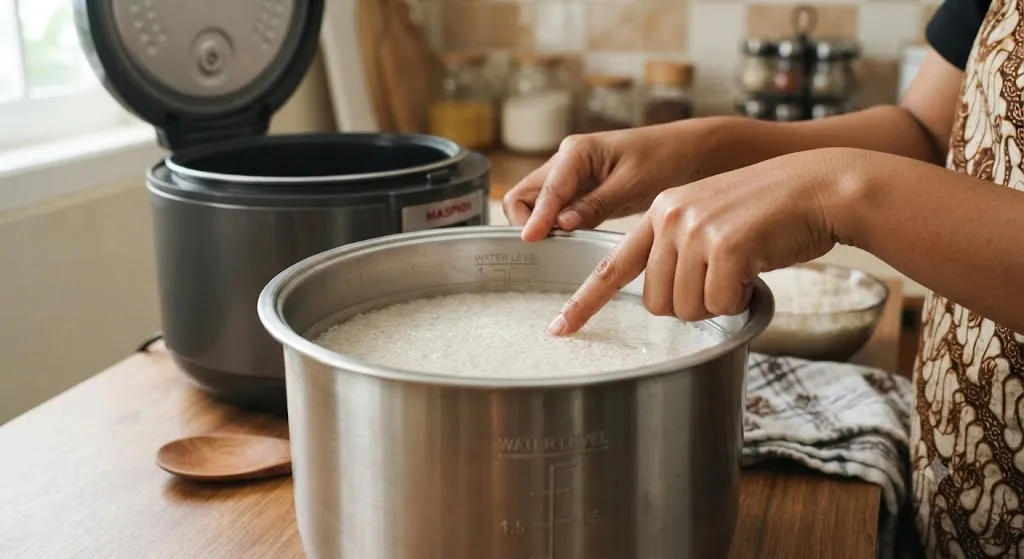
Pay Attention to Water and Rice Type (AI Generated)
Preventing is certainly easier than fixing rice that has already become mushy. Most failures in cooking rice actually start from simple steps that are often considered trivial. With a little attention to detail, you can achieve consistently fluffy rice every time you cook.
According to Rice Chemistry and Technology published by the American Association of Cereal Chemists, the balance between the type of rice, moisture content, and heating process is the main factor determining the quality of the rice. Since each rice variety has different water absorption capabilities, the amount of water should be adjusted according to the characteristics of the rice used, rather than using the same measurement for all types.
To achieve fluffier rice that doesn't easily become mushy, apply the following habits.
- Use the water measurement according to the type of rice. Dry rice usually requires less water compared to very fluffy rice.
- Drain the rice after washing. Let it sit for a few minutes so that the excess water does not add to the cooking water volume.
- Use a measuring cup or the built-in measuring tool of the rice cooker. This method is more accurate than estimating the amount of water manually.
- Avoid opening the rice cooker lid too often. Opening the lid during the cooking process changes the temperature and steam pressure, resulting in less than optimal rice.
- Ensure the rice cooker is in good condition. Clean the inner pot, heating element, and sensor regularly to ensure even heat distribution.
- Let the rice sit for 10–15 minutes after cooking. This resting time helps steam distribute more evenly, making the rice grains feel fluffier when stirred.
5. Questions About How to Fix Mushy Rice to Be Fluffy
1. Can mushy rice be saved?
Yes. As long as the rice is not spoiled or sour smelling, its texture can still be improved by reducing excess moisture using heat or air circulation.
2. Why is the rice still mushy even though the water measurement was correct?
In addition to the amount of water, the cause could come from the type of rice, rice that was not drained after washing, or the condition of the rice cooker that is starting to decline in performance.
3. How long should rice be left after cooking?
Ideally about 10–15 minutes before stirring or serving to allow the steam to distribute evenly and the texture to be fluffier.
4. Can mushy rice be fixed without a rice cooker?
Yes. You can steam the rice again, heat it in a pan over low heat, or spread it on a tray to allow steam to escape quickly.
5. How can you prevent rice from becoming mushy?
Use the appropriate water measurement for the type of rice, drain the rice after washing, avoid opening the rice cooker lid frequently, and ensure the cooking appliance is functioning properly.
(kpl/mda)
Disclaimer: This translation from Bahasa Indonesia to English has been generated by Artificial Intelligence.


 Follow
 Rekomendasi