Kapanlagi.com - Growing celery (Apium graveolens) at home is an effective way to obtain a supply of fresh and organic vegetables. Celery is known as a vegetable rich in nutrients and is often used in various dishes. By following the right steps, you can ensure that your celery plants grow optimally and quickly become lush.
In this guide, we will explain how to grow celery for quick lushness, starting from seed selection to the harvesting process. By knowing the right techniques, you can enjoy a bountiful and high-quality celery harvest.
1. Selection of Celery Seeds or Seedlings
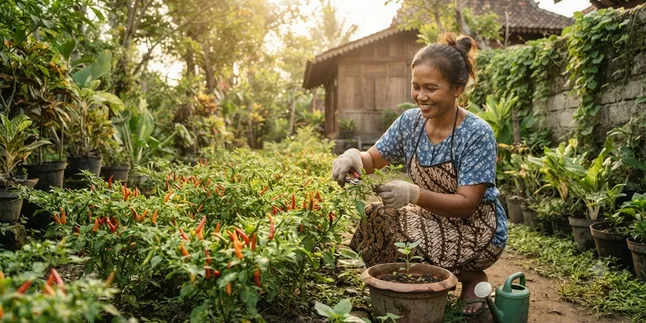
Planting Celery (AI Generated)
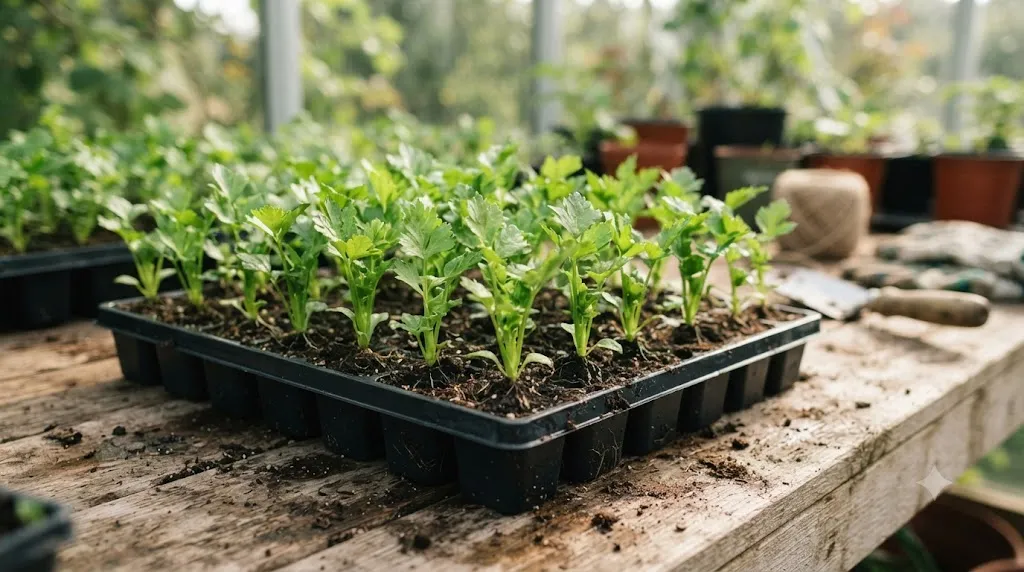
The selection of celery seeds or seedlings is a very important initial step in the planting process. There are two common types of celery that are grown, namely stalk celery and leaf celery. Choose a variety that suits your preferences so that the harvest meets your expectations. Also, make sure to use good quality celery seeds that can be purchased at the nearest agricultural store.
You can propagate celery using several methods. First, from seeds, where celery seeds are sown to grow new plants. Second, from offsets, where celery seedlings are taken from shoots that grow close to the parent plant. Lastly, you can also plant celery from leftover stalk bases that still have roots, which can be soaked in water until new roots grow before being planted in permanent media.
By choosing the right and quality seeds, you will have a greater chance of obtaining healthy and lush celery plants. Make sure to pay attention to the appropriate propagation methods so that the planting process goes smoothly.
2. Preparation of Planting Media
The ideal planting media greatly influences the growth of celery. A mixture of loose soil, manure or compost, and rice husk or burned husk in a ratio of 1:1:1 is the recommended composition. Some sources also recommend a mixture of soil, mature compost, and burned husk in a balanced ratio for better results.
The characteristics of the planting media should be loose, fertile, and have good drainage. Loose media makes it easier for roots to absorb nutrients, leading to faster leaf growth. Additionally, the ideal soil pH for celery is between 5.5 and 6.5, so you need to ensure that the soil used has the appropriate acidity level.
Use pots or polybags with adequate drainage holes to avoid waterlogging that can cause root rot. Add gravel or broken tiles at the bottom of the pot to improve drainage. With the right planting media, your celery will grow well and become lush quickly.
3. Seed Germination (If from Seeds)
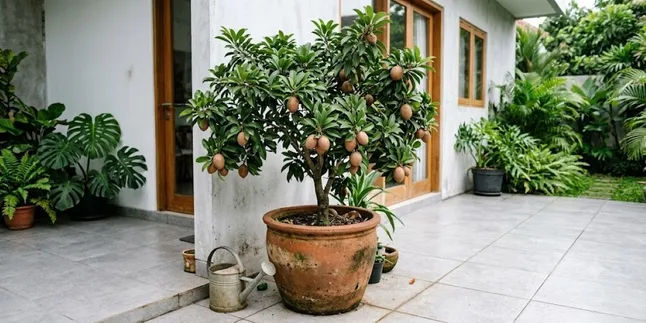
Planting celery (AI Generated)
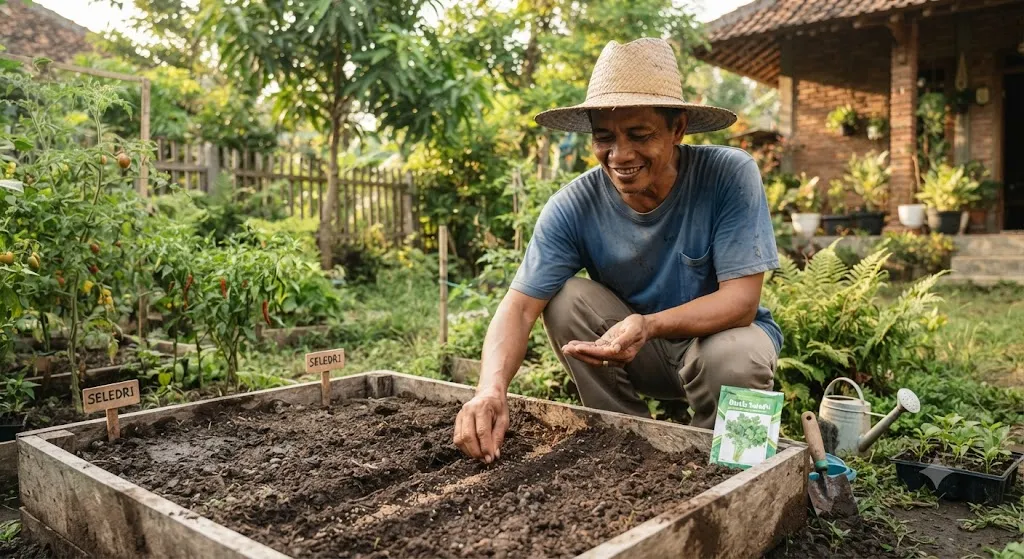
Germinating celery seeds needs to be done carefully to ensure optimal plant growth. First, soak the celery seeds in warm water at a temperature of 50-60 degrees Celsius for 60 minutes to enhance germination. Prepare the seedling medium from a mixture of soil and compost in a ratio of 2:1, or you can use rockwool, cocopeat, or rice husk charcoal.
Sprinkle the celery seeds evenly on the surface of the seedling medium, ensuring they do not pile up for uniform growth. Cover the seeds with a thin layer of planting medium to protect them. After that, water the seeds and cover the seedbed with a sack or soil cover to maintain moisture and stimulate germination.
Place the seedling medium in a warm location so that the soil temperature is between 21-23 degrees Celsius until germination, which usually takes about 2-3 weeks. After germination, remove the cover and provide shade to protect from the sun's heat. Celery seedlings are ready to be transplanted after 45-50 days or when they have 2-4 true leaves.
4. Seedling Planting
Once the celery seedlings are strong enough, it’s time to move them to the planting area. Ensure that the seedlings have several true leaves before planting. The ideal planting distance is about 15-20 cm between plants to support maximum growth and prevent nutrient competition. Planting too closely can hinder growth and make the plants susceptible to diseases.
Create planting holes 2-3 cm deep and place the seedlings in the holes. Cover the planting holes with soil while compacting it, ensuring the celery seedlings grow upright and sturdy. Plant the base of the stem so that part of it is submerged in the growing medium, leaving the shoot part above the surface for optimal growth.
After planting, keep the pot or polybag in a shaded area for 3-7 days for the adaptation process. This way, your celery plants will adapt more easily to their new environment and grow well.
5. Lighting
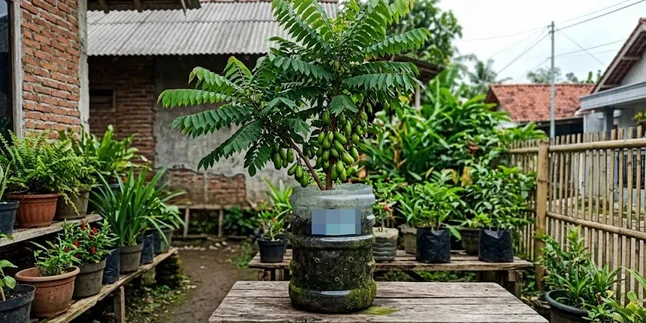
Growing Celery (AI Generated)
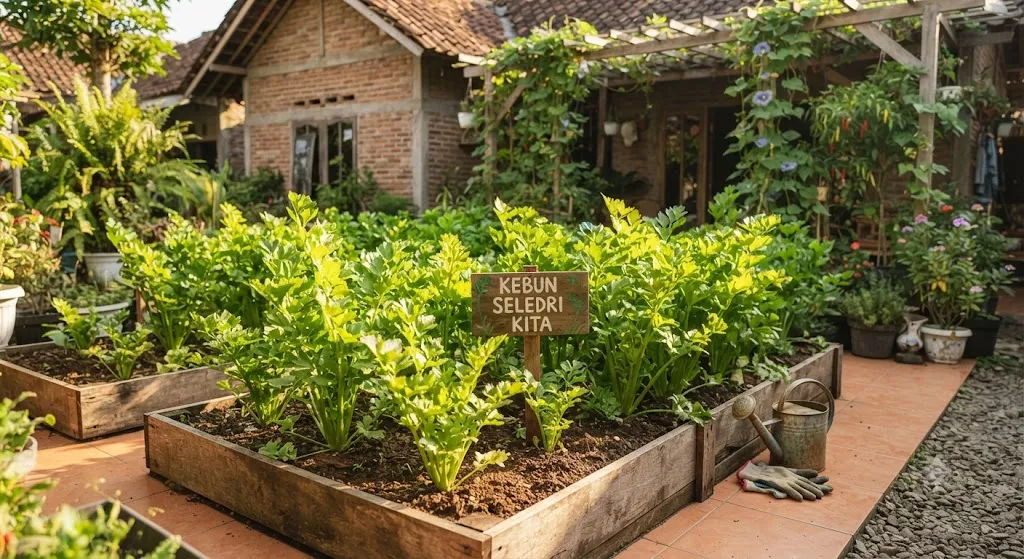
Proper lighting is very important for the growth of celery. Celery needs a minimum of 4-6 hours of morning sunlight every day, but some sources suggest that celery should receive full sunlight for 6-8 hours. Placing pots or containers in locations that receive adequate sunlight will support optimal plant growth.
Although celery is considered a vegetable that can grow in low light conditions, intense light can enhance chlorophyll content. Therefore, providing shade can help reduce the detrimental effects of excessive light intensity, lower temperatures, and increase humidity around the plants.
Be sure to monitor the condition of the plants and adjust the placement of pots according to the light needs of the celery. With the right lighting, your celery will grow healthier and bushier.
6. Watering
Proper watering is crucial to maintain the moisture of celery. Water the plants regularly, especially when the surface of the growing medium starts to feel dry. Water every morning and evening, especially during the dry season, to keep the soil moist. Celery requires about one to one and a half inches of water per week, even more during hot weather.
Use a sprayer or hose with a fine nozzle to avoid damaging young leaves and stems. Ensure that water does not pool in the pot, as this can lead to root rot. Celery is very susceptible to root rot if its water needs are not balanced, so it is important to maintain consistent moisture.
During the rainy season, reduce watering to avoid excess moisture that can trigger diseases. You can also install a transparent plastic cover if the rainfall is too high to protect the plants from excess humidity.
7. Fertilization
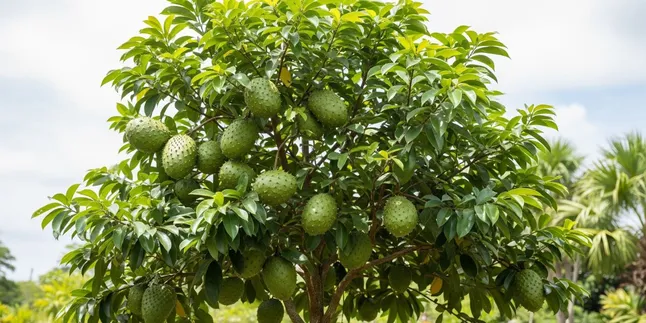
Planting celery (AI Generated)
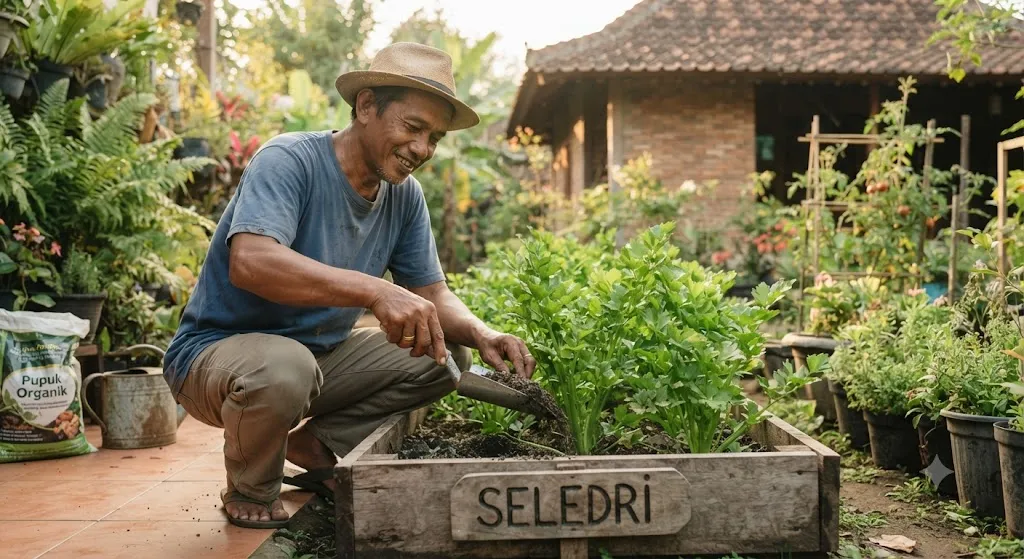
Proper fertilization will support optimal celery growth. Apply liquid organic fertilizer or compost every two to three weeks to meet the plant's nutritional needs. Organic fertilizers such as compost or manure can routinely improve soil quality and help stimulate the growth of new leaves, making the plants look even more lush.
You can also use chemical fertilizers like NPK (16:16:16) and ZA fertilizer. Basal fertilization should be done during land preparation, while subsequent fertilization can be carried out 10-15 days after planting and so on according to the predetermined schedule.
The nitrogen content in fertilizers is very important for the growth of new leaves, while calcium is also needed to strengthen plant cell walls. With proper fertilization, your celery will grow healthier and become more lush quickly.
8. Other Maintenance
Celery maintenance not only includes watering and fertilizing but also weeding. Perform weeding every 2 weeks to prevent competition for nutrients with the celery plants. Manually remove weeds to avoid damaging the roots of the growing celery.
Pruning old leaves is also important for maintaining plant health. Don’t hesitate to prune leaves that are starting to yellow or look old, as pruning helps the plant redirect energy to produce new, denser shoots. Additionally, periodically loosen the soil to ensure good aeration for the roots.
By performing good maintenance, you will achieve an abundant and high-quality celery harvest. Always monitor the condition of the plants and provide the necessary care to ensure optimal celery growth.
9. Pest and Disease Control
Pest and disease control is very important to maintain the health of celery plants. Common pests that attack celery include aphids, whiteflies, and caterpillars. Aphids can absorb nutrients from the plants, hindering their growth, while soil caterpillars can cut the leaf stalks or shoots of the plants.
Diseases that often affect celery include leaf spots caused by fungi and stem rot caused by bacteria. To prevent pest and disease attacks, arrange the planting distance properly for good air circulation and keep the area around the plants clean from debris and leaves.
You can also use botanical pesticides to control pests such as aphids and whiteflies. Spray a mixture of vinegar, water, baking soda, and vegetable oil to eliminate aphids. With proper control, your celery will grow healthy and be free from pests and diseases.
10. Harvest
The harvest time for celery typically ranges from 60 to 90 days after planting. If grown from seeds, the first harvest can be done after the plants are 80 to 100 days old. Celery plants are ready to be harvested when their leaves are lush and reach a height of 25-30 cm, or when there are many side shoots.
The harvesting technique that can be used is the 'cut-and-come-again' method, where you can periodically pick or cut the outer leaf stalks, while leaving the young leaves in the center. This method ensures that the plants can continue to regenerate new leaves, allowing you to harvest repeatedly from a single plant.
After harvesting, add compost or new growing media to the pot or polybag to replenish the nutrients. With good post-harvest care, your celery will be ready to grow back and provide abundant yields.
11. Questions and Answers About Growing Celery
1. What are the benefits of growing celery at home?
Growing celery at home provides a supply of fresh and organic vegetables, as well as saving on grocery costs. Celery is also rich in nutrients and can be used in various dishes.
2. When is the best time to plant celery?
The best time to plant celery is during spring or early summer, when the soil temperature is warm enough and the weather conditions support plant growth.
3. How to care for celery to keep it healthy?
To care for celery and keep it healthy, make sure to provide enough water, fertilize regularly, and keep the planting area clean from weeds and pests.
4. Can celery be planted in pots?
Yes, celery can be planted in pots or polybags as long as the planting medium is suitable and the pot has good drainage holes to prevent waterlogging.
(kpl/ank)
Disclaimer: This translation from Bahasa Indonesia to English has been generated by Artificial Intelligence.


 Follow
 Rekomendasi