

 Follow
 Rekomendasi
How to Plant Banana Trees So They Don't Grow Tall, Follow These Steps for Easier Maintenance
Follow this method of planting banana trees so they don't grow tall, making maintenance and harvesting easier. Learn each step here.
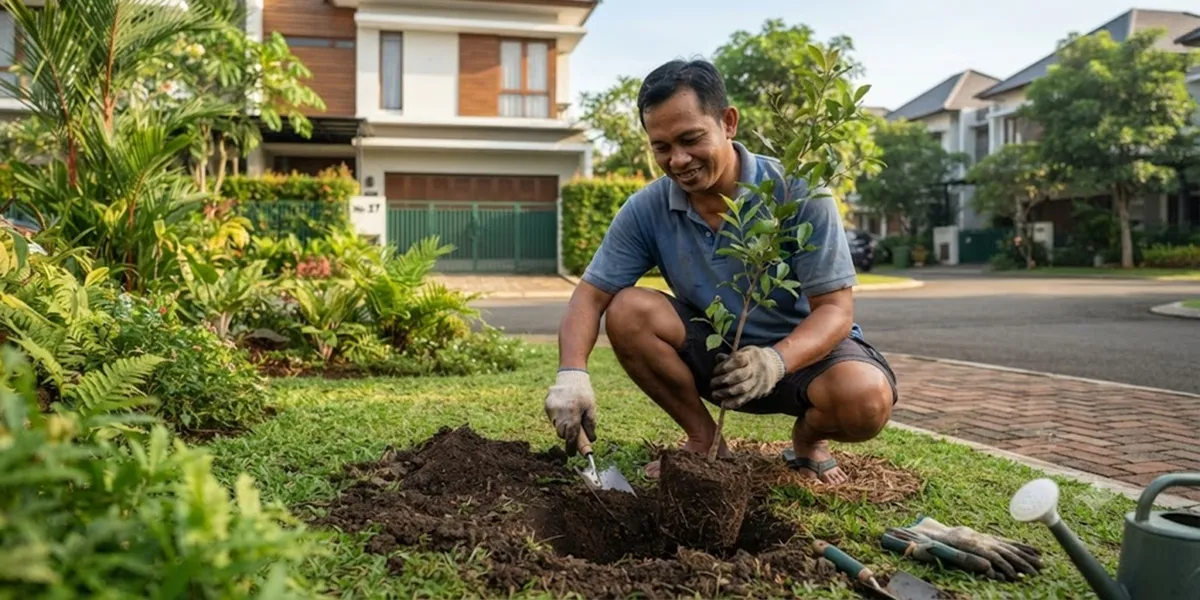
Kapanlagi.com - How to plant Jamaican guava trees for quick fruit production is information that is highly sought after because this fruit plant has a sweet taste, thick flesh, and an attractive dark red color when ripe. In addition to producing quality fruit, Jamaican guava trees can also provide shade for the yard due to their lush canopy and relatively easy growth if given proper care from the beginning of planting.
The way to plant guava trees actually does not only depend on fertilization, but is also influenced by the quality of the seedlings, planting media, watering, and the pruning techniques that are consistently applied. If all these stages are implemented correctly, the trees will grow healthier, flower faster, and be able to produce more fruit compared to less cared-for plants.
(AI Generated)
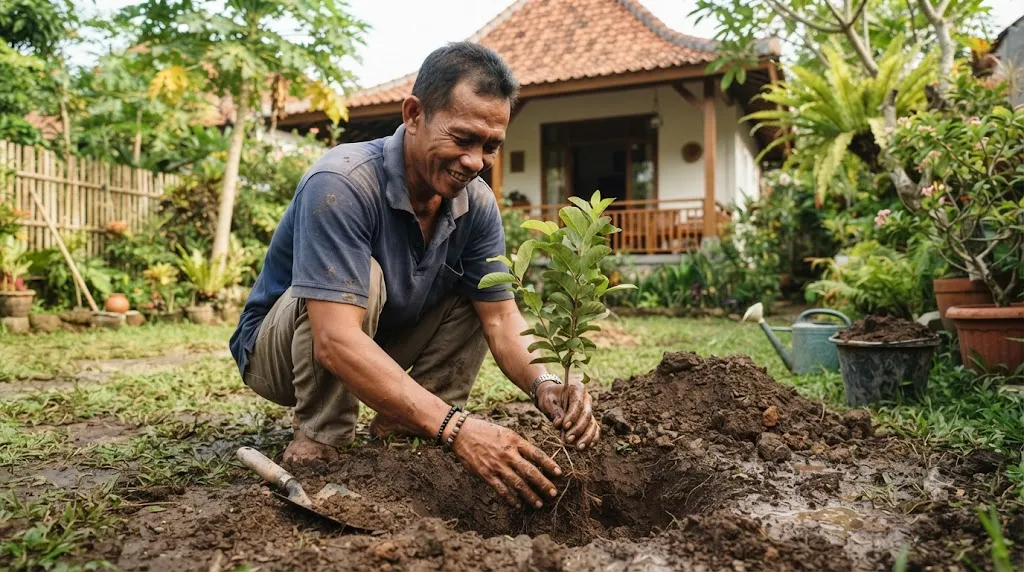
Seedlings are a key factor that determines how quickly a tree enters its productive phase, so it is advisable to choose seedlings from grafting, budding, or top grafting that come from healthy parent plants that have proven capable of producing quality fruit. Vegetative seedlings generally have the same characteristics as their parent trees, so the chances of bearing fruit more quickly are also greater compared to seedlings that come from seeds.
In addition to choosing the type of seedling, ensure that the seedlings have sturdy stems, fresh green leaves, undamaged roots, and are free from signs of disease or pest attacks. How to plant guava trees will yield more optimal results if the planting process begins with truly healthy seedlings, allowing the plants to adapt more quickly after being transferred to the field.
Jamaican guava is a fruit plant that requires a high intensity of sunlight for the photosynthesis process to occur optimally and for flower formation to happen more quickly. Therefore, choose a planting location that receives direct sunlight for six to eight hours each day without being obstructed by buildings or large trees.
A location that is too shady often causes the plant to grow tall with dense leaves, but flowering becomes slower because the plant's energy is more used for vegetative growth. By selecting the right place from the start, the growth of the tree becomes more balanced, thus increasing the chances of producing fruit.
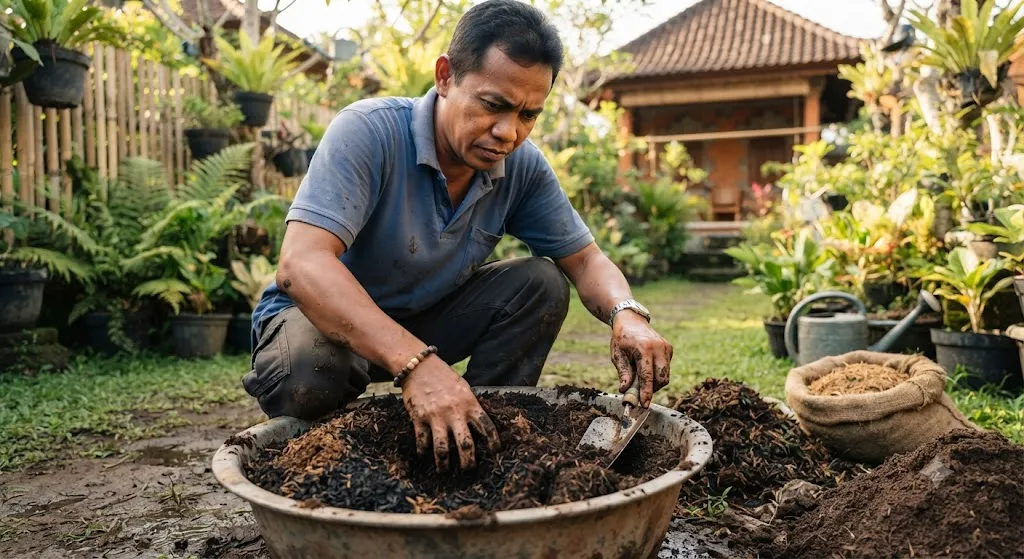
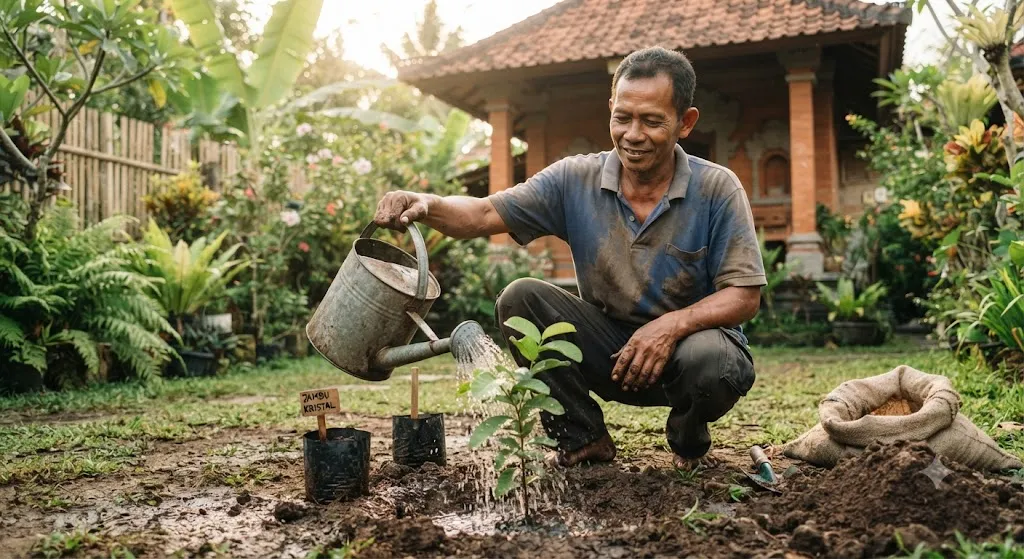
Loose and nutrient-rich planting media helps roots to develop more widely, making the absorption of water and nutrients more efficient during the plant's growth period. Mix soil with mature manure, compost, and burnt rice husks to make the soil structure more porous while also retaining moisture well.
In addition to paying attention to the composition of the planting media, also create planting holes that are large enough for the roots to have space to grow from the beginning. The method of planting guava trees using fertile planting media usually results in faster trunk and branching growth, making the plants more ready to enter the flowering phase.
Base fertilizer functions to provide a reserve of nutrients needed by the plants during the adaptation period after being transferred to the planting area. Use well-matured manure so that its nutrients are easily absorbed and do not generate heat that can damage young roots.
If the soil condition is acidic, add dolomite as needed to make the soil acidity level more ideal for the growth of Jamaican guava. A combination of organic fertilizer and balanced soil conditions will help the roots develop faster, allowing the plants to grow healthier in the long term.
(AI Generated)
Watering is an important part of caring for Jamaican guava because the roots need a sufficient supply of water to support the growth of stems, leaves, and new branches. In the early stages after planting, water daily, especially during hot weather, so the plants do not suffer from water shortage.
However, avoid excessive watering that causes water to pool around the roots, as this condition can trigger root rot and hinder plant growth. The correct way to plant guava trees always pays attention to the balance of water needs so that the media remains moist without becoming too wet.
Regular fertilization helps meet the increasing nutrient needs as the plant ages. During the growth phase, provide organic fertilizers such as compost or well-rotted manure every two to three months, then complement with NPK fertilizer according to the recommended dosage to optimize the growth of stems, leaves, and roots.
When the plant begins to enter its productive age, reduce the application of fertilizers with excessively high nitrogen content and increase phosphorus and potassium to stimulate the formation of flowers and fruits. How to plant guava trees that pay attention to nutritional balance will make the plants not only grow lush but also enter the generative phase more quickly, resulting in a more maximal harvest.
(AI Generated)
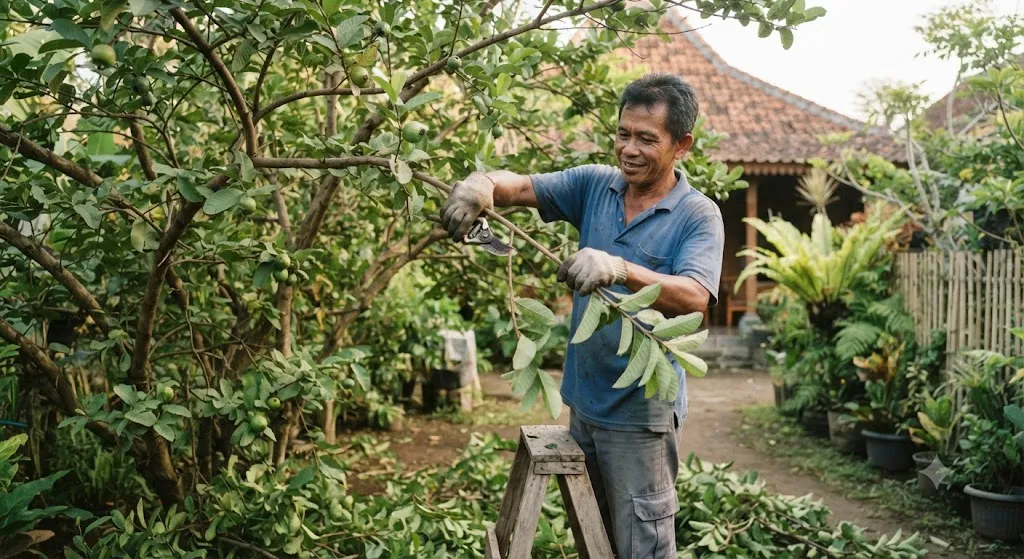
Pruning aims to shape the tree canopy to be neater while improving air circulation and lighting among the plant's branches. Trim the tips of the stems when the plants are still young to encourage the emergence of new branches, then remove dry, diseased branches, those growing inward, or overlapping branches to ensure nutrients are not wasted.
Regular pruning also helps the plants direct energy towards forming flowers and fruits rather than producing less productive shoots. Additionally, a canopy that is not too dense allows sunlight to reach all parts of the tree, making the photosynthesis process more efficient and reducing the risk of fungal attacks.
Organic mulch such as straw, dry grass, or dried leaves can be placed around the base of the tree to keep soil moisture stable throughout the day. A layer of mulch also helps reduce water evaporation, especially during the dry season, making watering needs more efficient without causing the plants to experience drought.
In addition to maintaining moisture, mulch can suppress the growth of weeds that compete for water and nutrients from the soil. The way to plant guava trees will yield more optimal results if the soil conditions remain fertile, moist, and free from weeds, allowing roots to develop with minimal disturbance from wild plants.
(AI Generated)
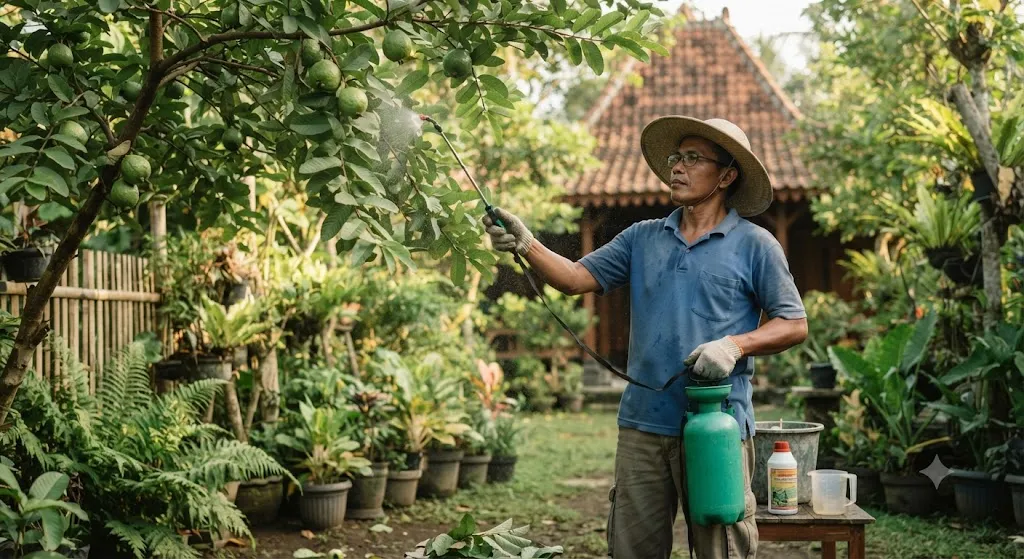
The Jamaican guava tree can be attacked by various pests, such as aphids, caterpillars, fruit flies, as well as fungal diseases that can potentially hinder growth and reduce fruit quality. Therefore, conduct regular inspections of leaves, stems, flowers, and fruits so that signs of attack can be detected while they are still mild, making management easier.
If pests or diseases are found, immediately take control measures using botanical pesticides, fruit fly traps, or pruning infected parts of the plant to prevent further spread. Quick and accurate care will help keep the plants healthy so that their energy can be focused on producing flowers and high-quality fruit.
The success of cultivating Jamaican guava is not determined by just one type of care, but is the result of various steps taken consistently, starting from watering, fertilizing, weeding, to pruning branches. Plants that receive regular care tend to have more stable growth and better resistance to weather changes and pest attacks.
How to plant guava trees done with discipline from the start will help the tree enter the flowering stage in a shorter time compared to plants that are cared for irregularly. By maintaining plant health throughout the year, the chances of obtaining abundant, large-sized, and sweet-tasting Jamaican guava will increase, making this how to plant guava trees suitable for anyone who wants to enjoy the harvest from their own garden.
A Jamaican guava tree that is grafted or budded generally starts to bear fruit within about 1–3 years after planting if given good care. Meanwhile, plants grown from seeds usually take longer, around 5–8 years or even more.
The best time to plant Jamaican guava is at the beginning of the rainy season because water availability is more abundant, making it easier for seedlings to adapt. However, the plants can also be planted in the dry season as long as regular watering is done.
Organic fertilization can be done every 2–3 months, while NPK fertilizer is given according to the age and needs of the plant. When the plant begins to enter the flowering phase, the use of fertilizers with higher phosphorus and potassium content is recommended to assist in flower and fruit formation.
Yes. Jamaican guava can be cultivated in a large pot using fertile planting media with good drainage. However, the plant still requires adequate sunlight and regular pruning to keep its growth in check.
Some of the most common causes include using seeds for seedlings, lack of sunlight exposure, unbalanced fertilization, failure to prune, and pest and disease attacks. By applying the correct way to plant guava trees from the start, the chances of the plant blooming and bearing fruit will be much greater.
(kpl/ank)
Cobain For You Page (FYP) Yang kamu suka ada di sini,
lihat isinya
Follow this method of planting banana trees so they don't grow tall, making maintenance and harvesting easier. Learn each step here.

Discover the secret to skin goals like Nagita Slavina with a practical layering trick to lock in maximum moisture. Check it out here!

So, how do you get rid of the musty smell in the house after being left for a long time during Mudik? Let's dive into the discussion below.

Prepare your best playlist! Find song recommendations to accompany your journey, complete with tips to avoid drowsiness so your mudik trip is even more exciting and safe.

Get ready to feel emotional! Check out the list of old songs that make your homecoming journey more memorable, full of nostalgia, and definitely makes you miss your hometown.

Confused about finding entertainment during the journey? Let's check out fun podcast recommendations that are ready to make your moments more enjoyable and insightful.

After enjoying the Eid holidays filled with delicious food, many people feel their bodies have become heavier and more easily fatigued. To clarify, here’s a review of how to restart exercising after the Eid holidays that you can try to become active again.

Post-holiday blues often arise after the long Eid holiday, making one unproductive. To find out how to overcome post-holiday blues after Eid, let's take a look at the following review.

There are several ways to answer sensitive questions during Eid that can be done elegantly without hurting oneself or others. To find out, just take a look at the following review.

Raline Shah and Mamah Dedeh discuss the meaning of fasting as a moment to reset the heart and body. Check out nutritious sahur tips to stay fit during Ramadan!

To know the reading of the prayer and dhikr of Nisfu Syaban, its practices, and its virtues, just check out the following review:

Let's take a look at some of the best Korean dramas from 2024 to 2026 that you should know about. Come on, let's check it out, KLovers!
