

 Follow
 Rekomendasi
How to Plant Jamaican Guava Trees for Quick Fruit Production
How to plant Jamaican guava trees for quick fruit production with proper care, easy to practice at home.
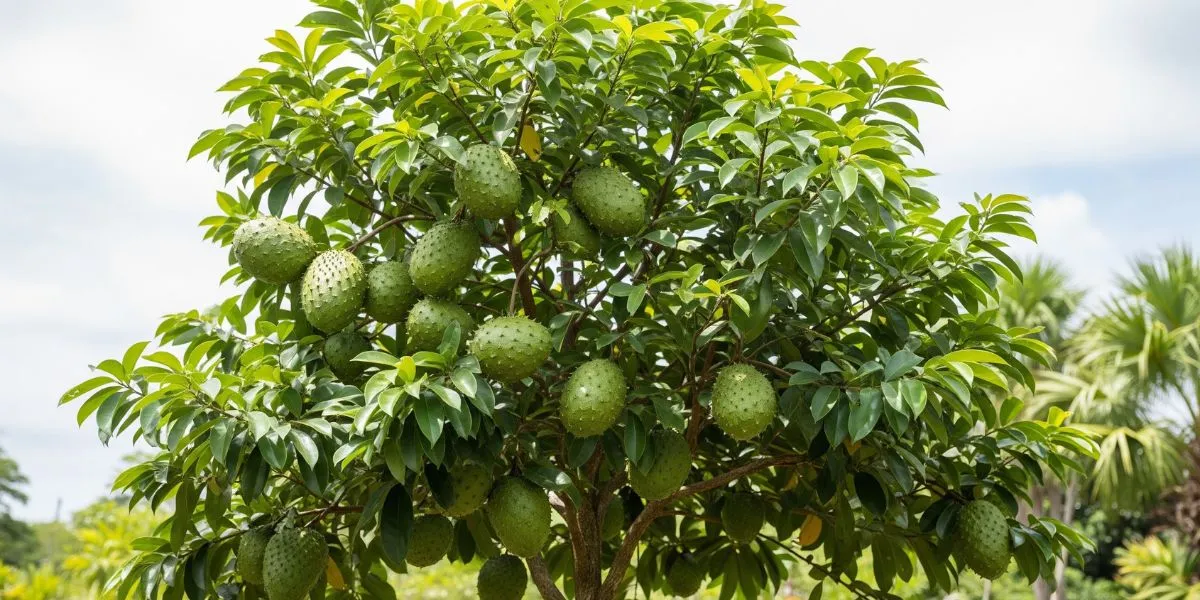
Kapanlagi.com - The method of growing soursop trees short but fruitful is increasingly popular, especially among homeowners with limited yards. Generally, soursop trees can grow quite tall, making maintenance and harvesting difficult. However, through certain cultivation techniques, the height of the plants can be controlled without reducing fruit productivity.
In addition to facilitating harvesting, shorter trees also have more branching, which can potentially produce more flowers and fruits. Here are seven methods that can be applied, as reported by kapanlagi.com from various sources, Wednesday (15/7/2026).
How to Plant Soursop Trees to Keep Them Short but Fruitful/AI Generated
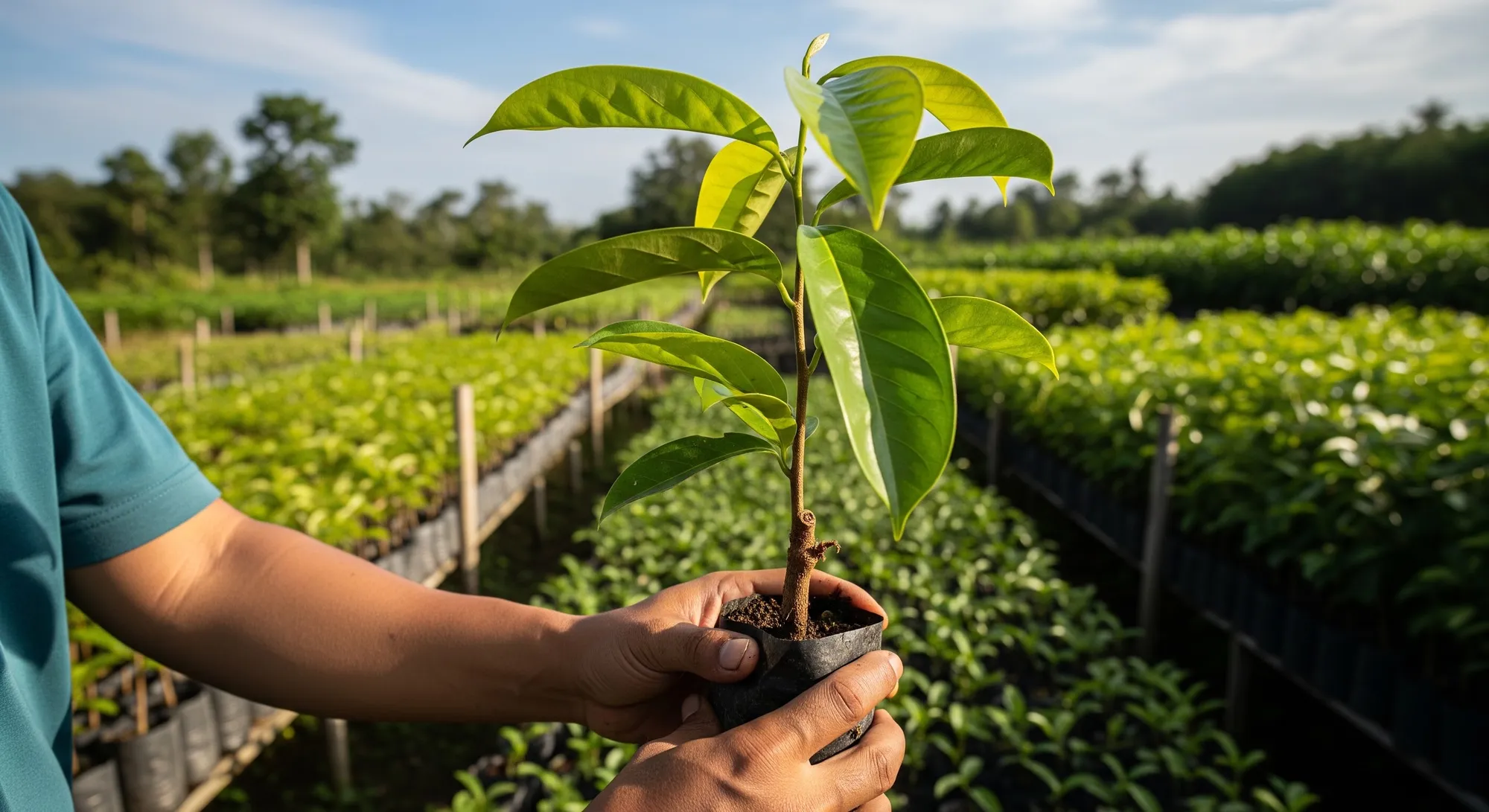
The crucial first step in soursop cultivation is the selection of seedlings. High-quality seedlings serve as the foundation for optimal growth and abundant harvests. Signs of healthy seedlings include sturdy stems, fresh green leaves without disease spots, and freedom from pest attacks.
Vegetative propagation methods, such as grafting or budding, are highly recommended due to their high success rates. This method also allows the tree to bear fruit more quickly, typically within 1-2 years after planting. In contrast, seedlings grown from seeds take 3-5 years to start producing fruit.
For the best results, choose fast-bearing soursop varieties such as Jumbo Honey Soursop or Queen Soursop. These varieties are known for their quick fruiting and productivity, making them very suitable for pot cultivation, also known as tabulampot.
How to Plant Soursop Trees to Keep Them Short but Fruitful/AI Generated
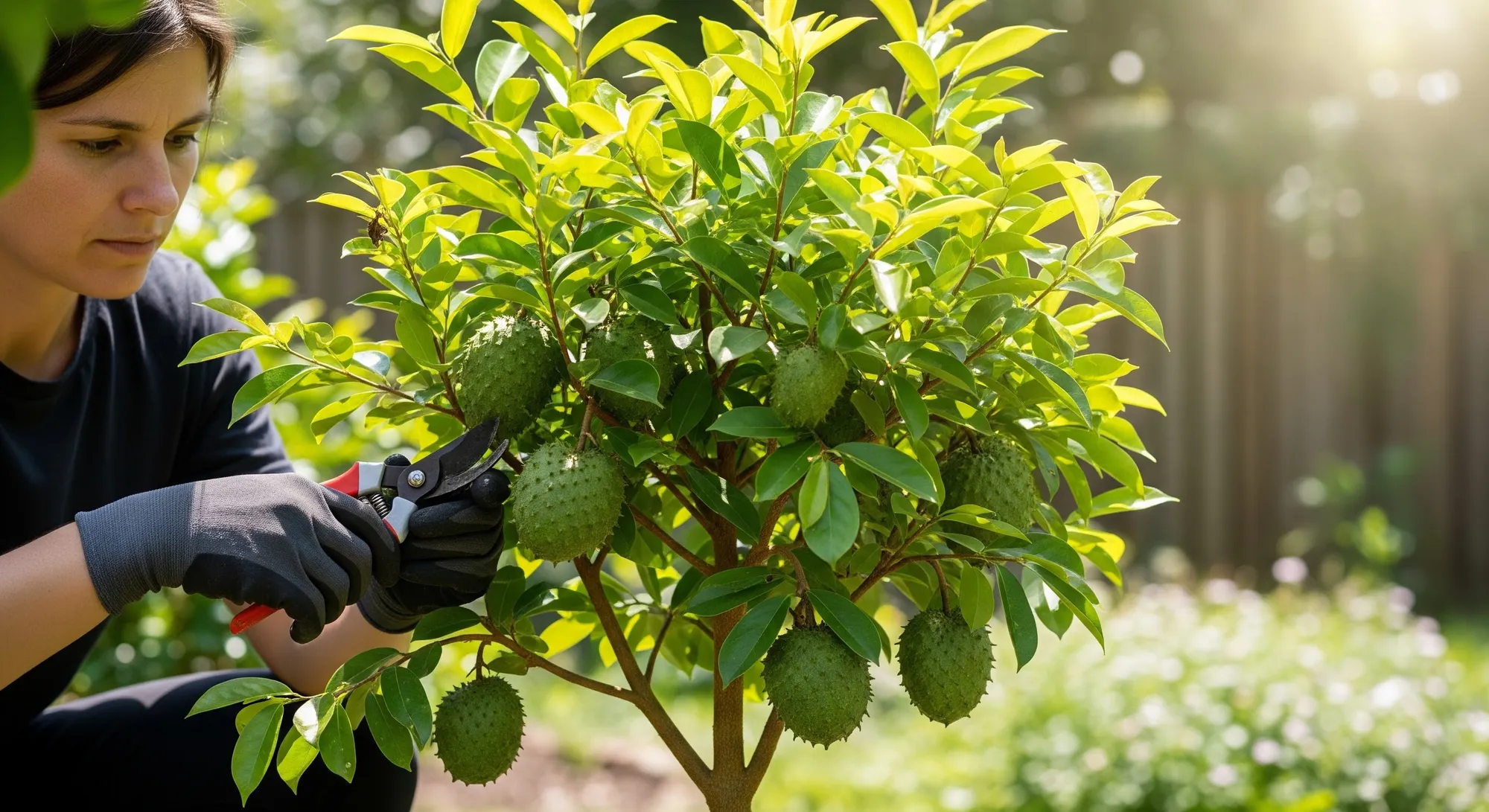
Regular pruning is the key to keeping the soursop tree short while producing plenty of fruit. This technique directs the plant's growth energy to focus on flower and fruit formation, rather than just leaves and branches.
There are two types of pruning that need to be done. First, early pruning, which is performed when the tree is still young, about 6-12 months after planting. The goal is to form a tidy canopy, remove branches that grow inward or cross each other, and improve air circulation and sunlight penetration.
Second, production pruning, which is done after the harvest period. This pruning aims to remove unproductive branches and dry leaves, allowing nutrients to be channeled to new, more productive branches. It is recommended to leave 3 to 5 main stem segments so that growth is more focused and produces more fruit. With regular pruning, the height of the tree can be maintained to not exceed 3 meters, making maintenance and harvesting easier.
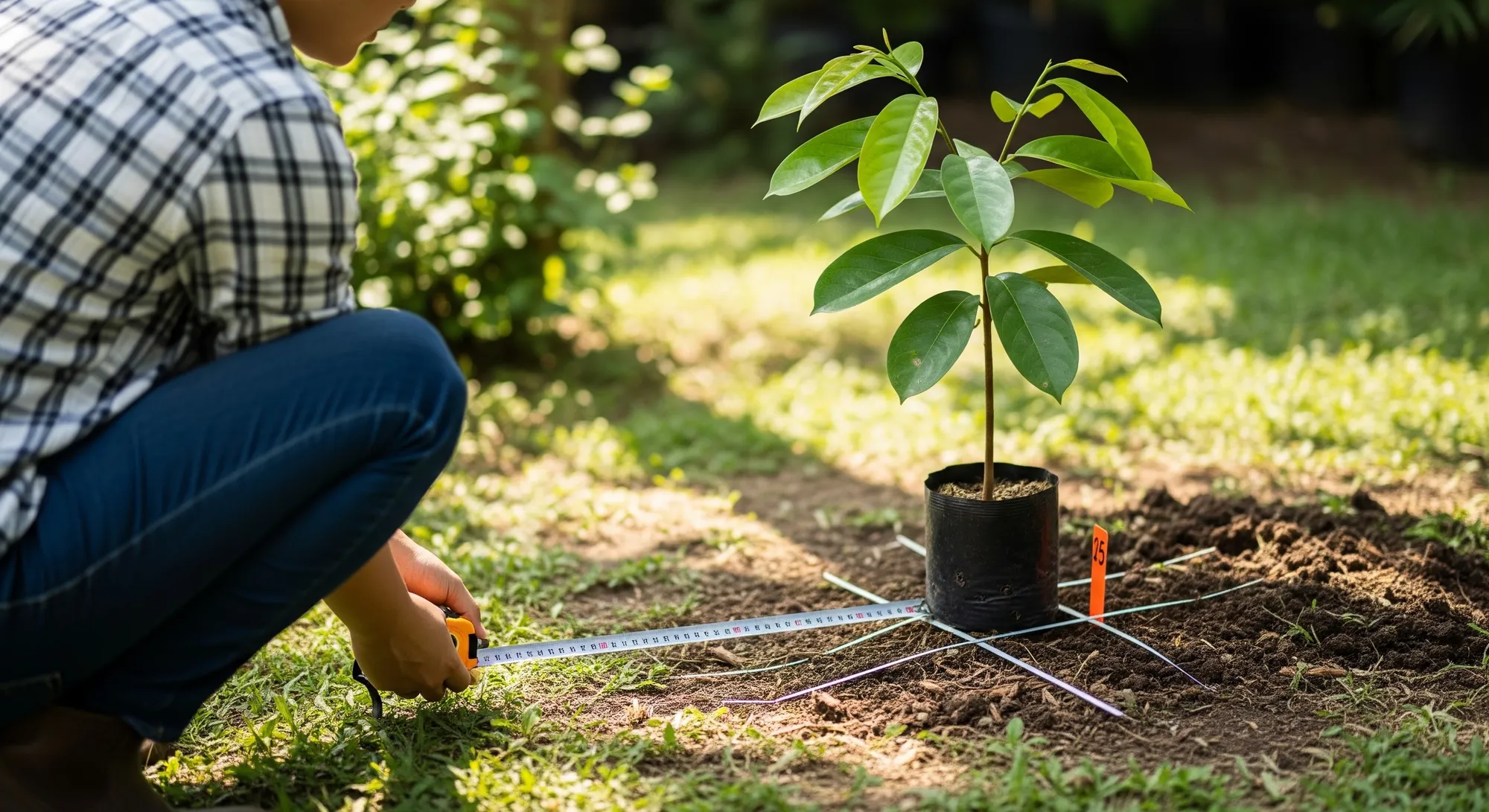
How to Plant Soursop Trees to Keep Them Short but Fruitful/AI Generated
Although the main goal is to keep the tree short, the proper planting distance also contributes to the health and productivity of the soursop tree. The ideal planting distance for cultivating soursop to quickly bear abundant fruit and be profitable is about 2 meters.
Other sources recommend planting distances of 4 x 4 meters, 4 x 5 meters, or 5 x 5 meters, depending on the slope of the land. For potted plants, the planting distance is not an issue, but the ideal pot size is a diameter of 40-50 cm.
Adequate planting distance ensures that each tree receives enough sunlight and good air circulation. This is important for optimal photosynthesis and reducing excess humidity that can trigger diseases in the plants.
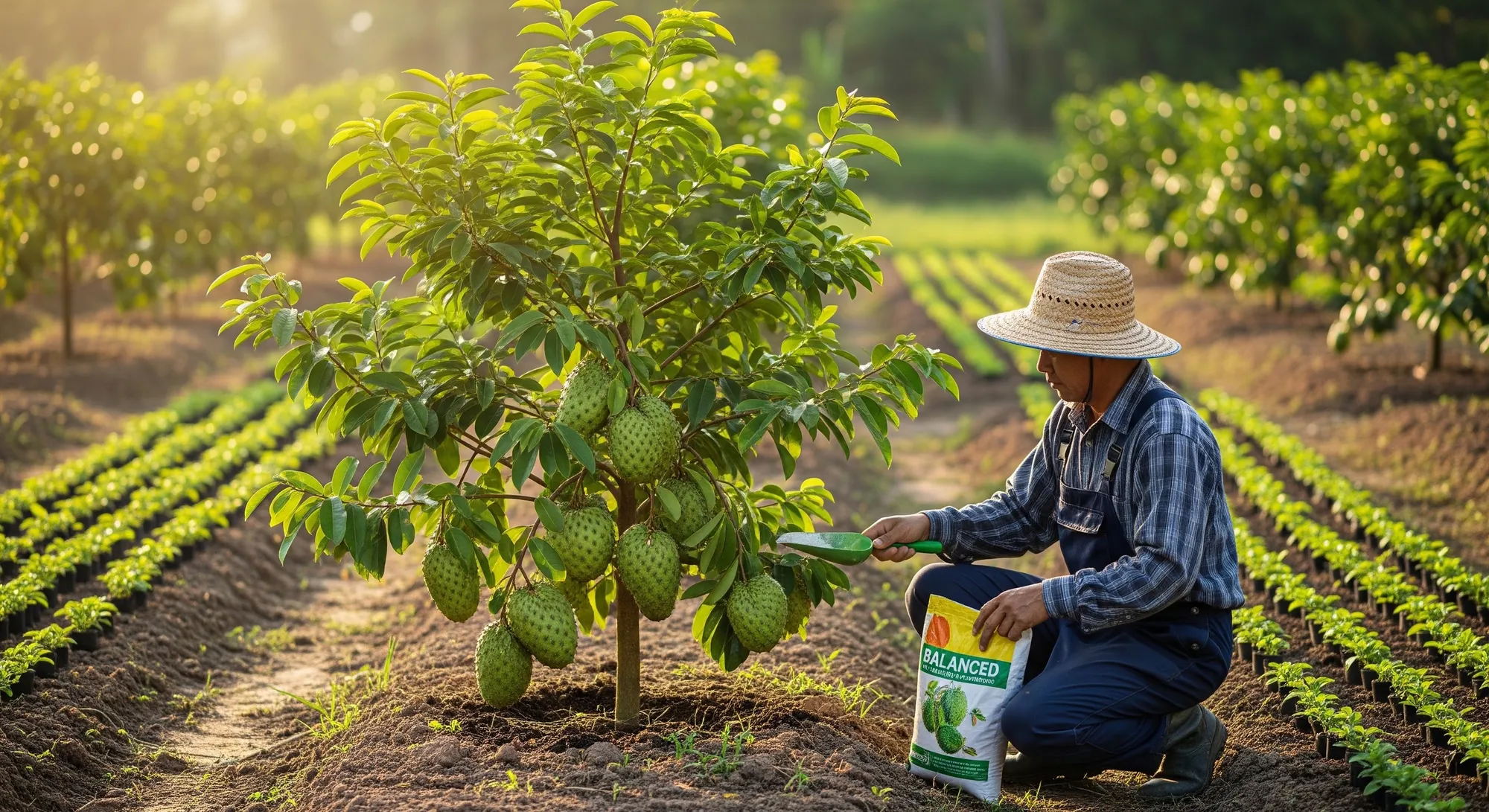
How to Plant Soursop Trees to Keep Them Short but Fruitful/AI Generated
Proper fertilization is an important factor in how to keep soursop trees short but productive. In order for soursop trees to bear fruit more quickly and optimally, the fertilization process must be carried out in a balanced manner, paying attention to the needs of essential nutrients such as nitrogen (N), phosphorus (P), and potassium (K).
During the early stages of vegetative growth, nitrogen is crucial for the development of stems and leaves. However, when the plants enter the generative phase (flowering and fruiting), the need for phosphorus and potassium must be increased to stimulate the formation of flowers and fruit. A balanced N-P-K ratio such as 10-10-10 or a slightly higher potassium ratio like 10-10-15 is recommended.
In addition to chemical fertilizers, the use of organic fertilizers such as mature compost and manure is highly recommended. Organic fertilizers help improve soil structure, enhance microbial activity, and maintain land fertility in the long term. Fertilization can be done every 2-3 months or every four months, depending on the age of the plants.
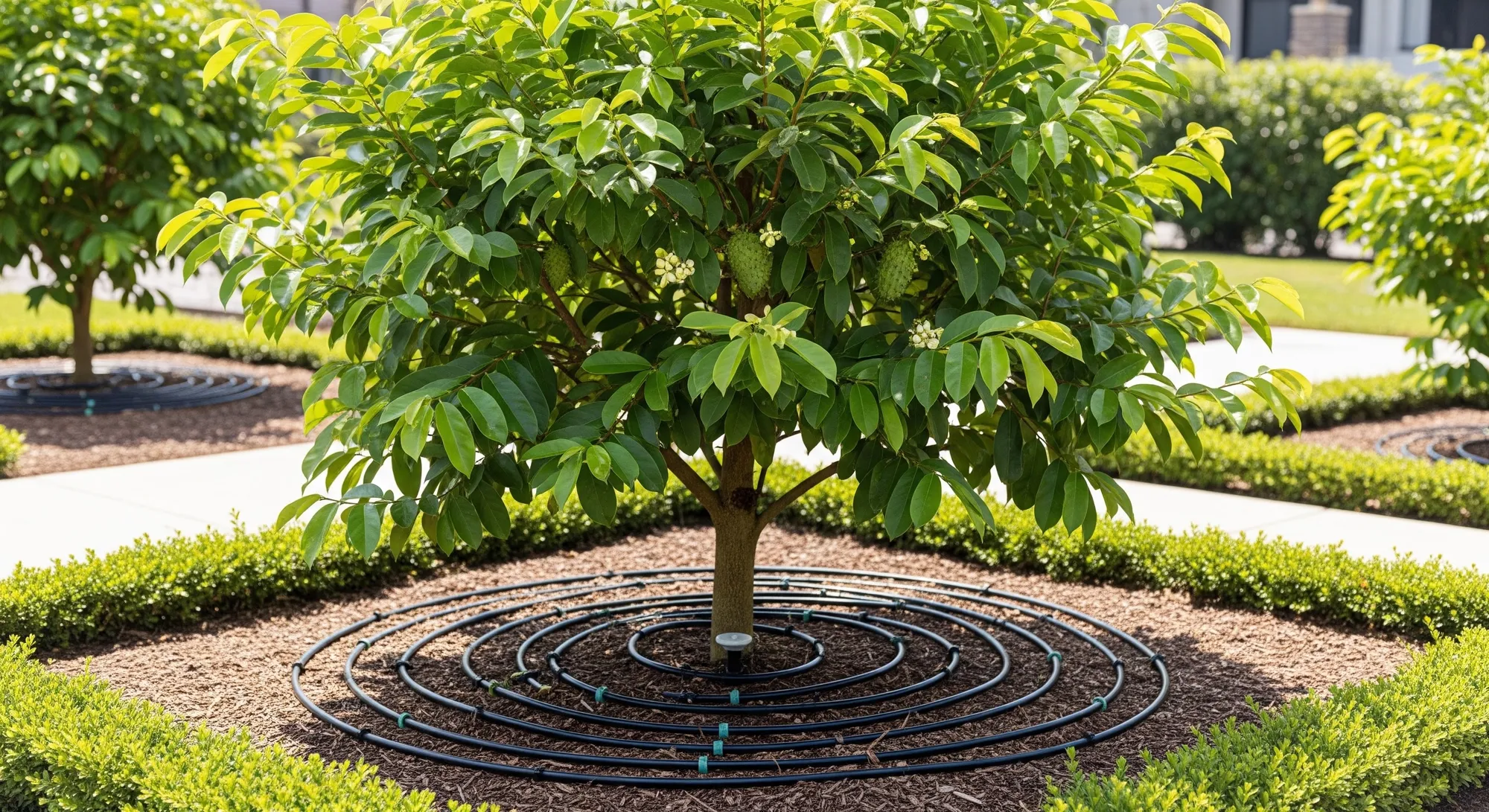
How to Plant Soursop Trees to Keep Them Short but Fruitful/AI Generated
Consistent watering is an important part of how to plant soursop trees to keep them short but fruitful. Soursop plants require regular watering, especially during the dry season, to maintain soil moisture. Watering can be done at least every two days if there is no rain to ensure the plants' water needs are met.
For potted plants, watering is done daily until water drains from the bottom of the pot. Soursop is tolerant of dry soil, but prolonged drought can cause leaf drop.
Interestingly, to stimulate flowering, you can try the "water stress" technique. This involves stopping watering for 2-3 days (until the leaves are slightly wilted), then watering again with plenty of water mixed with fruit-boosting fertilizer. This environmental shock often triggers the plant's instinct to reproduce (produce flowers) immediately.
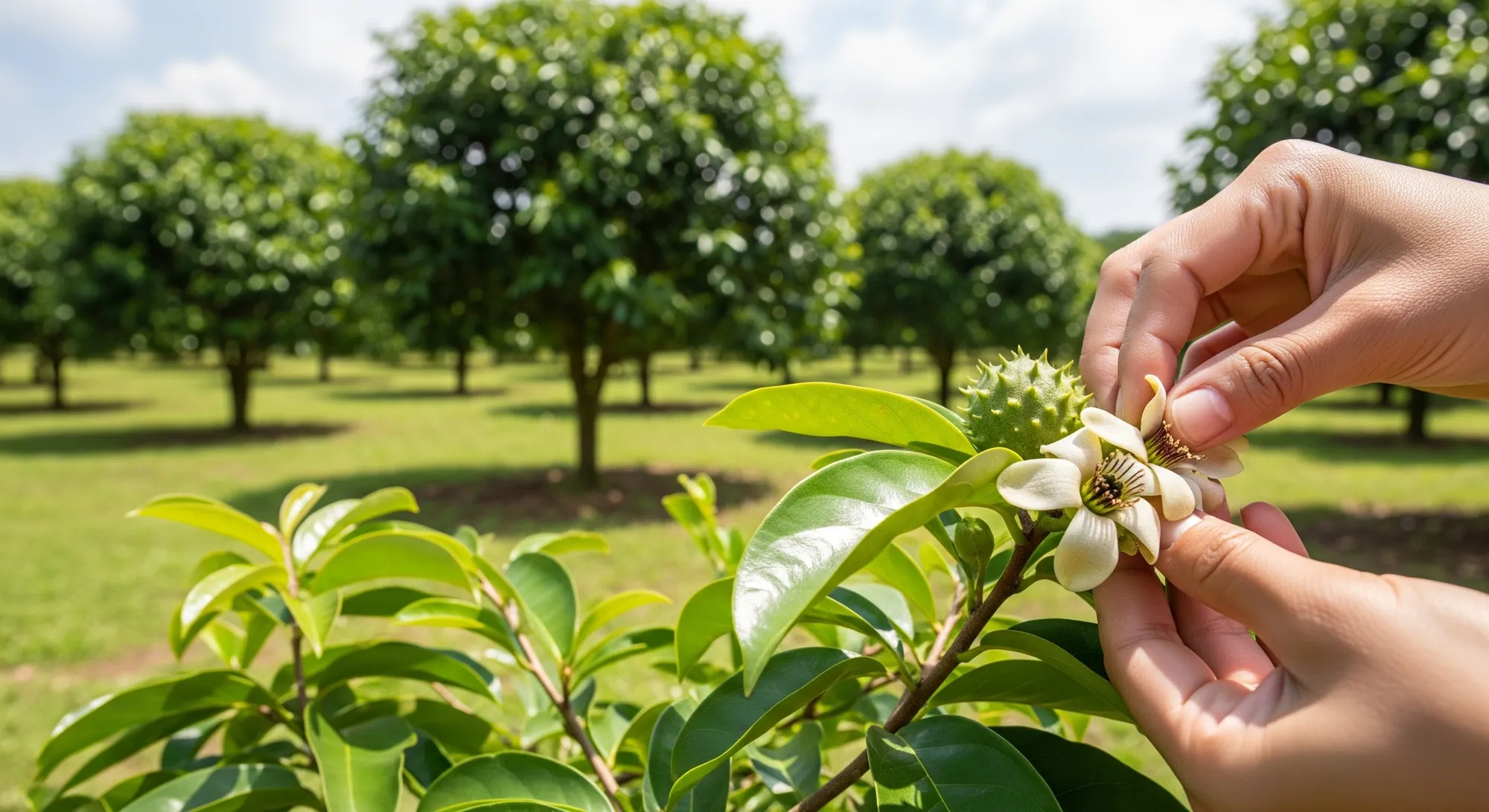
How to Plant Soursop Trees to Keep Them Short but Fruitful/AI Generated
To ensure an abundance of high-quality soursop fruit, artificial pollination is one of the effective ways to keep the soursop tree short but highly productive. Natural pollination by insects is often not optimal, which can result in imperfect or small-sized fruit.
Soursop flowers are hermaphroditic, but the pollen is often too heavy to be carried by the wind. Artificial pollination allows for the right timing and the maximum amount of pollen on the stigma, making the fertilization process more perfect. As a result, the fruit can reach 2-3 times the size of fruit from natural pollination, with a larger, elongated, and smoother shape.
The best time to perform artificial pollination is in the morning when the flowers are fully bloomed and the pollen is in optimal condition. Pollen can be collected using a brush or a bottle, and it can be stored in the refrigerator for up to 1 week.
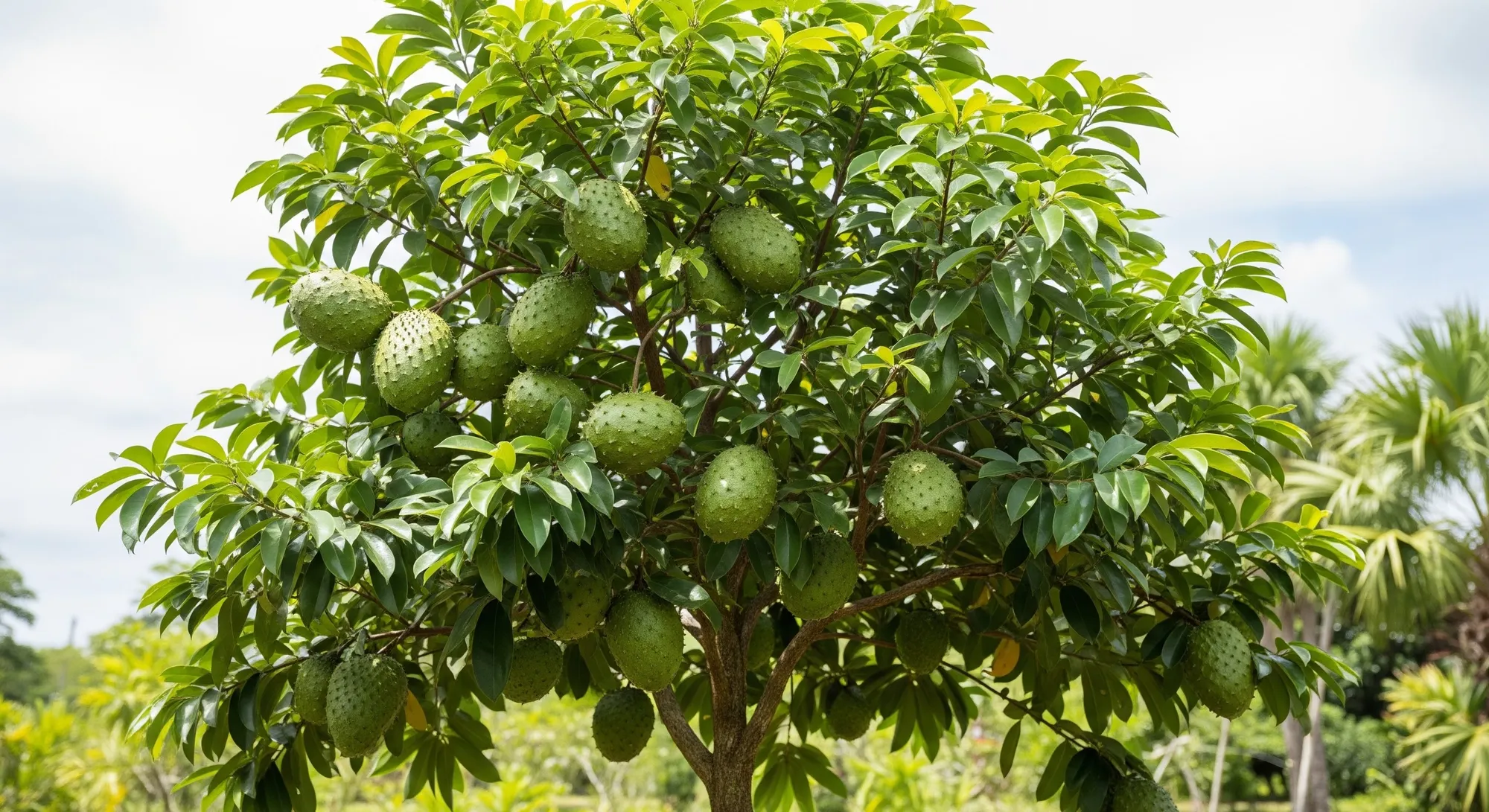
How to Plant Soursop Trees to Keep Them Short but Fruitful/AI Generated
Maintaining the health of the tree is an integral part of how to plant soursop trees to keep them short but fruitful. Routine pest and disease control is very important to ensure that the soursop tree grows vigorously and bears abundant fruit. Common pests on soursop include scale insects, whiteflies, and fruit flies. Diseases can manifest as leaf spots, rot, or root rot caused by fungi or bacteria.
Regular observation of the plants is essential to detect problems early. Control can be carried out by applying pesticides according to the recommended type and dosage. An environmentally friendly alternative is the use of plant-based pesticides, such as extracts from the soursop leaves themselves, which contain active compounds that can control pests like thrips. Maintaining cleanliness in the garden and ensuring good air circulation can also help prevent the spread of diseases.
(kpl/nti)
Cobain For You Page (FYP) Yang kamu suka ada di sini,
lihat isinya
How to plant Jamaican guava trees for quick fruit production with proper care, easy to practice at home.
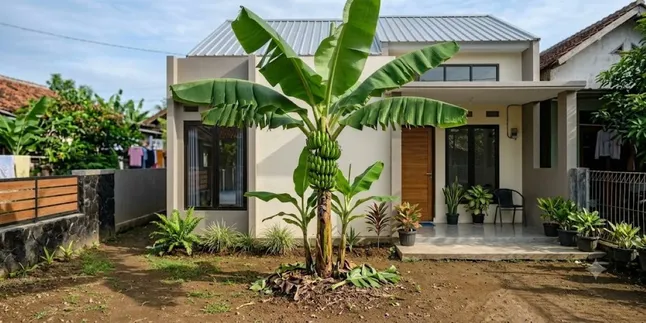
Follow this method of planting banana trees so they don't grow tall, making maintenance and harvesting easier. Learn each step here.

Discover the secret to skin goals like Nagita Slavina with a practical layering trick to lock in maximum moisture. Check it out here!

So, how do you get rid of the musty smell in the house after being left for a long time during Mudik? Let's dive into the discussion below.

Prepare your best playlist! Find song recommendations to accompany your journey, complete with tips to avoid drowsiness so your mudik trip is even more exciting and safe.

Get ready to feel emotional! Check out the list of old songs that make your homecoming journey more memorable, full of nostalgia, and definitely makes you miss your hometown.

Confused about finding entertainment during the journey? Let's check out fun podcast recommendations that are ready to make your moments more enjoyable and insightful.

After enjoying the Eid holidays filled with delicious food, many people feel their bodies have become heavier and more easily fatigued. To clarify, here’s a review of how to restart exercising after the Eid holidays that you can try to become active again.

Post-holiday blues often arise after the long Eid holiday, making one unproductive. To find out how to overcome post-holiday blues after Eid, let's take a look at the following review.

There are several ways to answer sensitive questions during Eid that can be done elegantly without hurting oneself or others. To find out, just take a look at the following review.

Raline Shah and Mamah Dedeh discuss the meaning of fasting as a moment to reset the heart and body. Check out nutritious sahur tips to stay fit during Ramadan!

To know the reading of the prayer and dhikr of Nisfu Syaban, its practices, and its virtues, just check out the following review:
