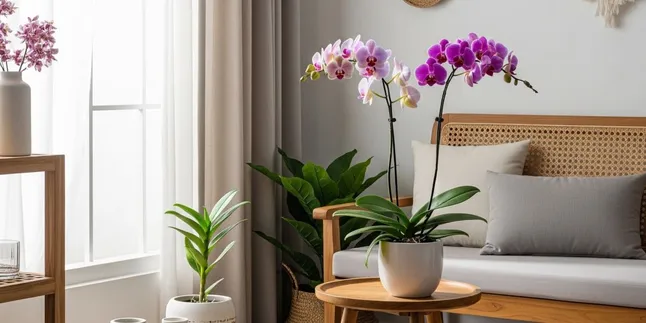
Kapanlagi.com - The way to care for orchids to bloom quickly does not only depend on how often the plants are watered. Lighting, temperature, humidity, fertilization, and the choice of planting media also need to be considered to ensure that orchids grow healthy and are ready to produce flowers.
Each type of orchid has different needs, so the care methods must be adjusted to the plant's conditions. Providing sufficient light, adequate watering, and the right nutrients can help stimulate the appearance of flower buds.
By consistently applying the methods to care for orchids to bloom quickly, the plants can grow more lush and have a greater chance of producing beautiful flowers. Here are some easy steps that can be applied at home.
1. Provide Adequate Light and Good Air Circulation
Light is one of the important factors to help orchids grow healthily and produce flowers. Most orchids prefer bright light but should not be exposed to direct sunlight. Excessive exposure can cause leaf burn and roots to dry out more quickly. Adjust the light intensity according to the type of orchid being cared for.
In addition to lighting, ensure that the plants receive good air circulation. Moving air helps maintain the health of the leaves and roots while reducing the risk of diseases caused by excess moisture.
2. Water According to Plant Needs
Overwatering can cause orchid roots to rot and hinder flower growth. Check the condition of the roots or growing medium before watering. If the roots appear green, the plant usually still has enough water, while roots that are white or gray indicate that the plant is starting to need watering.
In general, orchids can be watered about once a week, but the frequency needs to be adjusted based on the type of plant, temperature, and environmental humidity. Allow the growing medium to dry out partially before watering again to prevent the roots from being constantly in overly wet conditions.
3. Provide Fertilizer Regularly
Fertilizing can help meet the nutritional needs of orchids while supporting growth and flower formation. Use special orchid fertilizer in light doses and follow the instructions on the package. Fertilizing every one to two weeks can be done while the plants are in the active growth phase.
It is advisable to apply fertilizer after watering the plants to prevent root damage due to high fertilizer concentration. Avoid excessive use of fertilizer as it can disrupt plant health.
4. Maintain Temperature and Humidity
Environmental conditions also affect the ability of orchids to produce flowers. Many types of tropical orchids prefer relatively high humidity with cooler temperatures at night. The temperature difference between day and night can help stimulate bud formation in some types of orchids.
To maintain humidity, you can place the pot on a tray filled with pebbles and water without allowing the bottom of the pot to become submerged. Also, avoid overly stuffy rooms to prevent humidity from triggering mold or disease growth.
5. Use Appropriate Planting Media
Orchids require planting media that can drain water while also providing air circulation for the roots. Therefore, regular garden soil is less suitable for most orchids. Media such as bark and sphagnum moss can be used according to the type and needs of the plants.
The choice of media should be adjusted to the plant's ability to retain water. Media that is too moist can cause root rot, while media that dries out too quickly can lead to the plants lacking water and nutrients.
6. Choose a Pot with Good Drainage
Pots with sufficient drainage holes help to remove excess water after watering. This condition is important because orchid roots need air and do not like standing water. Transparent pots can also be an option as they make it easier for you to monitor the condition of the roots and moisture of the media.
Make sure the pot size is appropriate for the plant and do not choose a container that is too large. The right pot helps the roots develop well while keeping the media conditions suitable to support growth and flowering.
7. Questions About How to Care for Orchids to Bloom Quickly
What is the ideal light intensity for orchids to bloom quickly?
Orchids require bright indirect light with an intensity of about 1,000-2,500 foot-candles, or about 12-25 percent of full sunlight, to stimulate optimal blooming.
How can you tell if an orchid needs water?
If the moss on the roots is damp or the roots are green, the orchid has enough water. However, if the roots appear white or grayish, it is a sign that the plant needs water.
Do orchids need a temperature drop at night?
Yes, many tropical orchids like Phalaenopsis and Dendrobium require a temperature drop of about 10-15°C at night to trigger flower bud formation. The ideal daytime temperature is 24-29°C and nighttime is 15-18°C.
What growing medium is suitable for orchids?
Growing media such as sphagnum moss that retains moisture or bark suitable for orchids that do not prefer damp conditions are popular choices. It is also important for the pot to have plenty of drainage holes.
(kpl/sel)
Disclaimer: This translation from Bahasa Indonesia to English has been generated by Artificial Intelligence.


 Follow
 Rekomendasi