Kapanlagi.com - Planting avocado from seed can be a simple way to start a new plant from leftover fruit consumed at home. The process can be done by germinating the seed in water before the seedling is transferred to a pot or planting medium.
Although relatively easy, avocado seeds require time and consistent care until they develop into a plant. Plants grown from seeds do not always produce fruit with the same characteristics as the parent plant and generally take years to start bearing fruit.
Furthermore, check out how to plant avocado from seed that KapanLagi.com has reviewed from various sources, Wednesday (12/8).
1. Prepare the Avocado Seed
How to Plant Avocado from Seed/AI Generated
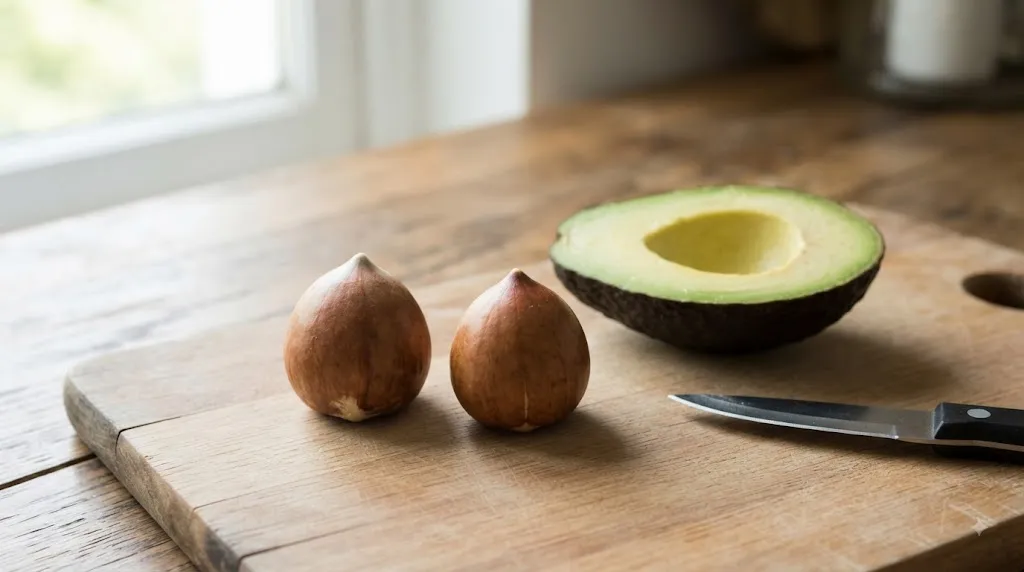
Choose a ripe avocado, then carefully remove the seed to avoid cutting or damaging it. After that, wash the seed with water until all the remaining fruit flesh is completely clean.
Pay attention to the shape of the seed to determine the correct position when germinating. The wider and flatter part of the seed is the bottom where the roots will grow, while the sharper part is the top where the shoots will develop.
Once clean, the seed can be used directly for the germination process. Ensure the seed remains intact to avoid disrupting its sprouting process.
2. Attach Toothpicks as Supports
How to Plant Avocado from Seed/AI Generated
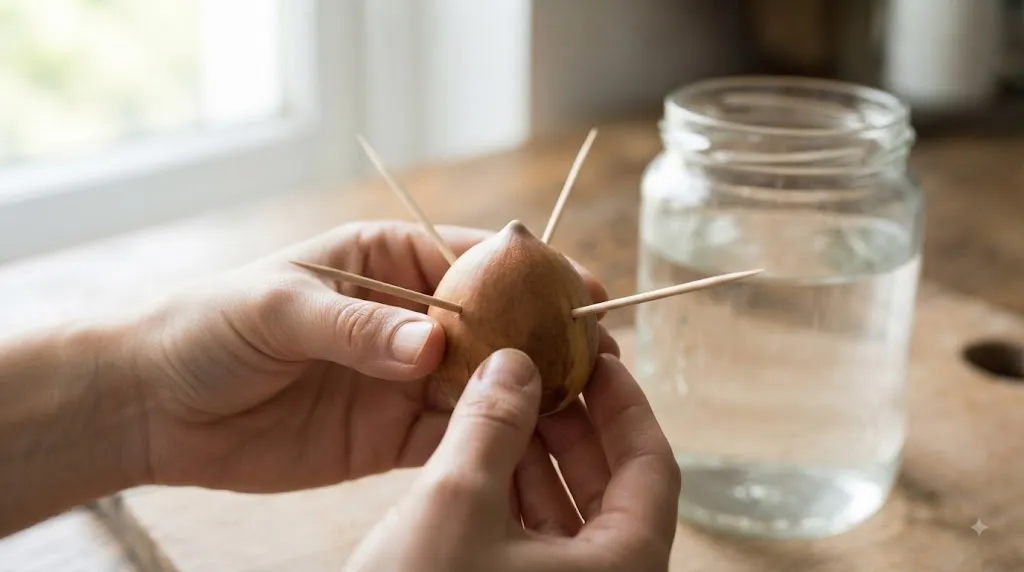
Prepare two or three toothpicks, then insert them into the sides of the seed, approximately in the middle. The toothpicks serve as supports so that the seed can be placed on the rim of a glass without its entire part going into the water.
Arrange the toothpicks evenly so that the seed can rest stably. Make sure the wider and flatter part of the seed is facing down as the roots will grow from that part.
Use a glass or container that is large enough to support the seed while also holding water. Place the seed in such a way that only its bottom part can touch the water, while the top part remains above the water surface.
3. Soak the Bottom Part of the Seed in Water
How to Plant Avocado from Seed/AI Generated
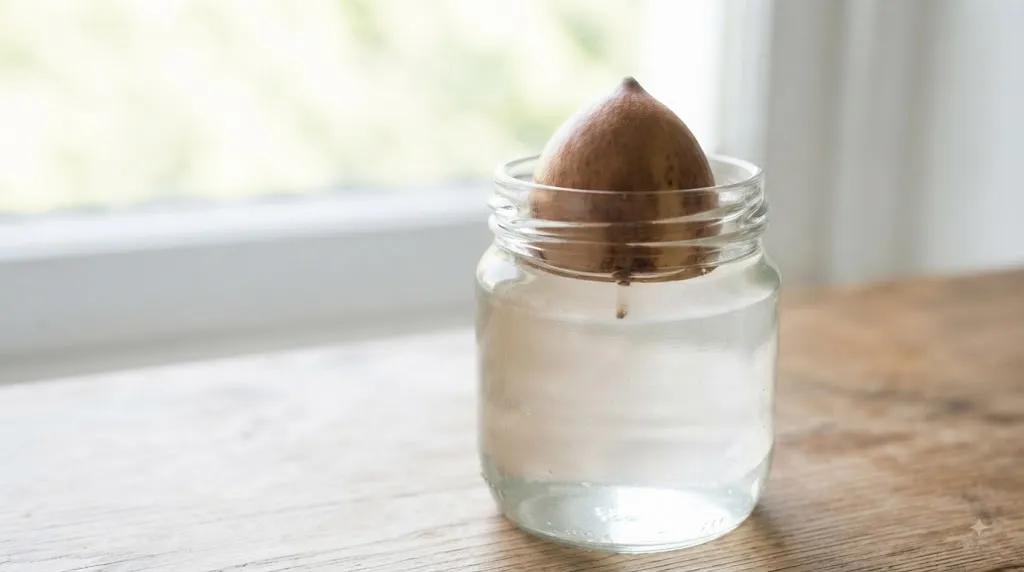
Place the seed on a glass or container filled with water with the bottom part facing down. Fill the water until about 2–3 cm of the bottom of the seed is submerged, while the top part of the seed remains above the water surface.
Place the container in a warm location with bright light. Avoid locations that are too hot to prevent the seed from experiencing stress due to excessive temperatures.
The seed will undergo gradual changes before roots and shoots are visible. Cracks on the seed may appear first, then roots and shoots start to develop, but the germination time can vary for each seed, so there is no need to rush to move it.
4. Change the Water Regularly
How to Plant Avocado from Seed/AI Generated
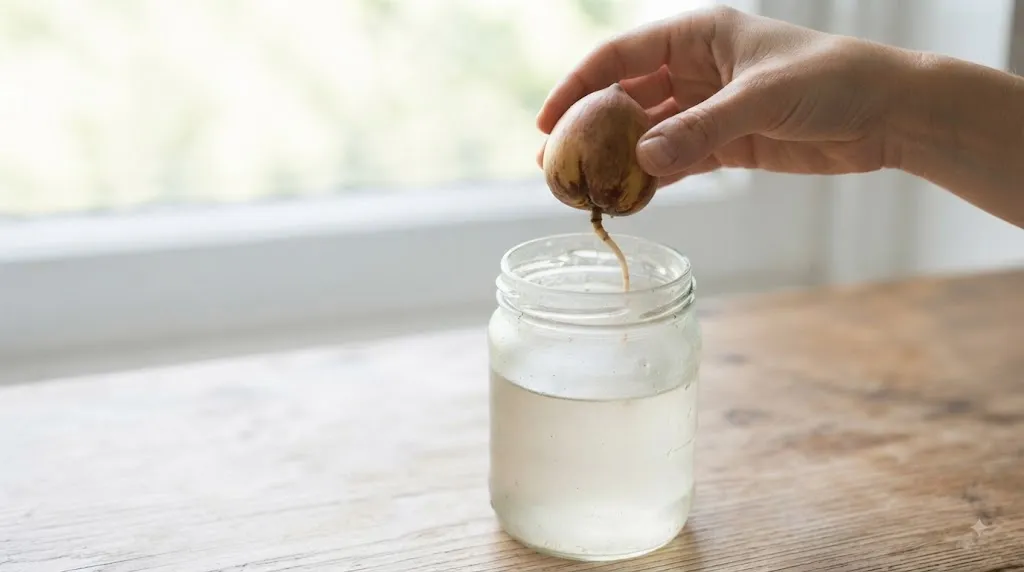
The water used to soak the seed needs to be changed regularly, about every four to five days. Changing the water helps keep the water clean during the germination process and reduces the risk of poor water conditions for the seed.
When changing the water, also check the condition of the seed and the roots that are beginning to appear. Ensure that the bottom part of the seed remains submerged in water so that the developing roots receive enough moisture.
Do not submerge the entire seed because the top part needs to remain above the water surface. If the water volume decreases before the next scheduled change, add enough water to keep the bottom part of the seed submerged.
5. Prune Shoots After They Grow
How to Plant Avocado from Seed/AI Generated
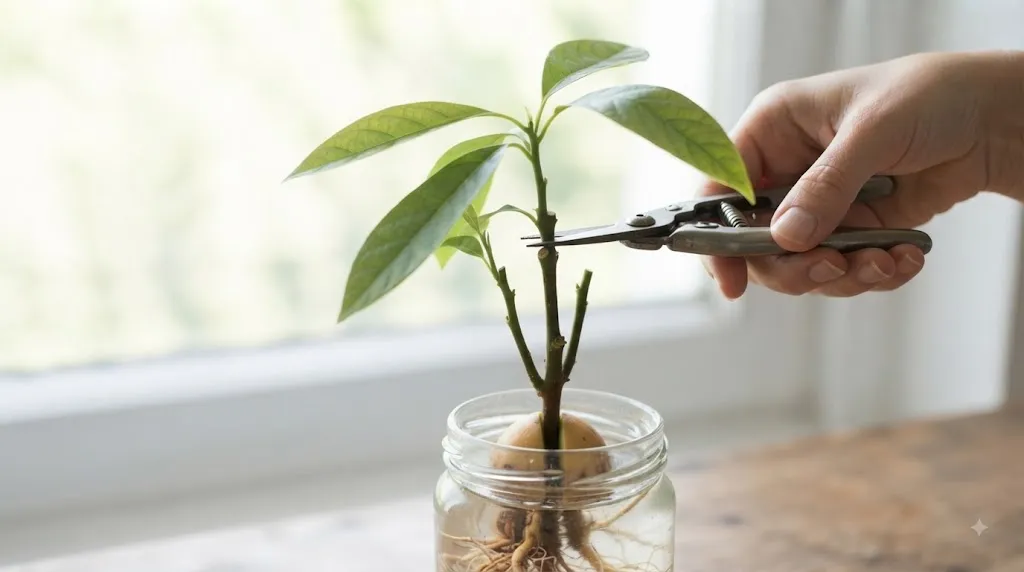
After some time, roots begin to appear from the bottom of the seed, while shoots grow from the top. The time required can vary, but in this germination method, shoots can start to develop after a few weeks to about two months.
When the seedling has grown to about 30 cm, you can trim the top of the stem to encourage branching. BHG recommends cutting about one-third of the stem, just above the node where new shoots can grow.
After pruning, place the seedling back in a location with adequate lighting and continue its care. Avoid pruning too often or too much, as young seedlings need leaves to perform photosynthesis and support their growth.
6. Transfer Seedlings to Pots
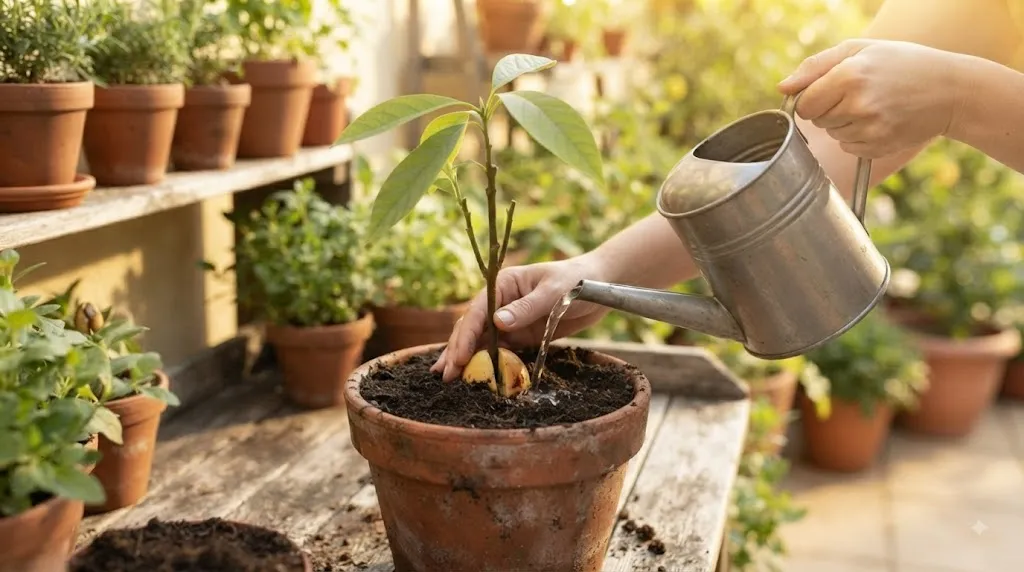
How to Plant Avocado from Seed/AI Generated
Seedlings can be transferred to pots after they have developed roots and several leaves. Use pots with drainage holes and a loose planting medium that can drain excess water well.
When planting, position the seedlings so that about half of the seed remains above the surface of the planting medium. After that, water sufficiently until the medium is moist and allow excess water to drain out through the drainage holes.
Place the pot in a location that receives enough sunlight after the seedlings have adapted to the planting medium. Water when the top 2–3 cm layer of the medium starts to dry and avoid continuously waterlogged conditions as excess water can increase the risk of root problems.
Growing avocados from seeds is more suitable as a seedling activity or home gardening rather than as a quick way to obtain fruit. Plants propagated from seeds are a result of sexual reproduction, so the characteristics of the fruit are not guaranteed to be the same as the parent plant and may take up to about 10 years to start bearing fruit; some plants may never produce fruit. If the main goal is to maintain the characteristics of a certain variety, vegetative propagation such as grafting or budding is more appropriate as it can retain the traits of the parent plant.
7. Questions and Answers About How to Plant Avocado from Seed
1. How long does it take for avocado seeds to start germinating?
The germination time for avocado seeds can vary. Roots and shoots typically begin to appear after a few weeks, but under certain conditions, shoots may take up to about two months.
2. Can avocados from seeds produce fruit?
Yes, but it takes quite a long time and there is no guarantee that the plant will bear fruit. Avocado plants grown from seeds can take up to about 10 years to start producing fruit, and some plants may never produce fruit at all.
3. Will the fruit of avocados from plants grown from seeds be the same as the original fruit?
Not always. Plants that grow from seeds are the result of sexual reproduction, so the characteristics of the fruit can differ from the parent plant. If you want to maintain the characteristics of a specific variety, vegetative propagation such as grafting or budding is more appropriate.
(kpl/rmt)
Disclaimer: This translation from Bahasa Indonesia to English has been generated by Artificial Intelligence.


 Follow
 Rekomendasi