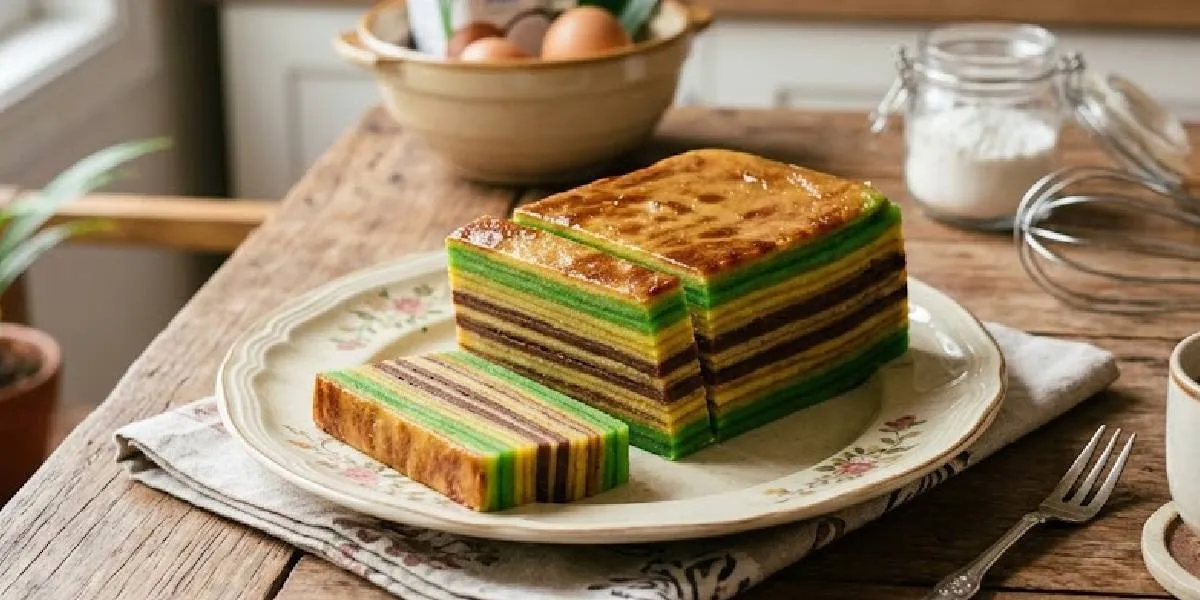
Kapanlagi.com - Layer cake without tapioca flour can be an option for those who want to try a new variation of this traditional snack. Although it generally uses tapioca flour as one of the main ingredients, the following recipe offers an alternative by utilizing a combination of hunkwe flour and wheat flour.
Tapioca flour has long been known to provide a chewy texture while also helping to thicken and retain the moisture of the batter. However, even without this ingredient, layer cake can still be made with a soft and chewy texture through the combination of hunkwe flour and wheat flour.
What is the method for making layer cake without tapioca flour? Let’s check out the complete recipe.
1. What is Needed to Make Layered Cake Without Tapioca Flour?
The combination of hunkwe flour and wheat flour is the key in this recipe. The combination of both produces a different texture from traditional layered cake, yet remains soft when eaten.
To make it, prepare coconut milk from 1/2 coconut amounting to 850 ml. The coconut milk is then combined with pandan leaves to give a more fragrant aroma to the batter.
Other necessary ingredients include 130 grams of hunkwe flour, 70 grams of wheat flour, 90 grams of granulated sugar, 1/2 teaspoon of salt, 1/2 teaspoon of liquid vanilla, food coloring as desired, a little cooking oil to grease the mold, and a mold measuring 14 x 14 cm with a height of 7 cm.
2. Steps to Prepare the Batter Until Ready to Steam
Start by boiling the coconut milk with pandan leaves while continuously stirring until it boils to prevent the coconut milk from breaking. After that, remove it and let it cool completely before using.
In another bowl, mix hunkwe flour, wheat flour, granulated sugar, salt, and liquid vanilla. Once all the dry ingredients are well combined, gradually pour in the coconut milk while stirring with a whisk until the batter is smooth and lump-free.
To make the texture even softer, strain the batter before dividing it into several containers. If you want to make colored layers, add food coloring to each batter according to your preference.
3. Arranging the Pan and Steaming Each Layer
Before starting to steam, grease the entire surface of the pan with a little cooking oil to make it easier to release the cake after it is cooked. Meanwhile, heat the steamer until the water is boiling and producing a lot of steam. Cover the steamer lid with a clean cloth so that water droplets do not fall onto the surface of the batter.
Pour one ladle of batter into the pan as the first layer. Steam for about 5–7 minutes until the layer hardens and cooks before adding the next batter.
Continue this process by pouring in different colored batter alternately. Make sure each layer is cooked first before adding the next layer to ensure the final result is neat and does not easily come apart. After all the batter is used up, steam the last layer for 15–20 minutes until the cake is perfectly cooked.
4. Tips for Keeping Layered Cake Soft and Chewy
After the steaming process is complete, remove the pan from the steamer and let the cake cool completely. This step is important to maintain the texture and prevent the cake from breaking when removed from the pan or cut.
The use of coconut milk also needs to be considered. Choose coconut milk with medium thickness, then wait until it is completely cool before mixing it with the dry ingredients. This method helps prevent the batter from clumping, resulting in a smoother final product.
Additionally, ensure that the steamer is hot from the start and produces plenty of steam. The steaming time should also be followed according to the recipe. Layers that are steamed for too short a time risk not bonding with the next layer, while steaming for too long can make the cake's texture drier.
Patience is an important part of making layer cakes. The process of pouring the batter little by little and steaming each layer does take time, but this step helps produce neat layers with a soft and chewy texture.
In this recipe, the function of tapioca flour as a chewy texture provider is replaced by a combination of hunkwe flour and wheat flour. Even without tapioca flour, the layer cake can still have a soft texture with a distinctive flavor. As long as the coconut milk is cooled before mixing into the batter and the steaming time for each layer is adhered to, the final cake can remain evenly cooked and easy to cut after it has completely cooled.
(kpl/mda)
Disclaimer: This translation from Bahasa Indonesia to English has been generated by Artificial Intelligence.


 Follow
 Rekomendasi