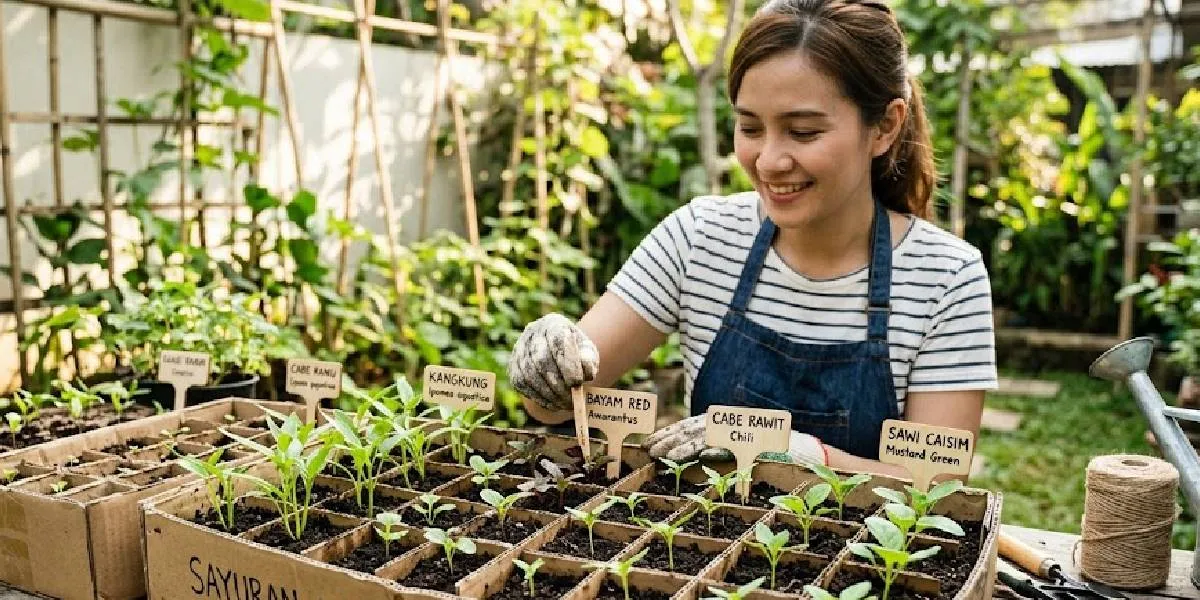
Kapanlagi.com - Utilizing used cardboard as a medium for sowing vegetables is a simple way to reduce household waste while also cutting gardening costs. This easily found material can be used as an seedling container before the plants are transferred to larger pots or planting areas.
In addition to reducing the use of single-use plastic pots, cardboard also has the ability to absorb water and is easily biodegradable in the soil. This method helps reduce the risk of root damage when the seedlings are transplanted, making it suitable for those, especially in limited gardening spaces.
What does it look like? Let's take a look.
1. How to Choose Cardboard and Prepare Seedling Containers
Not all cardboard is safe to use as a medium for sowing consumption plants. Therefore, the first step to consider is to choose materials that are free from harmful substance residues.
Use plain brown cardboard without plastic coating or glossy ink prints. It is advisable to avoid cardboard from detergent packaging or chemicals as the residue can potentially affect seed growth.
Before use, remove all insulation, staples, and labels that are still attached to the surface of the cardboard. Once clean, cut the cardboard into sheets approximately 10 x 10 centimeters in size.
Fold each piece to form a small open-top box like a mini pot. After that, make several holes at the bottom using scissors or a nail as drainage channels, then arrange all the containers on a tray to keep them upright during the sowing process.
2. Preparing Planting Media and Sowing Seeds
The success of sowing is also influenced by the composition of the planting media. Since cardboard easily absorbs water, the contents of the container should use a mixture of loose soil that is rich in nutrients.
Use a mixture of topsoil, mature compost, and burned rice husks in a ratio of 1:1:1. All materials should be sifted first to ensure a finer texture so that young roots can develop more easily.
Fill the planting media to about 80 percent of the container's capacity. Avoid overfilling it so that watering does not cause overflow.
For sowing, make a hole about 0.5 centimeters deep in the center of the media. Place one or two seeds in each container, then water using a spray bottle to prevent the seeds from shifting due to water pressure.
During the germination period, keep the containers in a shaded area. Once the sprouts begin to grow, gradually move them to an area that receives sunlight.
Additionally, the moisture of the cardboard needs to be maintained. The containers should remain moist, but not overly wet to avoid quick deterioration before the seedlings are ready to be moved.
3. Seedling Transfer, Container Care, and Suitable Plant Types
One of the advantages of using cardboard as a seedling medium is that the seedlings can be transferred along with their containers. When the plants have four true leaves, the mini cardboard pots can be directly placed into the planting holes in the bed or larger pots.
Tear a small part of the bottom of the cardboard so that the new roots can grow through the medium. After that, cover the entire container with soil. Over time, the cardboard will decompose into organic material in the soil.
During the seeding process, white mold may appear on the surface of the cardboard if the humidity is too high. To address this, space the pots apart to maintain good air circulation, reduce watering frequency if necessary, and sun the containers under morning sunlight for a few hours if mold begins to appear.
The outer walls of the cardboard can also be sprayed with diluted garlic boiling water as a natural fungicide.
This seedling medium is suitable for various types of short-lived plants. Leafy vegetables such as mustard greens, bok choy, lettuce, and spinach can grow well using this method. Chili peppers, tomatoes, and eggplants can also be seeded in cardboard containers before being transferred to larger planting media.
In addition to vegetables, herbs such as basil, celery, and parsley are also suitable for cultivation in this way.
Cardboard is chosen because it has pores that help with air circulation around the roots while maintaining moisture in the planting medium. This material is also easily biodegradable, thus not adding plastic waste to the environment.
The use of used cardboard can save costs on purchasing seedling pots while also reducing paper waste that ends up in landfills. Funds that are usually used to buy plastic containers can be redirected to purchase quality seeds or organic fertilizers.
Cardboard seedling containers generally last about 4 to 6 weeks in humid conditions, which is sufficient until the seedlings are ready to be transplanted. At the seedling stage, chemical fertilizers are also not needed because the nutrients from the mature compost mixture are adequate to support the initial growth of the plants. Additionally, the bottom of the container should always have holes to allow excess water to escape and prevent the roots from rotting due to standing water.
(kpl/mda)
Disclaimer: This translation from Bahasa Indonesia to English has been generated by Artificial Intelligence.


 Follow
 Rekomendasi