

 Follow
 Rekomendasi
8 Open Kitchen Ideas in the Village for Slow Living, Comfort, and Close to Nature
Inspiration for open kitchens in the village with natural materials and simple designs to create a comfortable cooking space while supporting a slow living lifestyle.
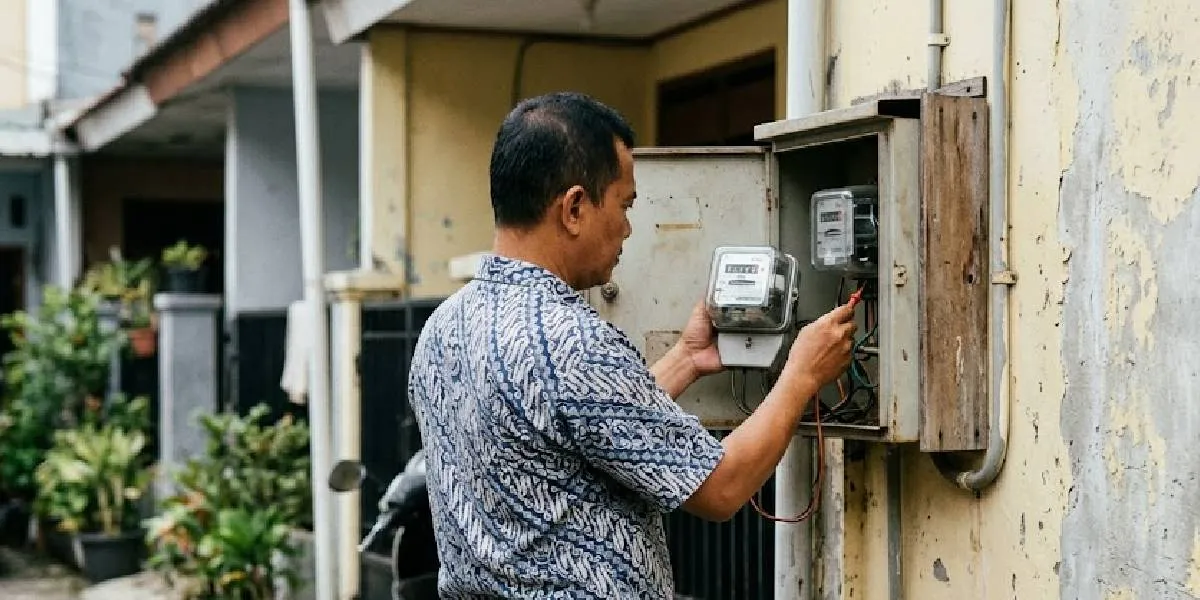
Kapanlagi.com - Knowing the wattage of home electricity is important before adding electronic devices or changing electricity usage habits at home. This information helps you estimate whether the available electricity capacity is still sufficient, thus minimizing the risk of power outages due to overload.
There are several ways to find out home electricity wattage that can be done independently without assistance from officials. Starting from checking the information on the electricity meter, checking through the PLN Mobile app or the official PLN website, to calculating it from the power capacity in Volt Ampere (VA) units. All these methods can be done for free as long as you have access to the meter or customer data.
It should be understood that PLN sets the customer's electricity capacity using the unit Volt Ampere (VA). Meanwhile, electronic devices use the unit watt as a measure of the actual power consumed. In household installations, the watt value is generally obtained by multiplying the VA capacity by a power factor of about 0.8. For example, a power of 1,300 VA is equivalent to approximately 1,040 watts.
The meter or kWh meter is the most accurate source of information to know the electrical capacity installed in the home. Both prepaid and postpaid customers can see the power information directly from the device.
For postpaid customers, the power rating is usually printed on the front or side of the meter. Numbers such as 900 VA, 1,300 VA, or 2,200 VA indicate the maximum capacity of electricity that can be used simultaneously.
Meanwhile, prepaid electricity users can press the Enter or OK button on the digital meter to display technical information. One of the data that appears is the power capacity in VA units. If the button layout is different, users can adjust it according to the meter instructions based on the brand used.
Another piece of information that can also be used as a reference is the tariff group code, for example R1/900 VA or R1/1300 VA. The power rating can be determined from the number indicated after the slash.
In addition, PLN meters also recognize the code CL as a marker of electrical capacity. CL 2 generally indicates a power of 450 VA, CL 4 indicates 900 VA, while CL 6 refers to 1,300 VA. The power rating is usually in line with the size of the MCB used, such as 2A for 450 VA, 4A for 900 VA, 6A for 1,300 VA, and 10A for a power of 2,200 VA.
Referring to Rewiring America, the electrical capacity label is generally affixed to the electrical panel. Meanwhile, Angi mentions that the shape of the meter box in several countries can also indicate electrical capacity. However, for customers in Indonesia, official information still refers to the data listed on the PLN meter.
In addition to checking the meter directly, customers can also find out the electricity capacity of their home through digital services provided by PLN. This method is suitable when the meter is hard to reach or if you want to check customer information via mobile.
The first step is to download PLN Mobile from the Play Store or App Store. After the application is installed, create an account using your mobile number or email address, then log in to the main page of the application.
Next, prepare your Customer ID which consists of 11–12 digits. This number is usually printed below the barcode on the electricity meter and can also be found on the token purchase receipt or monthly electricity bill.
Go to the Token and Payment menu, then enter your Customer ID and select the Check menu. The application will display customer details, including Rate/Power information such as R1/1300 VA, which indicates that the customer is a household in the R1 category with a connected power of 1,300 VA.
In addition to displaying power information, PLN Mobile also provides various other services, ranging from electricity token purchases, bill payments, reporting outages, to applying for increased power.
For those who do not want to install the application, checking can also be done through the official PLN website at layanan.pln.co.id. Users only need to enter the meter number or Customer ID in the customer identity column, then select the Search button to view rate, power, and other customer data.
Another equally practical way is to check the token purchase receipt or electricity bill because power information is usually listed in the Rate/Power section.
Several marketplaces and digital wallets that provide electricity token purchase services will also display the customer's name along with power capacity after the Customer ID is entered, even before the transaction is completed.
If all of these methods do not provide the needed information, customers can contact PLN Contact Center 123. The staff will assist in providing information about the registered electricity power according to customer data.
After knowing the installed power capacity, you can also calculate how much real power or watts can be used. This calculation is useful for estimating the number of electronic devices that can be safely turned on simultaneously.
The formula used is quite simple, which is:
Watt = VA × Power Factor
In household installations, the power factor is generally around 0.8. Thus, electricity 900 VA can provide about 720 watts, while 1,300 VA is equivalent to approximately 1,040 watts.
Each electronic device also has power consumption information listed on its product label. From refrigerators, televisions, washing machines, to air conditioners, all have different electricity needs, making it important to know the wattage of each.
If the device label only displays the current value (amperes), you can calculate it using the formula:
Watt = Volt × Ampere
With the standard PLN voltage of 220 volts, the wattage can be calculated from the multiplication of voltage and electric current.
To keep electricity usage within safe limits, add up the total power of the devices used at the same time. As a guideline, a household refrigerator generally requires about 100–150 watts, an iron about 300 watts, a television about 80 watts, while an air conditioner can consume 350–800 watts or more, depending on the PK capacity.
Electrical experts recommend that the total electrical load should not exceed about 80 percent of the available power capacity. This reserve space is needed to anticipate current spikes when devices are turned on, so the MCB does not easily trip.
To find out daily energy consumption, use the following formula:
Usage (kWh) = (Power in watts × Duration of use in hours) ÷ 1000
The calculation results from all devices can be summed up to determine the estimated daily electricity consumption.
Guidance from Anker SOLIX explains that electrical power is the result of multiplying voltage and electric current. Meanwhile, Electrical Safety First reminds that each circuit in the house has a maximum current limit. The use of high-power devices on circuits with inadequate capacity can trigger overheating and increase the risk of electrical disturbances.
Knowing the electrical capacity of a home will be more beneficial if followed by the ability to recognize when that power is no longer suitable for needs. As the number of electronic devices increases, household electricity needs can also rise.
According to Regulation of the Minister of Energy and Mineral Resources Number 28 of 2016, the household tariff categories are divided into R-1 for power 450 VA to 2,200 VA, R-2 for 3,500 VA to 5,500 VA, and R-3 for power 6,600 VA and above. If electricity usage exceeds the available capacity, several signs usually begin to appear.
MCBs that frequently trip or electricity that often "jumps" is the most common indication that the electrical load exceeds capacity. This condition occurs because the protection system cuts off the electrical flow to prevent damage to the installation.
Dimming or flickering lights when other devices are turned on can also indicate voltage fluctuations due to limited electrical capacity. Additionally, difficulty in turning on several devices simultaneously, leading to power outages, is a sign that the available power is inadequate.
The need to increase power often arises when a home starts using devices with high electricity consumption, such as additional air conditioners, water heaters, or other high-power electronic equipment. Similarly, during renovations that add rooms, a larger electricity supply is needed.
Working from home, which keeps more devices active throughout the day, can increase the electrical load. If plugs, panels, or MCBs start to feel hot during use, this condition should be checked immediately as it could be a sign that the installation is operating close to its capacity limit.
Understanding electrical capacity not only helps manage the use of electronic devices but also plays a role in maintaining the safety of electrical installations in the home. By knowing the power limits, residents can reduce the risk of overload that could trigger electrical disturbances.
The Executive Director of Energy Watch, Mamit Setiawan, explains the function of the MCB as a safety system for electrical installations.
"The main function of the MCB is as a protection system in electrical installations in case of overload and short circuit of electrical current."
According to the Electrical Safety Foundation International, household electrical problems are estimated to cause around 53,600 fires each year, with a significant number of casualties and injuries. This data highlights the importance of keeping electrical installations working within their capacity.
In addition to safety factors, understanding electrical power is also related to energy efficiency. Replacing incandescent bulbs with LED lights can reduce electricity consumption by up to 75 percent while also having a longer lifespan. On the other hand, some electronic devices still consume power even when in standby mode (phantom load), so turning them off when not in use can help save electricity consumption.
If the household's electricity needs have indeed increased, applying for a power upgrade is a more appropriate solution than continually limiting the use of devices alternately.
The Executive Vice President of Corporate Communications at PLN, Agung Murdifi, stated:
"So customers can increase their power according to their needs without having to worry that the rates will be more expensive."
Electric power can also be checked through the Customer ID consisting of 11–12 digits. This number is available on the electricity meter, token purchase receipt, or monthly bill, and can be used to check power information via PLN Mobile, the PLN website, or PLN Contact Center 123.
It should also be noted that VA is not the same as watts. VA is a unit of apparent power used by PLN to determine the electrical capacity of customers, while watts are the actual power that electronic devices truly consume. Both are connected by the power factor, so the watt value is obtained from the multiplication of VA by the power factor.
For example, electricity with a capacity of 1,300 VA has a real power of about 1,040 watts. This figure serves as a reference when calculating the total load of electronic devices that can be used simultaneously to ensure that the electrical installation operates safely.
(kpl/mda)
Cobain For You Page (FYP) Yang kamu suka ada di sini,
lihat isinya
Inspiration for open kitchens in the village with natural materials and simple designs to create a comfortable cooking space while supporting a slow living lifestyle.

KIP College 2026 opens registration until October 31. Here are the requirements for recipients, registration stages, verification process, and important schedules that need to be known.

Inspiration for combinations of decorative flowers in pots for a minimalist terrace, from shaded areas to terraces that receive full sunlight.

Recommendations for superpower dramas featuring uniquely powerful characters, from supernatural family stories to battles against evil spirits. Let's take a look.

Recommendations for Thai black magic films featuring stories of curses, supernatural rituals, and black magic practices such as THE MEDIUM, HOME FOR RENT, and PANOR.

Korean shaman films present horror stories based on the mudang culture. Check out film recommendations, the history of the genre, and how to enjoy them.

Get to know the list of films and dramas of Ryu Hwa-young, a former member of T-ara who built her acting career up to the news of her marriage in 2026.

Inspiration for pergolas made from climbing vegetable plants that make the yard feel cooler while also providing fresh harvests for daily needs.

Inspiration for low-maintenance side gardens with concepts of coral stones, Zen Gardens, synthetic grass, and beautiful modern gardens that are easy to care for.

Inspirations for modern facades combining concrete, glass, and wood to create an elegant, warm, and comfortable home appearance in a tropical climate.

Recommendations for Chinese zombie dramas present the story of the undead typical of China with elements of jiangshi, martial arts action, and criminal mystery.

Empty land at home can be utilized to create a productive kecipir garden. Check out seven complete layout ideas along with planting and care instructions.
