Kapanlagi.com - The ideal exercise duration each week actually has a fairly clear benchmark according to global health guidelines: at least 150 minutes of moderate-intensity aerobic activity, or 75 minutes of high-intensity activity, plus muscle-strengthening activities at least twice a week.
Although this number may sound like a challenging target, it doesn't have to be pursued in one long session. The key lies in consistency and how to divide the time, not just chasing total duration in one go.
This guide summarizes five important points regarding ideal exercise duration, ranging from official recommendations, how to divide training time, differences in needs for each age group, signs of over-exercising, to the real benefits that the body can feel.
1. How Many Minutes of Exercise Are Recommended per Week?
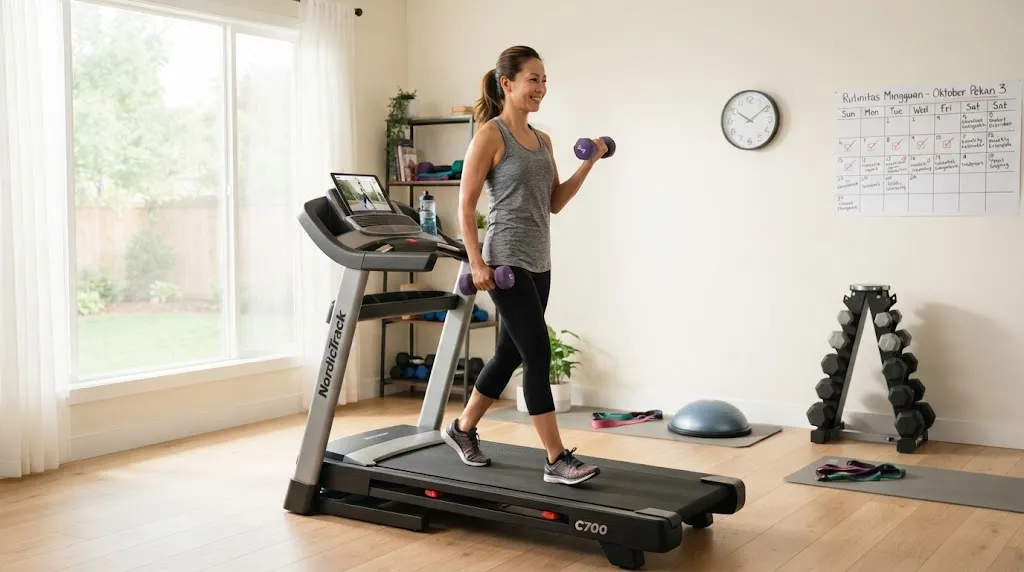
Aerobic Exercise. (AI Generated)
According to the physical activity guidelines issued by the World Health Organization (WHO), adults are advised to engage in at least 150 minutes of moderate-intensity aerobic activity, or 75 minutes of high-intensity aerobic activity, each week to gain significant health benefits.
In addition to aerobic exercise, WHO also recommends muscle-strengthening activities such as weight lifting at least two days a week. The combination of both is considered the minimum standard, not the maximum target, so gradually increasing the amount of exercise still provides additional benefits for the body.
2. How to Divide Exercise Time Amid a Busy Schedule

Dividing Exercise Time Amid a Busy Schedule. (AI Generated)
One of the most practical ways to meet the 150-minute target is to break it down into 30-minute sessions per day over five days a week. This way, the body still gets recovery time without having to force exercise every day without breaks.
The 30-minute duration itself can be further divided into shorter sessions throughout the day, as the effects of physical activity tend to be cumulative. This approach of spreading out exercise time is considered easier to fit into daily routines, especially for those who find it difficult to start long workout sessions all at once.
3. Exercise Needs Vary According to Age and Body Condition
The figure of 150 minutes is actually just a general guideline, not a strict rule for everyone. The WHO provides different guidelines according to age groups: children and adolescents aged 5-17 years are advised to be active with moderate to high intensity for an average of 60 minutes per day, while adults aged 18-64 years are targeted for 150-300 minutes per week.
The elderly are advised to follow targets similar to adults, but with more emphasis on body balance exercises to reduce the risk of falls. Meanwhile, pregnant women and postpartum mothers are recommended to achieve around 150 minutes of light aerobic activity gradually while avoiding movements that pose a risk of falling.
4. Recognize the Signs of Overexercising

Signs of the Body from Excessive Exercise. (AI Generated)
Although theoretically there is no maximum limit on daily or weekly exercise duration, it does not mean the body is immune to excessive fatigue. Some signs to watch out for include:
- Decreased exercise performance
The body's ability to exercise actually decreases even though the intensity of the workout remains the same. - The body feels constantly tired
Fatigue that does not go away even after resting can be a sign that the body needs a longer recovery period. - Mood swings
Physical fatigue from excessive training can make someone more irritable, emotional, or lose motivation to exercise. - Difficulty sleeping
An overly heavy exercise routine can make it difficult for the body to relax, disrupting the quality and duration of sleep. - More susceptible to colds
When the body does not get enough recovery time, physical condition can decline, making someone more likely to feel unwell. - Unusual weight loss
Weight loss without intentional changes in diet should be noted, especially if it occurs alongside fatigue and decreased exercise performance.
If several of these signs appear simultaneously, give the body enough rest and recovery time before increasing exercise intensity again.
5. Real Benefits of Regular Exercise for Health

Benefits of Exercise. (AI Generated)
Exercise in the right proportion provides various benefits for the health of the body and mind. Some of the benefits that can be obtained include:
Helps reduce inflammation
Regular physical activity can help keep the body's inflammatory response under control.
Improves blood flow
Exercise helps enhance blood circulation so that oxygen and nutrients can be distributed to various body tissues more effectively.
Boosts metabolism
Physical activity helps the body use energy more effectively while supporting metabolic functions.
Increases insulin sensitivity
Exercise can help the body respond to insulin better, thus playing a role in maintaining blood sugar levels.
Supports tissue health
Physical activity aids in various processes of maintenance and recovery of body tissues.
Reduces the risk of chronic diseases
An active physical lifestyle is associated with a lower risk of several chronic diseases, including type 2 diabetes and heart disease.
Supports brain function and memory
Exercise can enhance brain health and help maintain cognitive functions, including memory ability.
Improves mood and reduces stress
Regular physical activity can help improve mood while relieving stress and tension.
Helps improve sleep quality
Regular exercise can support better sleep patterns, making it easier for the body to rest at night.
6. Questions and Answers About Ideal Exercise Duration
How many minutes of exercise are recommended for adults each week?
At least 150 minutes of moderate-intensity aerobic activity or 75 minutes of high-intensity activity, plus muscle-strengthening activities at least twice a week.
Does the 150 minutes need to be done all at once?
No. This duration can be broken down into shorter sessions throughout the week, such as 30 minutes a day for five days, as the effects are cumulative.
Do children and the elderly have the same exercise targets as adults?
No. Children and teenagers are advised to be active for about 60 minutes a day, while the elderly are encouraged to add balance exercises to reduce the risk of falls.
What are the signs of the body exercising too much?
Some signs include decreased performance, easy fatigue, irritability, difficulty sleeping, frequent illness, and unexplained weight loss.
What are the main benefits of regular exercise for health?
Regular exercise helps reduce inflammation, improve metabolism and insulin sensitivity, maintain heart and brain health, and lower the risk of chronic diseases.
(kpl/rao)
Disclaimer: This translation from Bahasa Indonesia to English has been generated by Artificial Intelligence.


 Follow

 Rekomendasi