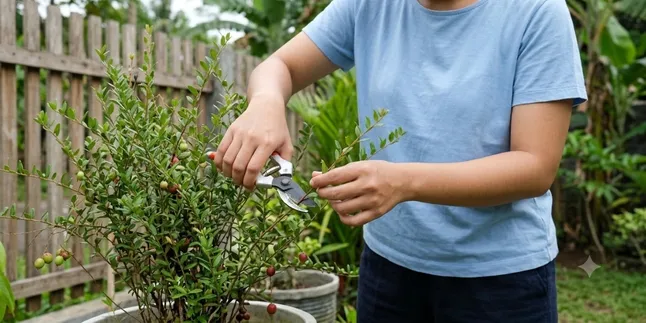
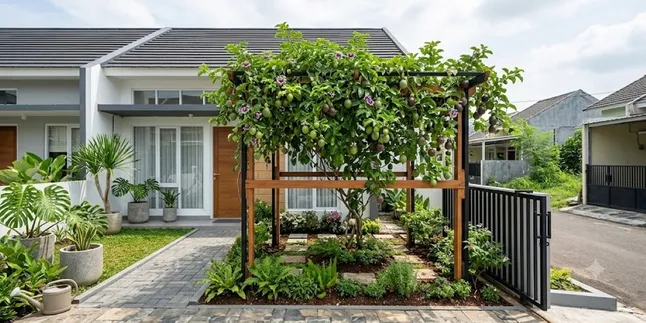
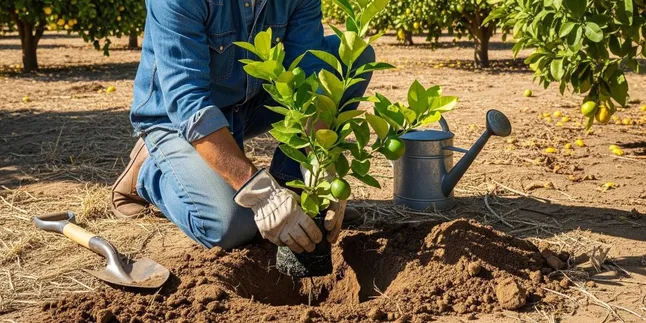
Kapanlagi.com - Yellow dragon fruit or Selenicereus megalanthus has bright yellow skin and sweet white flesh sprinkled with small black seeds. Its taste is often described as a blend of grape and lychee, with a higher sugar content compared to other dragon fruits. This fruit is also rich in vitamin C, antioxidants, and fiber.
The yellow dragon fruit plant belongs to the cactus family and grows as a climbing plant requiring strong support. Its growth is slower compared to red dragon fruit, with smaller roots and stems. Here are the steps to grow dragon fruit for lush growth and quick fruiting.
1. Choosing the right planting location
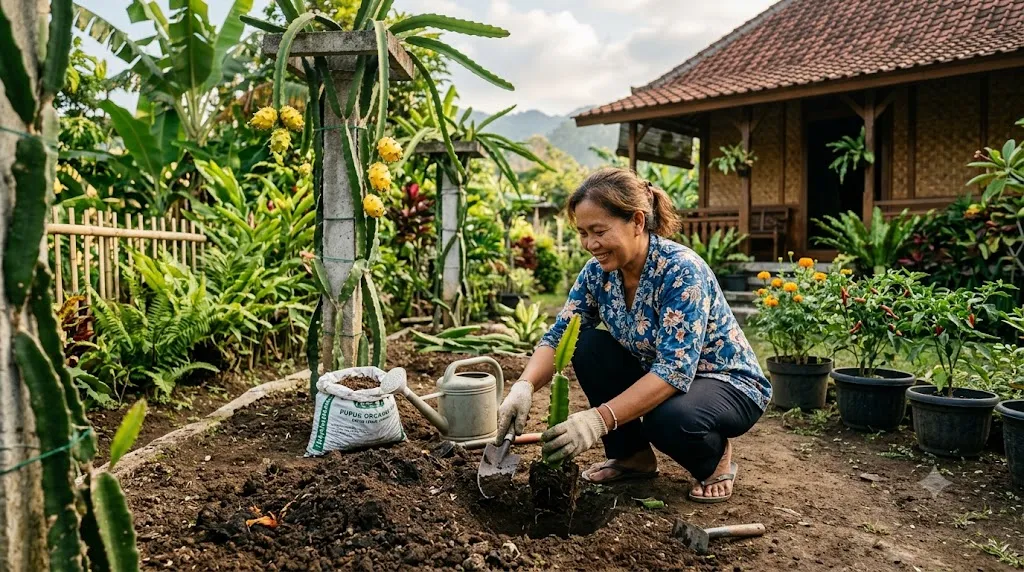
Planting yellow dragon fruit. [AI Generated]
Yellow dragon fruit grows well in a location that receives full sunlight for at least eight hours each day. Choose land with good drainage to prevent water from pooling and causing root rot.
The ideal soil has a pH of 5.5–7.0 and is sufficiently loose. A bright location that is not too humid will help optimize the growth of stems, flowering, and fruit formation.
2. Choosing superior seeds
Use seeds from healthy parent plants that are free from pests and diseases and have already borne fruit several times. Seeds from productive parents generally have stronger growth and better fruit quality.
Choose stems that are old, sturdy, and undamaged. Superior seeds will accelerate plant growth, increase resilience, and help produce larger and more uniform harvests.
3. Preparing stem cuttings
Cut the stems to a length of 20–30 cm using clean and sharp tools. The top should be cut flat, while the bottom is angled to facilitate root formation.
After cutting, the cuttings need to be air-dried for a few days to prevent the cut wounds from rotting easily. The base of the cuttings can be dipped in rooting hormone to help accelerate the growth of new roots and increase planting success.
4. Sowing seedlings until ready for planting
The cuttings are first planted in polybags or seedbeds containing loose and moist media. Place them in a bright area but not exposed to excessive rain.
During the sowing period, maintain the moisture of the media and avoid waterlogging. Seedlings are considered ready to be transferred to the field once the roots are strong, the shoots are well-developed, and the plant height reaches about 40–50 cm.
5. Preparing the land and planting holes
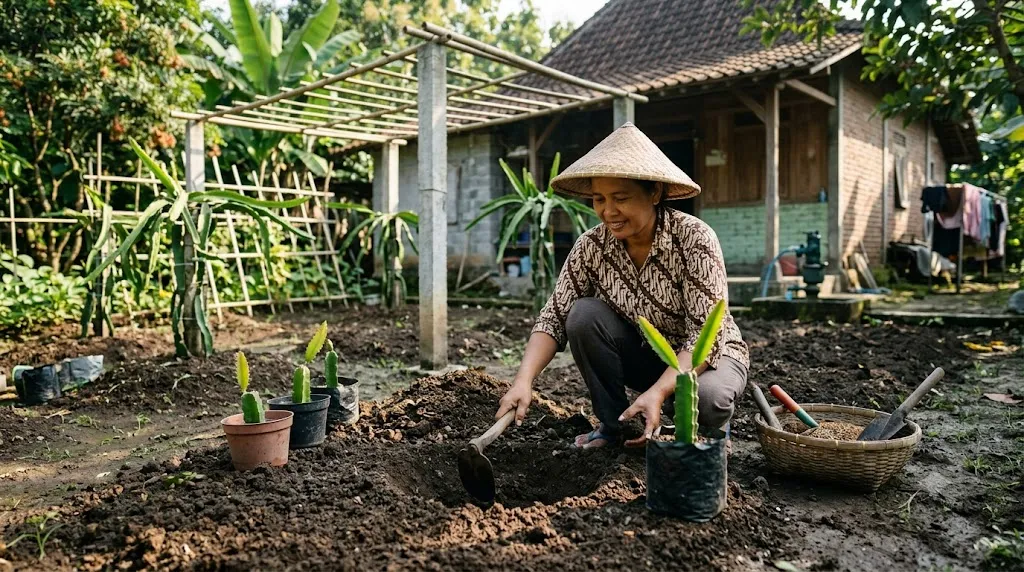
Planting yellow dragon fruit. [AI Generated]
Clear the land of weeds and other plant residues to prevent them from becoming sources of pests and diseases. Create planting holes approximately 40–60 cm in size with a planting distance of about 2 x 2.5 meters.
A sufficient distance is important for air circulation and lighting. Proper land preparation will facilitate root development and support optimal plant growth.
6. Mixing planting media
The excavated soil is mixed with sand, compost or well-rotted manure, dolomite, and a little NPK base fertilizer. This mixture makes the media more loose, fertile, and well-aerated.
Sand helps with drainage, compost adds nutrients, while dolomite helps stabilize soil pH. Nutrient-rich planting media will support the growth of roots and stems from the beginning of planting.
7. Installing Support Poles
Yellow dragon fruit is a climbing cactus plant that requires a strong support. Use a concrete or wooden pole about two meters tall and plant it firmly in the ground.
At the top of the pole, you can attach a metal ring or other supports to prevent the stem from falling. A good support helps the plant grow upright, makes maintenance easier, and increases fruit productivity.
8. Planting Seedlings in the Planting Hole
Carefully remove the polybag to avoid damaging the roots. Place the seedling into the planting hole, then cover it back with the prepared medium while gently pressing it down to ensure the plant stands firm.
After planting, tie the stem to the support pole using a not-too-tight string. This step helps the seedling adapt quickly and prevents the plant from falling over due to the wind.
9. Performing routine watering
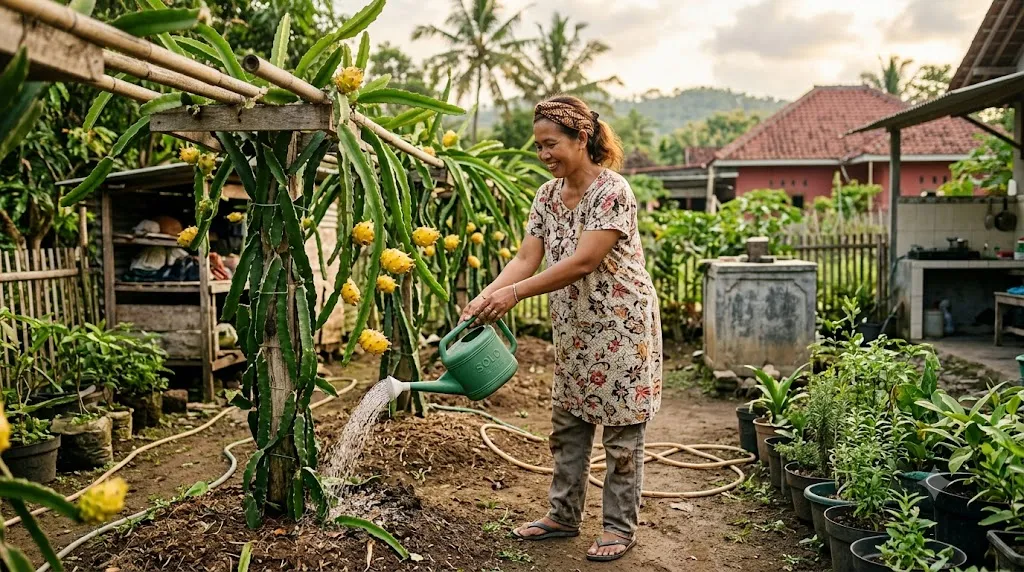
Watering yellow dragon fruit. [AI Generated]
Watering is done adequately according to weather conditions and soil moisture. During the dry season, young plants can be watered more frequently to keep the media moist, but not soggy.
When the plants start to flower and bear fruit, watering can be reduced to improve fruit formation. Excess water should be avoided because yellow dragon fruit is quite sensitive to standing water and root rot.
10. Performing fertilization and further care
In the vegetative phase, use fertilizers that contain higher nitrogen to stimulate the growth of stems and shoots. When the plants start to flower, provide fertilizers with higher phosphorus and potassium content to optimize flower and fruit development.
Weeding, pruning unproductive branches, and regularly monitoring pests and diseases should be carried out to keep the plants healthy and productive.
11. Questions About How to Plant Yellow Dragon Fruit
Can yellow dragon fruit be planted in lowland areas?
Yes, yellow dragon fruit can be planted in lowland areas as long as it receives full sunlight, has good drainage, and is not waterlogged. However, its growth is generally more optimal in cooler areas with appropriate humidity and temperature.
How long does it take for yellow dragon fruit to bear fruit after being planted?
Plants from cuttings usually start to bear fruit at 1–2 years of age. If using the grafting technique on the rootstock of red dragon fruit, the plant can bear fruit more quickly, about 9 months after planting.
Why is yellow dragon fruit considered sweeter than red dragon fruit?
Yellow dragon fruit has a higher content of sucrose and fructose compared to most other dragon fruit varieties. Therefore, it tends to taste sweeter with a more fragrant aroma and is often preferred as a premium fresh fruit.
What are the most common mistakes when planting yellow dragon fruit?
The most common mistakes include planting in soggy soil, insufficient sunlight, and not providing a strong support pole. These conditions can lead to root rot, slow growth, and suboptimal flower and fruit production.
(kpl/this)
Disclaimer: This translation from Bahasa Indonesia to English has been generated by Artificial Intelligence.


 Follow
 Rekomendasi