

 Follow
 Rekomendasi
10 Dramas About Adult Women Learning to Enjoy Life Alone, Perfect for Me-Time
Need some 'me-time'? Check out these 10 recommended dramas about adult women learning to enjoy life alone. The stories are relatable, inspiring, and heartwarming!
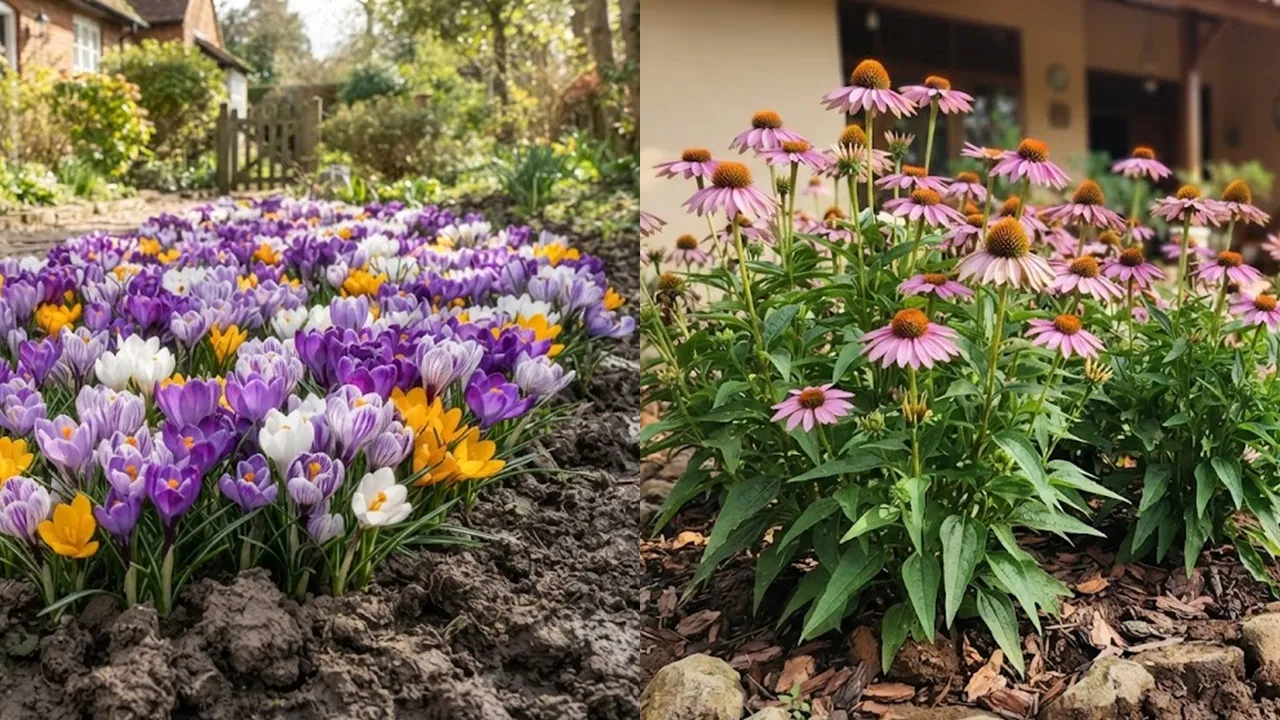
Kapanlagi.com - Flowers that thrive in clay soil can be a choice for homeowners with soil conditions that are difficult to drain. This situation often makes it hard for plants to develop because the roots stay in wet soil for too long.
However, clay soil retains nutrients that can be utilized by plants if the type of flower chosen is appropriate. Therefore, homeowners do not always need to replace all the soil before starting to plant flowers.
So, what flowers can grow in clay soil and how to care for them? Here, KapanLagi presents 17 flower options that thrive in clay soil, Friday (21/8).
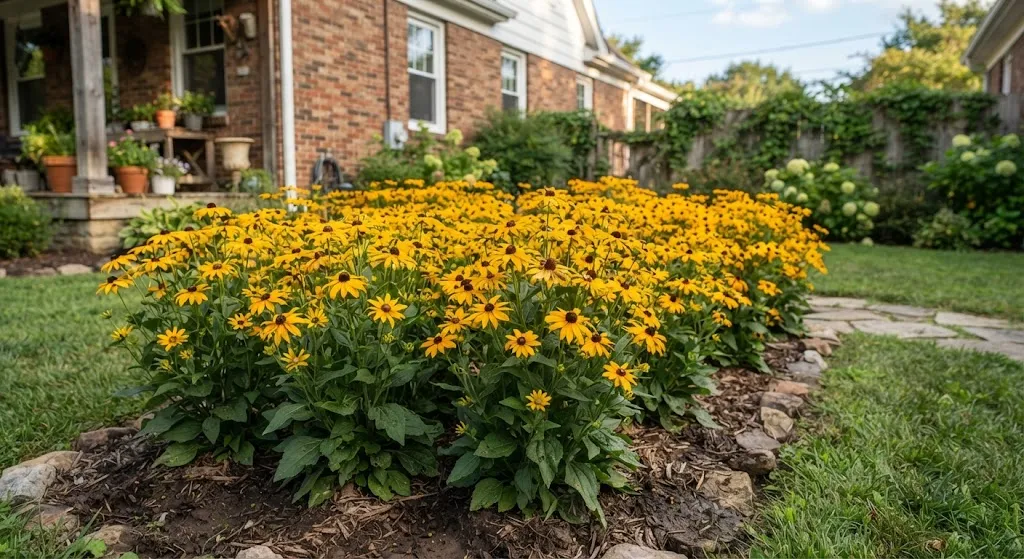
A flower that thrives in clay soil and is suitable for home yards, the black-eyed Susan - AI generated
Black-eyed Susan grows wild in the eastern United States and is known for its yellow petals surrounding a dark brown center. This plant thrives in clay soil because its roots penetrate the dense layer without being disturbed by light waterlogging.
Caring for black-eyed Susan is relatively easy because this plant is drought-resistant after the initial growing period. Full to partial sunlight is essential for the flowers to bloom abundantly throughout the summer into early fall.
In addition to beautifying the yard, black-eyed Susan attracts butterflies and seed-eating birds. This plant also grows in clusters year after year, making it suitable for planting in open areas or garden borders.
Bee balm belongs to the mint family and produces tubular-shaped petals in various colors ranging from red, pink, to light purple. Its root structure helps break down clay layers gradually each planting season.
This plant spreads quickly in clay soil, so garden owners need to divide the clumps every two years at the beginning of spring. Full sunlight maximizes bee balm flowering, while stable soil moisture reduces the risk of leaf diseases.
The distinctive aroma of bee balm attracts bees, butterflies, and hummingbirds. Therefore, this plant is often chosen for gardens that serve as pollinator habitats in residential yards.
Garden phlox is widely known as a classic garden flower that can thrive in various types of soil, including heavy clay. Its petals come in blue, pink, red, lavender, and white with a soft fragrance that can be detected throughout the day.
This plant blooms from mid-summer until temperatures begin to drop in the fall. Regularly cutting off wilted flowers helps extend the blooming period while keeping the clump looking tidy.
Garden phlox is suitable for planting in groups at the back of the garden because its stems can reach up to one meter tall. The diverse color combinations make this plant easy to integrate with other flowers around the yard.
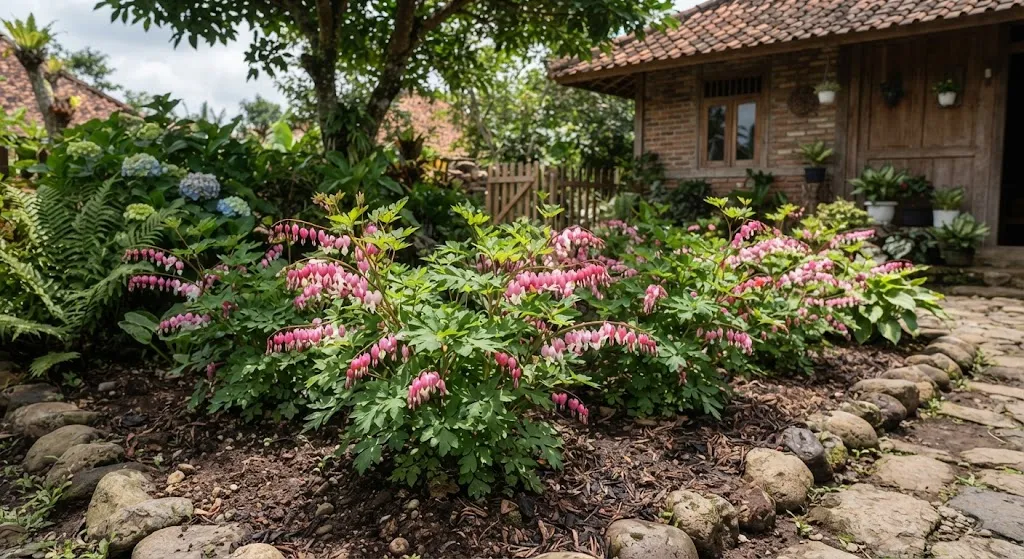
A flower that thrives in clay soil and is suitable for home gardens, the bleeding heart - AI generated
Bleeding heart is a choice for shady areas because this plant thrives under the shade of trees with moist clay soil. Its flower shape resembles small hearts that hang in rows along the curved stems.
The petals of the bleeding heart come in shades of pink, red, and white, and bloom from late spring for six weeks in temperate regions. In warmer areas, this plant often blooms again when the weather cools in the fall.
Because it prefers shade, the bleeding heart is well-suited to be planted alongside ferns or other ground cover plants. This flower, which flourishes in clay soil, is also tolerant of acidic to neutral soil conditions.
Daylily is famous for each of its petals blooming for only one day, yet a single stalk can produce many buds in succession, allowing the flowers to remain visible throughout the season. The thick, fibrous roots of the daylily make this plant easy to adapt to heavy clay soil.
This plant grows in clusters and spreads slowly, making it suitable for use as a border along walkways or garden edges. Full to partial sunlight allows daylilies to bloom profusely without complicated care.
In addition to being tolerant of clay, daylilies are also drought-resistant once the roots are well established. The combination of yellow, orange, red, and purple colors makes this plant flexible to combine with any garden style.
Asters bloom from late summer to fall, when most other flowers begin to wilt. Their petals are purple, blue, to pink with a yellow center that attracts bees and butterflies.
This plant thrives in clay soil because its roots are resistant to seasonal moisture. Light pruning in early summer helps asters grow bushier and prevents them from toppling over during heavy blooming.
Asters are suitable to be planted alongside other fall-blooming plants such as tickseed or coneflower. This combination keeps the garden colors vibrant until just before winter.
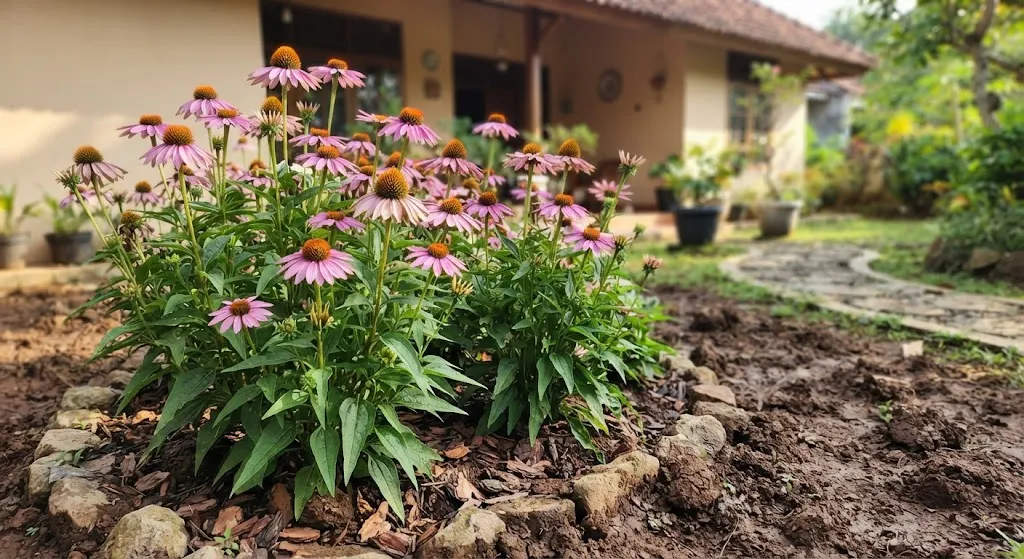
A flower that thrives in clay soil and is suitable for home gardens of the coneflower - AI generated
The coneflower has light purple to pink petals surrounding a cone-shaped center that is orange-brown in color. Its deep taproot helps the plant penetrate clay layers while also allowing it to withstand dry seasons.
This plant is heat, drought, and high humidity tolerant, making it suitable for various weather conditions. Full sunlight allows the coneflower to bloom maximally from summer to early autumn.
In addition to attracting butterflies, the seeds of the coneflower that dry at the end of the season become a food source for birds. Many gardeners intentionally leave the wilted flowers standing to keep the birds coming to the yard.
Yarrow grows in low clumps with feathery leaves and tight clusters of small flowers at the top of the stems. This plant is known to be highly adaptive to poor soil conditions, including dense clay and nutrient-poor soil.
Yarrow is drought-resistant as well as tolerant of prolonged rainy seasons, making it one of the easiest flowers to care for that thrives in clay soil. Its flower colors vary from white, yellow, pink, to brick red.
Yarrow flowers are also long-lasting when cut, making them a popular choice for cut flowers for home decoration. Its dense clumps help suppress weed growth around the planting area.
Coral bells stand out with fan-shaped leaves in colors ranging from green, purple, to orange-brown throughout the year. Small bell-shaped flowers appear at the tips of slender stems from spring to summer.
This plant is suitable for planting in partially shaded areas with clay soil that is not too soggy. Coral bells are resistant to deer and rabbits, making them safe to plant in yards that are frequently visited by wildlife.
Due to their low height, coral bells are often used as ground cover in the front of gardens. The variety of leaf colors keeps the garden looking attractive even outside of flowering season.
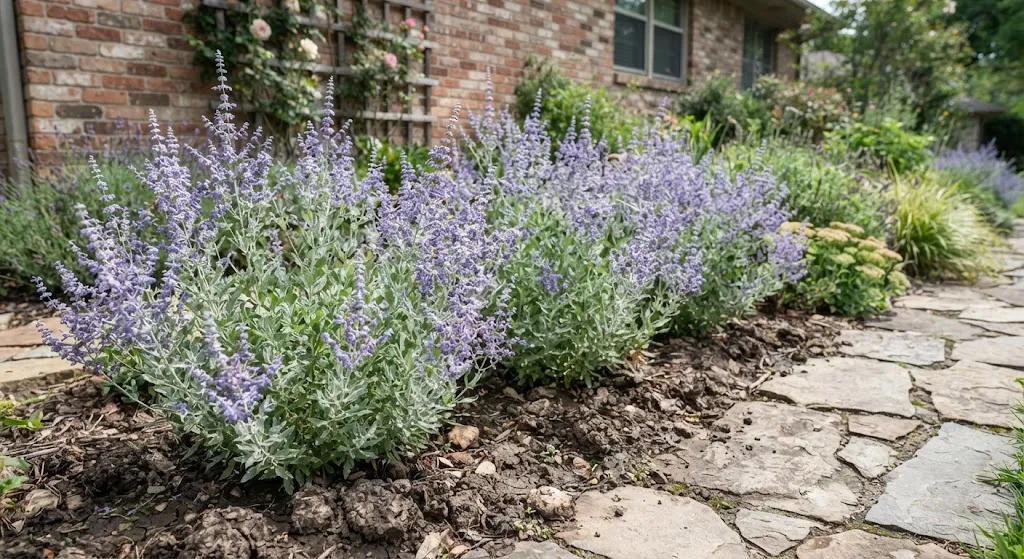
Flowers that thrive in clay soil and are suitable for Russian Sage home gardens - AI generated
Russian sage features tall, silvery stems with clusters of bluish-purple flowers that bloom from summer to early fall. This plant is tolerant of clay soil as long as it does not remain waterlogged for long periods.
The distinctive aroma of Russian sage leaves makes this plant rarely disturbed by deer or rabbits. Full sunlight is essential for the stems to grow upright and not easily topple during heavy flowering.
Russian sage is suitable for planting in groups as a backdrop in gardens, as it can reach heights of over a meter. This plant also attracts a large number of bees during the flowering season.
The Annabelle variety of hydrangea produces large round white flowers that appear from spring to summer. This plant is known for its ability to bloom even when planted in dense clay soil.
Caring for Annabelle hydrangeas is relatively simple because this plant can withstand heavy pruning every early spring without reducing the number of flowers in the following season. Stable soil moisture helps the flowers grow larger and last longer.
In addition to beautifying the yard, Annabelle hydrangeas attract butterflies, songbirds, and moths. This plant is also resistant to deer disturbances, making it safe to plant in open yards.
Roses come in many varieties with diverse petal shapes and colors, ranging from shrub roses to climbing roses. These plants can grow in clay soil as long as drainage is improved with an adequate addition of organic matter.
Roses require full sunlight, especially in the morning, with some shade during the hot afternoons. Regular maintenance such as pruning and pest monitoring helps roses continue to bloom throughout the summer.
In addition to producing fragrant flowers, roses also form small fruits called rose hips, which provide food for birds during the winter. This plant is suitable for planting as a focal point in home gardens.
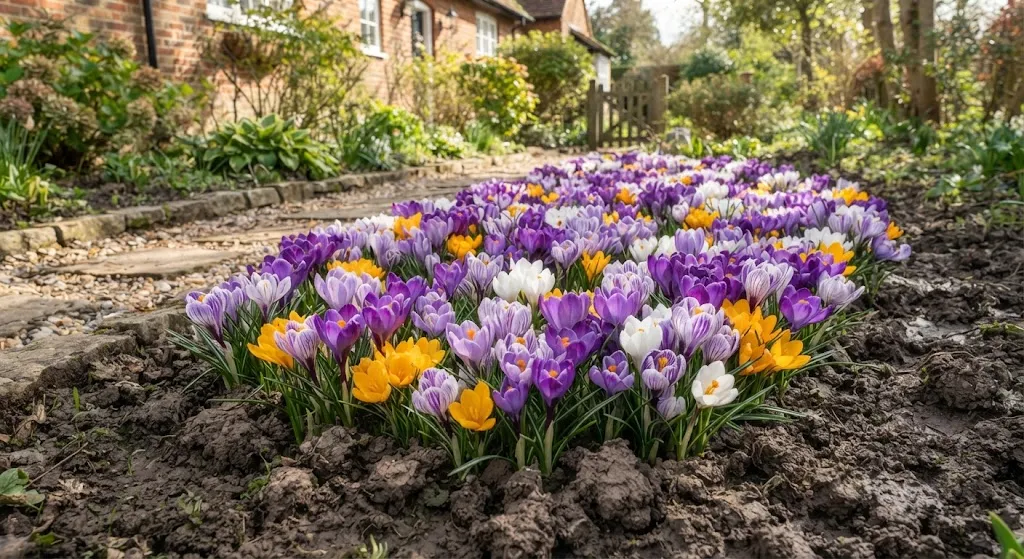
Flowers that thrive in clay soil and are suitable for home gardens such as Crocus - AI generated
Crocus is one of the earliest bulb flowers to emerge in spring, even when the snow has not completely melted. Its compact bulb allows this plant to survive in clay soil as long as the surface drainage is not excessively flooded.
The colors of crocus petals include purple, yellow, and white, with small flower sizes but growing in large numbers simultaneously. Bulbs are planted in the fall so that the flowers are ready to bloom as soon as the temperatures start to warm up.
Crocus is suitable for planting in groups under trees or in between grass because of its short growing period. After blooming, the bulbs can be left in the ground to grow again in the following spring.
Daffodil marks the arrival of spring with its bright yellow trumpet-shaped petals. Its bulb is resistant to clay soil as long as water does not pool around the roots for extended periods.
Daffodil planting is done in the fall so that the roots can develop before the ground freezes. This flower, which thrives in clay soil, will bloom again each year without the need for replanting.
Daffodil is resistant to disturbances from rodents because the contents of its bulb are toxic to these animals. This property makes daffodil a safe choice for gardens that are often visited by rabbits or squirrels.
Tickseed produces small yellow flowers with thin needle-like leaves that grow lush throughout the summer. This plant is drought-resistant and can adapt to clay soil with moderate drainage.
Tickseed care is relatively light as this plant is rarely attacked by pests or diseases. Pruning wilted flowers periodically encourages tickseed to continue blooming until early autumn arrives.
Tickseed is well-suited to be combined with asters and daylilies because their blooming times complement each other throughout the year. These flowers also attract butterflies and bees seeking nectar in the afternoon.
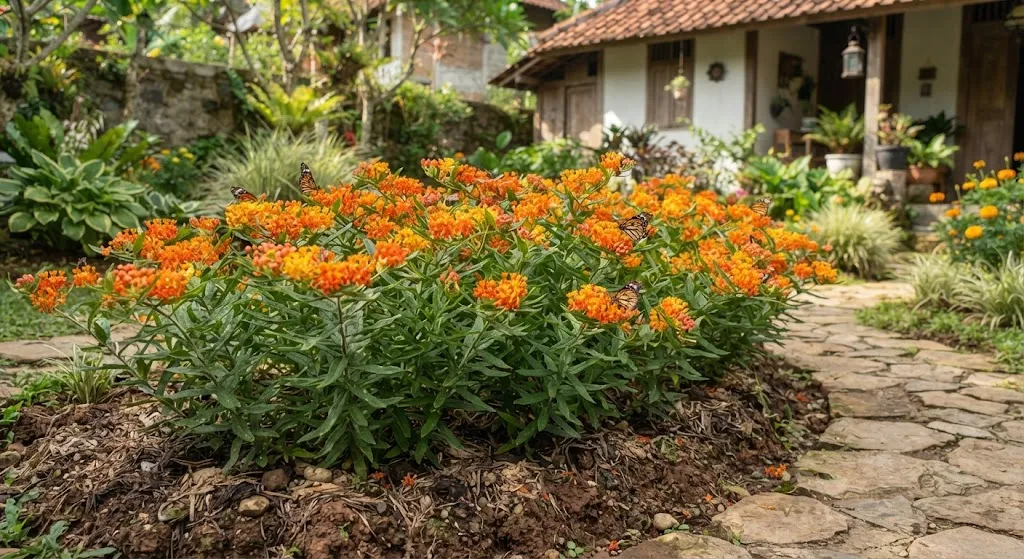
Flowers that thrive in clay soil and are suitable for home gardens such as Butterfly Weed - AI generated
Butterfly weed is known for its clusters of bright orange flowers that serve as a primary food source for monarch butterfly caterpillars. Its long taproot allows this plant to survive in clay soil even during prolonged dry conditions.
This plant requires additional organic matter when first planted to slightly improve the drainage of the clay soil. Once the roots are well established, butterfly weed no longer needs regular watering throughout the summer.
The size of butterfly weed, which is not too tall, makes it suitable for planting in both small and large gardens. This plant is a top choice for yards that want to support the population of monarch butterflies.
Joe Pye weed grows tall with clusters of reddish-purple flowers that bloom in mid to late summer. This North American native plant thrives in moist clay soil that is often avoided by other plants.
The roots of Joe Pye weed are strong and fibrous, helping to gradually break down the structure of clay soil each season. This plant is also tolerant of light flooding in low areas of the garden.
Large numbers of butterflies are commonly attracted to Joe Pye weed when the flowers are in full bloom. This plant is suitable for planting at the back of the garden because its height can exceed one meter.
What flowers are suitable to plant in clay soil?
Black-eyed Susan, daylily, coneflower, aster, and yarrow are among the flowers that thrive in clay soil because their roots can penetrate the compact soil structure without complicated maintenance.
Is clay soil good for flowering plants?
Clay soil retains many nutrients and water, so the right flowers actually grow stronger compared to sandy soil, as long as surface drainage is maintained.
How do you improve clay soil before planting flowers?
Adding compost or organic matter to the surface of the soil helps to gradually improve the structure of clay soil without needing to replace the entire layer of garden soil.
Can roses grow in clay soil?
Roses can grow in clay soil as long as they receive full sunlight and additional organic matter to improve water flow around the roots.
How long do flowers in clay soil take to bloom after planting?
Most annual flowers like asters and tickseed start blooming within one growing season, while bulb flowers like crocus and daffodil bloom the following season.
(kpl/rul)
Cobain For You Page (FYP) Yang kamu suka ada di sini,
lihat isinya
Need some 'me-time'? Check out these 10 recommended dramas about adult women learning to enjoy life alone. The stories are relatable, inspiring, and heartwarming!
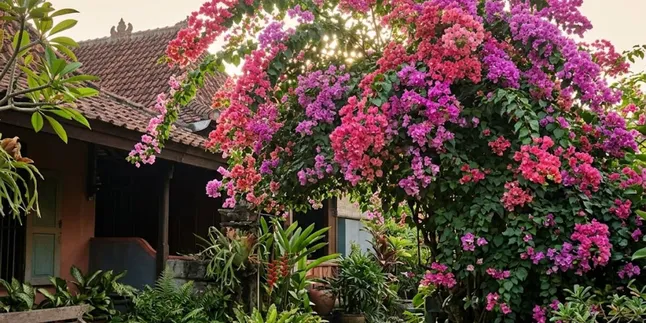
Want your bougainvillea at home to bloom profusely and in bright colors? Choosing the right fertilizer, along with optimal care such as sufficient sunlight and proper watering techniques, is the key.

Family restaurant and culinary-themed films that warm the heart, presenting adventures of taste and inspiring stories.

Recommendations for movies themed around painters and lost artwork, from stories of art hunters to biographies of world maestros. Perfect for art and mystery lovers.
A complete guide to choosing the right pot, from size, material, to aesthetics so that plants thrive and the terrace looks more beautiful.

House paint colors can reflect the personality of their owners. Here are 7 personality types and the colors that suit them best.

A Korean drama about two male friends falling in love with the same girl, a love triangle story that makes you feel emotional and heartbroken.

Confused about choosing the right pants? Find a complete guide to choosing pants according to apple, pear, hourglass, square, and inverted triangle body shapes to appear proportional and confident.
Coconut oil can actually be a lifesaver for stuck zippers! This natural lubricant is effective in reducing friction and restoring the movement of the zipper without damage.

Beware of 7 sentences usually spoken by someone who is emotionally numb; this sign is often considered normal, yet it carries a heavy burden.

Watch a lineup of the best boxing and martial arts films that tell the story of life's struggles, unyielding determination, and the never-give-up spirit of their characters.
Plants that can be grown from kitchen scraps are diverse and easy to try at home, ranging from vegetables, herbs, tubers, to fruits.
