Kapanlagi.com - Choosing pots for a mini vegetable garden on the terrace doesn't have to be complicated. You just need to adjust it to the type of vegetables, the size of the terrace, and the amount of sunlight that comes in. The right pot also makes plants more comfortable to grow and easy to care for.
In addition to size, also pay attention to the pot material and drainage holes. By understanding how to choose pots for a mini vegetable garden on the terrace, you can determine containers that are not only aesthetically pleasing but also help maintain the growing medium conditions suitable for the plants' needs.
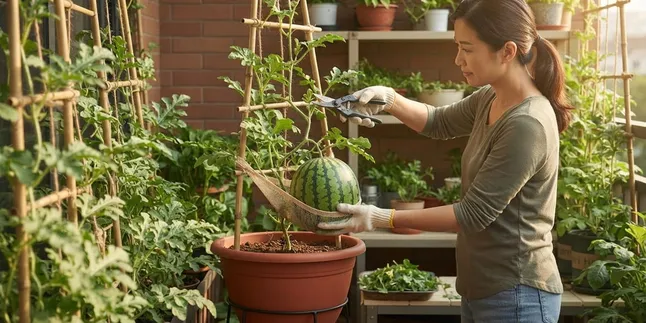
Having a narrow terrace doesn't mean you can't garden. Through the right way to choose pots for a mini vegetable garden on the terrace, you can utilize hanging pots, tiered racks, or recycled containers to create a neat green area without taking up much space.
1. Adjust Pot Size to Vegetable Type
Choose the pot size based on the type of vegetable you will plant. Leafy vegetables such as lettuce, spinach, and kale generally only require pots with a depth of about 15–20 cm. Meanwhile, carrots and beets need deeper containers, around 30–40 cm, so that their roots can develop properly.
For fruiting plants like tomatoes, eggplants, and chilies, use larger pots with a diameter of about 30–50 cm and a minimum depth of 40 cm. Avoid pots that are too small as they can restrict root growth, but also do not choose excessively large containers that make the use of planting media and water less efficient.
2. Choose Pot Material According to Terrace Conditions
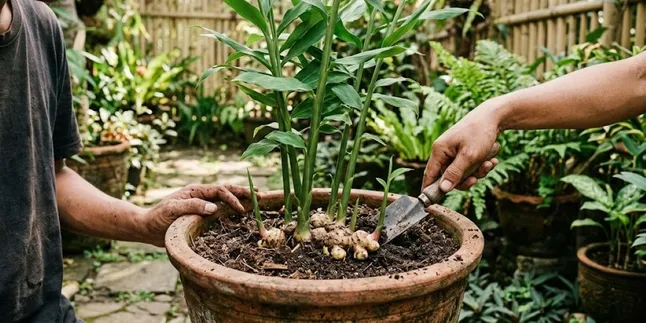
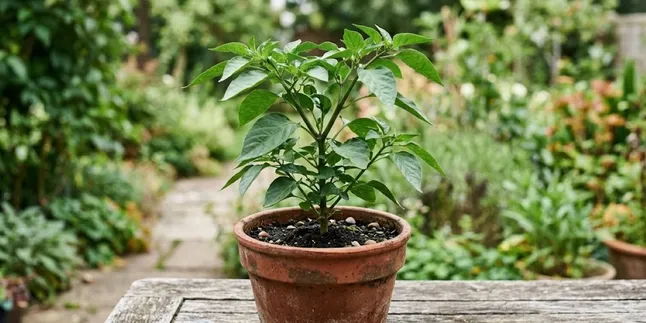
The pot material affects the container's ability to retain moisture, regulate the temperature of the planting media, and the air circulation around the roots. Clay or terracotta pots have porous properties that help with air exchange, but the planting media inside tends to dry out faster.
Plastic pots are lighter, durable, and can retain moisture better, making them practical for vegetable gardens on terraces. However, dark-colored pots that are constantly exposed to sunlight can become hot. Wooden pots provide a natural impression, while glazed ceramic pots are more decorative but do not have as good air circulation as terracotta.
3. Make Sure the Pot Has Good Drainage
Drainage holes are one of the important things to consider before buying a pot. The container must have holes at the bottom so that excess water can flow out and not pool around the roots. Continually overly wet growing media can increase the risk of root rot.
If using used containers like buckets, plastic bottles, or cans as pots, make several holes at the bottom. Add a saucer to catch the water that drains out so the patio floor stays clean. Water that pools in the saucer should be discarded to prevent the bottom of the pot from being submerged.
4. Utilize Vertical Pots for Narrow Patios
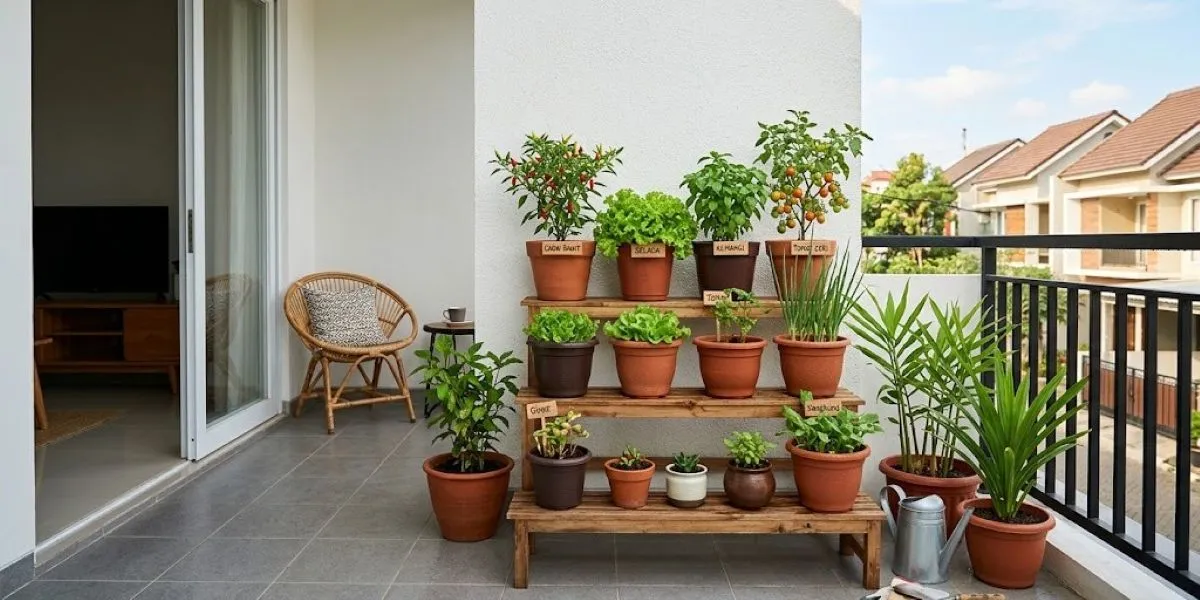
If patio space is limited, take advantage of hanging pots, tiered racks, or vertical garden systems. This way, you can grow more vegetables without filling the entire floor area. Arrange plants based on their light requirements so that each pot receives enough sunlight.
Tiered racks also make organizing and maintaining your plant collection easier. Ensure that the construction is sturdy and can support the weight of the pots, growing media, and water after watering.
5. Choose Easily Movable Pots
Pots for vegetable gardens on the terrace should not be too heavy, especially if the plants need to be moved to follow the direction of sunlight. Plastic pots or other lightweight materials can be a practical choice for such conditions.
If using large and heavy pots, determine their location from the start. You can also use wheeled pot stands to make it easier to move the plants when necessary.
6. Consider the Color of the Pot
The color of the pot is not just related to appearance but can also affect the temperature of the planting medium. For terraces that receive a lot of sunlight, light-colored pots such as white or cream can be a good choice because they tend to absorb less heat than dark colors.
In shaded areas, color choices can be more flexible. Adjust according to the terrace conditions and the needs of the plants to keep the pots attractive while supporting vegetable growth.
7. Use Suitable Reused Containers
You don't have to buy new pots to create a mini vegetable garden. Used containers like buckets, large plastic bottles, cans, or food containers can be repurposed as planting spots.
Make sure the containers are cleaned and safe to use for food plants. Don't forget to make adequate drainage holes so that water doesn't accumulate after watering.
8. Adjust Depth According to Root Growth
In addition to diameter, the depth of the pot also needs to be considered. Vegetables with shallow root systems do not require very deep containers, while plants that produce tubers or have longer roots need more space.
Choosing the appropriate depth helps roots develop without quickly filling the container. This way, plants can grow more optimally and the need for frequently transferring them to larger pots can be reduced.
9. Combine the Shape and Color of Pots with the Terrace
After meeting the plant's needs, consider the appearance of the pots so that the vegetable garden blends with the home decor. Clay and wooden pots are suitable for creating a natural atmosphere, while pots in neutral colors give a more minimalist and tidy impression.
To appear harmonious, use several pots with matching shapes or colors. If you want a more cheerful look, combine certain colors as accents without making the terrace area look too crowded. With the right selection, a mini vegetable garden can become a source of food while beautifying the terrace.
10. Questions About How to Choose Pots for a Mini Vegetable Garden on the Terrace
What should be considered when choosing pots for a mini vegetable garden on the terrace?
Pay attention to the size, depth, material, drainage holes, and weight of the pot. Choose containers that are suitable for the type of vegetables and the conditions of the terrace so that the plants can grow well.
What size pot is suitable for vegetables on the terrace?
Leafy vegetables like lettuce, spinach, and water spinach can generally be planted in pots with a depth of about 15–20 cm. Plants like chili, tomatoes, and eggplants require larger and deeper containers.
Are plastic pots suitable for a mini vegetable garden?
Yes. Plastic pots are lightweight, easy to move, and fairly good at retaining moisture. However, choose a location that is not too hot or use light-colored pots if the terrace gets a lot of sunlight.
Why are drainage holes important in pots?
Drainage holes help to release excess water so that the planting medium does not become waterlogged. Conditions that are too wet can cause the roots to lack air and increase the risk of rot.
How to choose pots for a narrow terrace?
Use hanging pots, tiered shelves, or containers for vertical gardening. This method can save floor space while allowing more vegetables to be planted in a limited area.
(kpl/sel)
Disclaimer: This translation from Bahasa Indonesia to English has been generated by Artificial Intelligence.


 Follow
 Rekomendasi