

 Follow
 Rekomendasi
10 Easy Ways to Propagate Pothos, Can Use Water or Plant Media
How to propagate pothos using water, planting media, and layering to quickly grow roots and produce new seedlings.
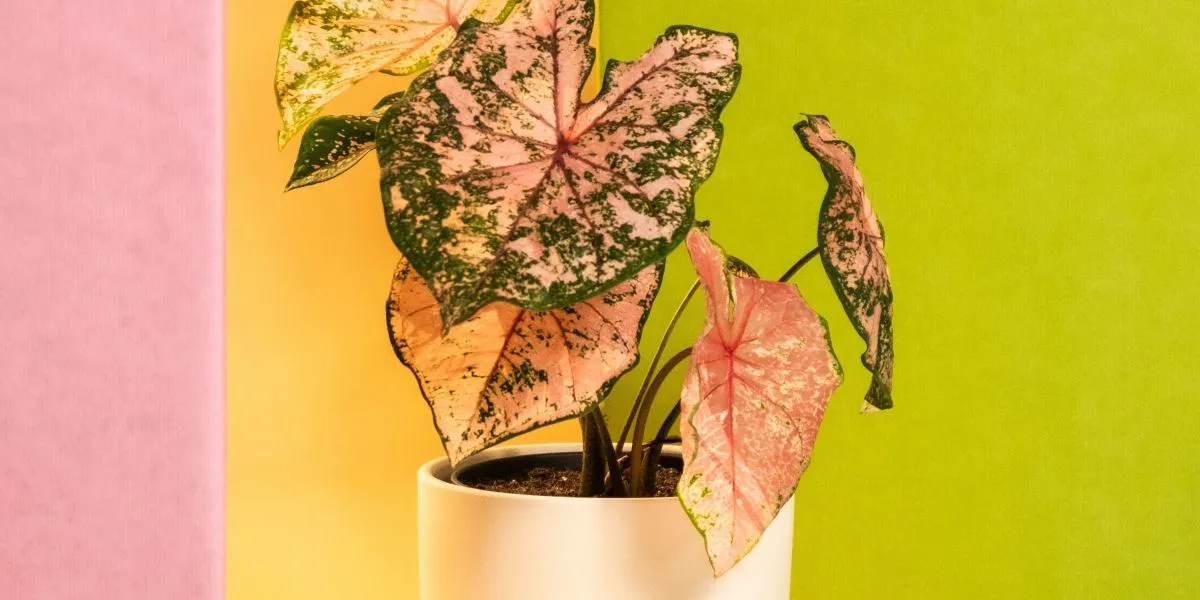
Curling and wilting taro leaves usually indicate that the plant is experiencing stress. This condition may be related to inadequate water availability, light intensity, temperature, media and root conditions, as well as pest or disease attacks.
Taro, belonging to the Colocasia group, is a tropical plant that generally prefers warm conditions and sufficient water availability. However, the water and light requirements can vary according to species, cultivar, media conditions, and growing environment, so the causes of curling and wilting leaves need to be viewed from the overall condition of the plant.
Therefore, check out the following ways to overcome curling and wilting taro leaves, reviewed by KapanLagi.com from various sources, Tuesday (18/8).
How to Overcome Curling and Wilting Taro Leaves/AI Generated
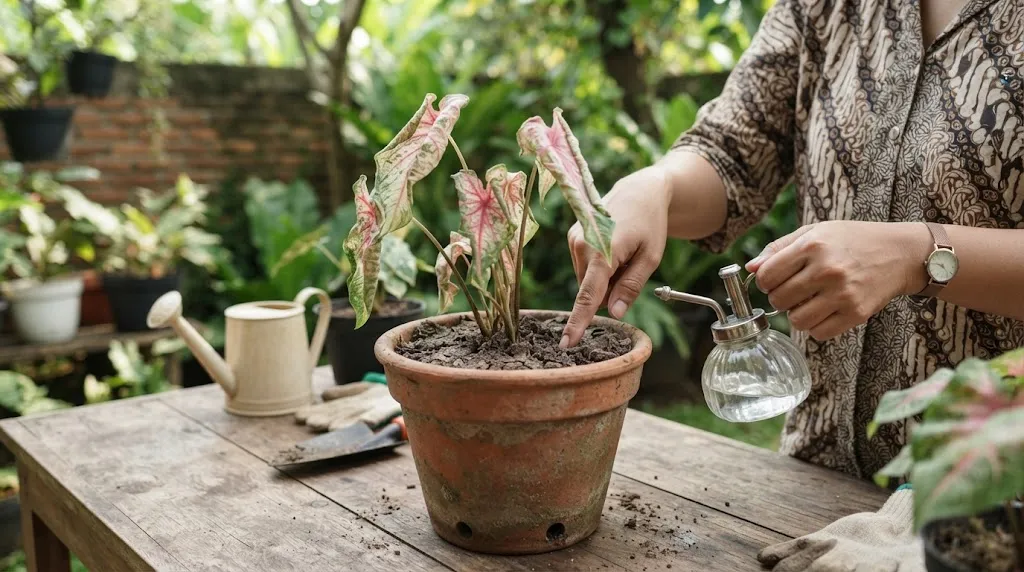
The first step to address curling and wilting taro leaves is to check the condition of the planting media. If the media feels very dry and the leaves appear limp or curling, the plant is likely experiencing a lack of water.
If the media is indeed too dry, water thoroughly until water drains out through the pot's drainage holes. Thorough watering helps moisten the media down to the root zone, not just the surface of the soil.
After that, do not set a watering schedule based solely on a count of days. In Indonesia, pot media can dry out faster during hot and windy weather, while in the rainy season, the media can remain moist for longer, so the condition of the media should be checked before watering again.
Wilting leaves do not always mean that the plant is lacking water. If the medium is continuously saturated with water, the availability of oxygen around the roots may decrease, and this condition can disrupt root function.
Check if water is pooling on the surface or if the medium takes a long time to dry. If the plant remains wilted even though the medium is very wet, check the drainage and root condition before increasing the watering frequency.
Elephant ears do have a tolerance for wet conditions, and some Colocasia can grow in environments with high water availability. However, for ornamental elephant ears grown in pots, it is best to use a medium that can retain moisture but does not cause prolonged pooling around the roots.
How to Overcome Curling and Wilting Taro Leaves/AI Generated
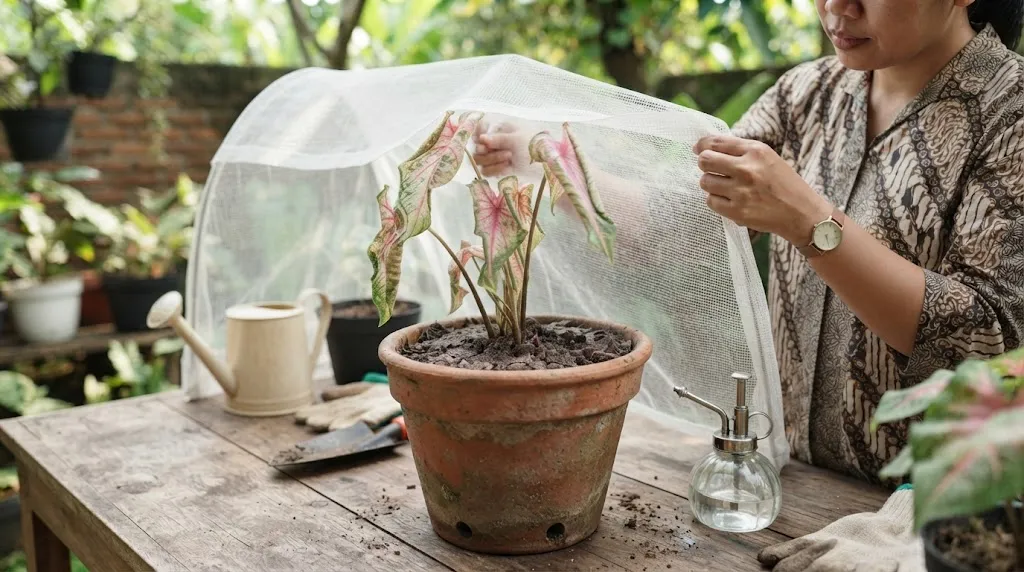
Elephant ears can grow in a variety of light conditions, ranging from direct sunlight to partial shade, depending on the type, cultivar, and environmental conditions. However, exposure to very intense sunlight, especially when accompanied by high temperatures and low water availability, can increase water loss and cause the plant to experience stress.
If the leaves show signs such as edges or surfaces drying out and browning after being exposed to direct sunlight, especially from midday to afternoon, evaluate the light intensity in that location. The plant can be gradually moved to a place with more filtered light or provided with partial shade.
Avoid directly moving elephant ears that were previously accustomed to shaded areas to full sun locations. Sudden changes in light intensity can increase the risk of leaf damage, so adjustments should be made gradually.
Taro is a tropical plant that generally grows well in warm conditions with adequate water availability. An environment that is too hot and dry can increase water loss through transpiration, especially if the growing medium also dries out quickly.
For taro planted at home, avoid placing it directly in front of an air conditioning vent or in locations exposed to very strong airflow. If the plant is in a very hot area, provide protection from excessive sunlight exposure and ensure its water needs are met.
High humidity also needs to be balanced with good air circulation. A humid but stuffy environment can keep the leaf surfaces wet for longer and create conditions that support the development of certain diseases, so taro should be placed in an area with sufficient air exchange.
How to Address Curling and Wilting Taro Leaves/AI Generated
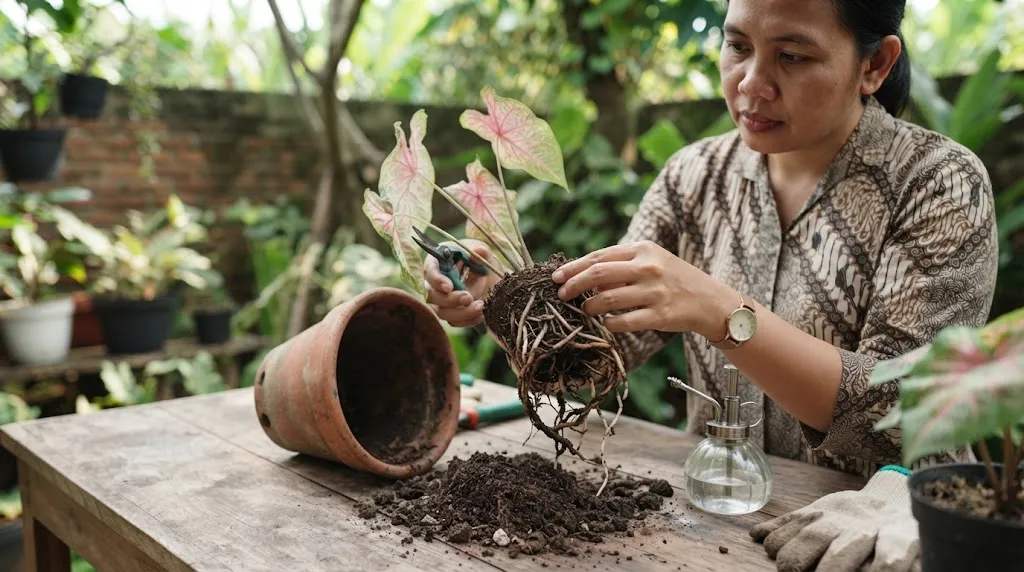
If the leaves remain wilted even though the medium is sufficiently moist, check the condition of the roots and the base of the plant. Issues with the roots can hinder the plant's ability to absorb water, causing the taro to appear wilted even when water is available in the medium.
For potted plants, carefully remove the plant if the problem persists and inspect the root system. Healthy roots generally have firm tissue, while rotting roots can become soft, damaged, or discolored.
If you find any rotting parts of the roots, remove the damaged tissue using clean tools, then replant in suitable media that does not cause prolonged waterlogging. Do not immediately increase watering just because the leaves appear wilted, as overwatering can actually worsen the condition of already problematic roots.
Leaves that curl or change shape may also be related to pest attacks, especially if the changes are most noticeable on young leaves. Certain pests can suck the plant's fluids and cause the leaves to change shape, disrupt growth, or appear unhealthy.
Regularly check the underside of the leaves, stems, and buds to see if there are small insects, pest colonies, spots, or other signs of damage. Inspections should be thorough because small pests can be difficult to see from the top of the leaves.
If a small number of pests are found, clean them manually or gently spray with water depending on the plant's condition, then monitor periodically. Avoid using pesticides directly based on the symptoms of curling leaves, as the same symptoms can also be caused by issues with water, light, heat, or roots.
How to Overcome Curling and Wilting Taro Leaves/AI Generated
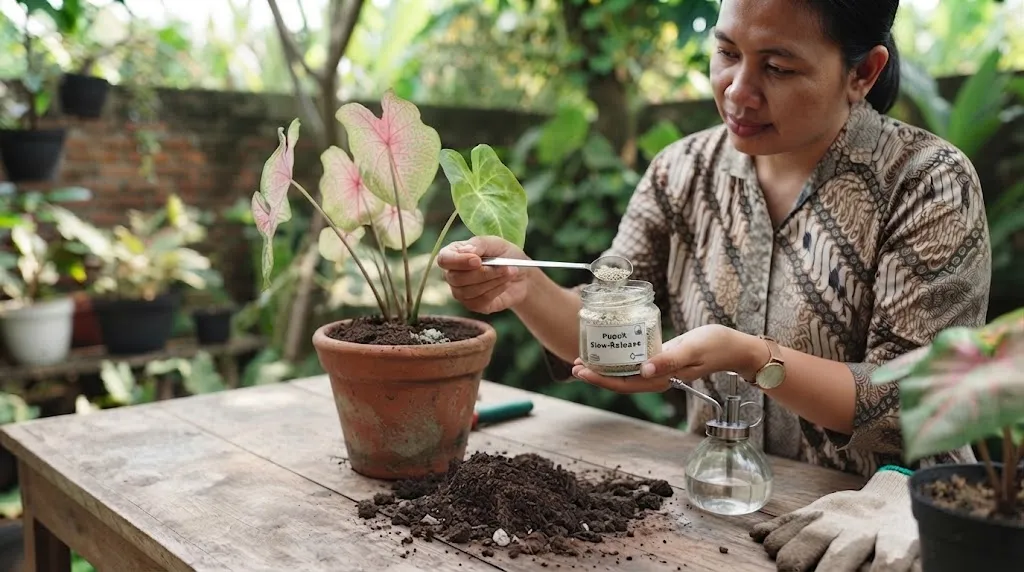
A lack of nutrients can affect the growth and color of leaves, but fertilizer is not the first solution when the taro is wilting and curling. If the primary cause is a lack of water, overly wet media, root disturbances, heat, or pests, applying fertilizer will not address the root of the problem.
Once the conditions of water, media, roots, and environment are more stable, the taro can be fertilized according to the needs and dosage indicated on the product label. Avoid applying fertilizer in excessive concentrations because a solution that is too concentrated can increase the salt concentration around the roots and potentially cause stress to the plant.
Observe the growth of the plant after care has been provided. Old leaves that have suffered severe damage may not always return to their original shape, so a better sign of recovery is when the plant starts to produce new healthy leaves and grows normally.
Curling or wilting taro leaves are not always caused by a lack of water. These symptoms are a plant's response to various stress conditions, so diagnosis should be done by examining the condition of the leaves as well as the media, roots, light, and the presence of pests.
If the leaves are curling accompanied by very dry media, check for the possibility that the plant is experiencing water deficiency. Conversely, if the leaves are wilting while the media is continuously wet, the condition of the roots and drainage should be examined before watering again.
Also, pay attention to the pattern of damage on the leaves. Dry or brown edges of leaves after being exposed to very intense sunlight may be related to heat or light stress, while young leaves that curl or change shape accompanied by the presence of small insects need to be checked for potential pest attacks.
If the leaves are yellowing along with poor growth, do not immediately conclude that the plant is lacking fertilizer. First, check the conditions of water, roots, planting media, light, and the possibility of pests or diseases, as these various factors can also cause color changes and suboptimal plant growth.
How to Overcome Curling and Wilting Taro Leaves/AI Generated
After the causes of curled or wilted leaves have been successfully addressed, the condition of old leaves may not necessarily return to normal. Leaf tissue that has already experienced dryness, burning, or severe damage generally cannot repair the parts that have died.
Therefore, do not make changes in the shape of old leaves the sole indicator of successful treatment. Pay attention to whether the plant is growing well again and able to produce new leaves with more normal shapes, colors, and sizes.
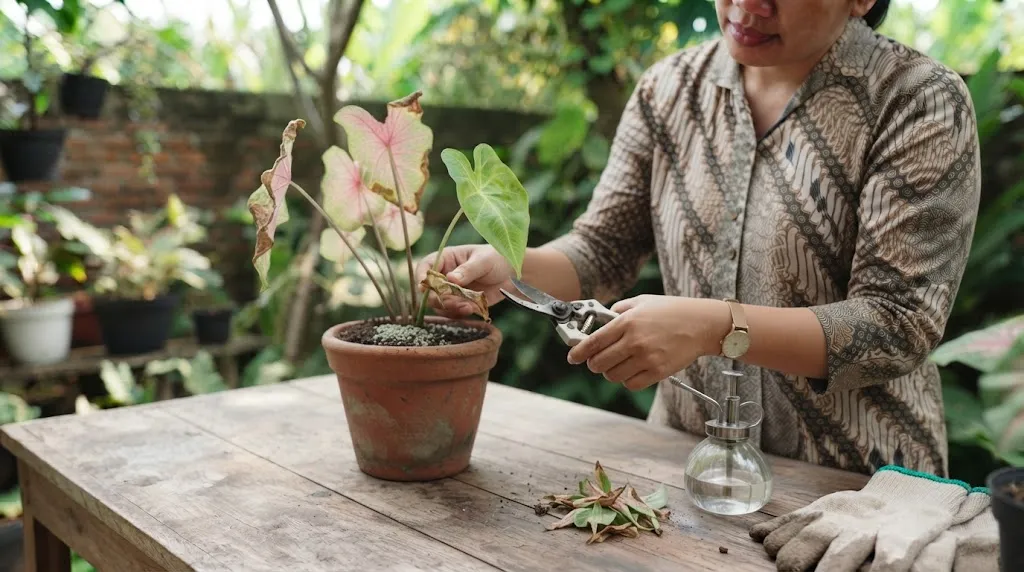
If only a small portion of the leaves is damaged, those leaves can be left as long as they still have plenty of functioning green tissue. However, leaves that are severely damaged, completely yellow, or dead can be pruned using clean tools to maintain the appearance of the plant and reduce non-functional tissue.
Very dry media + curling or wilting leaves: check water needs and water thoroughly if the plant is indeed lacking water.
Always wet media + wilting leaves: check drainage and root condition before adding more water.
Dry or brown leaf edges + exposure to intense sunlight: evaluate light intensity, temperature, and water availability.
Young leaves curling or changing shape + presence of insects: check the underside of the leaves, stems, and shoots for pests.
Yellowing leaves + stunted growth: do not immediately apply fertilizer; first check the condition of the roots, media, watering, light, and the possibility of pests or diseases.
Ultimately, the way to address curling and wilting taro leaves needs to be adjusted according to the cause. By thoroughly checking the conditions of the media, roots, light, humidity, temperature, and potential pests, care can be carried out more accurately without merely increasing watering frequency or applying fertilizer.
1. Why do taro leaves curl and wilt?
Taro leaves can curl and wilt due to various factors, such as overly dry media, prolonged waterlogging, excessive sunlight exposure, high temperatures, root disturbances, or pest attacks. Check the condition of the media, roots, leaves, and the plant's environment to determine the most likely cause.
2. Can curling taro leaves return to normal?
Leaves that are only wilting due to mild stress may improve once the plant's conditions are corrected. However, parts of the leaves that have already dried, burned, or suffered tissue damage usually cannot return to their original state, so the growth of new leaves can be a better sign of recovery.
3. Should wilting taro be watered immediately?
Not always. If the media is indeed dry, watering can help address wilting due to lack of water, but if the media is already wet or waterlogged, adding more water may worsen root issues.
(kpl/rmt)
Cobain For You Page (FYP) Yang kamu suka ada di sini,
lihat isinya
How to propagate pothos using water, planting media, and layering to quickly grow roots and produce new seedlings.
Learn the complete way to plant watermelon in narrow land using pots or polybags. Find tips on choosing mini varieties, planting media, care, and pruning to ensure abundant and sweet fruits.

Tricks to brighten a dark room can be achieved by playing with colors, lighting, and decorations to create a more comfortable atmosphere.
A guide to 6 levels of boiling eggs, from runny yolk to perfectly cooked, to achieve the desired texture.

Rainwater harvesting offers a smart solution for mitigating heat waves in urban areas, cooling the environment, supporting vegetation, and saving energy.
Bring an artistic touch to your home with a collection of uniquely-stemmed plants; this collection is not only beautiful but also easy to care for.
Yellowing plant leaves often indicate problems. Identify various causes ranging from watering, nutrition, to pests, and find effective ways to address them so that your plants can return to health.

Maintaining the quality of food ingredients and equipment is important? Pay close attention, there are kitchen items that should not be placed near windows due to exposure to sunlight and temperature.

These tricks for organizing kitchen drawers help keep cooking utensils from getting messy and make them easier to find.

Discover a list of items that are often placed in the wrong spot and make your home messy quickly, complete with easy tips to tackle them every day.
How to care for orchids to bloom quickly with a complete guide on lighting, watering, fertilizing, and the ideal temperature for maximum results.

Rust on home fences can be addressed without repainting. Learn practical guidelines for cleaning rust with natural materials, mechanical methods, and special products for a clean and well-maintained fence.
