

 Follow
 Rekomendasi
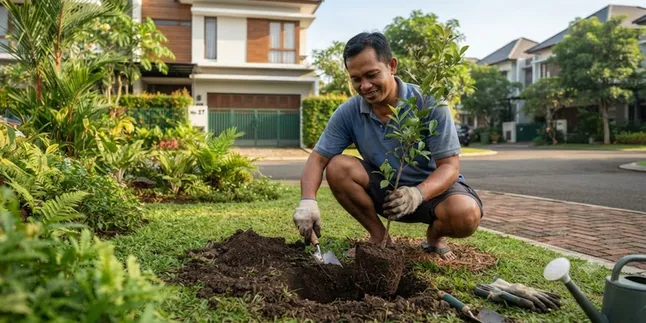
How to Plant Jamaican Guava Trees for Quick Fruit Production
How to plant Jamaican guava trees for quick fruit production with proper care, easy to practice at home.

Kapanlagi.com - Roses, with their beautiful petals and captivating aroma, have always been a favorite in various gardens. For ornamental plant lovers, having a diverse collection of roses is certainly a dream. One effective method to propagate this plant is through planting rose flowers from cuttings, also known as stem cuttings. This method allows you to grow new rose plants from existing parent plants, promising satisfying results.
The process of taking rose cuttings is considered more practical and faster compared to planting from seeds, which require a longer time to germinate and eventually bloom. Success in growing roses from cuttings not only depends on the initial planting steps but also on the consistency of care provided afterward. With the right understanding, you can have healthy roses that bloom profusely in your yard.
Starting the journey of planting roses from cuttings requires attention to every stage, from selecting quality cuttings to ongoing post-planting care. Here are the steps summarized by Kapanlagi.com on Thursday (16/7/2026).

Rose Tree Stem. (AI Generated)
The success of rose cuttings is greatly determined by the quality of the selected stem. A healthy stem with good root growth potential is the key factor. This selection is a crucial first step in the entire planting process.
It is recommended to choose stems that are still relatively young and flexible. The ideal stem usually comes from new growth that has not yet produced flowers or buds. Avoid stems that are too old or have fully bloomed, as the energy in those stems tends to be allocated for flower production, not for forming new roots.
The most suitable stems have a thickness similar to a pencil and should be free from signs of disease or pest attacks. Once the right stem is found, cut it to a length of 15-20 cm. Ensure the cut is made at a 45-degree angle above a pair of the first leaves for the best results.

Equipment and Supporting Materials. (AI Generated)
Before starting the planting process, preparing sterile tools and materials is something that should not be overlooked. The use of clean equipment is crucial to prevent infection and maintain the health of the rose cuttings that will be planted. Sterilization helps avoid the transmission of diseases that could hinder growth.
You will need pruning shears or a sharp knife. Ensure that the tools are sterile before and after use, for example, by cleaning them with alcohol. This step will minimize the risk of bacterial or fungal contamination on the rose stems.
Additionally, prepare a container filled with clean water to keep the stems moist after cutting. Rooting hormones, suitable planting media, and planting pots are also important components that need to be prepared. All these materials will support the root formation process and the initial growth of the cuttings.

Rose Tree Trunk. (AI Generated)
After the rose stem is cut, special treatment is required to stimulate root growth. This stage is very important and can significantly increase the success rate of cuttings. Careful preparation will help the stem adapt and start forming a root system.
Immediately after cutting, dip the bottom part of the rose stem into a glass of room temperature water. This aims to keep the stem hydrated so it does not wilt quickly. Next, remove all the leaves on the stem, leaving only the top two leaves. This step redirects the stem's energy focus to root formation, rather than maintaining the leaves.
To accelerate and enhance the success of root growth, you can dip the cut end of the stem into rooting hormone. Although the use of this hormone is optional, many find it very helpful in the rooting process. This hormone provides the necessary substances for the stem to trigger the growth of new root cells.

Ideal Planting Media. (AI Generated)
The selection and preparation of the right planting media is the foundation for strong and healthy root growth. Good planting media will provide adequate nutrients and drainage, allowing rose roots to develop optimally. Effective drainage is crucial to prevent root rot.
The planting media for rose cuttings should be loose and have excellent drainage capabilities. A commonly used mixture is soil, sand, and horticultural gravel or perlite. This combination ensures good air circulation and prevents water pooling around the roots.
As an alternative, you can use a mixture of loose soil, manure, and burned husk. Whatever your choice, make sure the planting media is not too wet. Excessive moisture can cause root rot and thwart your efforts to plant rose cuttings.

Planting Rose Cuttings. (AI Generated)
The process of planting cuttings must be done carefully and precisely to ensure that the stem is properly planted in the medium. The correct planting depth also plays an important role in the success of root growth. Gentle handling will reduce stress on the cuttings.
Use chopsticks or a pencil to make holes in the planting medium. The holes should be about 8-10 cm deep. Ensure that the holes made are wide enough so that any root growth hormone that may have been applied to the stem is not wiped off when the cutting is inserted.
Plant the rose cuttings slowly and carefully. Insert about half to three-quarters of the stem into the prepared hole. After the cuttings are planted, gently compact the soil around the stem. This compaction aims to support the cutting to stand firm and ensure good contact between the stem and the planting medium.

How to Plant Roses from Cuttings. (AI Generated)
After the rose cuttings are planted, proper initial care is essential to help the stems adapt and begin to grow. At this stage, maintaining moisture and protecting the cuttings from direct sunlight exposure is a top priority. A stable environmental condition will support the rooting process.
Immediately after planting, water the rose cuttings sufficiently to maintain the moisture of the growing medium. It is important to avoid overwatering that can cause waterlogging, as this poses a risk of root rot. Ensure that water is well absorbed into the medium.
Place the pot containing the cuttings in a bright location but out of direct sunlight. This condition helps the cuttings adapt without experiencing stress from excessive heat. After some time, when the cuttings begin to show signs of growth, they can gradually be introduced to more intense sunlight.

How to Plant Roses from Cuttings. (AI Generated)
After passing the initial stage, routine care becomes key for rose cuttings to develop into healthy and productive adult plants. Consistency in care will ensure optimal growth and abundant blooming. Without ongoing care, the potential of the roses will not be fully realized.
Water regularly, ideally twice a day, using a spray method. The goal is to keep the growing medium moist but not waterlogged. Consistent moisture is vital for root development and the growth of new shoots.
In addition to watering, periodic pruning of overly dense leaves and stems is necessary. This pruning helps redirect the plant's energy towards flower growth, rather than just foliage. It also maintains the overall health of the plant and prevents the spread of diseases.
Q: When is the best time to plant roses from cuttings?
A: The best time to take rose cuttings is at the end of spring or the beginning of summer when the air temperature is warm but not too hot. Morning is the most suitable time to take cuttings.
Q: How long does it take for rose cuttings to root?
A: Rose cuttings generally take about 4-8 weeks to form roots. Softwood cuttings can root faster, in about 10-14 days.
Q: Is it necessary to use rooting hormone?
A: The use of rooting hormone is not mandatory, but it can increase the chances of rose cuttings growing well and speed up root development.
Q: Why do rose cuttings often fail?
A: Rose cuttings can fail due to several factors, such as unhealthy cuttings, lack of sunlight, inappropriate growing media, or not using rooting hormones. Dull cutting tools can also cause rot.
Q: Can roses be planted from cuttings using potatoes?
A: Yes, potato tubers can be used as an initial growing medium because they have enough water reserves to support the growth of rose cutting roots.
(kpl/rao)
Cobain For You Page (FYP) Yang kamu suka ada di sini,
lihat isinya
How to plant Jamaican guava trees for quick fruit production with proper care, easy to practice at home.

Manohara prefers classic and timeless fashion styles so that they remain relevant to wear even after being stored for years.

Check out 5 trendy hat style inspirations for cool kids that are a must-add to your wishlist this month.

Curious about how to combine PDF files? To find out, just take a look at the following reviews.

Curious about how to edit PDF files? To find out, just take a look at the following review.

Now, there are various ways to quickly and easily convert PDF files to Word format using mobile devices. Curious about how to do it? Just check out the following review to learn more.

Here is a review related to the procedures and readings of the prayer after the repentance prayer that is important for every Muslim to know:

So, what is the procedure and prayer for the taubat prayer? To find out, just check the following review.

Besides the registration method for KIP College, there are several requirements and registration steps that you need to pay attention to. To find out, just check out the following review.

Zhang Jing Yi, a Chinese actress, captures attention with her stunning and varied stylish outfits.

Yumena Yanai, a young Japanese actress, dazzles with her bold and colorful OOTD style.

Lu Yu Xiao, a talented young actress, appears stylish with outfits that blend comfort and aesthetics.
