Kapanlagi.com - Do you have a gardening hobby but are constrained by limited space? Don't worry, KLovers, because you can work around it by choosing the right types of flora. One trendy option you should definitely try is caring for ornamental plants that are suitable for shallow pots. This indoor gardening trend is perfect for placing on your work desk, wall shelves, or in narrow room corners to keep the atmosphere feeling fresh and vibrant.
Shallow pots, or what are often referred to as shallow planters, indeed have their own visual charm. Their flat and minimalist shape gives a very modern, tidy, and elegant impression. It's no wonder that many plant parents today are starting to hunt for this type of pot to beautify their home interior decor without taking up much space.
However, you should also know that not all types of plants can thrive comfortably in shallow containers. You need to be smart in choosing species with short or spreading fibrous root systems. Curious about what the options are? Let's take a look at the list of seven super beautiful plants ready to make your home even more cozy and Instagramable!
1. Mini Ornamental Cactus
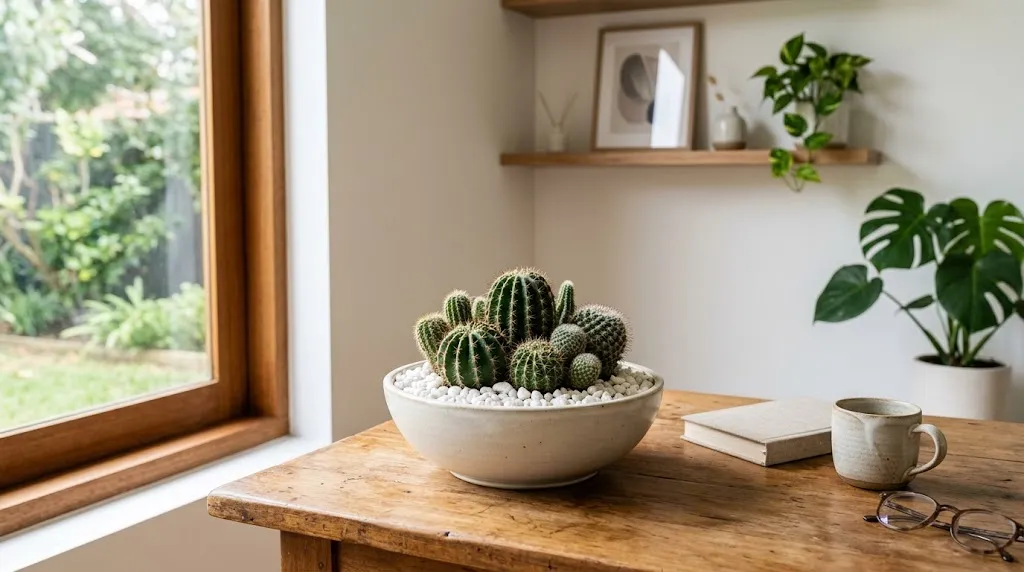
Mini Decorative Cactus. (AI Generated)
Who doesn't know about cacti? This spiky plant, which is synonymous with the desert, is the main and best candidate to be placed in a shallow pot. Mini ornamental cacti have a very shallow root system, so they do not require deep planting media to survive well.
Taking care of cacti in shallow containers is also super easy and won't be a hassle for you. You only need to water them when the planting media is completely dry. Because the pot is shallow, water will evaporate more quickly, thus effectively avoiding the risk of root rot due to overly wet soil or overwatering.
Visually, mini cacti arranged neatly in a shallow ceramic bowl will create an exotic mini desert atmosphere in your room. You can add small decorative stones like white coral pebbles on the surface of the soil to enhance its aesthetic value. It's really cool to showcase on social media!
2. Succulents of Various Colors
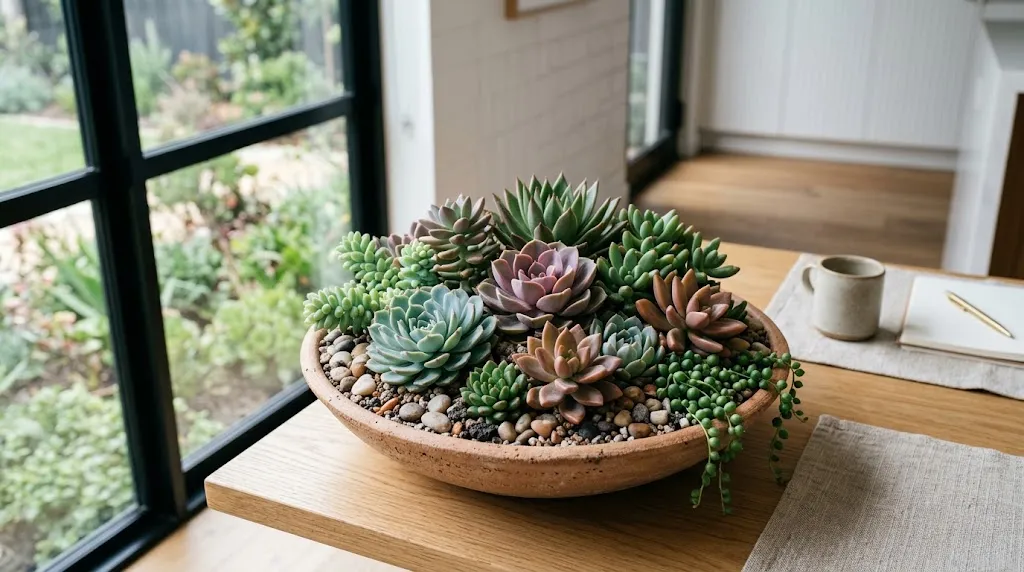
Succulent of Various Colors. (AI Generated)
Like its close relative, the cactus, succulents are the beloved stars among indoor plant enthusiasts. Their thick, fleshy leaves serve specifically as storage for water reserves, making them very self-sufficient plants. Their short root characteristics make succulents very comfortable to be planted in bowl-shaped pots or shallow trays.
The main specialty of succulents lies in their super cute variations in shape and color. You can freely get creative by making a succulent arrangement, which involves assembling several different types of succulents with various shapes and colors in one wide shallow container. The result? It is guaranteed to look like a bouquet of fresh flowers that never wilts.
One important thing, make sure you use a porous planting medium, such as a mixture of volcanic sand and perlite. This type of planting medium is crucial for shallow pots to ensure proper water circulation. Don’t forget to place your beautiful succulents near a window so their vibrant colors don’t fade.
3. Mini Snake Plant (Sansevieria Hahnii)
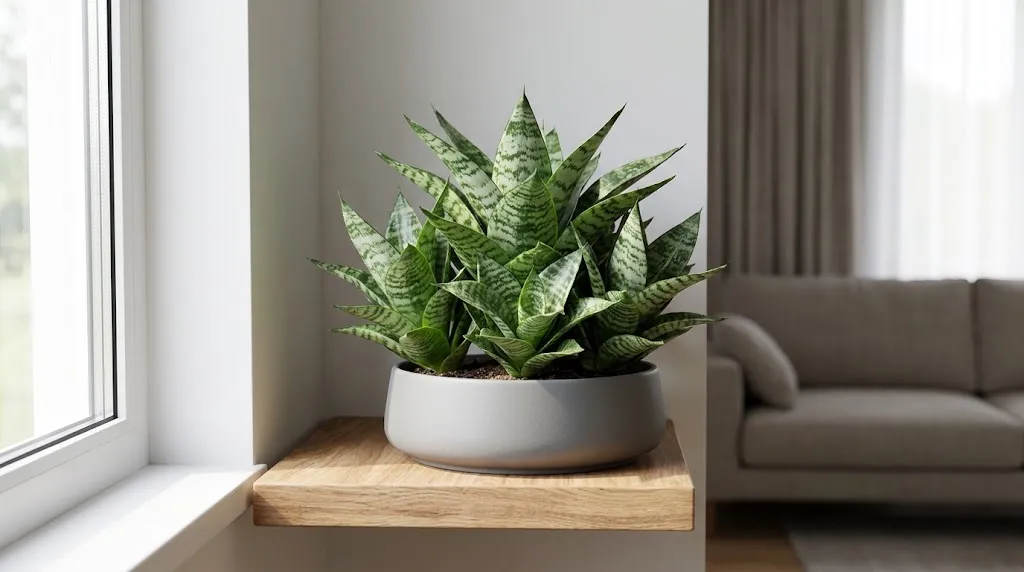
Mother-in-law's Tongue Mini (Sansevieria Hahnii). (AI Generated)
If you need a plant that looks striking yet requires minimal care, the mini version of the Snake Plant, also known as Sansevieria Hahnii, is the perfect answer. Unlike its relatives that grow tall like swords, this variety grows in a short, spreading rosette. Its petite size pairs very well with shallow pots.
The roots of the mini Snake Plant grow horizontally and do not like to penetrate the soil too deeply. This makes it very comfortable living in its new shallow home, as long as there is enough space on the sides. This plant is also known to be very tough and can survive even if you often forget to water it.
The added bonus that makes you fall in love even more is that the Snake Plant is one of the best natural air purifiers ready to absorb harmful pollutants in your room. Just imagine, you not only get a chic table decoration but also a free air purifier that makes the air in your room much healthier. It's a complete package, right?
4. Nerve Plant (Fittonia)
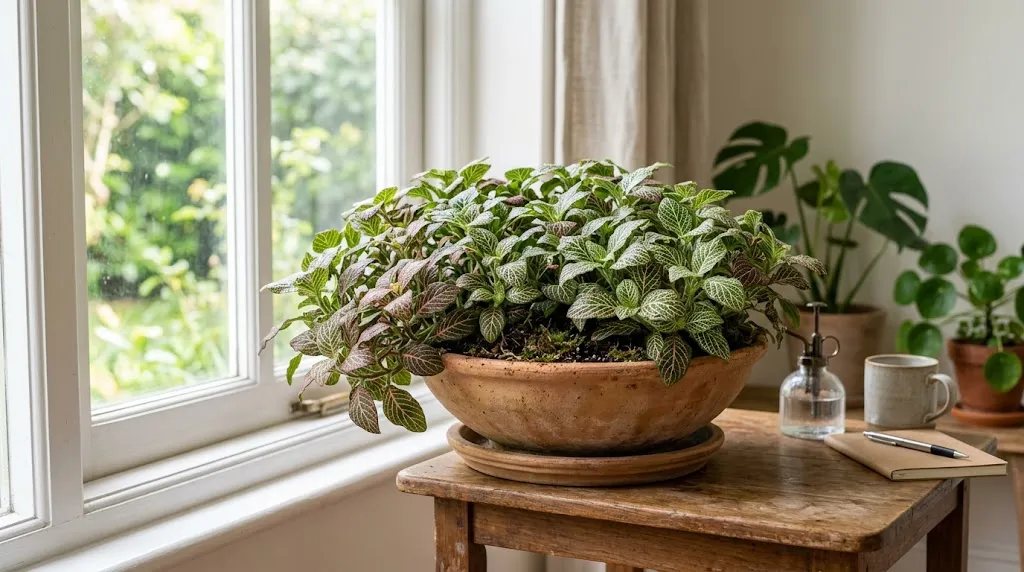
Nerve Plant (Fittonia). (AI Generated)
Fittonia, or more commonly known as the nerve plant, is a perfect choice for those who love foliage with vibrant patterns. Its leaves are adorned with contrasting veins in colors like neon pink, pure white, or bright red, resembling the anatomy of human nerves at a glance. This lively pattern is sure to capture the attention of anyone who sees it.
This cute creeping plant has an incredibly shallow and delicate root system. Its natural habitat, creeping along the forest floor of tropical rainforests, causes it to grow sideways rather than downward. This characteristic makes Fittonia very happy when placed in a shallow terracotta pot.
A small challenge when caring for Fittonia in a shallow container is maintaining its moisture. The thin pot allows the soil to dry out more quickly, while this beauty loves soil that is moist or slightly damp. Be diligent in lightly misting the area around its leaves to prevent it from wilting and to keep it looking fresh and vibrant.
5. Pilea Peperomioides (Chinese Money Plant)
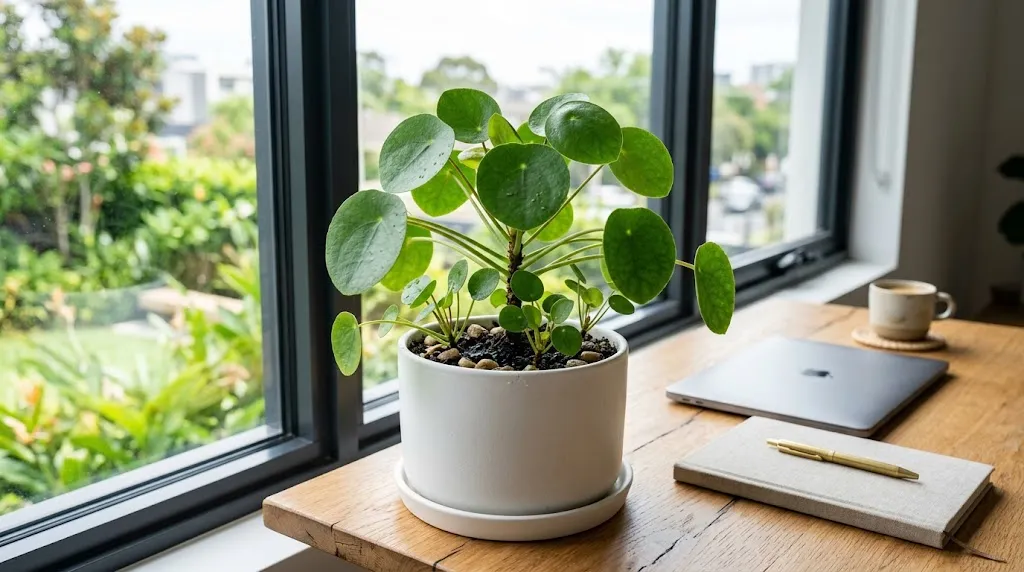
Pilea Peperomioides. (AI Generated)
Often seen in the feed on Pinterest, Pilea Peperomioides or the Chinese Money Plant has now become a must-have for contemporary interior decorators. Its iconic characteristic is having flat round leaves resembling green coins that sit sweetly at the tips of the stems. This quirky appearance successfully livens up the atmosphere of any room.
Pilea is very suitable to be paired with shallow pots because it does not have long taproots. Instead of growing downwards, Pilea is super diligent in producing offshoots from the sides of the main stem near the soil surface. A wide shallow pot will provide a free stage for these new shoots to emerge.
In terms of care, you just need to place it in a bright area but not exposed to direct harsh sunlight. Allow the top part of the planting medium in its shallow pot to dry out slightly before you do the next watering. It won't take long, and your Pilea will surely be busy multiplying to decorate your table corner!
6. Peperomia
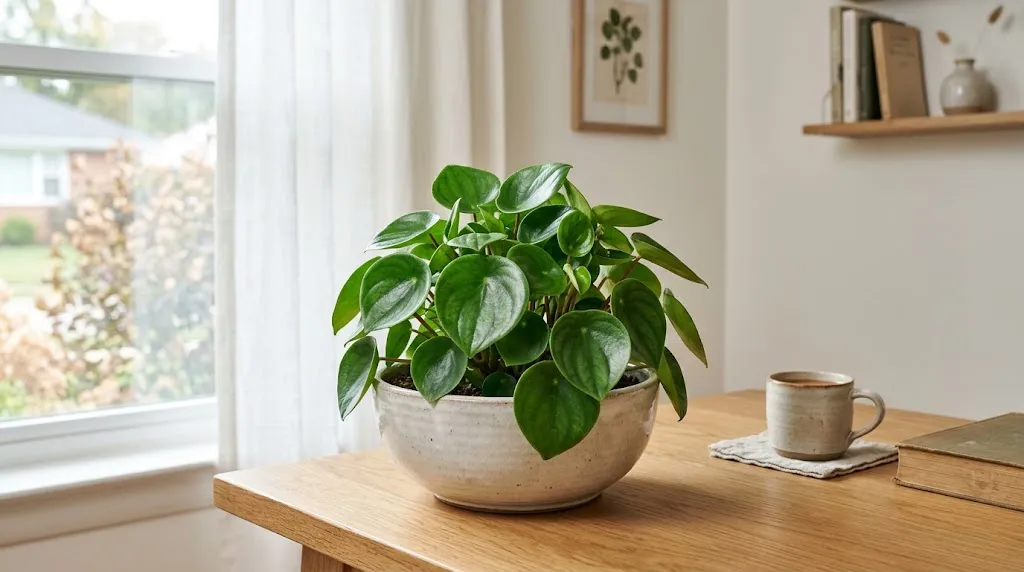
Peperomia. (AI Generated)
The Peperomia family offers hundreds of enticing species with a wide variety of leaf textures and colors. From those with striped leaves resembling watermelon skin, to heart-shaped ones with thick, glossy textures. This super wide selection means you'll never run out of style when collecting them.
An interesting fact is that almost all types of Peperomia are classified as lightweight epiphytic plants that originally like to cling to tree trunks. This means their root systems are very thin, fragile, and very shallow. If planted in a pot that is too deep, it actually poses a high risk of causing the roots to rot because the lower soil tends to retain water for too long.
By placing them in a shallow pot, the air circulation around the roots will be much more optimal and healthy. Peperomia also grows at a slow pace, so you don't have to worry about frequently changing pots or doing repotting. Just pay attention to their light intake, and their beautiful leaves will continue to accompany you.
7. Mini Bonsai
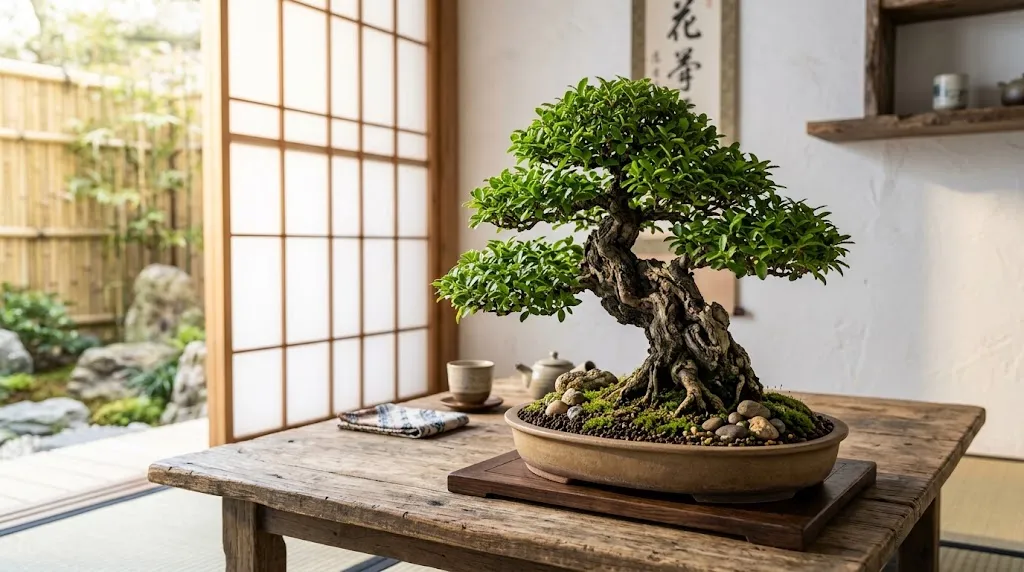
Mini Bonsai. (AI Generated)
When we talk about shallow planting containers, it would certainly be a sin to overlook this legendary prima donna, which is the Bonsai. Bonsai is essentially the art of caring for and dwarfing large trees to create beautiful miniature characters. Since ancient times, shallow tray pots have always been a mandatory 'home' for this botanical masterpiece.
The use of shallow pots for Bonsai is not just for aesthetics! Shallow pots technically function to limit the movement of the tree's support roots. With tightly restricted root space, the tree is forced not to grow into a giant. Through regular root pruning, the tree will only produce fine fibrous roots that fit in the thin pot.
Caring for Bonsai indeed requires extra dedication and patience compared to other ornamental plants. You need to learn pruning techniques, wiring, and precise watering. But believe me, the pride of seeing a majestic miniature tree occupying a shallow pot on your living room table is definitely worth it and one of a kind!
8. Questions About Ornamental Plants Suitable for Shallow Pots
1. Do plants in shallow pots need to be watered more often? Yes, because the smaller volume of soil causes water to evaporate more quickly. Always check the moisture of the topsoil before watering again.
2. What is the best planting medium for shallow pots? Use a very porous and quick-draining mix, such as a combination of soil, volcanic sand, burned rice husk, and perlite to prevent root rot.
3. Is it okay for shallow pots not to have drainage holes? It is highly discouraged. Drainage holes are essential for removing excess water. If your pot does not have holes, add a thick layer of gravel at the bottom of the pot before adding soil.
4. How do you fertilize plants in shallow containers? Use diluted liquid fertilizer (half the recommended dose from the package) and spray it once a month to prevent the plant's fine roots from burning due to too strong a dose.
5. When is the right time to repot? Repot when the roots start to show through the bottom holes of the pot, or when the plant appears too crowded at the surface (usually every 1-2 years).
(kpl/rao)
Disclaimer: This translation from Bahasa Indonesia to English has been generated by Artificial Intelligence.


 Follow
 Rekomendasi