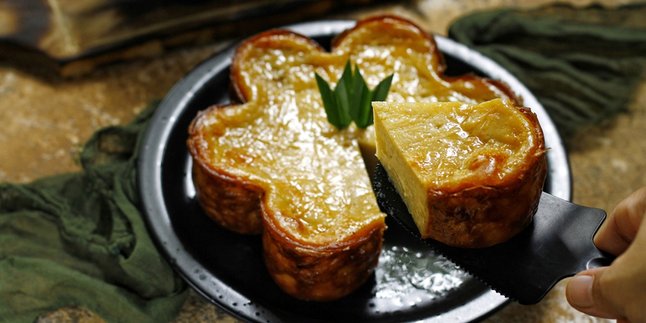
Kapanlagi.com - The deliciousness of traditional cakes always holds a special place in the hearts of home snack lovers. The light texture, savory taste, and fragrant pandan aroma make this dish feel special to accompany relaxation time. The pandan sago cake recipe can be an option for anyone who wants to present simple dry cakes with a distinctive flavor on the family table.
The pandan aroma can provide a fragrant sensation as soon as the cake starts baking in the oven. The combination of sago flour, sugar, coconut milk, butter, and margarine creates a crunchy texture on the outside and then feels melt-in-your-mouth when enjoyed. Through the pandan sago cake recipe, the preparation process can be done practically using easily found ingredients.
Making sago cake not only requires quality ingredients but also precision at every stage of processing. The process of toasting the flour, adjusting the dough's consistency, piping with a pastry bag, and baking at the right temperature are important parts to achieve perfect results. The pandan sago cake recipe offers a practical way to present fragrant, crunchy, savory snacks that melt in your mouth.
1. Ingredients for Pandan Sago Cake
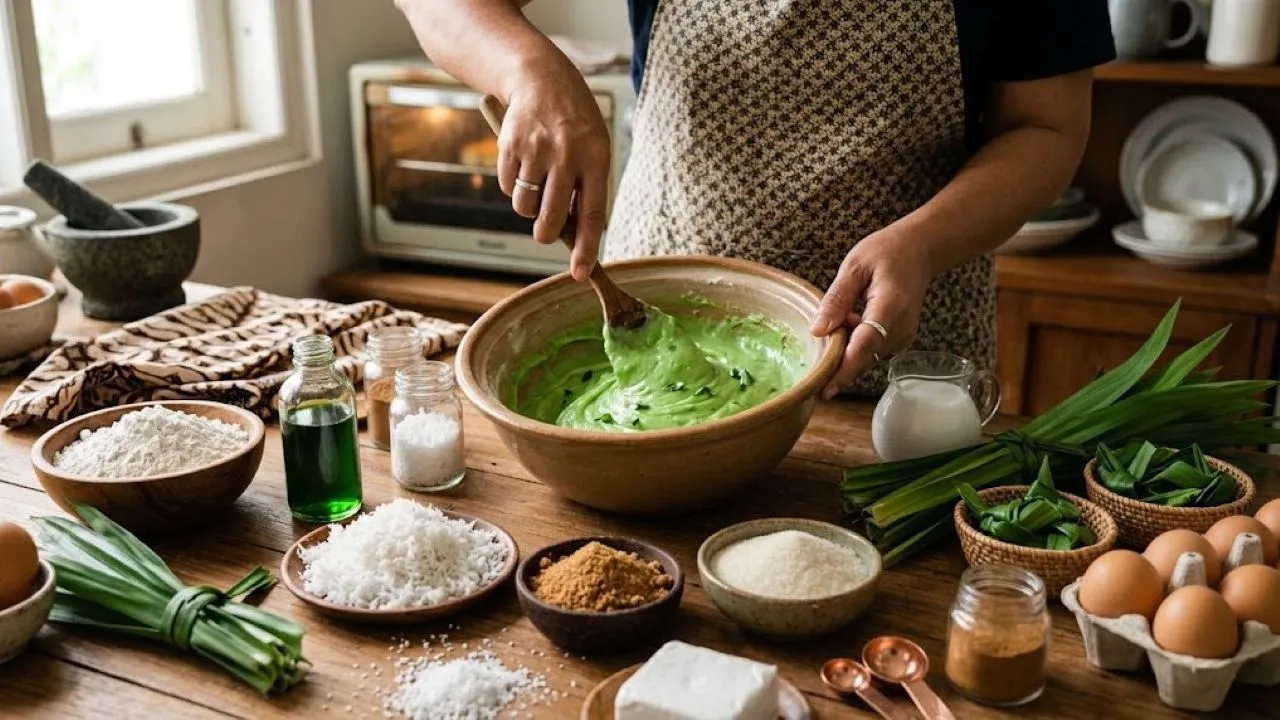
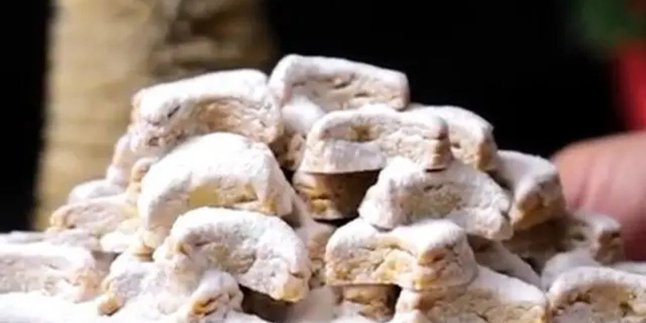
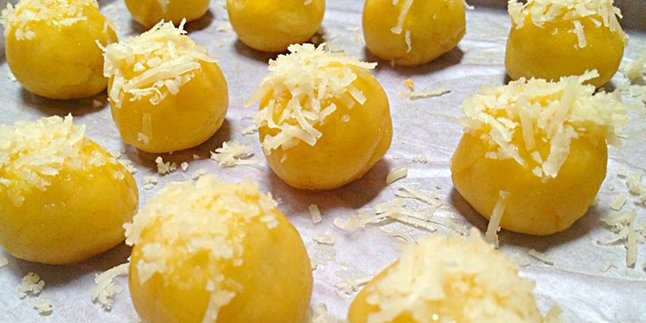
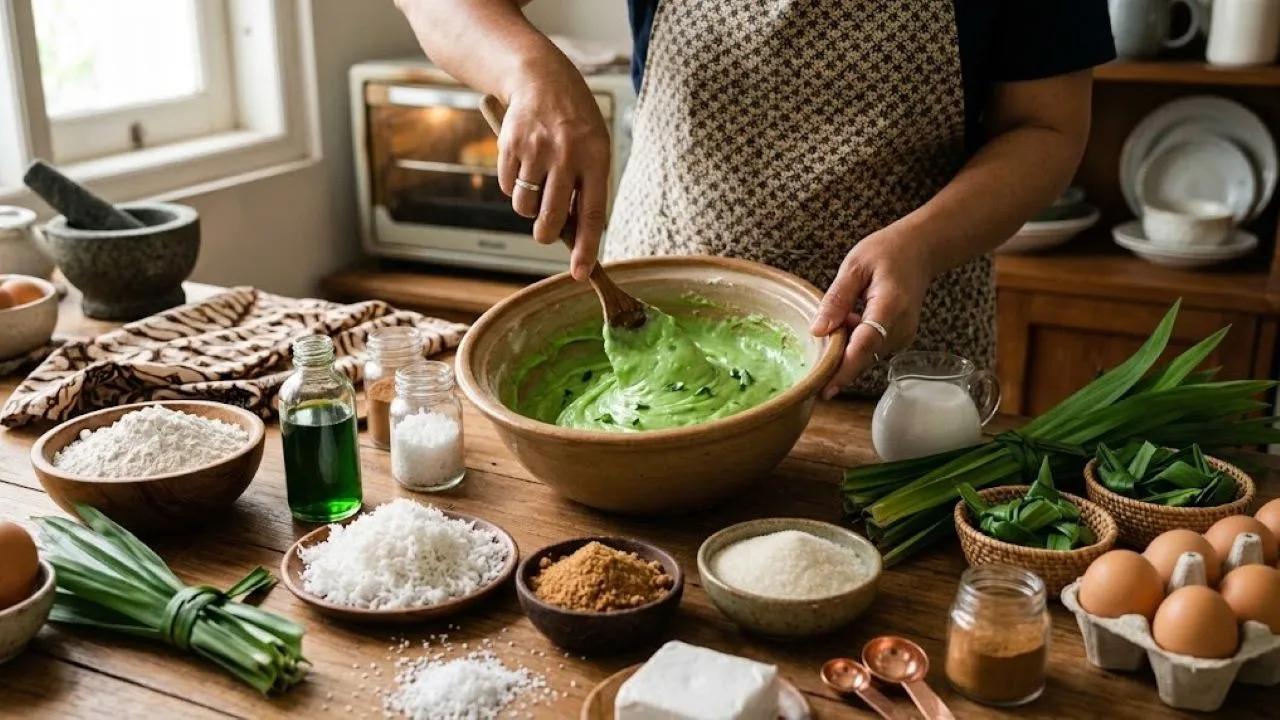
Pandan Sago Cake Recipe (AI generated)
Here are the ingredients to make pandan sago cake:
250 grams of sago flour or tapioca flour
100 grams of powdered sugar
100 grams of margarine
50 grams of butter
2 egg yolks
50 ml of thick coconut milk
1–2 pandan leaves
1 teaspoon of pandan paste
50 grams of grated cheddar cheese, optional
1/4 teaspoon of salt
The measurements can be adjusted based on the number of cakes you want to make. Using a combination of margarine and butter produces a more fragrant aroma and helps create a softer cake texture.
Sago flour is the main ingredient in this recipe. The flour needs to be toasted first to reduce its moisture content. This process also helps create a lighter and crispier cake texture.
2. How to Make Pandan Sago Cake
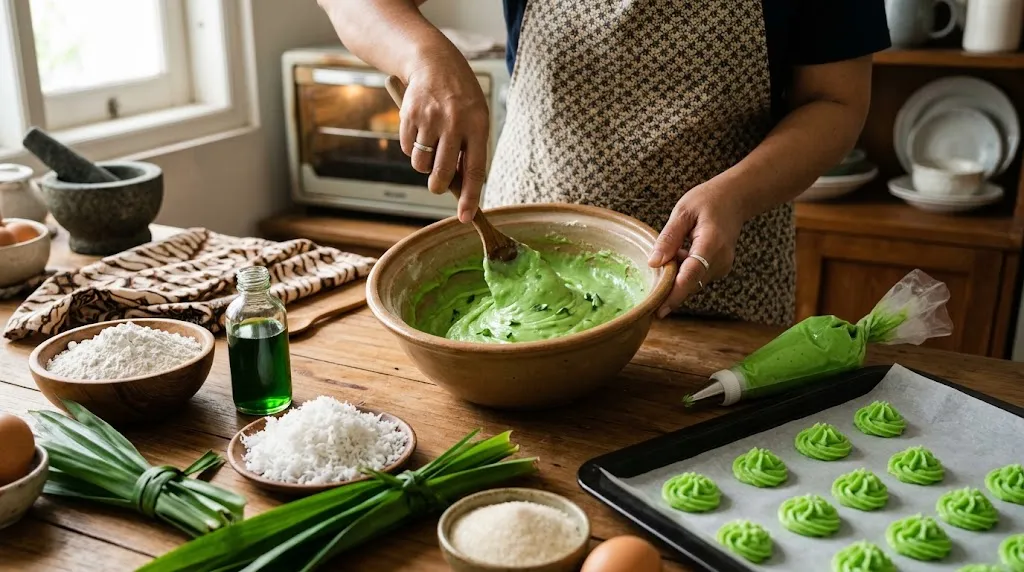
Pandan Sago Cake Recipe (AI generated)
Making pandan sago cake requires several important steps to ensure the final result has a crispy, light, fragrant texture, and melts in the mouth. The process begins with toasting the flour, making the dough, shaping it, and then baking the cake at the right temperature. Follow each of the following steps to maximize the shape and texture.
Toast the Sago Flour
Prepare a clean pan and ensure its surface is completely dry. Add the sago flour, then add pandan leaves. Toast over low heat while continuously stirring slowly to ensure the heat spreads evenly.
Perform this process for about 5–10 minutes. The flour does not need to change color. Just make sure the flour feels lighter and the aroma of pandan begins to smell fragrant. After finishing, turn off the stove and let the flour cool completely.
This step is important to help reduce the moisture content in the flour. Do not use high heat so that the flour does not burn and the aroma of pandan remains fresh.
Mix Margarine, Butter, and Sugar
Put margarine, butter, and powdered sugar into a sufficiently large bowl. Beat using a mixer on low to medium speed until the mixture looks soft and well combined.
There is no need to beat too long until the dough expands. Just make sure the margarine, butter, and sugar are evenly mixed to produce a smooth dough base.
Add Egg Yolks
Add the egg yolks one by one into the margarine mixture. Beat briefly until each egg yolk is well combined before adding the next egg.
After that, add pandan paste. Stir again until the green color is evenly distributed and the aroma of pandan begins to emerge.
Add Coconut Milk
Pour the coconut milk gradually while continuing to stir the dough. Do not add the coconut milk all at once so that the consistency of the dough can be more easily controlled.
Stir until the coconut milk is completely incorporated. At this stage, the dough will feel softer and have the characteristic savory aroma of coconut milk.
Add Sago Flour
Make sure the toasted sago flour is cool before adding it to the dough.
Gradually add the flour while stirring with a spatula. Do this slowly until the flour is incorporated and forms a soft dough.
If using grated cheddar cheese, add it at this stage. Stir gently until the cheese is evenly distributed.
Avoid overmixing the dough. Stop once all the ingredients are combined and the dough has a soft enough texture to be piped.
Prepare the Piping Bag and Pipe the Dough
Prepare a piping bag and attach a star-shaped nozzle. Gradually fill the pandan sago cake dough into the piping bag.
Prepare a baking tray. Use baking paper as a base or lightly grease the surface of the tray with margarine.
Pipe the dough into small flower shapes, circles, or other shapes as desired. Leave space between the dough pieces so that the cakes do not stick together during baking.
Try to ensure that each cake is relatively uniform in size. Uniform size helps all the cakes to bake almost at the same time.
Bake Pandan Sago Cake
Preheat the oven to a temperature of around 150–160 degrees Celsius. Once the oven reaches that temperature, place the pan with the batter inside.
Bake for about 20–30 minutes. The duration may vary based on the size of the cake, the thickness of the batter, and the characteristics of each oven.
Pay attention to the color of the cake during the baking process. The pandan sago cake does not need to turn dark brown. The bottom of the cake should appear cooked, while the surface retains a soft green color.
Cool Before Storing
After baking, remove the pan from the oven. Do not immediately transfer the cake to a jar as its texture is still very fragile.
Let the cake sit on the pan until its temperature drops and its texture begins to harden. Once completely cool, carefully transfer it to an airtight container.
Ensure the jar is clean and dry before use. Close tightly so that the cake remains crisp and does not easily absorb moisture from the air.
3. Tips for Making Pandan Sago Cake So It Melts in Your Mouth and Doesn't Crumble Easily
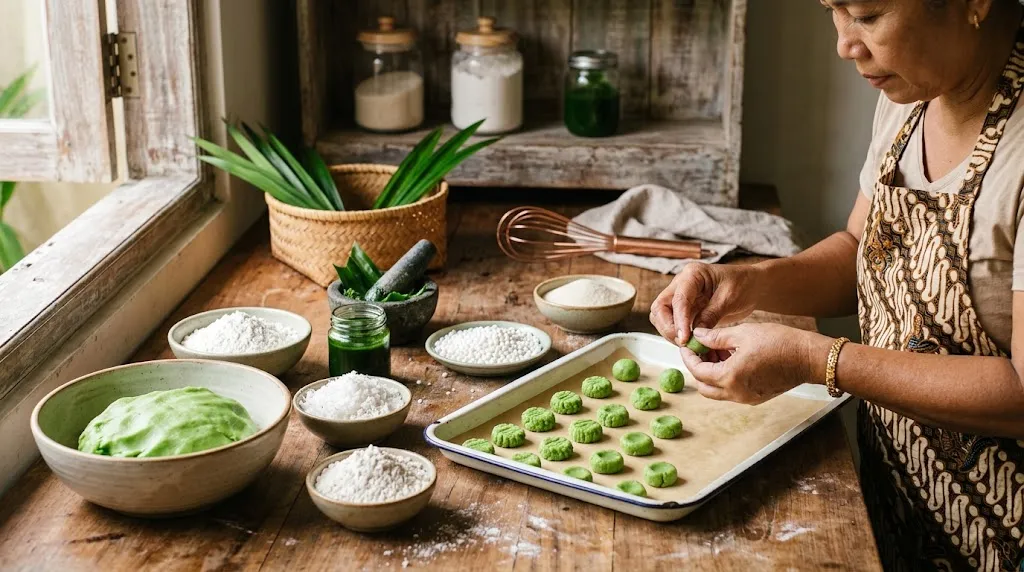
Making sago cake requires attention to several important stages. Here are tips to maximize the final result.
Use Quality Sago Flour
Choose good quality sago or tapioca flour that is still fresh. The flour is the main component, so its quality greatly affects the final texture of the cake.
Toast Flour Over Low Heat
Toast the flour slowly over low heat. Stir continuously so that the heat spreads evenly and the flour does not burn easily.
Do not use high heat just to speed up the process. The flour may change color or have an unpleasant aroma.
Do Not Overbeat the Margarine
Margarine and butter should be beaten until soft. Beating too long can make the dough structure too light, causing the shape of the cake to change easily when baked.
Pay Attention to the Consistency of the Dough
The dough should be soft enough to be molded. If it is too hard, the dough will be difficult to come out of the piping bag. Conversely, a batter that is too runny can cause the cake to spread when it enters the oven.
Use a Stable Oven Temperature
The oven temperature greatly affects the texture of the sago cake. A temperature that is too high can cause the outside to cook quickly while the inside does not achieve the right texture.
Cool Before Storing
The cake must be completely cool before being placed in jars. A still-warm cake can produce steam inside the container, causing the crispness to diminish more quickly.
4. Questions About Pandan Sago Cake Recipe
1. What is pandan sago cake?
Pandan sago cake is a dry cake made from sago or tapioca flour, then infused with the distinctive aroma and color of pandan. Its texture is light, crispy, crumbly, and melts easily in the mouth.
2. What are the main ingredients in the pandan sago cake recipe?
The main ingredients include sago or tapioca flour, powdered sugar, margarine, butter, egg yolks, coconut milk, and pandan. Pandan paste can be used to enhance both the aroma and color.
3. Can sago flour be replaced with tapioca flour?
Yes. Tapioca flour is often used as an alternative to sago flour. The final texture may vary slightly, but it can still produce a light-textured dry cake.
4. Why does sago flour need to be toasted?
Toasting helps reduce the moisture content in the flour. This process also makes the flour more ready to be used, resulting in a crispier and lighter sago cake texture.
(kpl/ses)
Disclaimer: This translation from Bahasa Indonesia to English has been generated by Artificial Intelligence.


 Follow
 Rekomendasi