Kapanlagi.com - For plant lovers, whether in the backyard or in larger agricultural lands, plant health is a top priority. However, there are often invisible enemies threatening, namely plant pests that hide behind leaves. These hidden areas become favorite locations for various nuisance insects to breed, feed, and shelter from predators or extreme environmental exposure. Understanding these types of pests, recognizing the signs of their attack, and applying ways to address them are key to keeping plants healthy and productive.
The threat from these pests should not be underestimated. Their hidden presence makes early detection a challenge, often resulting in damage that is only realized after it has become severe. Pest attacks can cause leaves to become holey, yellow, curl, and even hinder the overall growth of the plant.
1. Aphids
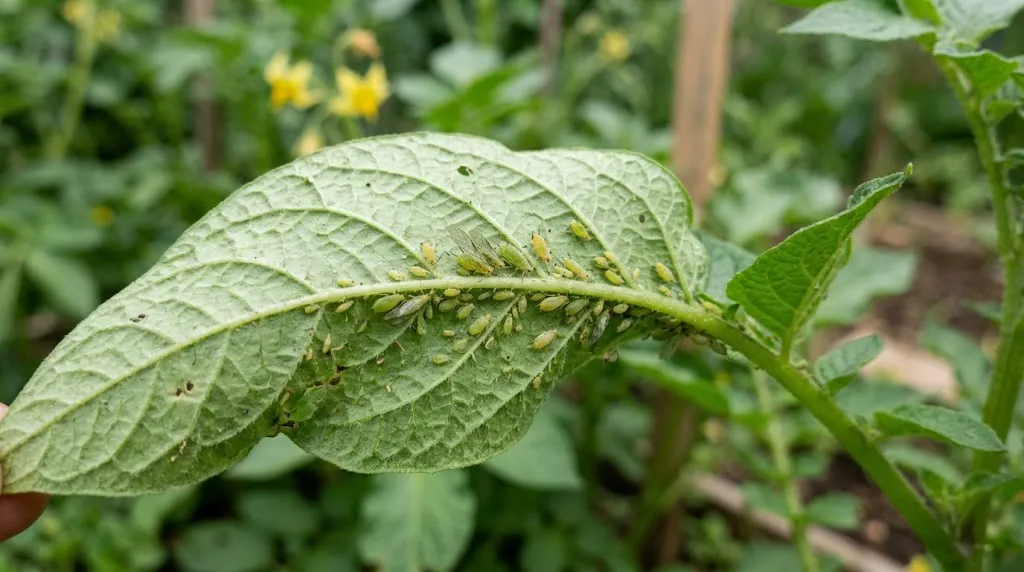
Aphid Illustration/AI Generated
One of the most common pests found on the underside of leaves is the aphid or aphids. Aphids are small insects that are green, yellow, black, or red in color and are usually found in clusters on the underside of leaves or plant shoots.
They range in size from 0.5 to 2 mm, have soft bodies and long antennae. Aphids suck sap from the plant's phloem tissue, causing leaves to yellow, curl, and stunt growth. This pest also produces sweet "honeydew," which triggers the growth of sooty mold and attracts ants. Aphids also serve as vectors for transmitting viral diseases in plants.
2. Whitefly (Bemisia tabaci)
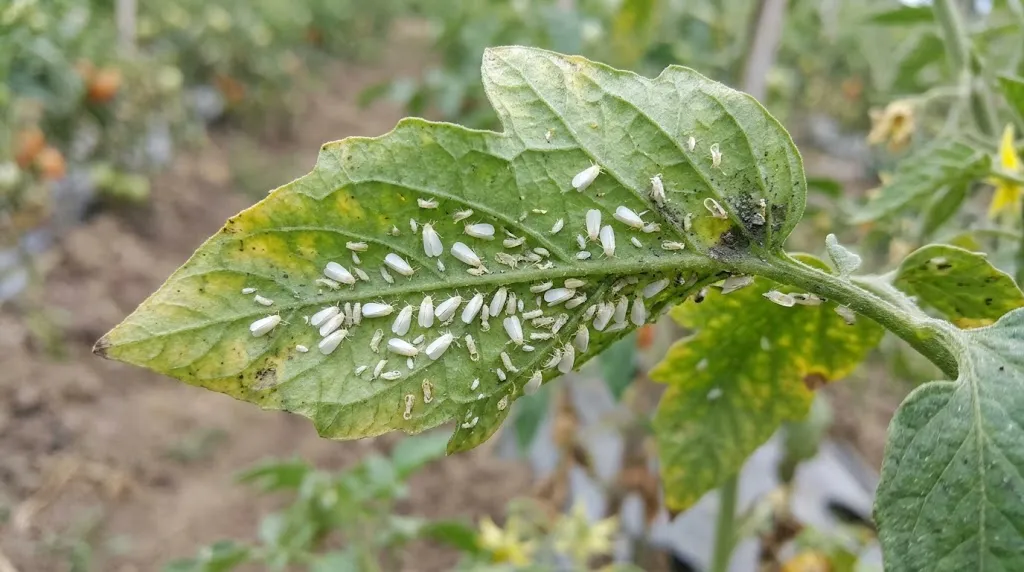
Illustration of Whiteflies (Bemisia tabaci)/AI Generated
The whitefly (Bemisia tabaci) is a small white insect that often attacks various vegetable plants. The whitefly is a small insect that is white in color. It typically attacks any plant such as food crops, chili, vegetables, and fruits, usually residing in clusters on the underside of leaves.
They are commonly found under young leaves and will fly away when the plant is shaken. Whiteflies damage plants by sucking fluids, causing leaves to curl, chlorosis (yellowing), and stunted growth. Like aphids, whiteflies also produce honeydew, which triggers sooty mold and is a vector for spreading yellow virus (gemini virus) in plants such as chili and tomatoes.
3. Mealybugs
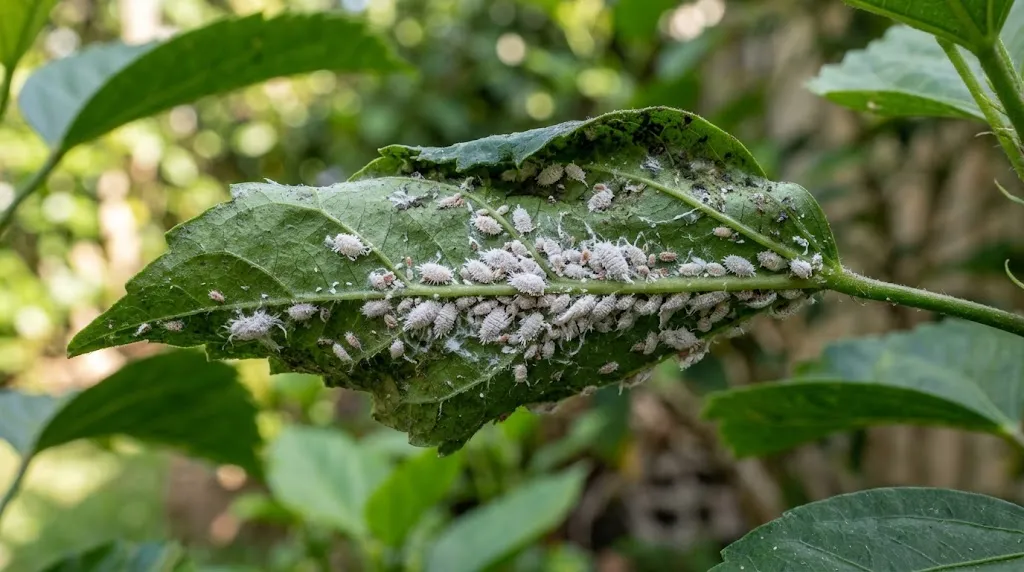
Illustration of Mealybugs/AI Generated
Mealybugs (mealybugs) are also sap-sucking pests that live in colonies and often attach themselves to the leaves and stems of plants, especially the younger parts. Mealybugs and whiteflies are white pests that attack various plants. Both damage plants by sucking plant sap, excreting a sweet liquid (honeydew) that triggers sooty mold, and have the potential to be vectors for spreading viruses and other pathogens.
Infestations of mealybugs are characterized by a white, cotton-like layer on stems, shoots, leaves, or fruit, as well as yellowing, curling, or drying leaves. They suck the plant's sap, causing tissue damage and disrupting growth.
4. Spider mites
Spider mites (spider mites) are very small pests, less than 1 mm, that resemble spiders and live on the undersides of leaves. Spider mites are so small that they are often difficult to see without close inspection. Their presence can be marked by the appearance of pale spots, dull or yellowing leaves, and fine webs on the underside of leaves and between stems.
They pierce plant cells to feed, causing pale spots. Affected leaves can become stiff, curl downward, turn bronze or silvery, become brittle, and eventually fall off. These mites can also spin protective silk webs on the undersides of leaves.
5. Thrips
Thrips are very small insects with slender bodies that attack leaves, flowers, and fruits by sucking plant fluids. Damage caused by thrips can appear as silvery spots, discoloration on leaves, or plant surfaces that look scratched.
Thrips can leave small black spots of excrement around the infested areas. Thrips infestations can cause leaves to curl, roll upwards, and hinder growth. They often hide in protected parts of the plant, such as young shoots, flowers, and the undersides of leaves.
6. Several Types of Caterpillars
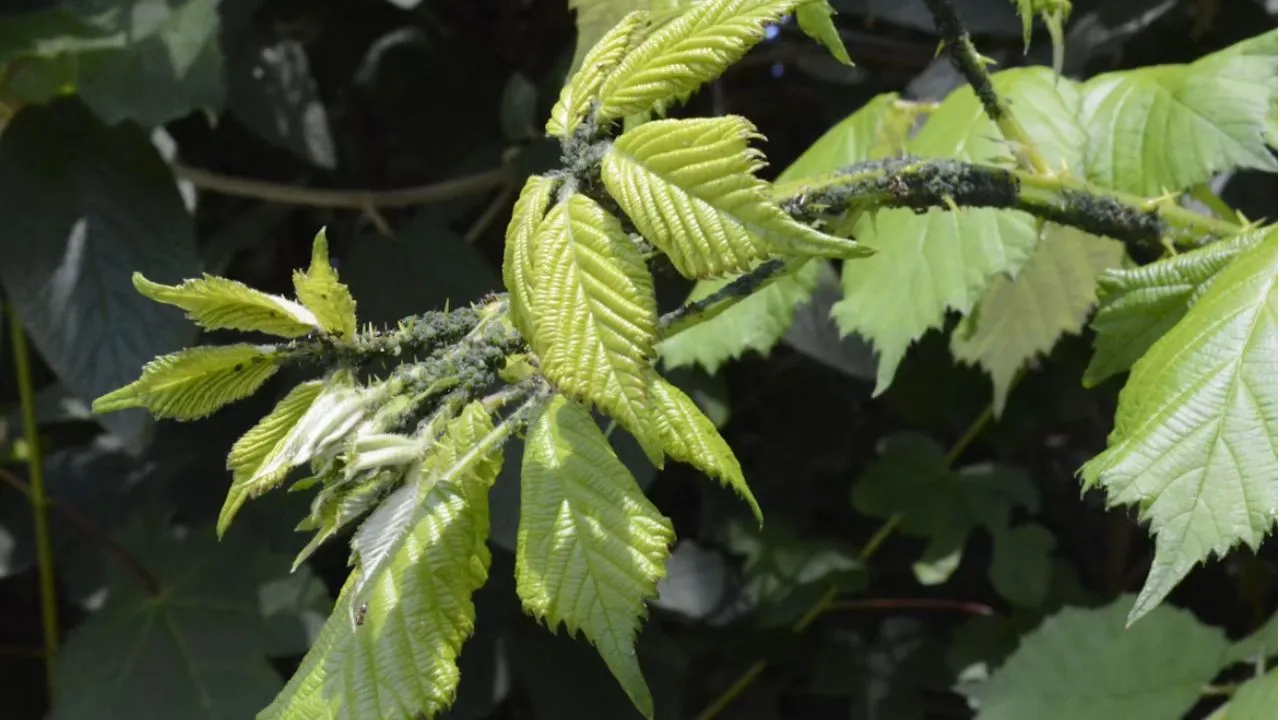
Illustration of Plant Pests/Photo by Nadine Eggenberger on Unsplash
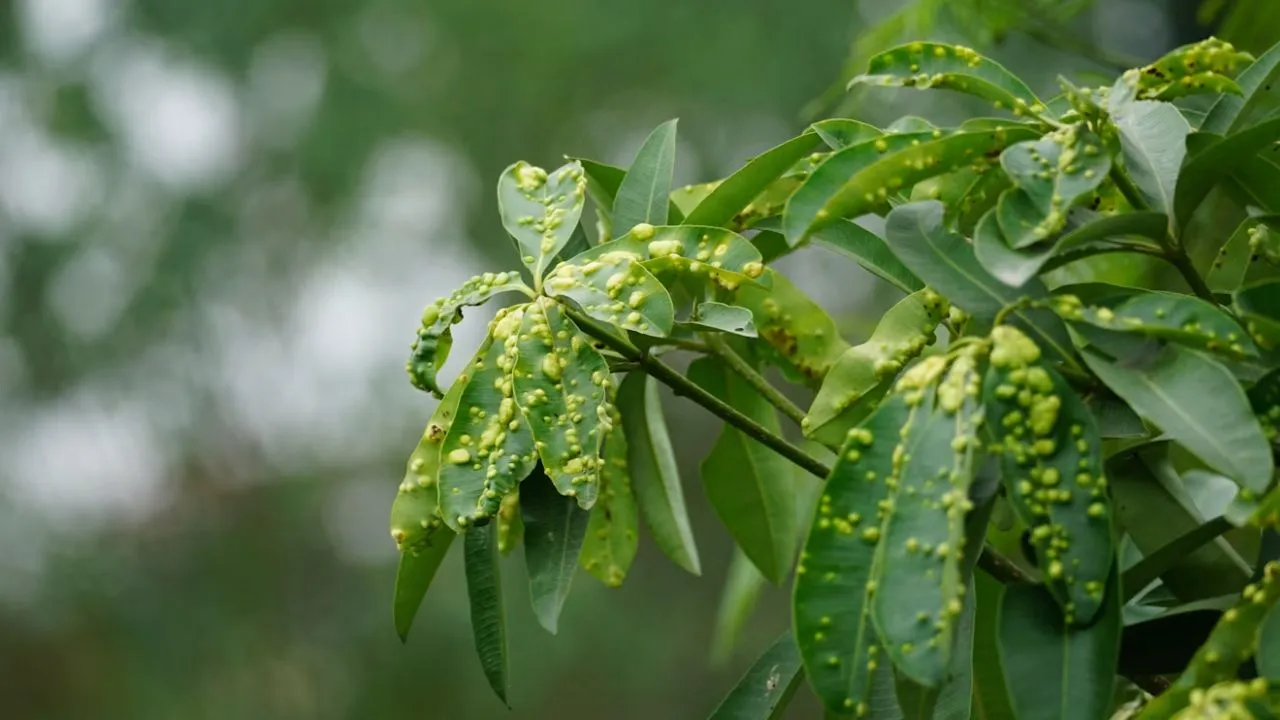
Although they do not always hide permanently behind leaves, some types of caterpillars, such as the armyworm, actively feed on foliage at night and hide under leaves or in the soil during the day. Usually, caterpillars will eat the foliage as well as the stems, primarily at night. As a result, the leaves eaten by caterpillars will only leave the skeleton or veins of the leaves. The damage caused appears as holes in the leaves, sometimes leaving only the leaf skeleton behind.
7. Recognize the Signs of Hidden Pest Attacks
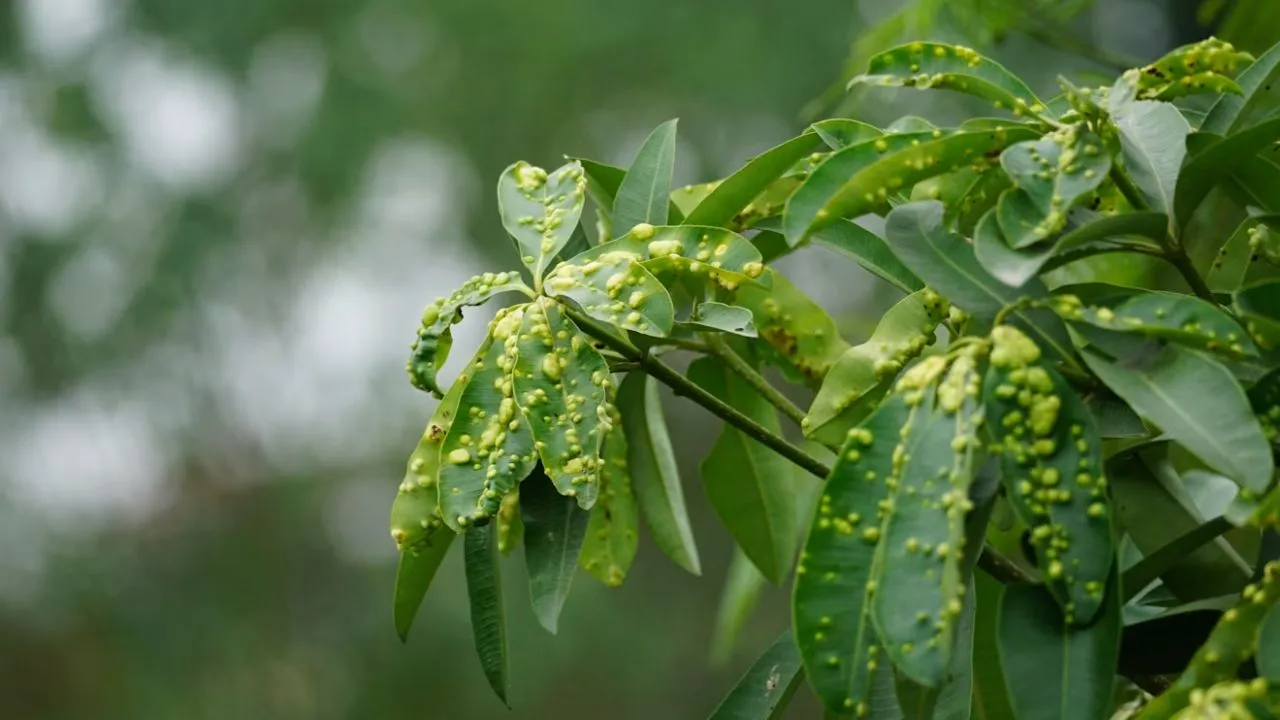
Illustration of Plant Pests/Photo by Duy Le Duc on Unsplash
Detecting plant pests that are often hidden behind leaves requires careful and routine observation.
Regular inspection of the underside of leaves is important, especially for plants that begin to show color changes or abnormal growth.
Some common signs you can observe include:
- Color changes in leaves, such as yellowing, paleness, or the appearance of spots.
- Curling or rolling leaves, especially on young leaves and shoots, are also strong indicators of pest attacks.
- Stunted or dwarfed plant growth is often caused by the activity of sap-sucking pests.
- The presence of a sticky layer known as honeydew, often followed by black sooty mold, is a typical sign of aphid or whitefly infestations.
- Fine webs, especially in spider mite infestations, can be seen on the underside of leaves or between stems.
- Holes or physical damage on leaves indicate the presence of caterpillars.
- A lot of ants clustering around the plant can indicate the presence of honeydew-producing pests.
- Shaking the leaves and seeing small insects flying (whiteflies) or inspecting with a magnifying glass for mites can confirm the presence of pests.
8. Effective Strategies to Drive Pests Away from Behind Leaves
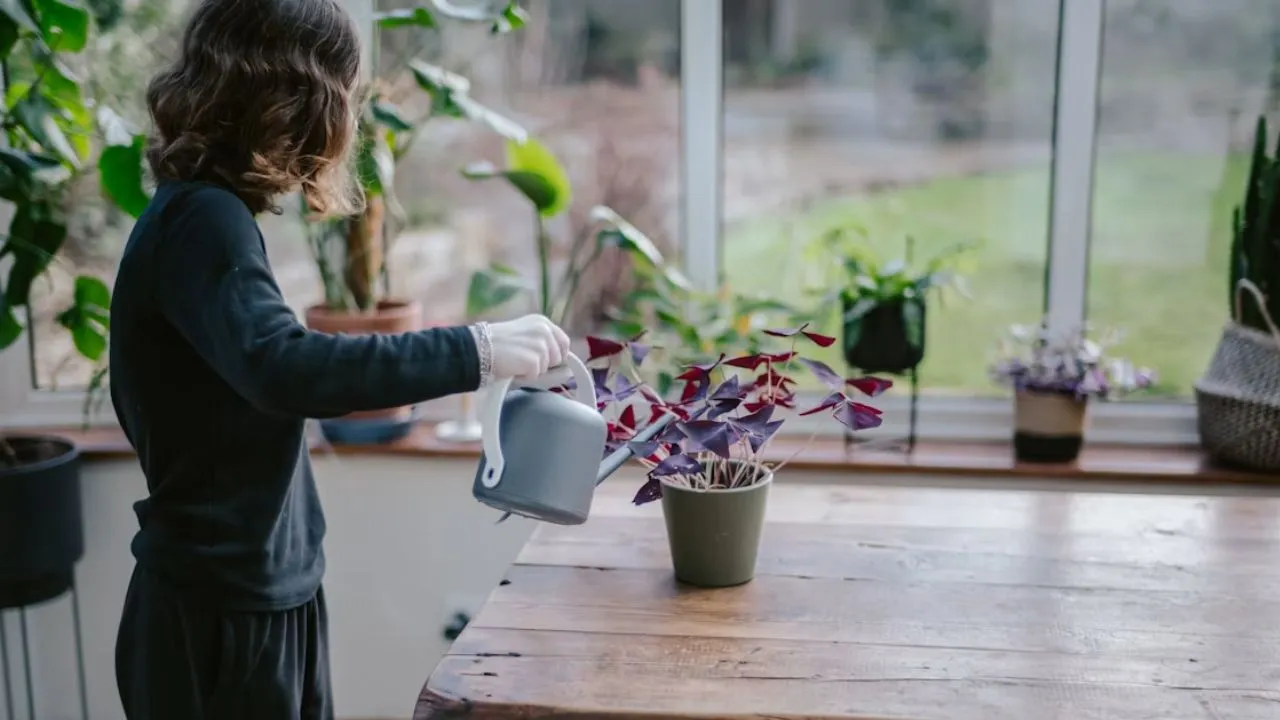
Illustration of Plant Care/Photo by Annie Spratt on Unsplash
Addressing plant pests hidden behind leaves requires a comprehensive and consistent approach. There are various methods that can be applied, ranging from physical methods to the use of natural materials.
Physical or mechanical control is an effective first step. You can spray pressurized water with a hose to wash off aphids and whiteflies from the plants, preferably done in the afternoon. For light infestations, manual removal of pests using your hands, an old toothbrush, or a damp cloth can also be done. Pruning severely affected parts of the plant can prevent further pest spread. Additionally, using bright yellow sticky traps is effective in attracting and capturing whiteflies and aphids.
Biological control utilizes the natural enemies of pests. Inviting beneficial insects such as ladybugs, lacewings, soldier beetles, and parasitoid wasps can help control the populations of aphids and whiteflies. Planting refuge plants such as sunflowers, marigolds, or cosmos around the area can also provide shelter for these predatory insects.
Plant or organic pesticides are an environmentally friendly choice. Insecticidal soap solution, a mixture of water and dish soap, is effective in eliminating aphids, whiteflies, and mites by damaging their protective body layer; it is best sprayed in the evening or morning. Garlic spray, with its pungent aroma, can repel pests; simply crush garlic, mix with water, let it sit, strain, and then spray. Neem oil (neem oil) is also very effective in eliminating various insects and has fungicidal properties; mix neem oil with liquid soap and water, then spray. Tobacco soak water, with its nicotine content, is disliked by whiteflies and whiteflies; soak cigarette butts in water, strain, and add soap as a binder.
Good cultivation practices are also crucial. Maintaining land sanitation by removing weeds and plant debris can eliminate alternative pest hosts. Periodic crop rotation can break the pest life cycle. Simultaneous planting in one area also facilitates integrated pest management. Avoid excessive fertilization, especially high-nitrogen fertilizers, which stimulate the growth of soft young shoots that attract whiteflies.
Lastly, proper watering, avoiding overwatering, can prevent an ideal moist environment for whiteflies.
With regular monitoring and the implementation of appropriate control strategies, pest problems hidden behind leaves can be minimized, ensuring your plants grow healthy and productive.
9. Questions and Answers About Plant Pests That Often Hide Behind Leaves
Why do pests tend to hide behind leaves?
Pests hide behind leaves to shield themselves from direct sunlight, predators, and pesticide sprays, as well as to access the softer leaf tissues for feeding.
What are the main types of pests commonly found behind leaves?
The main types of pests commonly found behind leaves include aphids, whiteflies, mealybugs, spider mites, thrips, and several types of caterpillars.
How can the presence of pests behind leaves be detected?
Detection can be done through regular inspection of the underside of leaves, looking for color changes, curling or rolling leaves, honeydew, fine webs, or by shaking the leaves to see flying insects.
What are the common symptoms of pest attacks that hide behind leaves?
Common symptoms include yellowing or pale leaves, curling or rolling, stunted growth, the presence of honeydew and sooty mold, as well as fine webs on the leaves.
What effective natural control methods are there for pests behind leaves?
Effective natural control methods include spraying with pressured water, insecticidal soap solution, garlic spray, neem oil, and tobacco soak water.
(kpl/nti)
Disclaimer: This translation from Bahasa Indonesia to English has been generated by Artificial Intelligence.


 Follow
 Rekomendasi