Kapanlagi.com - The causes of holes and curling in citrus leaves often make citrus plant owners panic, especially when the damage suddenly appears on the young leaves that have just grown. In fact, this issue is quite common in citrus plants, whether planted in home gardens or in larger scale farms.
Damage to citrus leaves can be caused by various factors, ranging from leaf-eating pest attacks, boring pests hiding within the leaf tissue, to environmental conditions such as water shortages. Each cause usually leaves a characteristic damage pattern, making it relatively easy to recognize as long as you know the signs.
Identifying the exact cause is the first step before determining the appropriate handling method. Here, Kapanlagi.com summarizes from various sources some of the main causes of holes and curling in citrus leaves that are most frequently encountered, complete with the signs that can be directly checked on the citrus plants at home.
1. Orange Dog Caterpillar
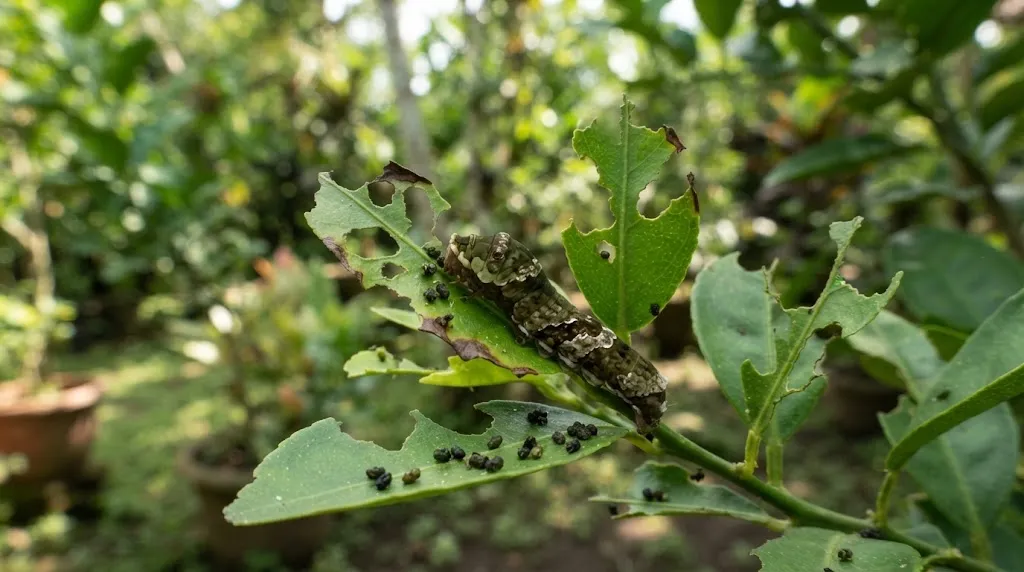
Orange Dog Caterpillar. (AI Generated)
One of the most common causes of holes in orange leaves is the caterpillar from the orange butterfly, which is known in some countries as the "orange dog caterpillar." This caterpillar has a unique appearance resembling bird droppings, complete with cream-colored spots on its body, which serves as natural camouflage from predators.
According to Citrus Industry Magazine, signs of an infestation by this caterpillar can be recognized by leaves that appear chewed, caterpillar droppings around the leaves, and the presence of cocoons attached to branches. This caterpillar particularly favors young leaves and usually starts eating the edges of the leaves, leaving behind uneven margins.
- Leaves appear holey with irregular edges, often starting from the leaf's perimeter.
- Large caterpillars with a pattern resembling bird droppings are found on the surface of the leaves.
- They primarily appear on young leaves that are newly growing on the outer canopy of the tree.
The good news is that mature orange trees can generally tolerate the loss of some leaves due to this caterpillar without experiencing serious disruption. However, for young plants with a limited number of leaves, a significant infestation should still be controlled to ensure that the plant's growth is not hindered.
2. Snails and Slugs
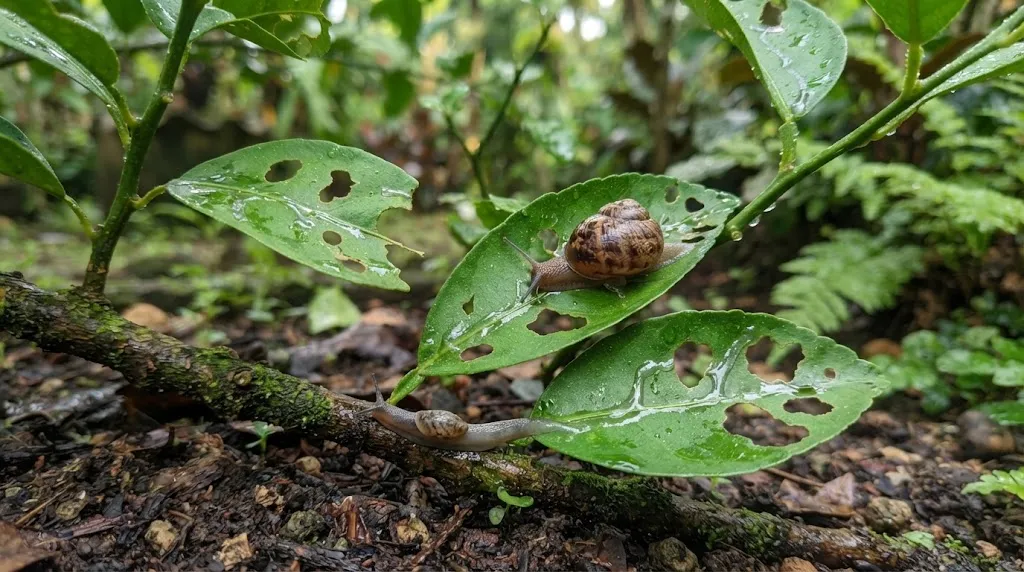
Snail on Orange Leaf. (AI Generated)
In addition to caterpillars, snails and slugs are also often the culprits behind the holes in orange leaves, especially on plants with branches hanging close to the ground. These two animals are usually active foraging at night, so the damage is often only noticed the next morning.
The characteristic damage caused by snails and slugs includes irregularly shaped holes, accompanied by dried silver slime trails on the surface of the leaves. The cool and humid environmental conditions make these pests more active and easier to breed around orange plants.
- Irregular holes in the leaves accompanied by remnants of dried slime trails.
- Damage is more severe after the rainy season or in humid environments.
- Branches that hang to the ground become a favorite entry route for snails and slugs to the tree canopy.
One simple way to prevent this problem is by trimming the lower branches that touch the ground, making it more difficult for snails and slugs to access the tree canopy.
3. Leafminer Pest (Phyllocnistis citrella)
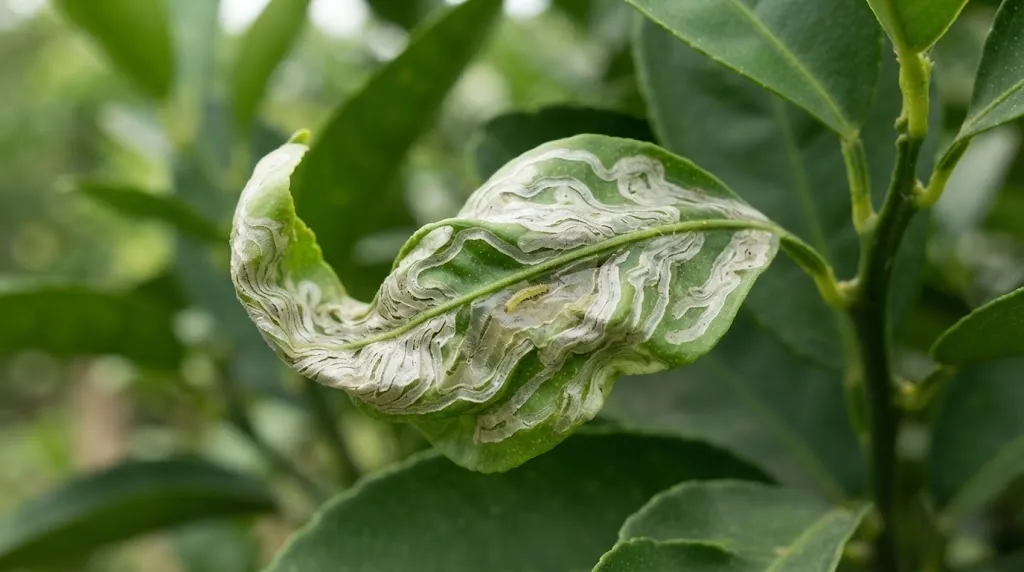
Leafminer Pest (Phyllocnistis citrella). (AI Generated)
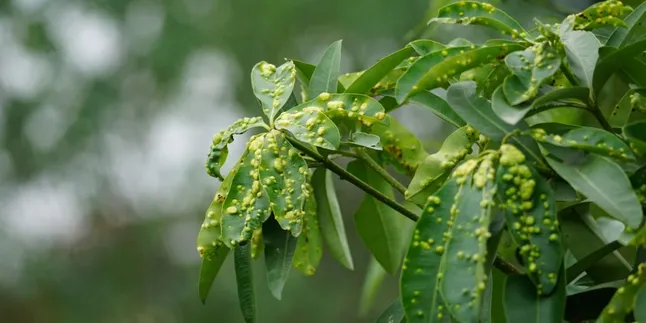
If the orange leaves are curling with winding silver-white lines on their surface, the likely cause is the leafminer, which is the larva of a small moth called Phyllocnistis citrella. This larva enters the leaf tissue and creates tunnels while feeding on the inside of the leaf.
The UC IPM Program from the University of California explains that leafminer larvae can only survive on young, soft, and shiny leaves, while older leaves that have hardened are relatively safe from this attack. As they approach the pupal stage, the larvae will curl the edges of the leaves as a shelter, making the leaves appear to fold or curl unnaturally.
- Winding white or silvery lines appear on the surface of the leaves, especially on the underside.
- The leaves appear twisted, curled, or asymmetrically folded.
- Only attacks young leaves that have just grown (flush), not older and hardened leaves.
Although its appearance is quite disturbing, most horticultural sources state that the damage caused by leafminers on mature trees is more cosmetic in nature and rarely fatal to the tree, although it should still be a concern for young plants that have few leaves.
4. Aphids, Mites, and Water Deficiency
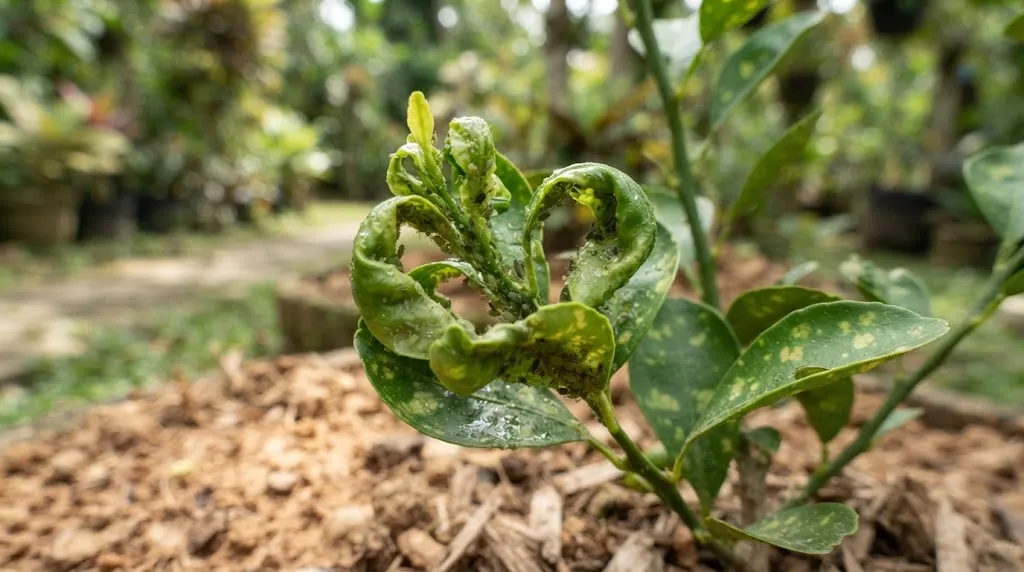
Aphids on Orange Leaves. (AI Generated)
The cause of curled citrus leaves does not always originate from leaf-eating or leaf-mining pests. Aphids and mites are included as sucking pests that operate differently, by piercing young leaf tissue and sucking its fluids, rather than chewing or creating tunnels.
According to the explanation from Trevallan Lifestyle Centre, a continually increasing population of aphids and mites can cause leaves to curl, droop, and even change color due to the continuous reduction of leaf fluids. Unlike the marks left by leafminers, damage caused by these sucking pests usually does not leave clear visible tracks or tunnels.
- Leaves curl inward without clear tracks or holes.
- Sticky spots (honeydew) from aphids appear on the surface of the leaves.
- Leaves remain green but curl, and the soil around the roots feels dry, usually indicating that the plant is lacking water, not under pest attack.
Because the causes are varied, directly inspecting the underside of the leaves for aphids or mites, as well as checking soil moisture, is an important step before determining the appropriate handling method.
5. FAQ on Causes of Holes and Curling in Orange Leaves
1. Why do orange leaves have holes?
Orange leaves can have holes due to caterpillars, snails, slugs, or other leaf-eating pests.
2. What causes orange leaves to curl?
Curling leaves can be caused by leafminers, aphids, mites, or lack of water.
3. What are the signs of a leafminer attack?
It usually appears as winding white or silvery trails on young leaves, which then curl up.
4. Can snails damage orange leaves?
Yes. Snails and slugs can create irregular holes and leave slime trails on the leaves.
5. How can you determine the cause of curling orange leaves?
Check the underside of the leaves for pests and check the soil moisture before deciding on treatment.
(kpl/rao)
Disclaimer: This translation from Bahasa Indonesia to English has been generated by Artificial Intelligence.


 Follow
 Rekomendasi