8 Ideas for Productive Yards in Flood-Prone Homes to Keep Land Maximized Year-Round
kapanlagi
yards in flood-prone homes remain productive (AI Generated)
Kapanlagi.com - Having a house in an area that is often affected by floods does not always mean the yard must be left empty or difficult to utilize. With the right arrangement concept, ideas for productive yards for homes that frequently experience flooding can be a solution to keep the land beneficial while beautifying the living environment.
A yard is not just an addition to the appearance of a house. This area can also be utilized as green space, a source of food, and a place to relax with family. The selection of cultivation methods, types of plants, and appropriate planting systems helps the yard remain functional even in areas prone to flooding during the rainy season.
In addition to enhancing comfort, proper yard management also supports more optimal land use. Various concepts can be applied according to the condition of the yard so that the outdoor area remains productive throughout the year
1. Use a Planting System that Reduces the Risk of Waterlogging
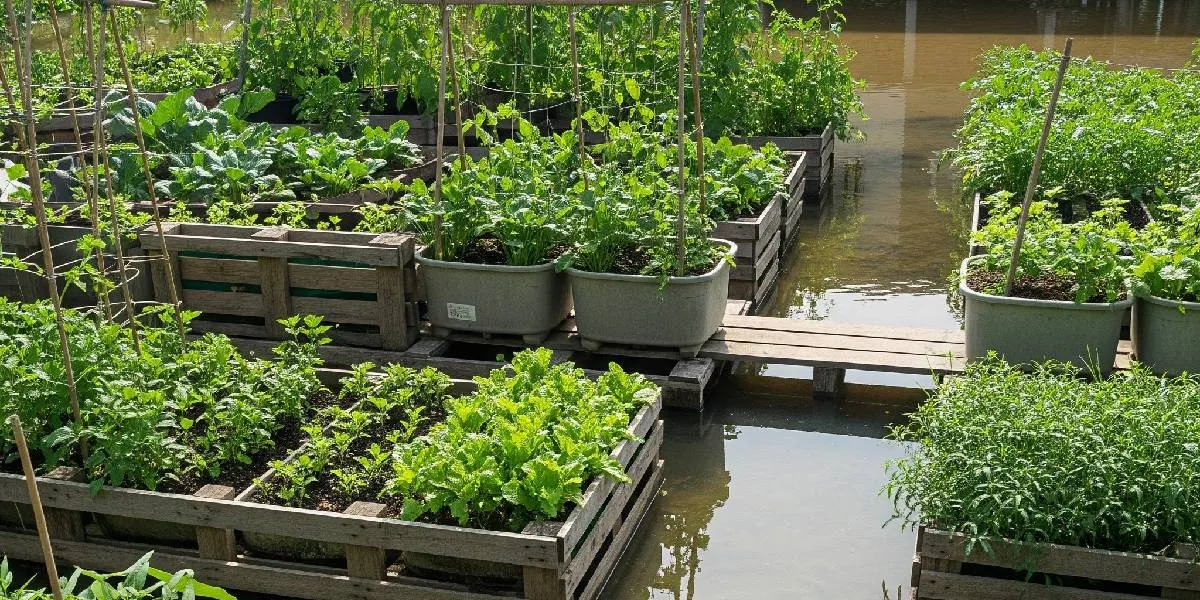
One of the methods widely applied in homes in flood-prone areas is to create vegetable gardens using a raised bed system. The planting area is made higher than the ground surface so that the plant roots are not easily submerged when heavy rain occurs.
This method helps the planting medium to have better drainage while maintaining air circulation around the roots. This condition is important for the plants to remain healthy even though the environment has a high humidity level and often experiences waterlogging.
Leafy vegetables such as water spinach, spinach, mustard greens, lettuce, and bok choy are suitable choices for cultivation using this system. Their harvest period is relatively short, allowing the yard to produce fresh vegetables sustainably. To optimize plant growth, the planting medium should ideally use a mixture of loose soil, compost, and burned rice husk to improve both water absorption and drainage capabilities.
2. Maximize Large Pots for Fruit Gardens in the Yard
Planting fruit plants in large pots is an alternative for homeowners living in flood-prone areas. In addition to helping protect the roots from standing water, using pots also makes it easier to move the plants when rainfall increases or water begins to flood the yard.
This method is suitable for areas that are not too large but still want to be utilized as a family fruit garden. With proper arrangement, the yard can still produce harvests without having to rely on the soil conditions around it.
Some fruit plants that can grow well in pots include guava, water guava, oranges, lemons, and starfruit. Use large pots that have adequate drainage holes so excess water can flow out. A lightweight, fertile planting medium with high porosity also helps root development, allowing the plants to grow and bear fruit more optimally.
3. Utilize Vertical Areas for Safer Plants
Houses located in flood-prone areas can still have a neat garden through the concept of vertical gardens. This system utilizes walls, fences, or tiered shelves as media for placing plants, so their position is not directly on the ground surface, which is prone to flooding.
In addition to being a solution for yards with limited space, this method also helps reduce the risk of plant damage due to waterlogging during the rainy season. Vertical arrangement makes maintenance easier while also utilizing previously unused space.
Various types of plants can be grown using this concept, ranging from ornamental plants, vegetables, herbs, to various flowers. The organized placement also makes the yard look greener and tidier without reducing its primary function as a productive area.
4. Transform Frequently Flooded Areas into Multifunctional Ponds
If there is a part of the yard that almost always becomes a gathering place for water during heavy rain, that area can be utilized as a multifunctional fish pond. Instead of letting the water stagnate without purpose, the land can be designed into a cultivation pond as well as an ornamental element for the yard.
Good pond planning allows the area to function as part of the water management system around the house. In addition to helping utilize the puddles, the existence of the pond also adds value to the yard.
The pond can be filled with various types of fish according to needs, such as tilapia, catfish, gourami, or koi for those who want to introduce decorative elements. Besides having the potential to be a source of food or additional income when managed sustainably, the pond also creates a more natural atmosphere in the yard.
5. Choose Plants That Are More Resistant to Humid Conditions
The success of building a productive yard in flood-prone areas is also influenced by the selection of plant types. Not all plants can survive when the soil has high moisture or is occasionally flooded, so choosing the right plants is an important step.
Plants that have tolerance to humid conditions tend to be easier to care for and have a better chance of growing compared to sensitive plant types. This way, the risk of plants dying due to roots being submerged for too long can be minimized.
Some plants known to adapt well to humid environments include taro, elephant ear, pandan, lemongrass, banana, and various wetland plants. In addition to being used for household needs, these plants also help maintain a green appearance in the yard throughout the year.
6. Apply Hydroponic System
The hydroponic system is a suitable choice for homes in areas that frequently experience flooding because it does not use soil as the main medium. Plants obtain nutrients from a special solution, while the installation is generally placed on shelves or frames, making it higher than the ground surface.
This method allows plants to continue growing optimally without relying too much on the land conditions around the house. In addition to producing clean harvests, hydroponics is also known to use water more efficiently and is relatively easy to maintain.
Types of vegetables such as lettuce, bok choy, spinach, water spinach, mustard greens, and kailan are commonly cultivated using this system.
7. Build a Mini Fruit Garden with Good Drainage
The presence of floods does not always hinder homeowners from having a mini fruit garden. What needs to be considered is ensuring that the drainage system works well so that rainwater does not pool too long around the plant roots.
The planting area can be raised using beds or mounds of soil. Additionally, drainage channels should be designed so that excess water can flow smoothly when rainfall intensity increases. This step helps maintain stable growing media conditions.
Some fruit plants such as water guava, guava, sugar apple, mulberry, and starfruit can be good choices for filling the mini fruit garden. With proper arrangement, the yard can consistently produce fresh fruit while also becoming a comfortable green space, even in an area with flood potential.
8. Present a TOGA Garden
A house located in a flood-prone area can still have a Family Medicinal Plants (TOGA) garden by applying an appropriate planting system. To prevent plants from being easily affected by flooding, use pots, polybags, or tiered racks so that the planting medium is above the ground surface. This arrangement also makes it easier to care for the plants and facilitates the process of moving them when rainfall increases.
Various medicinal plants can be cultivated to meet the family's needs, ranging from ginger, turmeric, kencur, galangal, lemongrass, mint leaves, aloe vera, sambiloto, to temulawak. Besides being used as natural ingredients for various health purposes, these plants also add a green touch that makes the yard look neater and serves increasingly diverse functions.
OR
Swipe Up Next Article
Cobain For You Page (FYP) Yang kamu suka ada di sini, lihat isinya
The 2026 Bhayangkara Day carries the theme of 80 Years of Service, Polri for the Community. Check out the messages, logo meanings, ceremony locations, and the messages behind the 80th Polri commemoration.
Ruben explained that his facial hair grows quite fast. However, during his time in the Holy Land, he intentionally did not shave his beard to be more focused on performing worship.
Want your home garden to stay tidy even if it's rarely cleaned? A number of low-maintenance landscaping concepts can be a choice for various types of modern residences.
The preparations for Taylor Swift and Travis Kelce's wedding are said to be getting more extravagant. A giant castle is reportedly being built at Madison Square Garden to realize a fairy tale-like celebration.
Netflix has finally announced the release schedule for ONE PIECE: HEROINES. This latest spin-off will highlight Nami's story with several original scenes.
Check out the merchandise from Lula Lahfah's latest film that successfully evokes emotions. Discover the story behind HARUSNYA HOROR and the support from netizens here!
Take a peek at the excitement of Natasha Wilona exploring the iconic landmarks of California. Check out her vacation photos from Beverly Hills to the Hollywood Sign here!
Check out Joshua Suherman's funny edits from the film Joshua Oh Joshua. Old scenes transformed into hilarious content that brings nostalgia and laughter.


 Follow
 Rekomendasi