Kapanlagi.com - Understanding the comparison between suits and blazers is important for anyone who wants to appear neat without making a wrong clothing choice. At first glance, both do look almost the same as they are both outerwear with collars and cuts resembling jackets. However, suits and blazers actually have different functions, structures, and characteristics.
Suits are identical to formal appearances and are usually part of a set of clothing along with pants or skirts in matching colors and materials. Blazers are more flexible as they can be worn separately and paired with various bottoms.
This difference makes the choice between suits and blazers should be adjusted according to the event, personal style, and the level of formality required. By recognizing each character, you can build a more functional yet stylish clothing collection, Tuesday (1/9/2026).
1. Comparison of Suits and Blazers from Design to Structure
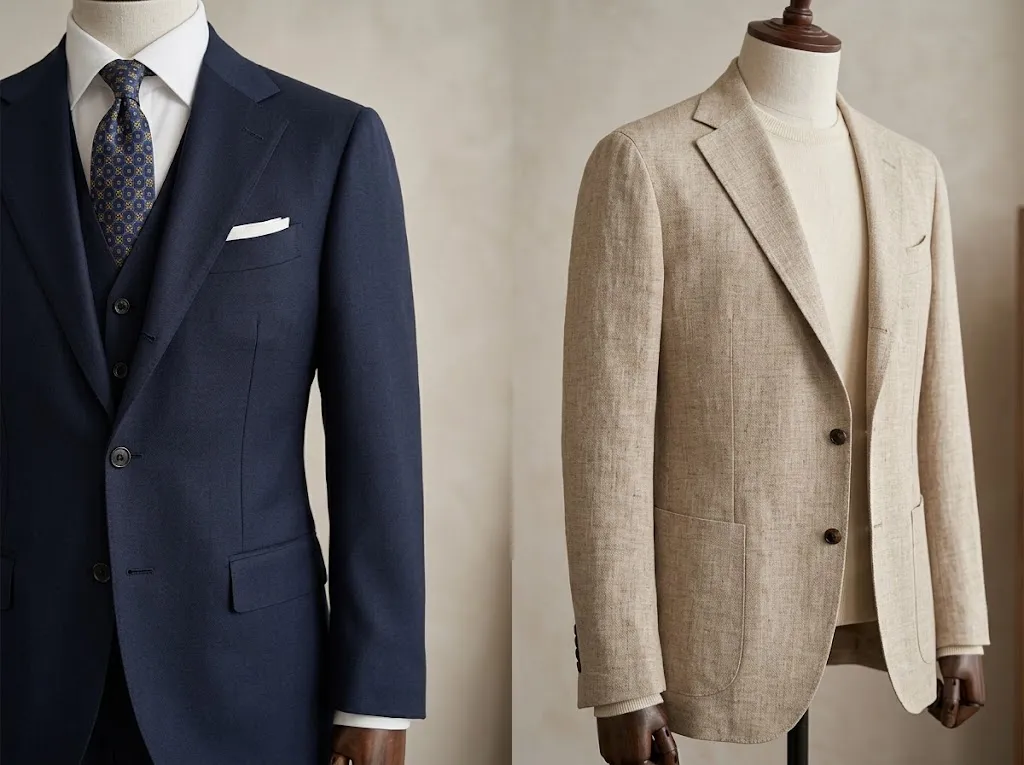
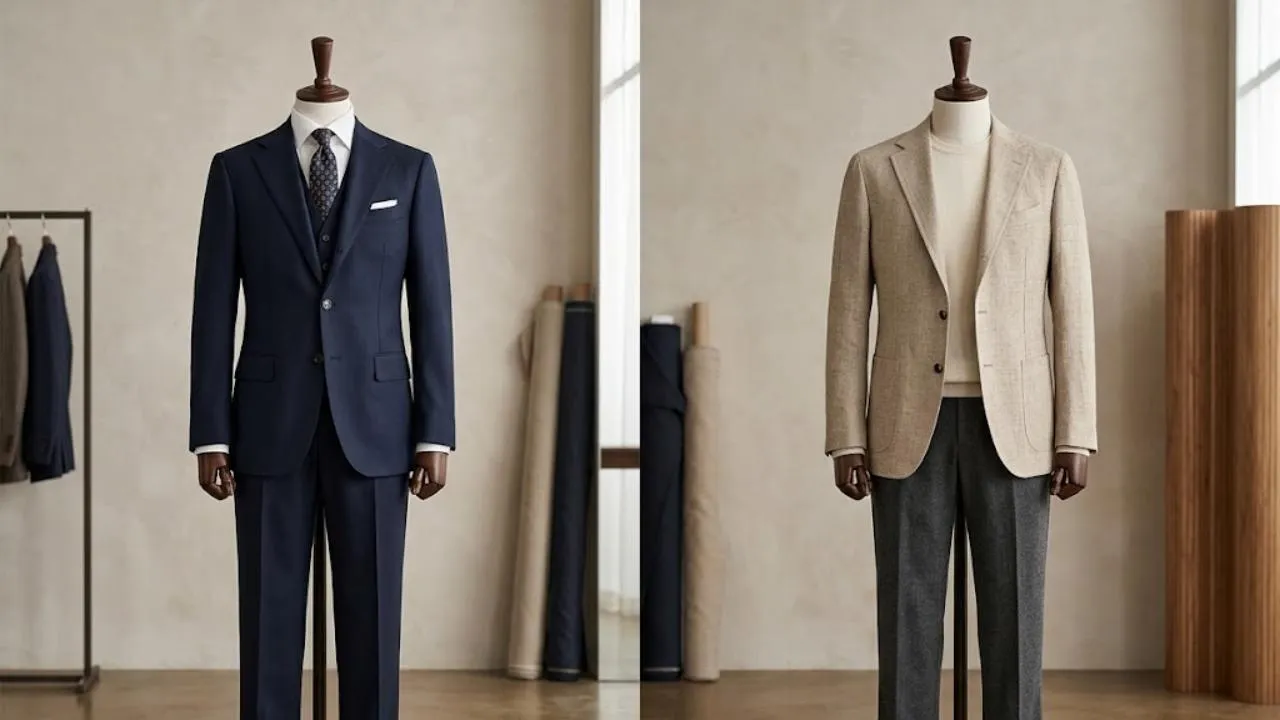
comparison of suits and blazers (AI generated)
The most fundamental difference between a suit and a blazer can be seen from the purpose of their creation. A suit or suit jacket is designed as part of a coordinated outfit. The color, material, texture, and construction are made to align with the matching trousers or skirt. Therefore, suits usually convey a more formal, neat, and professional impression.
Meanwhile, a blazer is an outerwear designed to be worn independently. A blazer does not have to have bottoms made from the same material or color. This characteristic makes it easier to wear for various occasions, ranging from work environments with business casual rules to social events.
In terms of construction, suits generally have a more structured build. The shoulder part can be made more structured, while the cut on the body is designed precisely to create a neat silhouette. Some suits use interfacing, shoulder pads, and internal construction that help maintain the shape of the garment.
Blazers tend to have a lighter and more flexible construction. Their cuts can be unstructured or semi-structured, making the clothing feel more comfortable when worn for long periods. This characteristic also makes blazers easier to wear for creating a less rigid style.
This difference does not mean that all blazers are always loose or that all suits are always stiff. Clothing models continue to evolve, so there are now blazers with very neat structures and suits with lighter designs. However, in general, the level of structure and the intended use remain important distinguishing factors.
2. Colors, Materials, Buttons, and Details that Differentiate
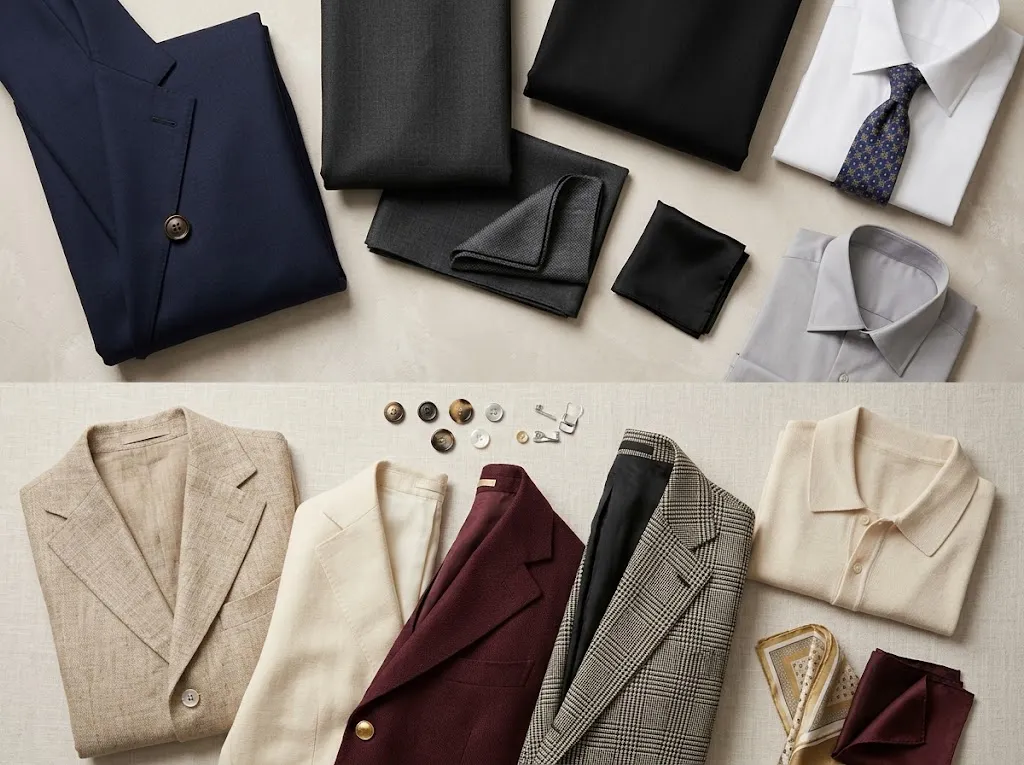
comparison of suits and blazers (AI generated)
The next difference can be found in the choice of materials and colors. Suits usually use materials designed to maintain a formal appearance. Colors such as black, navy, gray, charcoal, and dark brown are common choices because they easily create a professional impression.
Since it is a set, the color and pattern of the suit must be considered as a whole. If the suit has a striped or checkered pattern, that pattern should look harmonious when paired with the trousers or skirt that accompany it. This is what makes the color choices for suits tend to be more conservative.
Blazers offer a wider space for experimentation. In addition to neutral colors, blazers can be found in burgundy, green, cream, bright blue, and even bolder colors. Check patterns, stripes, fabric textures, and various decorative details are also more easily found on blazers.
The choice of materials is also more diverse. Blazers can be made from cotton, linen, wool, and other materials that provide different characteristics. Lightweight materials like linen and cotton are suitable for a casual look, while fabrics with a firmer texture can make a blazer look more formal.
Button details are also often a point of attention. Blazers often use one or two buttons at the front, although there are also double-breasted models with more buttons. Suits also have variations in the number of buttons, including models with one, two, or three buttons. Therefore, the number of buttons cannot be the sole criterion for determining whether a garment is a suit or a blazer.
The collar section can also provide clues. Formal suits usually have collars designed to maintain a neat and structured appearance. Blazers can use a wider variety of collar designs, from classic styles to more modern and minimalist shapes.
It is also important to pay attention to details on the sleeves. Suits often have a more precise sleeve construction and can be equipped with buttons as part of the tailoring design. Blazers have a wider variety of details, including models with sleeves that can be rolled up to create a casual impression.
3. When is it Best to Wear a Suit and Blazer?

comparison of suits and blazers (AI generated)
Choosing between a suit and a blazer will actually be much easier when considering the event you are attending. Suits have a stronger position in situations that demand a formal appearance. A suit can be used for important meetings, formal presentations, conservative work environments, official events, and various occasions that have specific dress codes.
The impression created by a suit comes from the coordinated look from top to bottom. When a suit is paired with pants from the same set, a shirt, tie, and formal shoes, the entire outfit looks more structured. This appearance can also convey a professional and serious impression.
Blazers have a wider area of use. This clothing is suitable for a smart casual atmosphere, offices with flexible dress codes, dinner events, social gatherings, and weekend activities. Blazers can bridge the gap between casual and formal looks without making the wearer appear too formal.
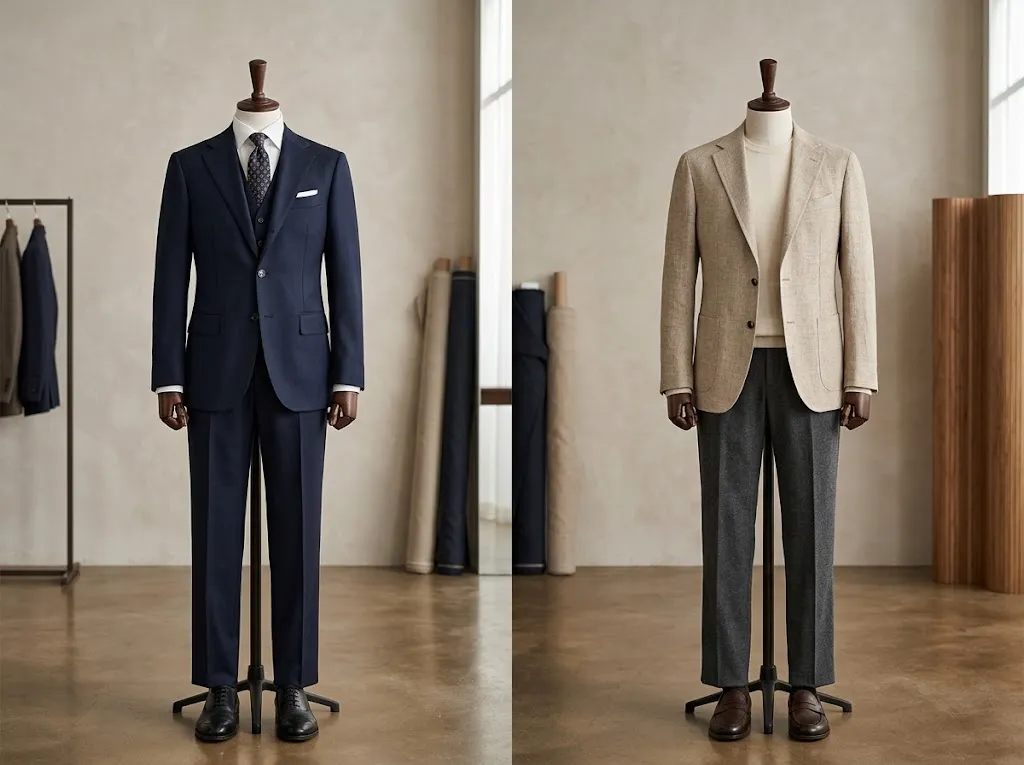
For a casual style, blazers can be paired with plain t-shirts, jeans, and sneakers. This combination results in a neat yet relaxed appearance. If you want to be a bit more formal, the t-shirt can be replaced with a shirt and the sneakers can be swapped for loafers or leather shoes.
A blazer can also be worn with trousers in a different color. For example, a navy blazer can be paired with gray pants, while a cream blazer can be worn with brown or black trousers. The play of contrasting yet harmonious colors is one of the advantages of a blazer.
For women, the versatility of a blazer can even be extended by pairing it with a skirt or dress. A blazer can be worn over a dress to add structure to the look or paired with a midi skirt for a more elegant style. This characteristic makes the blazer one of the pieces that can easily be incorporated into a capsule wardrobe.
The evolution of the working world has also made the boundaries between formal and casual wear increasingly fluid. The modern professional environment does not always require a complete suit every day. In conditions like this, blazers often become a choice because they still provide a professional impression while offering comfort and flexibility.
4. How to Choose and Care for Suits and Blazers
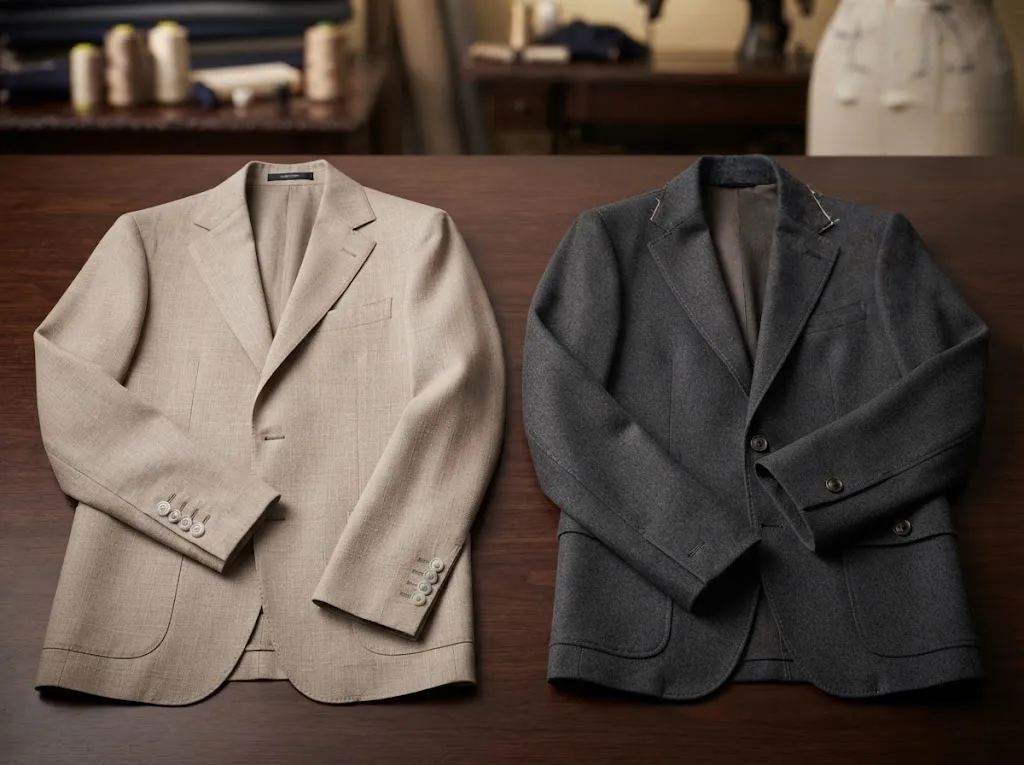
comparison of suits and blazers (AI generated)
When buying a suit, the first thing to consider is the fit. The shoulder area is one of the most important areas because changes in size in this part are relatively difficult to make. The suit should also have a proportional length for the sleeves and body so that the overall silhouette looks neat.
Since suits are designed as a set, it is also important to pay attention to the compatibility between the jacket and the trousers. The color, texture, and condition of both parts need to remain harmonious. If the pants experience a change in color or wear level that is significantly different from the jacket, the appearance of the suit can look less tidy.
Blazers offer greater freedom in choosing size and style. However, this does not mean that size can be ignored. An overly large blazer can make the body look engulfed, while a blazer that is too tight can restrict movement and reduce comfort. The shoulder, chest, arm, and length of the blazer need to be considered.
From a clothing investment perspective, blazers can provide high usage value because they can be worn with many different bottoms. One blazer can create several different looks just by changing the shirt, t-shirt, pants, shoes, or accessories. Suits have a more specific use, but they are an important investment for people who often attend formal events.
Both should also follow the care instructions on the clothing label. Blazers made from certain cotton or linen materials may be easier to care for at home, but not all blazers can be machine washed. The care method still depends on the type of fabric and garment construction.
Suits with more complex construction generally require more attention in their care. Professional cleaning such as dry cleaning may be an option for certain materials. Storage is also important. Use a hanger that can support the shoulders so that the shape of the suit does not easily change.
Blazers should also be hung properly after use. Steaming can help reduce wrinkles on suitable materials, while storing them in a place with good air circulation can help maintain the condition of the clothing.
In the end, the comparison between suits and blazers is not just about which one is better. Both serve different functions. A suit is more appropriate when you need a formal, coordinated, and professional look. A blazer excels when you need flexible clothing for various combinations and occasions.
Having both in your wardrobe can be a practical choice. A set of suits can be a go-to for formal events, while blazers can be used more frequently for work needs or social activities. This way, clothing choices not only follow trends but also truly fit daily needs.
5. Questions About Suits and Blazers
comparison of suits and blazers (AI generated)
1. What is the main difference between a suit and a blazer?
The main difference lies in their function and how they are used. A suit or suit jacket is designed as part of a set with matching pants or a skirt. A blazer is a separate garment that can be paired with various bottoms. Therefore, suits tend to be more formal, while blazers are more flexible.
2. Can a blazer be worn for formal events?
Yes, it can, depending on the model and the level of formality of the event. A blazer with a tailored cut, solid color, quality fabric, and paired with dress pants and a shirt can create a lighter formal look. However, if the invitation specifically requires a suit, a blazer should not be considered an equivalent substitute.
3. Can a suit be paired with different pants?
In principle, a suit is designed to be worn with the pants or skirt that are part of its set. Separating the suit from its counterpart can make the colors and textures appear mismatched. If you want to mix and match more freely, a blazer is a more appropriate choice.
4. Which is more flexible, a suit or a blazer?
A blazer is more flexible. One blazer can be worn with jeans, dress pants, skirts, or even dresses, depending on its style. A suit has a more specific function because its overall design is made to create a coordinated look.
5. Do blazers and suits require different care?
Both need to be cared for according to the material and instructions on the label. Certain lightweight blazers may have simpler care requirements, while suits with specific construction and materials require more careful handling. For suits that have a complex tailoring structure, professional cleaning can help maintain their shape and appearance.
(kpl/yni)
Disclaimer: This translation from Bahasa Indonesia to English has been generated by Artificial Intelligence.


 Follow
 Rekomendasi