

 Follow
 Rekomendasi
Guide to Making Traditional Ketupat from Young Coconut Leaves for Soft and Durable Results
How to make traditional ketupat from young coconut leaves through the stages of weaving, filling with rice, boiling, and storing it for longevity.
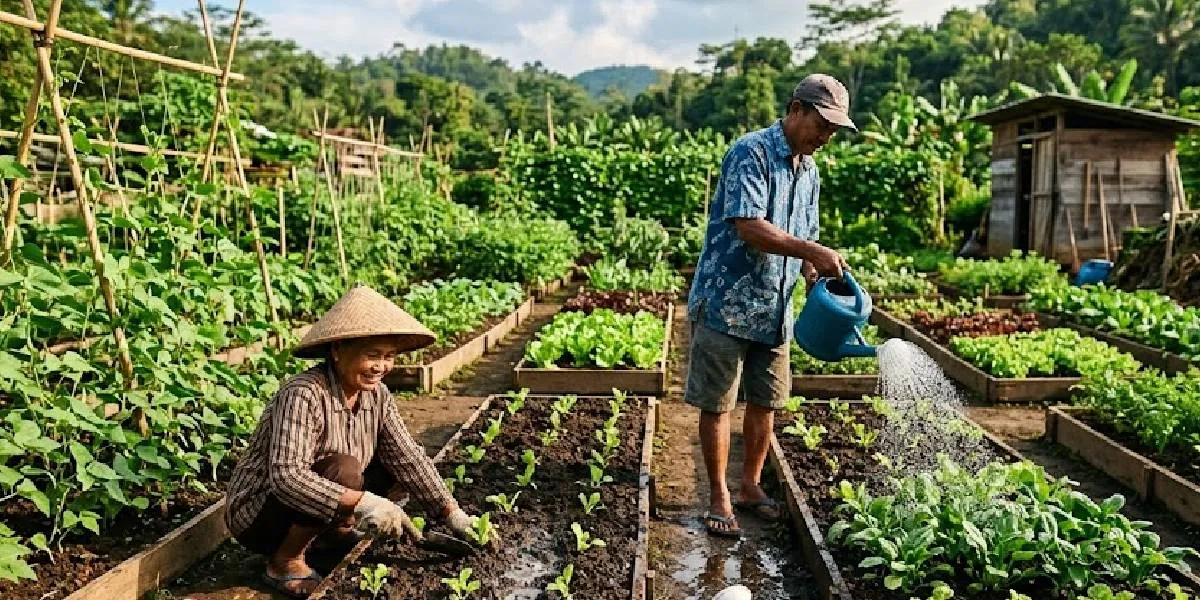
Kapanlagi.com - Gardening is now not only related to planting vegetables for daily needs but also choosing a system that suits the goals and land conditions. The comparison between food forests and conventional vegetable gardens is one of the many discussions because both offer different ways of producing food.
Food forests promote an agricultural concept that mimics natural forest patterns with layered plants, while conventional vegetable gardens rely on a more structured planting system that is easier to control. The differences between the two can be seen in harvesting times, initial costs, maintenance needs, and the ability to sustain ecosystems.
Food forests are a sustainable agricultural system designed to resemble forest ecosystems. Plants are planted in several layers, ranging from tall fruit trees, climbing plants, shrubs, to ground cover plants.
This system uses perennial plants that do not need to be replanted every season. Food forests also utilize natural cycles to maintain soil fertility and rely on plant diversity as part of pest control.
Meanwhile, conventional vegetable gardens use a more structured planting pattern. Plants are generally arranged in rows or specific plots so that water, nutrient, and maintenance needs can be managed more specifically.
Food forests are characterized by a layered arrangement of plants. This system can include seven layers of plants, from the tallest tree canopy to root vegetables that grow close to the ground.
In contrast to regular vegetable gardens that often focus on annual plants, food forests prioritize long-term perennial plants. Once the ecosystem is established, this system is designed to require less human intervention.
Regular vegetable gardens offer a more organized approach. Plants are planted in specific groups and often use compost or potting mixes as growth support media.
In conventional systems, garden owners have greater control over the needs of each plant. However, this method usually requires additional fertilizers and pesticides to keep plant yields optimal.
In terms of harvest time, both systems have distinct characteristics. Food forests take longer because perennial fruit plants may require 1-3 years before yielding their first harvest. Maximum production for this system typically occurs between the 3rd and 7th years.
Conversely, regular vegetable gardens can provide faster yields. Leafy vegetables like water spinach and spinach can be harvested in about 30-60 days, depending on the planting cycle applied.
In terms of costs, food forests require a larger initial investment. Research shows that the initial cost of this system is around €20,000 per hectare or more than Rp 350 million, with income stabilizing only after 10 years.
Although it requires a higher initial capital, food forests can reduce maintenance needs once their ecosystems are established. This system takes 7-20 years to reach the investment break-even point, depending on the marketing strategy used.
Meanwhile, traditional vegetable gardens have lower initial costs as they generally only require seeds, compost, and gardening supplies. However, maintenance costs can continue due to the need for fertilizers, pesticides, watering, and routine care.
For return on investment, traditional vegetable gardens yield faster since harvests can be obtained within 1-3 growing seasons. This system is more suitable for activities that require income in a relatively short time.
From a productivity perspective, research in Europe found that the average food forest produces 1,038 kg of biomass per hectare. This production includes a variety of calories, protein, carbohydrates, and fats.
Traditional vegetable gardens can produce a higher quantity of a specific type of plant, such as apples, pears, or corn, because they focus on a single commodity. However, this system is more vulnerable to pest attacks and extreme weather conditions compared to food forests.
The environmental impact is also a distinguishing factor. Food forests help improve soil fertility naturally, support biodiversity, and contribute to carbon absorption. Research indicates that this system is related to 9 out of 17 United Nations Sustainable Development Goals (SDGs).
In contrast, conventional vegetable gardens can experience a decline in soil quality if they continue to rely on chemical inputs. This system also requires more water because it often uses intensive irrigation.
Food forests have several advantages, such as the ability to create a self-sustaining system once established, supporting biodiversity, producing sustainable yields, and reducing operational costs in the long term.
Additionally, food forests can serve as habitats, educational resources, and part of residential environments. However, this system requires patience as early yields take 1-3 years.
Another drawback is the need for significant initial investment, a sufficiently large area, and knowledge of permaculture. Production per hectare for certain commodities is also lower compared to monoculture systems.
On the other hand, conventional vegetable gardens have the advantage of faster harvest times, complete control over plant growth, and the ability to be applied in limited spaces such as home yards or balconies.
This system is also suitable for short-term commercial activities because yields can be obtained more quickly. However, conventional vegetable gardens require regular involvement, including watering, weeding, and the use of fertilizers and pesticides.
The choice between food forests and conventional vegetable gardens depends on the goals to be achieved. Conventional vegetable gardens are more suitable for quick yield needs and measurable management, while food forests are more aimed at sustainable food systems in the long term.
Several factors to consider include waiting time for harvest, land area, and environmental conditions. Food forests require more space for diverse plant development, while conventional vegetable gardens are more flexible for small areas.
Food forests can also be implemented in tropical regions like Indonesia because they have a planting season throughout the year. Nevertheless, the initial stages of forming this system still require work and understanding of planting patterns.
Once established for 3-7 years, food forests require minimal maintenance as the ecosystem begins to support itself. However, the initial phase still requires intensive knowledge with a labor demand of around 544 hours/ha, higher compared to conventional agriculture.
In its implementation, food forests can still be adapted to the available land conditions. This concept can be applied in urban areas with certain adjustments, although maximum results generally require more space.
For financial needs, conventional vegetable gardens tend to provide quicker yields because crops like water spinach, spinach, or chili can be harvested and marketed in a shorter time. This system is more suitable for managers who need regular turnover of produce.
Meanwhile, food forests require a longer process before yielding optimal results. Once perennial plants begin to produce, operational costs can be reduced because some processes occur through the natural systems that have been established.
The main difference between these two methods lies in their working mechanisms and end goals. Food forests mimic forest ecosystems with layered plants and rely on biodiversity, while conventional vegetable gardens use simpler planting patterns with annual crops managed intensively.
Food forests generally take 1-3 years to achieve the first harvest from fruit trees and perennial plants. Peak production can be reached in the 5th to 10th year, after which this system can produce continuous harvests throughout the year.
For narrow land, conventional vegetable gardens are an easier option to implement as they can be created in home yards or balconies. Food forests can still be developed on a small scale but require plant arrangements that adapt to the available space.
In terms of maintenance, a food forest does not mean there is no work from the beginning. The initial development stage requires labor, planning, and understanding of permaculture. After the system has been running for 3-7 years, maintenance needs may decrease as relationships between plants begin to form.
Food forests are also said to have the potential to support food security by producing various types of plants in one area, maintaining soil conditions, and reducing dependence on chemical inputs. With tropical climate conditions and high biodiversity, this concept can be applied with certain adjustments in Indonesia.
Ultimately, the choice of gardening system needs to be tailored to the needs, land area, available time, and management goals. Conventional vegetable gardens offer faster yields with more controlled arrangements, while food forests require a longer time to establish a sustainable system.
(kpl/mda)
Cobain For You Page (FYP) Yang kamu suka ada di sini,
lihat isinya
How to make traditional ketupat from young coconut leaves through the stages of weaving, filling with rice, boiling, and storing it for longevity.

The KTP size in Word needs to be adjusted to ISO 7810 standards for precise printing results. Check the dimensions and the steps to set it up.

News item text in English can be learned through 7 steps, starting from understanding the structure to opening opportunities to become a freelance writer.
Natural stone and mini elephant grass terrace models present a combination of neat, cool natural elements that are suitable for various home concepts.
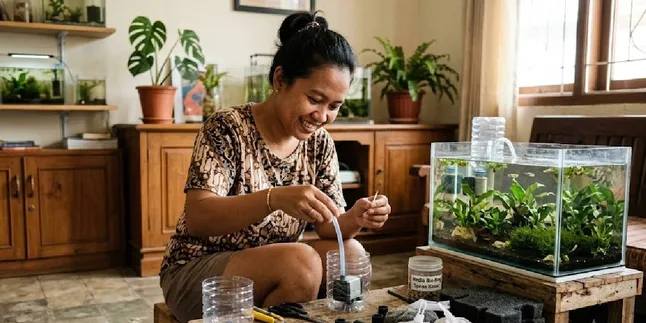
A guide on how to make your own aquarium filter using used bottles, sponges, and an aerator, complete with assembly steps and maintenance.
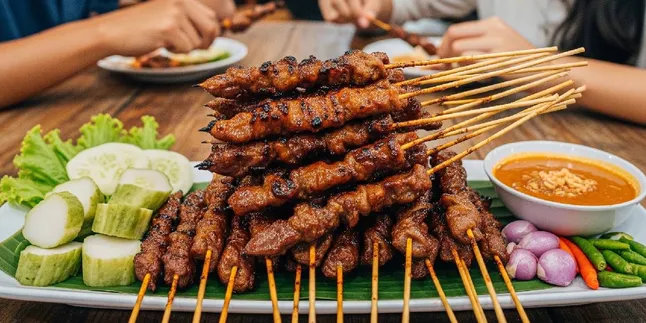
Looking for maranggi satay in Kemang? Here is a list of dining places around South Jakarta with menu options, prices, locations, and opening hours.

Recommendations for Chinese dramas about swapped children with stories full of family secrets, identity quests, and revealed past conflicts.
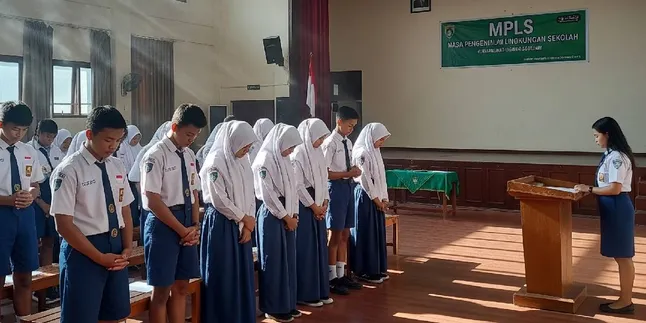
Check out 8 original examples of opening prayers for MPLS for Islam and Christianity as references to welcome new students in the new academic year.
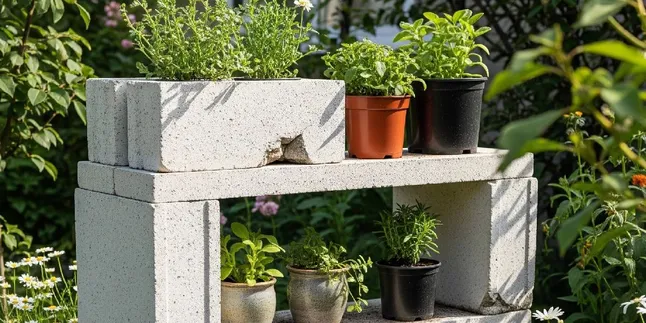
Used hebel can be repurposed into a strong and aesthetic plant pot rack. Check out the tools needed and the steps for making it from start to finish.

A list of Korean dramas about mafia falling in love that combines conflicts of the criminal world, action, and the emotional relationships of the characters.
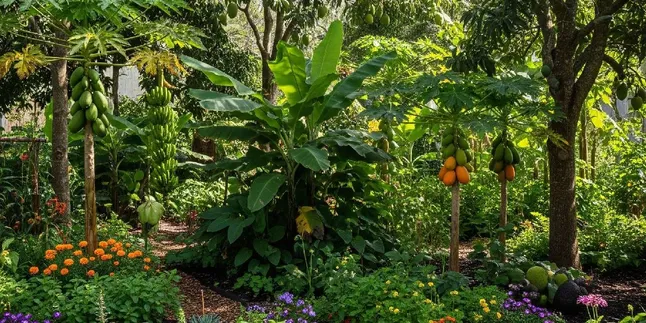
Creating a tropical food forest requires a combination of mutually supportive plants. Get to know 10 types of plants that can help maintain garden productivity throughout the year.
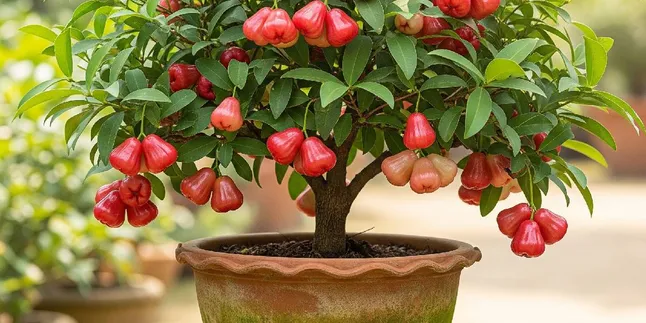
Limited land is no longer an obstacle to planting fruit trees. Here are 10 types of fruit plants that can be kept short yet remain productive.
