

 Follow
 Rekomendasi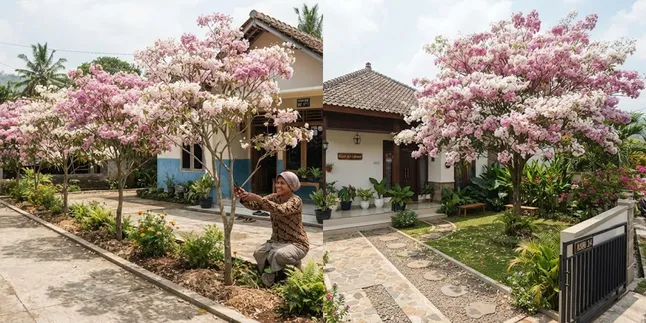
8 Ways to Care for Tabebuya to Encourage Frequent Flowering, Let's Try Planting It at Home to Make It Look Beautiful and Aesthetic
Discover effective ways to care for the Tabebuya tree to encourage frequent flowering with these eight easy steps.
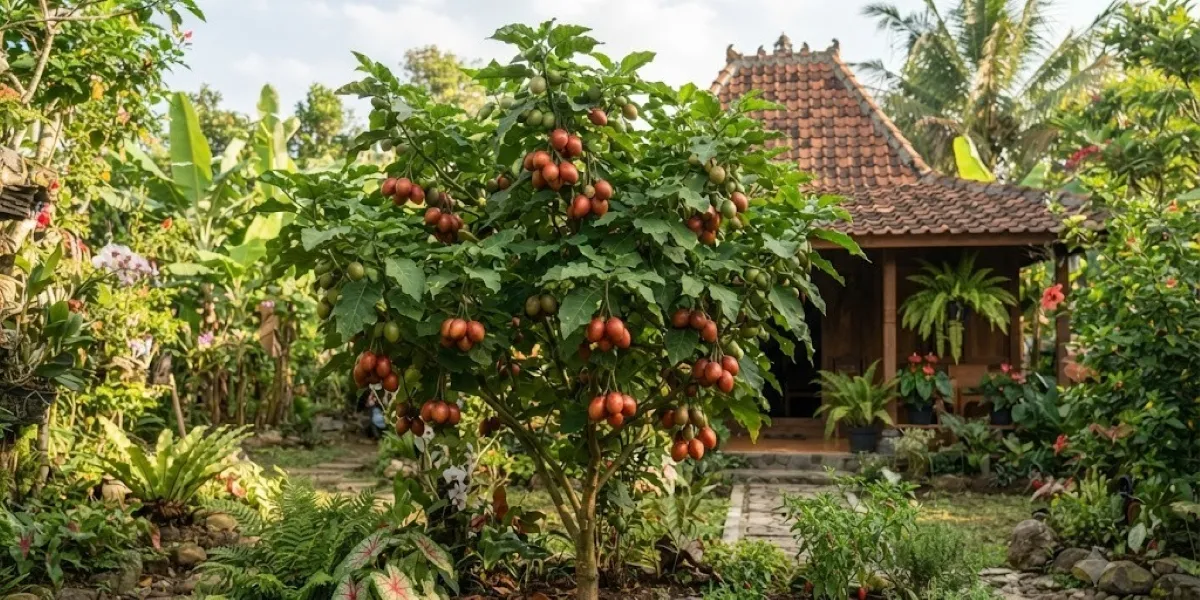
Kapanlagi.com - Tamarillo, also known as the tree tomato, is an exotic fruit that captivates with its unique egg-like shape with a pointed end. Its skin color varies, ranging from red, yellow, to orange when ripe, adding to its appeal. Although its name suggests origins from Europe, this fruit actually comes from the Andes Mountains in Latin America. In Indonesia, Tamarillo began to be cultivated by the Dutch since 1941, particularly in the Bogor area of West Java.
This fruit belongs to the nightshade family (Solanaceae), just like tomatoes and potatoes. Tamarillo offers a refreshing blend of sweet and sour flavors, and is rich in essential nutrients. Its vitamin C, vitamin A, and antioxidant content make it an excellent choice for maintaining immune health, eye health, and helping to prevent various diseases.
Seeing the benefits and appeal of this fruit, more and more people are interested in cultivating it themselves. The good news is that growing Tamarillo in your home garden is not difficult and can even become a promising business opportunity. Check out the complete guide below, summarized by Kapanlagi.com from various sources on Tuesday (11/8/2026).
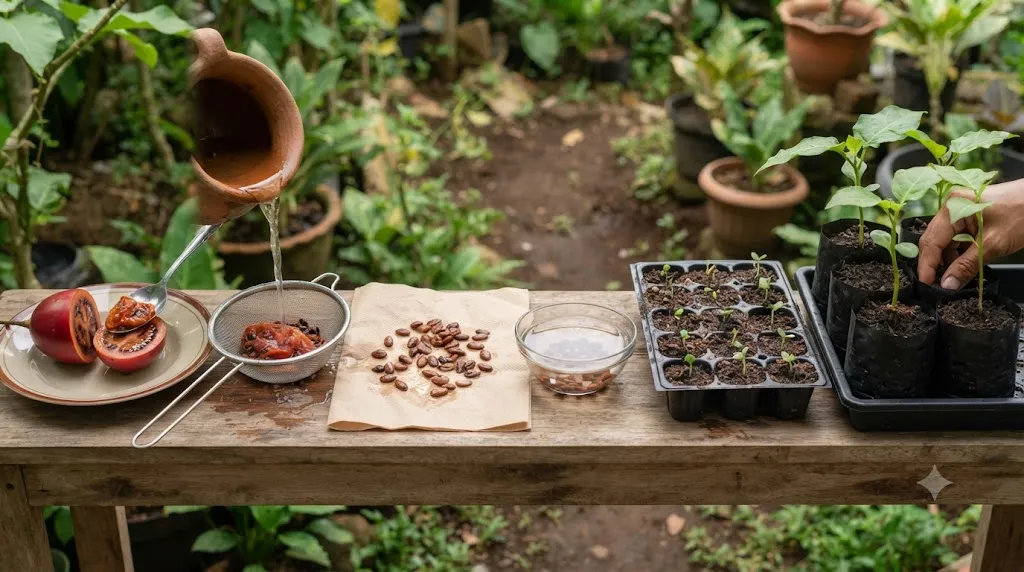
Choosing Superior Seedlings of Dutch Eggplant. (AI Generated)
The crucial first step in cultivating Dutch Eggplant is ensuring the selection of quality seeds. You can obtain seeds from ripe Dutch Eggplant fruit or buy ready-to-plant seeds available at the nearest agricultural store. Superior quality seeds generally have a purity level of about 90% and a germination rate of up to 85%.
If you choose to use seeds, the initial process is to clean the seeds from the flesh of the fruit that adheres, then dry them until completely dry. To speed up the germination process, the seeds can be soaked in a saltwater solution. After the soaking and sowing process, the seeds will usually start to germinate within 2 to 3 weeks.
Seeds that have germinated and show early growth can be transferred to polybags for further growth. This stage is ideally done after the seeds are about 1.5 months old or when they already have several leaves. Choosing strong and healthy seeds from the start will greatly influence the overall growth of the plants later on.
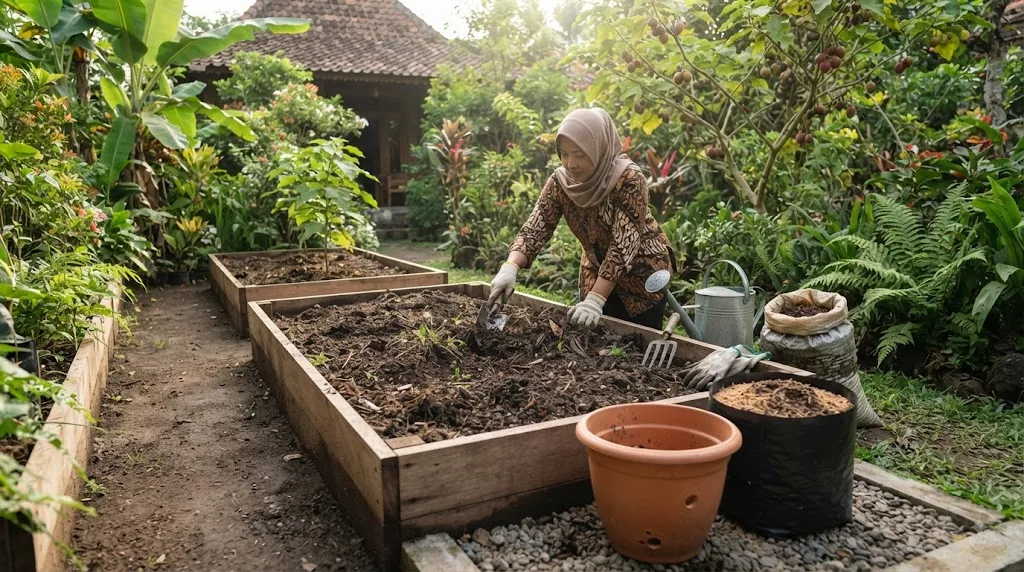
Planting Media for Dutch Eggplant. (AI Generated)
Dutch Eggplant requires specific planting media conditions to grow optimally and produce abundant fruit. The type of soil most favored by this plant is loose, fertile soil rich in organic matter. Additionally, a soil pH level of around 5-6 also greatly supports the growth of Dutch Eggplant.
For planting in the yard, the land needs to be well prepared. Start by clearing the area of weeds and branches that may hinder growth. Next, create raised beds approximately 40 cm high and 120 cm wide. It is also important to leave a distance of about 50 cm between the beds, which serves as a drainage channel to prevent waterlogging. Once the beds are formed, perform initial fertilization using compost or inorganic fertilizer, then let it sit for a full day to allow the fertilizer to seep in.
For those with limited land, Dutch Eggplant can still be cultivated in medium-sized pots or polybags. The planting media in pots can be made from a mixture of loose soil, compost, and rice husk. Ensure that the pots or polybags used have adequate drainage holes at the bottom to prevent water accumulation that could damage the plant roots.
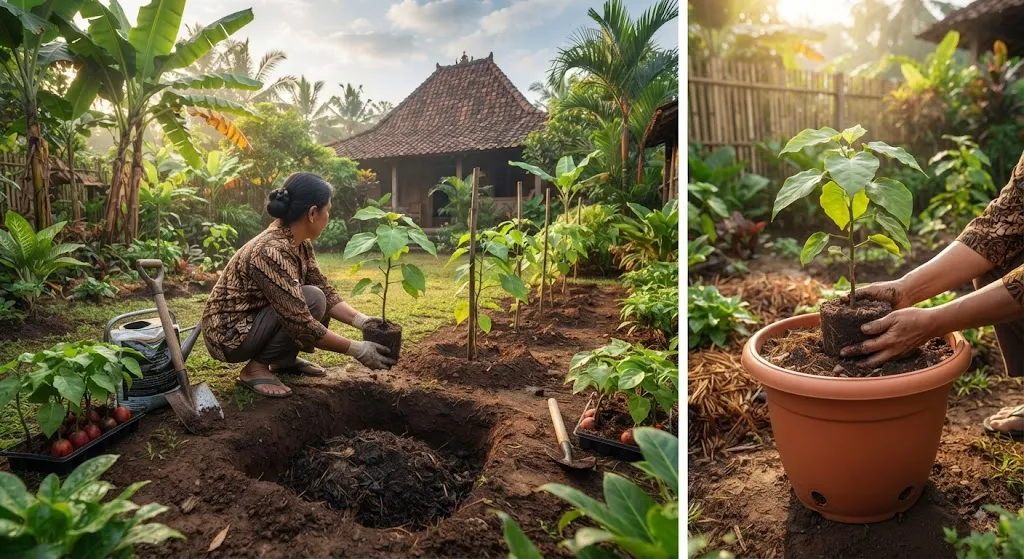
Techniques for Planting Tamarillo Seedlings. (AI Generated)
The process of planting Dutch Eggplant seedlings should be done at the right time to reduce stress on the plants and ensure good adaptation. Morning or evening is the most ideal time to plant seedlings, avoiding the harsh midday sun. Create planting holes with a depth of about 30 to 50 cm.
If planting in open land, the ideal planting distance between seedlings is 1.5 to 2 meters. This distance is important so that each plant receives adequate sunlight exposure and has space to grow. Before planting the seedlings, add 20 to 25 kg of manure to each planting hole, then let it sit for 10 to 15 days.
After the manure incubation period is complete, place the Dutch Eggplant seedlings into the planting holes and cover them back with excavated soil. For pot planting, fill the planting media to half the pot, place the seedling in the center, then add planting media up to 2 cm below the rim of the pot and compact it slightly to ensure the seedling is stable.
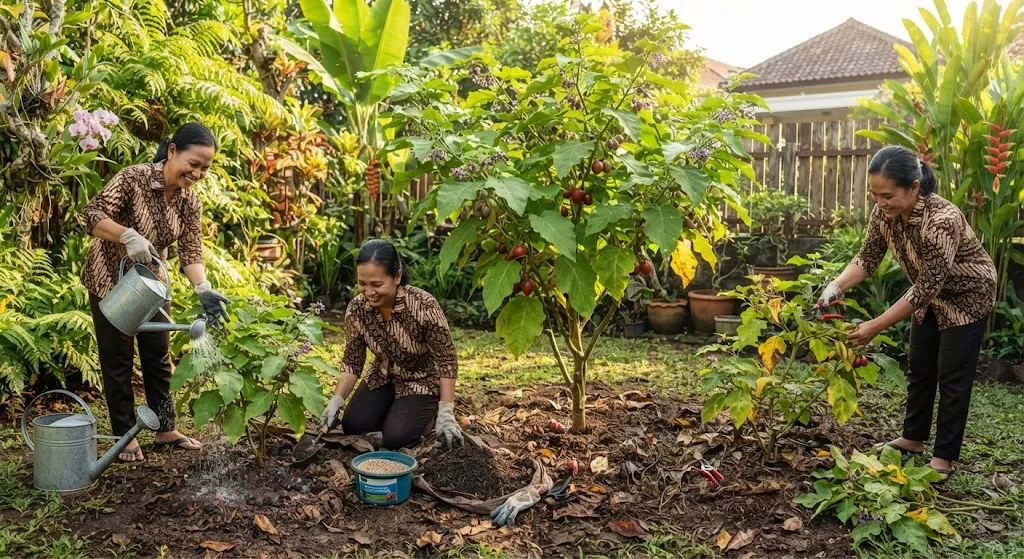
Routine Care for Eggplant. (AI Generated)
Routine care is the key to successful tamarillo cultivation. This includes regular watering, fertilization, and pruning. Watering should be done 1 to 2 times a day, adjusted according to soil moisture conditions, considering that tamarillo is not tolerant of waterlogging. The frequency of watering can be reduced once the plants start to flower.
Fertilization can be done once a month using organic fertilizer or balanced NPK fertilizer to support growth. Subsequent fertilization with manure, urea, TSP, and KCl is also recommended when the plants are 7-8 days old after planting and when the plants begin to enter the flowering phase. The use of compost regularly and natural pest control is highly recommended for tropical fruit plants like this tamarillo.
Periodically pruning wild shoots and old leaves is an important practice to stimulate branching and focus nutrients more on fruit formation. Pruning also helps control the height of the plants to prevent them from becoming too tall. Additionally, tamarillo plants require a minimum of 6 hours of direct sunlight per day to grow and fruit optimally.
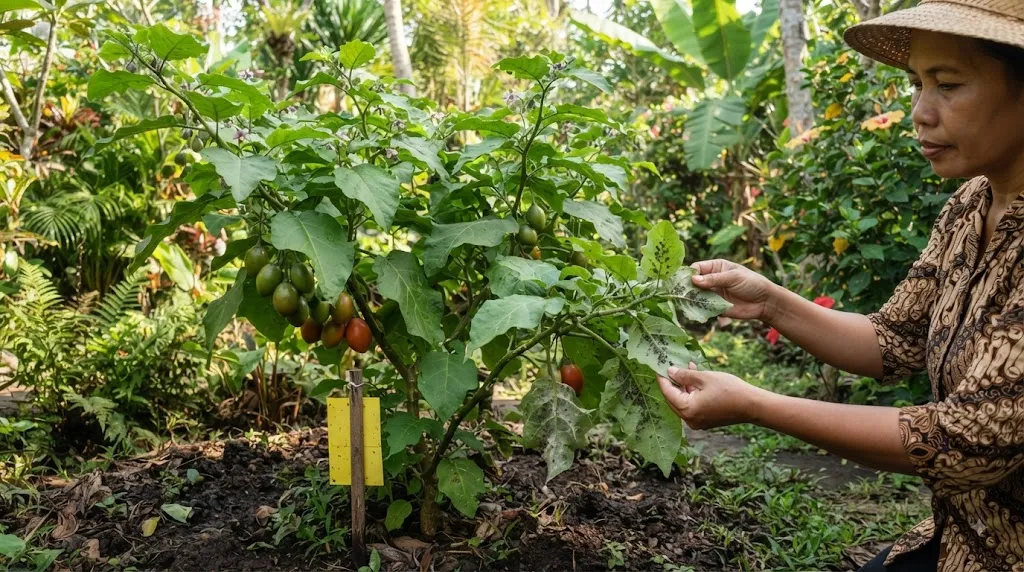
Dealing with Pests and Plant Diseases. (AI Generated)
Eggplant plants, like other cultivated plants, are susceptible to pest and disease attacks that can disrupt growth and fruit quality. Common pests found attacking this plant include aphids or leaf lice. Meanwhile, common diseases to watch out for include root rot, caused by the fungus Verticillium Alboatrum, and leaf rust triggered by Phomopsis Vexan.
Regular and careful inspection of plants is essential to detect signs of pest and disease attacks early. Prevention is the best step that can be taken, for example, by using pest traps or selecting eggplant varieties known to be resistant to certain diseases.
If pest or disease attacks are already severe and cannot be managed with preventive methods, the use of pesticides may be a solution. However, always ensure to use pesticides at the correct dosage and according to recommendations to avoid harming the plants or the environment.
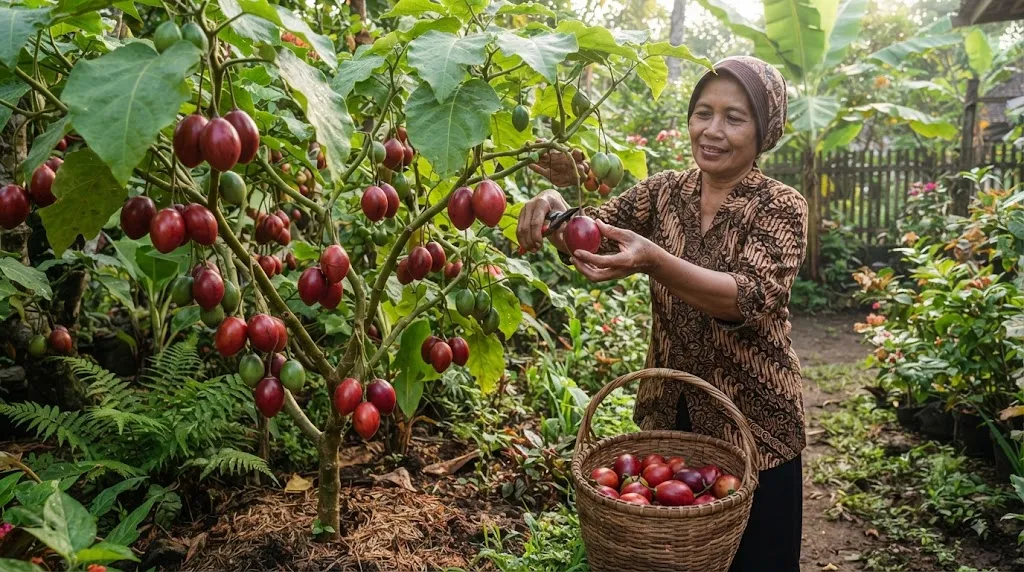
Harvesting the Results of the Dutch Eggplant. (AI Generated)
Patience is key when waiting for the harvest of the Dutch eggplant. Generally, this plant starts to bear fruit after 1.5 to 2 years from planting if grown from seeds. However, some reports also mention that harvesting can be done earlier, after 4 months or 10 months after planting, depending on the variety and environmental conditions.
The Dutch eggplant is ready to be harvested when its color has changed from green to red or reddish-purple, according to its variety characteristics. Another sign that the fruit is ripe is its bright and fresh-looking skin. Harvesting should be done carefully, by picking the fruit stem, to avoid damaging the plant's stem, which can disrupt future production.
The best time to harvest is in the morning or late afternoon, avoiding the scorching sun that can cause the fruit's skin to wrinkle quickly. After harvesting, the fruit can be stored in a clean container. It is important to note that ripe fruit that is picked and stored at room temperature can only last five to six days before its skin starts to bruise and rot.
(kpl/rao)
Cobain For You Page (FYP) Yang kamu suka ada di sini,
lihat isinya
Discover effective ways to care for the Tabebuya tree to encourage frequent flowering with these eight easy steps.

Transform your life to be more successful through these 12 magical micro habits. Starting with small, routine habits, your dreams can become a reality quickly.
Discover 6 best drinks for brain health that you can consume every day.

Liking to compare others can reflect certain character traits. Recognize 8 characters of people who like to compare others according to psychology.

Paper towels are often used for cleaning, but there are several items that should not be cleaned with paper towels. Check out the explanation here.
Keeping croton stunning on a porch exposed to scorching heat requires special strategies. Learn how to care for croton so that its leaves remain bright and not burnt, from watering to protection.

Explore the challenging world of journalism through recommendations for movies about journalists. From investigating major scandals to ethical dilemmas, witness their struggles to uncover the truth.
Plants that make homes cooler can serve as natural shade while making the yard feel more lush and comfortable.
How to plant red onions without extensive land is now easier to do at home, utilizing various innovative methods for abundant harvests.
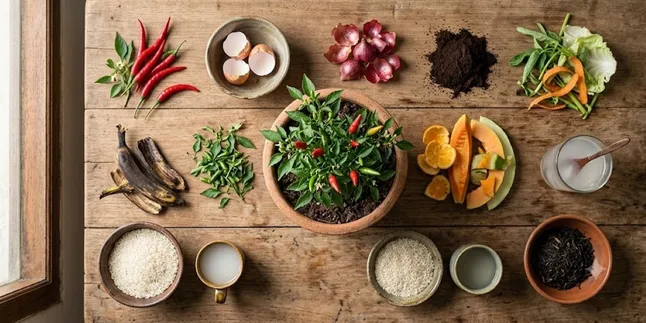
Check out 10 kitchen ingredients that can be used to care for chili plants to help them grow lush and bear fruit abundantly naturally.

The South Korean entertainment industry is increasingly enriching its works by adapting popular series from various countries, presenting familiar stories with a captivating Korean touch.

Discover 7 touching Indonesian films about firstborn children, depicting their struggles and strength in facing various challenges.
