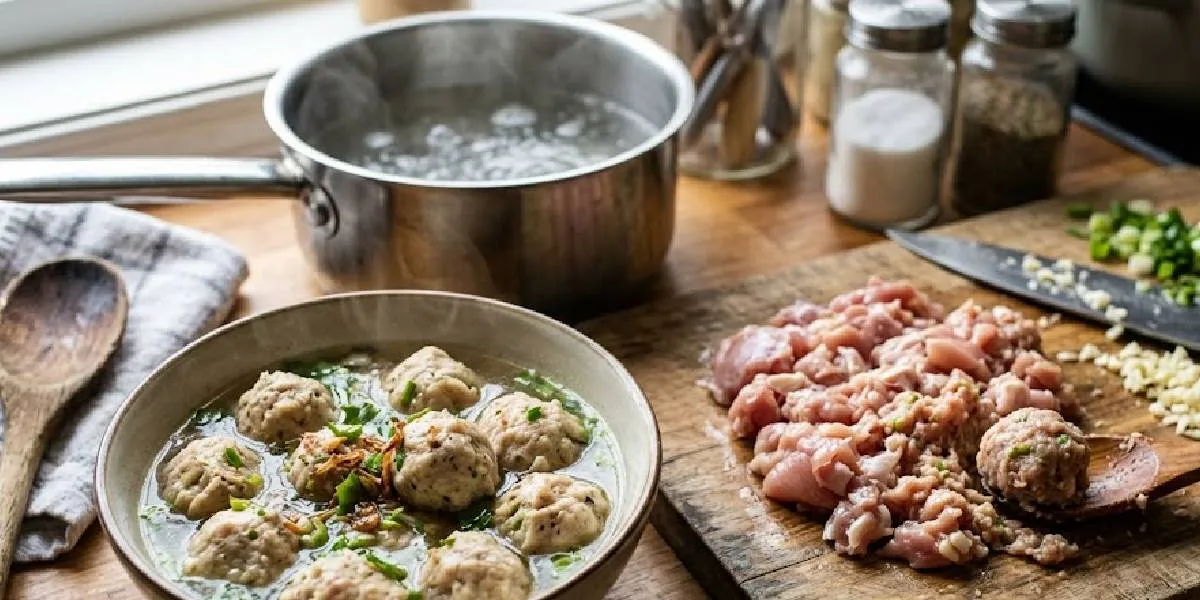
Kapanlagi.com - Making chicken meatballs without a blender can still be done at home with the right manual techniques. Without the help of a grinding machine, chicken meat can be processed using methods such as double chopping, frozen grating, and pounding techniques to achieve a chewy dough texture.
Many people believe that meatballs with a dense and elastic texture require special tools. In fact, the manual process allows for more controlled meat processing, from maintaining the dough temperature to adjusting the fineness of the meat.
The main key in how to make chicken meatballs without a blender lies in the selection of ingredients, the use of ice cubes, and the process of processing the meat protein to keep it cohesive. This method can also be an option for those who want to make homemade meatballs without relying on electricity or grinding machines.
1. Preparation of Ingredients and Techniques for Frozen Meat for Chicken Meatballs
To make manual chicken meatballs, the main ingredient needed is 500 grams of chicken breast fillet. The meat can be used in a semi-frozen state for the chopping method or fully frozen if using the grating technique.
In addition to chicken meat, prepare 1 cold egg white from the refrigerator, 120 grams of crushed ice turned into small flakes, and seasonings consisting of 3 cloves of fried garlic and 3 cloves of fried shallots that have been ground.
Other additional ingredients consist of 1 teaspoon of baking powder, 2 teaspoons of coarse salt, 1 teaspoon of granulated sugar, 1/2 teaspoon of ground pepper, 1 teaspoon of mushroom/chicken broth powder, and 100 grams of tapioca flour or starch.
One method that can be used to make chicken meatballs without a blender is the frozen grating technique. This method involves freezing the chicken meat, especially the breast part, until its texture is hard before grating it using a regular cheese grater.
The grated meat will turn into thin and fine flakes, making it easier to mix with the flour and seasonings. The condition of the meat being still cold also helps maintain the temperature of the mixture during the meatball-making process.
2. Choosing Chicken Parts to Ensure Meatballs Don't Dry Out
The choice of chicken parts also determines the final result of the meatballs. For manual techniques, a combination of chicken breast and chicken thigh is recommended because they have different characteristics.
Chicken breast provides a firmer structure, a clean white color, and dense meat fibers. However, this part has a lower fat content, so it needs to be combined with other chicken parts to prevent the result from feeling dry.
Chicken thighs have a higher fat and natural collagen content. This part helps provide a savory flavor and makes the texture of the meatballs softer.
Chicken skin can also be utilized in the mixture. If finely chopped until it turns into a paste, chicken skin acts as a natural fat emulsifier that helps produce meatballs with a moister texture.
The recommended ratio is 70% chicken breast and 30% chicken thigh along with the skin. When using manual techniques, the hard tendons or white tendons on the chicken legs should be removed as they are difficult to break down without machine assistance and can disrupt the texture of the meatballs.
3. Stages of Manually Processing Chicken Meatball Dough
Once the ingredients are ready, the preparation process begins by preparing the chicken meat. If not using the frozen grating method, use the double chopping technique by placing half-frozen chicken meat on a sturdy wooden cutting board.
The meat is chopped using two large knives, if available, with repeated crisscrossing motions until the texture is finer. The finer the initial chop, the smoother the surface of the resulting meatballs.
The next stage is to grind the meat using a large stone mortar. Add coarse salt and then pound the meat with a circular and pressing motion until it turns into a sticky pale pink paste.
This pounding process is done to release the meat proteins and help form a cohesive dough. After that, gradually add ice flakes while continuing to pound or stir vigorously using a wooden spoon.
The addition of ice flakes serves to keep the dough temperature cool during the processing. The meat will absorb the ice water and change to a softer texture like thick porridge.
4. Further Steps to Form a Chewy Chicken Meatball Texture
After the meat has turned into a softer dough, add finely ground fried garlic, finely ground fried shallots, ground pepper, granulated sugar, broth powder, and egg whites. All these ingredients need to be mixed quickly until well combined.
The egg whites act as an additional binder in the dough. The albumin content in the egg whites helps form a gel structure when the meatballs are heated, making the dough more cohesive and less likely to crumble.
Next, gradually add tapioca flour and baking powder. The mixing process can be done by hand with the help of plastic gloves to prevent the heat from the hands from directly transferring to the dough.
The dough should be mixed just until the ingredients are evenly combined. Over-kneading after the flour is added can make the meatball texture tough or too hard like rubber.
One important step in making chicken meatballs without a blender is the slapping technique. Take the entire dough, lift it about 30 cm high, and then slam it down hard into the bowl.
This motion should be repeated 20-30 times. This process aims to compact the meat fibers while reducing trapped air in the dough so that the meatballs do not have cavities.
5. The Process of Boiling Until the Chicken Meatballs are Perfectly Cooked
Once the dough is ready, move on to the molding stage. First, bring water to a boil in a large pot, then turn off the heat before adding the meatballs.
Boiling water is not recommended for use as it can cause the surface of the meatballs to crack during cooking. Your hands can be lightly oiled or dipped in ice water to prevent the dough from sticking when shaped.
Take some dough, grip it, and then press it out between your thumb and index finger. Shape it into a ball using a spoon, then place it into the hot water.
Once all the dough has been shaped, turn the stove back on to a low to medium heat. The meatballs are cooked slowly until they float.
When they start to float, let the meatballs remain in the boiling water for 3-5 minutes to ensure the center is perfectly cooked.
The final stage is the cold shocking process. The cooked meatballs need to be lifted out and immediately placed into a container filled with ice water and ice cubes.
The rapid change in temperature helps lock in the texture of the meatballs and makes their color appear brighter and not dull.
6. Mistakes to Watch Out for When Making Manual Chicken Meatballs
In the method of making chicken meatballs without a blender, several failures usually occur due to small mistakes during the processing. One of them is the dough being too soft, making it difficult to shape.
This condition can occur due to the use of too much ice or eggs. If the dough is too runny, add a little tapioca flour, a maximum of 1 tablespoon, or store the dough in the freezer for 15 minutes before shaping.
Another common problem is that the meatballs break when boiled. The cause is usually that the water temperature is too high, boiling vigorously.
To prevent this, use hot water with the flame turned off during the shaping stage, then cook slowly over low heat.
The taste of the meatballs can also be bland because the cold temperature makes the seasoning flavor more subdued. The raw dough should have a slightly stronger seasoning aroma than the desired final taste because some flavor will dissolve into the boiling water.
Meanwhile, the texture of the meatballs being dry or feeling tough can be caused by a lack of fat content. If using 100% chicken breast, adding about 1-2 tablespoons of cooking oil can help lubricate the fibers in the dough.
7. How to Store Chicken Meatballs and Serving Ideas
Manual chicken meatballs can be made into frozen food stock after going through the ice water soaking process. Before storing, the meatballs need to be drained until they are completely dry from any remaining water.
Store the meatballs in an airtight container or vacuum-sealed plastic. With this storage method, the meatballs can last up to 2-3 months in the freezer.
For serving, chicken meatballs can be processed into various dishes. The texture of the meatballs, which is slightly coarser compared to the factory-produced version, makes them suitable for grilling with soy sauce seasoning because the micro-porous surface of the meatballs absorbs the marinade more easily.
If served as meatball soup, this dish can be complemented with clear broth made from boiling chicken bones, topped with fried shallots, and fresh celery.
In the process of making chicken meatballs without a blender, using simple tools like a knife, grater, or mortar can still produce homemade meatballs with the desired texture and taste. Cold temperatures during processing are one of the factors to consider to keep the dough stable.
Questions regarding the use of ice cubes are also related to the process of maintaining dough quality. Ice cubes are used to keep the meat temperature cold, which is below 14°C during the chopping and manual kneading process. This condition helps prevent fat from melting and protein from degrading, which can make the meatballs soft and less chewy.
The use of tapioca flour is also not recommended to be completely replaced with wheat flour. Tapioca flour or starch plays a role in providing a bouncy texture to meatballs, while wheat flour can make the final result denser and resemble the texture of bread or donuts.
The kneading and pounding of the dough should ideally be done for about 10-15 minutes until the dough feels smooth, cohesive, and its surface appears shiny. A sign that the dough is ready to use is when a small piece of dough is pulled, its texture feels elastic and does not easily break.
Meatballs that become hard after cooling are usually caused by an excessive amount of flour compared to meat, with a flour-to-meat ratio exceeding 1:4. Boiling for too long or overcooking can also make the texture of the meatballs harder.
In addition, the use of baking powder in the recipe helps to avoid meatballs that are too dense. Meanwhile, egg whites help bind the meat and water particles so that the structure of the meatballs remains cohesive after the heating process.
(kpl/mda)
Disclaimer: This translation from Bahasa Indonesia to English has been generated by Artificial Intelligence.


 Follow
 Rekomendasi