Kapanlagi.com - The scale that sticks to the iron often makes the ironing process less comfortable. In addition to causing the soleplate to feel sticky, the scale can also leave stains on clothes and hinder steam output on steam irons. The method for cleaning iron scale can actually be done at home using simple ingredients that are easy to find.
Scale usually forms due to burnt fabric residue, fabric softener residue, or mineral deposits from the water used in steam irons. If allowed to accumulate, the performance of the iron can decline, causing heat to become uneven and resulting in less than optimal ironing results.
Several clothing care experts also mention that a dirty soleplate poses a risk of snagging fabric, clogging steam holes, and leaving marks on clean clothes. Therefore, regularly cleaning the iron is one important step to keep the appliance durable.
1. Household Materials That Can Be Used to Clean Iron Residue
Before deciding to replace your iron, it’s worth trying to clean it using materials readily available in your kitchen. In addition to being easy to find, these materials are relatively economical and do not leave harsh chemical residues when used on a cooled iron that is unplugged.
According to Real Homes, the bottom of the iron can become sticky, while limescale can also escape through the steam holes and stick to the soleplate. Therefore, keeping the iron's surface clean is an important part of routine maintenance.
One simple method is to use coarse salt. Heat the iron to medium temperature without activating the steam, sprinkle salt on a sheet of newspaper, and then rub the soleplate in a circular motion. Once the residue begins to lift, wipe away the remaining salt using a dry cloth.
Another option is white vinegar. Mix vinegar and water in a 1:1 ratio, spray it on the cooled soleplate, and let it sit for about five to ten minutes. After the residue softens, scrub with a microfiber cloth and then wipe dry.
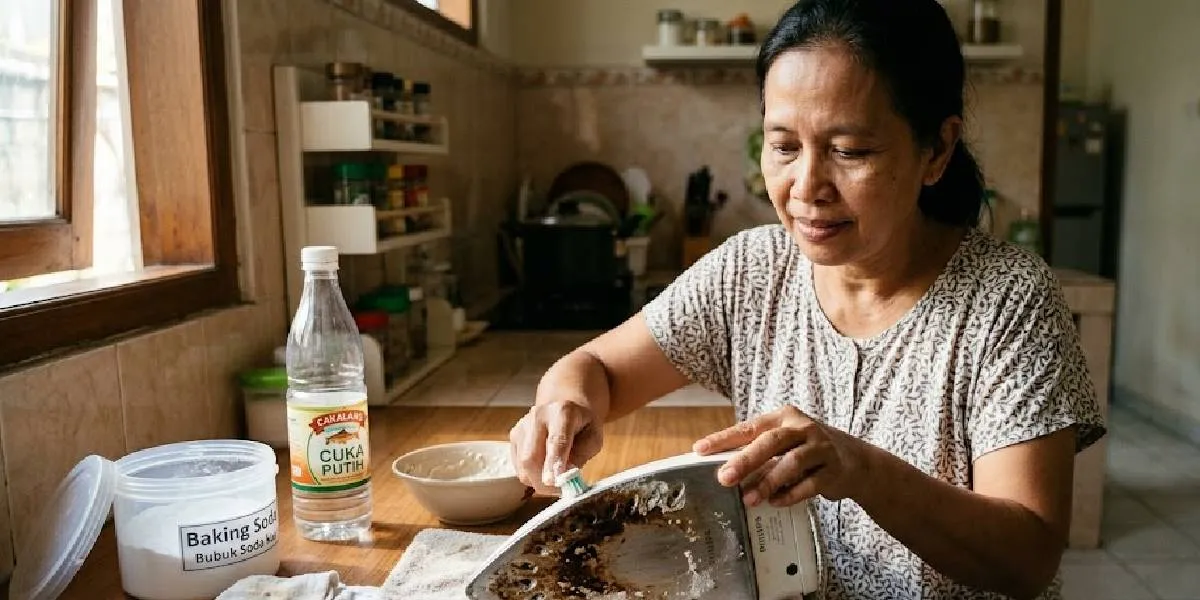
For more stubborn residue, make a paste from two parts baking soda and one part distilled water. According to Merry Maids, the use of distilled water helps prevent the formation of new mineral deposits. Apply the paste to the soleplate of the iron, gently rub with a soft cloth, then clean with a slightly damp cloth.
Non-gel white toothpaste can also be utilized. Apply a thin layer to the crusty areas, then scrub using a soft cloth or an old toothbrush in a circular motion. Once the stains start to lift, wipe away the residue with a damp cloth.
If the cause of the crust is from oil or detergent residue, use dish soap. Just drop it on the cooled soleplate, scrub with a soft sponge, then wipe until clean.
Another alternative is to mix lime juice and baking soda to form a paste. Apply it to the crusty areas, let it sit for about five minutes, then gently scrub before cleaning with a damp cloth.
Ideal Home also mentions that a mixture of two tablespoons of baking soda and one tablespoon of water can help remove stubborn brown stains on the iron's surface.
2. Cleaning Residue on Steam Irons the Right Way
Unlike scorch stains on the surface of the soleplate, limescale in steam irons forms inside the tank and steam channels. Therefore, cleaning also needs to be focused on the interior to ensure the steam flow is smooth again.
According to Rowenta, mineral deposits from tap water will continue to accumulate over time, reducing steam output and potentially leaving stains on clothing. Meanwhile, the guide from Braun Household mentions that the appearance of brown spots, white residue on clothes, or a crackling sound when the iron is heated are signs that the device needs to be cleaned immediately.
If the iron has a self-clean feature, make use of that function regularly. Russell Hobbs suggests filling the water tank to the maximum limit, heating the iron to the highest temperature, and then activating the self-cleaning feature about once a month. After unplugging, hold the iron over the sink, press the scale cleaner button, and then gently shake it until water, steam, and scale come out through the steam holes.
Clogged steam holes can be cleaned using a cotton bud or toothpick dipped in vinegar. Airtasker reminds not to use sharp metal objects as they can damage the soleplate surface and steam channels.
Another method is to rinse the tank using a mixture of white vinegar and water in a 1:1 ratio. Heat the iron, press the steam button for about 20–30 seconds several times, then empty the tank and rinse again with clean water to ensure no vinegar smell remains.
For irons equipped with anti-calc or Quick Calc systems, remove the scale collection container, empty its contents, rinse until clean, dry, and then reassemble according to the instructions.
Quoting Real Homes, the cleaning of the iron should ideally be done about once a month, depending on how often the device is used. An iron that starts to feel heavier during use may also be a sign of scale buildup inside.
3. Causes of Iron Residue and Prevention Steps
Cleaning the buildup is indeed important, but preventing its occurrence from the start will make maintenance easier. Buildup generally comes from excessively high temperatures, fabric softener residues, sticking detergents, tap water that contains many minerals, and the habit of ironing directly on prints.
Household appliance care experts also remind that an iron that has started to release brown water or has severe blockages should be checked by a technician to avoid more serious damage.
To reduce the risk of buildup formation, adjust the temperature according to the type of fabric being ironed and avoid using maximum temperatures on synthetic materials or silk. After use, get into the habit of wiping the soleplate when it is cool to prevent residue from hardening.
For steam irons, using distilled water or demineralized water can help reduce the buildup of limescale in the tank. Don't forget to empty the water tank after use so that water does not settle for too long.
Additionally, avoid ironing directly on printed or plastic materials. Turn the clothing inside out or use a thin protective cloth so that the soleplate does not come into contact with materials that can easily melt.
Store the iron in an upright position in a dry place to maintain the condition of the soleplate. Regular cleaning is also recommended over waiting until the buildup turns black and becomes difficult to remove.
With routine maintenance, buildup on the iron can be more easily controlled, ensuring that the soleplate remains smooth, steam bursts operate normally, and ironing results stay neat. Simple materials available at home are also sufficient to help maintain the iron's performance without having to spend a lot of money on new tools.
(kpl/mda)
Disclaimer: This translation from Bahasa Indonesia to English has been generated by Artificial Intelligence.


 Follow
 Rekomendasi