Kapanlagi.com - Growing spinach at home does not always require special pots or a large yard. The method of growing spinach in used plastic jars can be a practical alternative for anyone who wants to have a simple vegetable garden while also utilizing household plastic waste.
This method is suitable for beginners as it does not require complicated equipment. As long as the growing medium, watering, and sunlight needs are met, spinach can grow well and be ready for harvest in a relatively short time.
1. Starting Spinach Planting with Used Plastic Jars
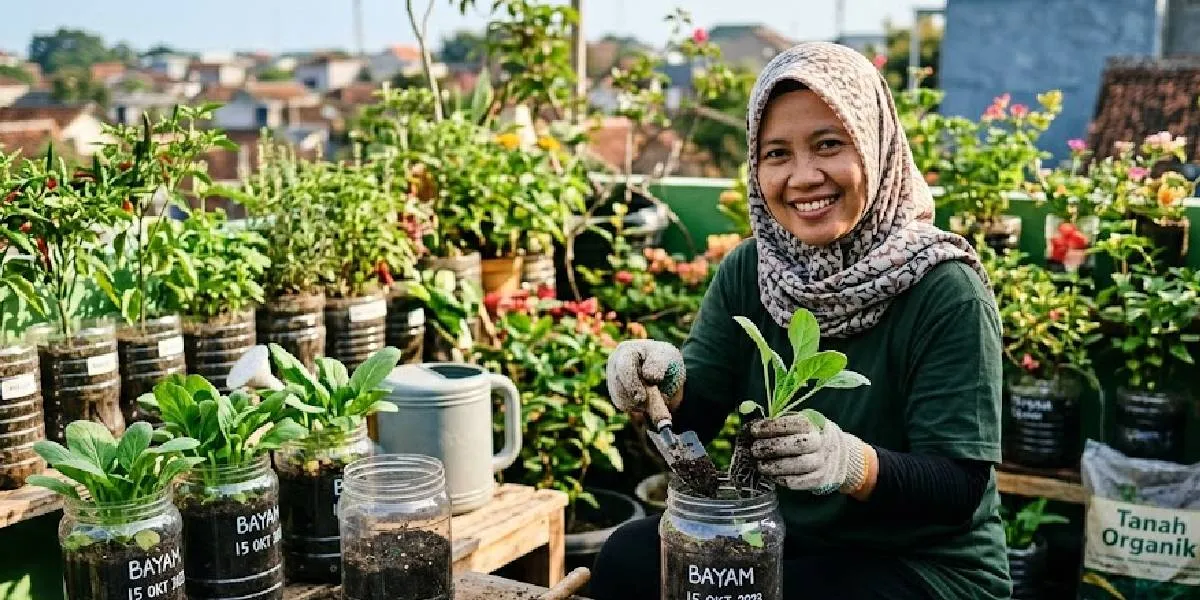
The first step is to choose a used plastic jar that is still suitable for use. Containers from snacks, biscuits, or other foods can be utilized as long as they are still sturdy, not cracked, and deep enough to support the growth of spinach roots.
Before use, clean the jar thoroughly to ensure it is free from any residue of oil, sugar, or other food substances. Washing with soap, followed by rinsing and drying until completely dry, is important to reduce the risk of mold and bacteria growth that can harm the plants.
Using used plastic jars not only helps save gardening costs but also serves as a way to reduce household plastic waste by utilizing available items.
The next step is to create drainage holes at the bottom of the jar using a soldering iron, a heated nail, or a small drill. These holes serve as a pathway for water to exit every time watering is done.
Good drainage helps maintain the moisture of the planting medium in balance. If water accumulates, the roots may lack oxygen, rot, and become more susceptible to mold and diseases, especially in the early stages of growth.
In addition to the bottom, several small holes can also be made on the lower sides of the jar as additional outlets, especially if watering is done in sufficient amounts.
2. Preparing Planting Media and Sowing Seeds
The success of planting spinach is also determined by the quality of the planting media. Use a mixture of loose soil, well-matured compost or manure, and burned rice husks in a balanced composition to keep the media fertile while providing good drainage.
Fill the planting media, leaving about two to three centimeters of space from the rim of the jar. This space is useful to prevent the soil from overflowing during watering. Avoid overly compact media as it can hinder root growth and reduce air circulation.
If available, add a little dolomite or charcoal from rice husks to help maintain pH balance while increasing the porosity of the planting media, making it easier for the seeds to germinate.
Before sowing the seeds, moisten the planting media evenly using a fine-holed watering can or sprayer. This method helps keep the soil surface tidy and creates ideal conditions for the seeds.
Media that is too dry can slow down germination, while media that is too wet risks causing the seeds to rot before they grow. After the initial watering, let it sit for a few minutes to allow the water to absorb well.
Sow the spinach seeds evenly without overcrowding. Adequate spacing helps each plant receive light, nutrients, and water more optimally, resulting in more uniform growth. The use of fresh seeds also increases the chances of germination.
If desired, the seeds can be soaked briefly in warm water before planting to help expedite the germination process.
After the seeds are spread, cover them with a thin layer of planting medium about half to one centimeter thick. A layer that is too thick can hinder the seeds from breaking through the soil surface, while a layer that is too thin makes the seeds prone to being washed away during watering.
3. Care Until Spinach is Ready to Harvest
A jar containing spinach should be placed in an area that receives sunlight for about four to six hours each day for optimal photosynthesis.
If the location of the house receives limited light, the container can be periodically moved to follow the direction of incoming sunlight. Plants that lack light usually have taller but weaker stems, while their leaves tend to be small and pale.
Watering should be done regularly according to weather conditions. During the dry season, it is generally done every morning and evening, while in the rainy season, the frequency can be adjusted based on the moisture of the planting medium.
Use enough water until the medium feels moist without causing puddles. Spraying with a fine mist is more recommended than pouring a large amount of water directly.
When the plants reach about two weeks of age, provide additional nutrients in the form of compost, liquid organic fertilizer, or NPK fertilizer at a light dose. Fertilization should be done gradually according to the needs of the plants to avoid yellowing leaves or unbalanced growth.
The next care is to remove weeds growing around the spinach so they do not take nutrients from the planting medium. Leaves that begin to yellow or are damaged should also be pruned regularly to maintain plant health.
If the seedlings are growing too closely, thinning should be done when the plants have several leaves. Leave the healthiest plants so that each has adequate space to grow, light, water, and nutrients. Seedlings from thinning can still be moved to another container as long as their roots are not too long.
Spinach is generally ready to be harvested at around 25–35 days after planting or when it reaches a height of about 20–30 centimeters. At this stage, the leaves are still young, fresh, and have good quality for consumption.
Harvesting can be done by pulling out the entire plant along with its roots or cutting the stem a few centimeters above the surface of the growing medium so that in some types of spinach, new shoots can grow.
With consistent care from the beginning, used plastic jars can become an effective growing medium to produce healthy and fresh spinach even when planted in limited spaces.
Moreover, the best growing medium for spinach still relies on a mixture of loose soil, compost or well-rotted manure, and burnt rice husks to ensure the plants receive nutrients as well as good drainage. Watering is generally done once or twice a day depending on weather conditions and moisture of the medium, while ideal sunlight exposure ranges from four to six hours each day.
(kpl/mda)
Disclaimer: This translation from Bahasa Indonesia to English has been generated by Artificial Intelligence.


 Follow
 Rekomendasi