Kapanlagi.com - Plastic waste from households is one of the wastes that continually arises in daily activities. Although it is difficult to decompose, various plastic packaging can actually be reused to create a mini vegetable garden at home.
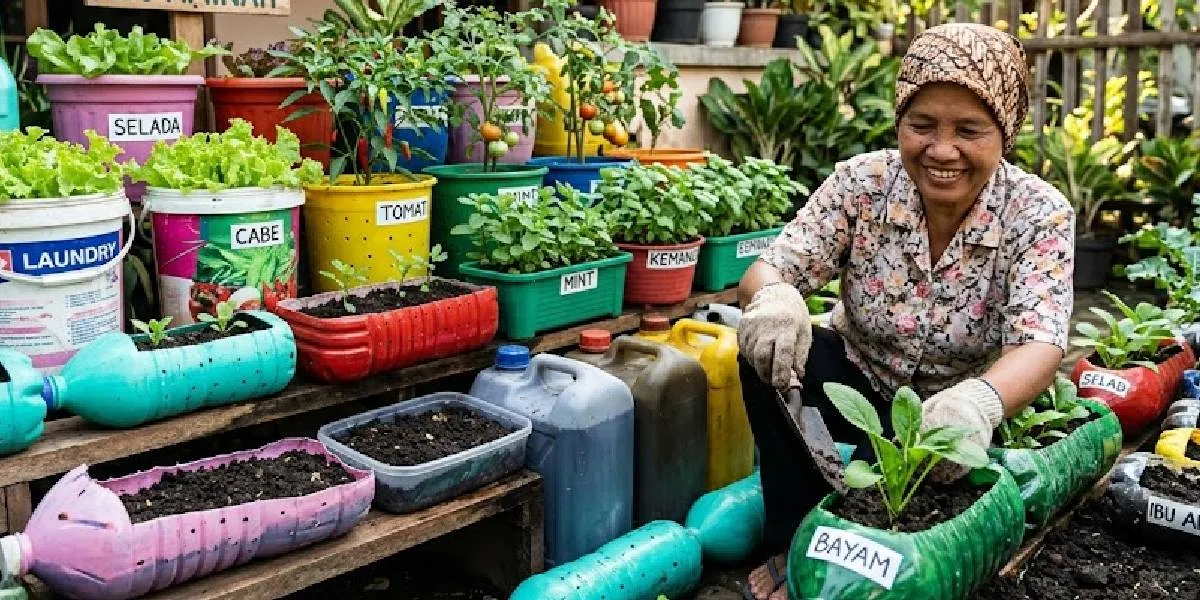
Transforming household plastic waste into a mini vegetable garden can be done by utilizing used containers such as mineral water bottles, cooking oil packaging, plastic cups, and jerry cans. This method can be applied especially for residences with limited space as it does not require large pots.
Plastic packaging has a fairly strong character, allowing it to be used as a planting container after being cleaned and properly prepared. In addition to replacing the function of conventional pots, using used containers also serves as a choice to reduce the amount of inorganic waste at home.
1. Used Plastic Container Options for Home Vertical Gardens
One way to utilize plastic waste is to turn it into a vertical wall pot. Thick plastic cooking oil refill packaging can be used because the material is not easily torn.
The top part of the packaging can be cut straight using sharp scissors. After that, the remaining oil inside needs to be cleaned with warm water to avoid disturbing the plants.
Small holes can be made on the left and right sides of the top part of the packaging to attach a hanging string. Meanwhile, the bottom part of the packaging needs to have several holes as drainage for excess water during watering.
The container can be hung on the terrace wall or fence that receives enough sunlight. Leafy vegetables like lettuce, spinach, and bok choy are suitable to be planted because they have fibrous roots.
The growing medium, which is a mixture of soil and manure, can be filled up to three-quarters of the packaging. The plants should then be watered regularly every morning to grow and be harvested in about a month.
In addition to cooking oil pouches, used 1.5-liter mineral water bottles can also be transformed into planting containers using a wick system. This method utilizes the fabric's ability to draw water to the growing medium.
The bottle is cut into two parts, then the top part is inverted and placed into the bottom part, which serves as a water reservoir. The bottle cap should remain on, but a small hole needs to be made for the wick fabric.
Felt or a piece of old t-shirt is inserted through the hole in the bottle cap until the bottom touches the water. This fabric will absorb water from the lower container to the soil, keeping the moisture of the planting medium maintained.
The top of the bottle can be filled with loose planting medium for planting water spinach or celery. These bottles can be placed on a rack or hung in a row to save space.
2. How to Use Large Plastic Packaging for Productive Plants
Single-use mineral water gallons can also be used as plant containers because their size is equivalent to a medium-sized pot. The narrow neck of the gallon can be cut to make the planting area easier to use.
This large container can be utilized to grow fruit vegetables such as chili, tomatoes, and eggplants. The outer part of the gallon can be painted with dark colors or given specific patterns to help reduce moss growth in the soil.
Drainage holes need to be made at the bottom of the gallon so that water does not accumulate and cause the plant roots to rot. The planting medium used is a mixture of soil, burned rice husk, and compost in a ratio of 1:1:1.
In addition to gallons, used plastic cups from coffee or boba drinks can also be used as seedling containers. These transparent containers are suitable for the germination process before the plants are transferred to larger pots.
The bottom part of the cup needs to be punctured using a hot nail or solder so that water can flow out. The planting medium used can be sieved soil or sterilized cocopeat.
One cup can be filled with one to two vegetable seeds to give the roots enough space to grow and not compete for nutrients. The seedling container should be placed in a shaded area that is not directly exposed to heavy rain.
The seedlings can be monitored until they have three or four strong true leaves before being transferred. The transfer process should be done carefully to avoid damaging the already formed roots.
3. Utilizing Used Food Containers and Coffee Sachets as Planting Media
Clear plastic food boxes or thinwall containers from food orders can also be used as a place to grow microgreens. Containers that have a wide and shallow shape allow many seeds to be planted in one place.
Microgreens are young vegetables that are harvested when they are 7-14 days old and have nutritional content. Because of their small size, these plants do not require deep planting containers.
The bottom part of the thinwall needs to have holes evenly made so that water does not get trapped in the growing medium. For the growing medium, wet tissue, cotton, or thin soil that maintains its moisture can be used.
Seeds such as broccoli, red spinach, or radish can be scattered across the surface of the container. After that, the thinwall is placed near a kitchen window that receives enough light but is not exposed to direct harsh sunlight.
Care is done by spraying water using a spray bottle every morning and evening. Within two weeks, the microgreens can be harvested for use as a garnish or salad mix.
Meanwhile, coffee sachet wraps with aluminum foil layers can be utilized to make recycled polybags. This material has strong characteristics and is weather-resistant, making it durable.
Dozens of coffee sachet wraps can be joined together using sewing or weaving techniques to form a large sheet. The sheets were then made into planting bags that can be used as plant containers.
The inside of the sachet, which is silver in color, can reflect sunlight, helping to maintain soil temperature. The use of this container can also reduce the presence of small plastic waste that is often scattered.
Polybags made from coffee sachets can be used to plant herbs such as green onions, basil, or mint. These containers can be arranged on wooden shelves or lightweight bricks in the corner of the yard.
4. Used Jerrycans Can Be Turned Into Space-Saving Hanging Pots
Liquid detergent or bleach jerrycans have thick plastic material with strong handles. This characteristic makes them reusable as hanging plant pots.
To make them, the jerrycan is placed in a lying or horizontal position. The side is then cut to create a rectangular planting hole, while the handle is left intact for easy hanging or moving.
The elongated shape of the jerrycan provides more space for roots compared to regular upright pots. One used 5-liter jerrycan can be used to plant two to three clusters of vegetables at once.
Before use, the container must be thoroughly washed multiple times to remove any chemical residues. Once ready, the jerrycan can be hung using clothesline wire or mounted on a strong wall nail, as its weight will increase once filled with soil.
Creeping or trailing plants such as strawberries and dwarf long beans can be planted using this container. Used jerrycans can also be placed as part of a mini garden arrangement at home.
5. Things to Consider Before Using Used Plastic
Not all types of plastic can be directly used as vegetable plant containers. Most food packaging plastics with the codes PET, HDPE, and PP are safe to use as long as they do not undergo extreme heating.
On the other hand, used plastic containers for harsh chemicals such as vehicle oil or pesticides should not be used because their residuals are difficult to remove. Each container needs to be washed with soap until completely clean before being filled with planting media.
Used plastic pots can sometimes cause plants to wilt more easily during the day. This condition can occur because the planting media inside the plastic heats up faster and water evaporates more quickly.
Thin or transparent plastic can transmit direct sunlight heat to the plant roots, putting the plants under stress. One way to address this is to paint the container a light color or add an extra layer to stabilize soil temperature.
The durability of pots made from plastic waste also varies depending on the type of material and exposure to sunlight. Thick plastics like jerry cans or oil pouches can be used for 2 to 5 years.
Meanwhile, mineral water bottles made from thinner materials usually start to become brittle after being used for 6 months to 1 year. The condition of the containers should be checked regularly and replaced when cracks become visible.
The planting media for used plastic pots needs to have porous or loose properties so that water can flow well. A mixture of soil, burned rice husks, and manure in a ratio of 1:1:1 can be used as planting media.
Adding pieces of charcoal or gravel at the bottom of the pot can also help with the drainage process. With good water flow, the risk of water pooling inside the plastic container can be reduced.
For beginners, water spinach and spinach are among the plants that are easy to grow using recycled pots because they grow quickly and can adapt to various container conditions. Green onions can also be a choice as they can be harvested repeatedly by cutting the leaf parts without uprooting the roots.
Additionally, vegetables from the mustard group, such as bok choy and caisim, are also relatively easy to care for and do not face many serious pest issues.
(kpl/mda)
Disclaimer: This translation from Bahasa Indonesia to English has been generated by Artificial Intelligence.


 Follow
 Rekomendasi