

 Follow
 Rekomendasi
12 Time Travel Themed Movies to Fix Mistakes, Most Exciting Drama & Action
A complete list of recommended time travel themed movies to fix mistakes. Synopsis reviews, cast, and relevant latest film categories for Indonesian viewers.
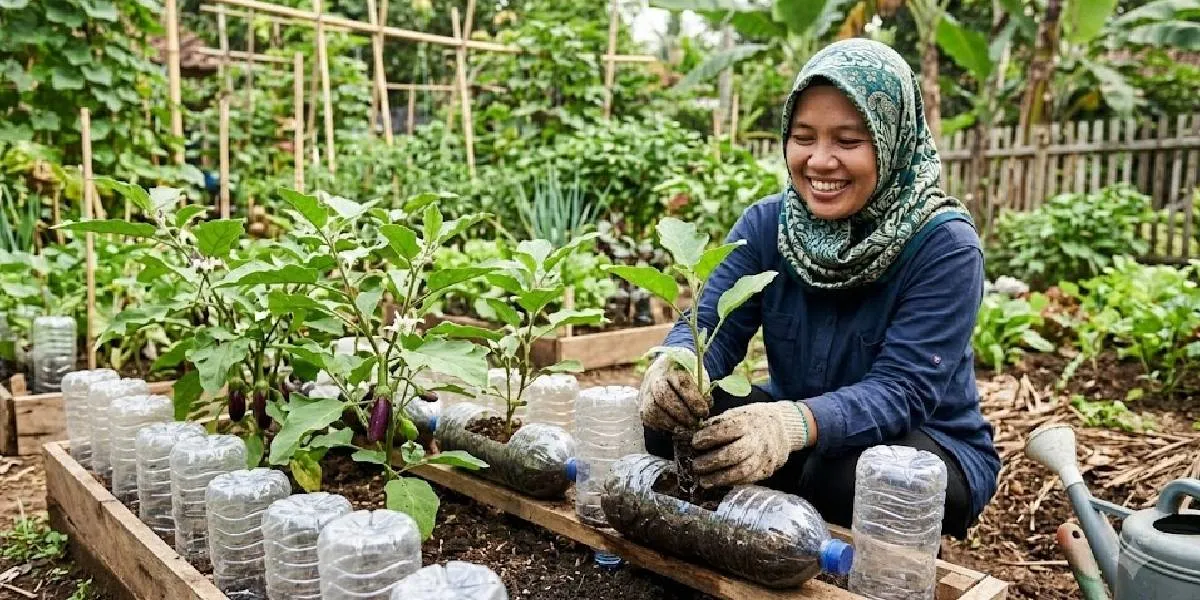
Kapanlagi.com - How to plant eggplants in used bottles properly is a practical solution for anyone who wants to garden even with limited land. By utilizing used plastic bottles, you not only reduce household waste but also can produce your own fresh vegetables at a lower cost.
In addition to being easy to cultivate, eggplants also have good nutritional value for the body. According to various studies, eggplants contain fiber, vitamins, minerals, and antioxidant compounds such as chlorogenic acid and anthocyanins that help protect body cells from damage caused by free radicals. Their fiber content also supports digestive health and helps keep you feeling full longer, making them suitable as part of a balanced diet.
Therefore, planting eggplants at home can be a beneficial choice. Besides obtaining fresher vegetables, the method of utilizing used bottles also supports an environmentally friendly lifestyle by reducing plastic waste. To ensure the plants grow lush and produce abundant fruit, there are several important stages to pay attention to from selecting containers to routine care. Let’s check out the complete details here, KLovers!
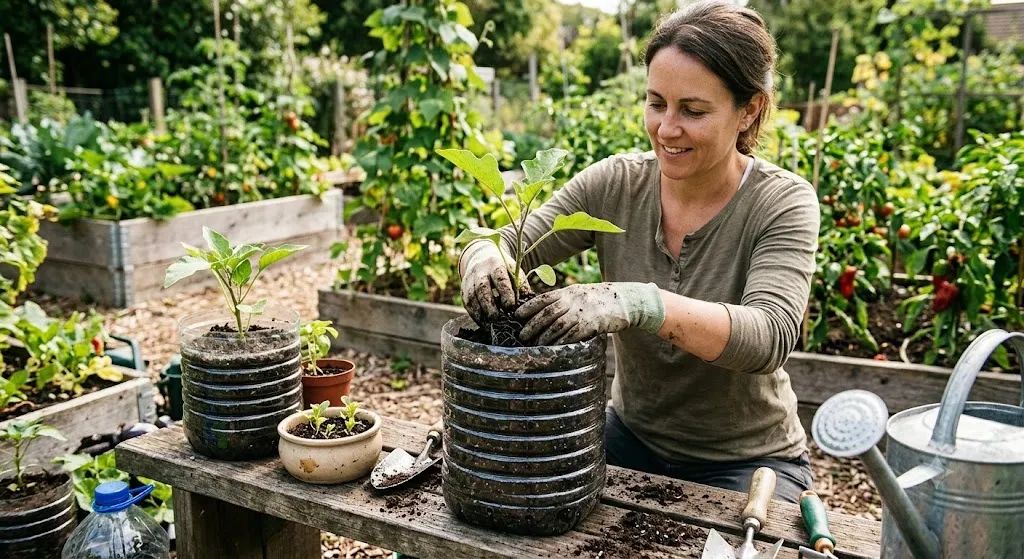
Choose a Used Bottle (AI Generated)
The size of the container greatly affects the growth of eggplant plants because their root system requires ample space. Use a used plastic bottle with a minimum size of 5 liters, such as a small gallon water bottle or a cooking oil bottle. Avoid using bottles that are too small as they can restrict root development, causing the plants to wilt easily and their growth to be hindered.
Before use, wash the bottle thoroughly to remove any residual liquid that was previously stored inside. Cut the side or the top of the bottle according to the desired pot design. Don't forget to make several holes at the bottom for drainage so that water does not pool. Additional holes on the sides of the bottle can also help with air circulation in the growing medium, keeping the roots healthy.
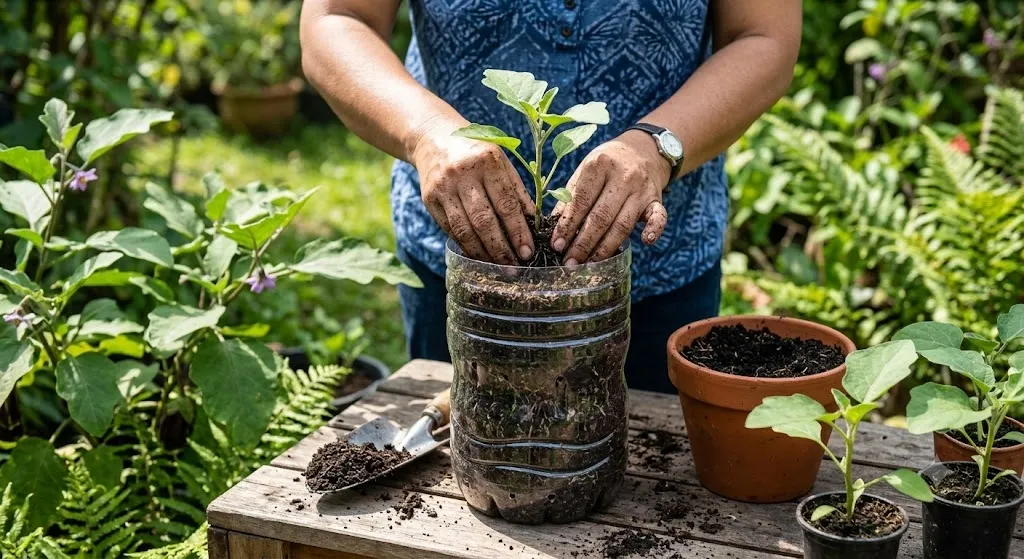
choose planting medium (AI Generated)
A good planting medium is one of the keys to successful eggplant cultivation in limited containers. Mix loose soil, mature compost or manure, and burnt rice husks or cocopeat in a ratio of about 1:1:1. This mixture can maintain a balance between water retention and aeration so that the roots can grow optimally.
Before placing it into the bottle, ensure that the planting medium is clean from stones, debris, and weed roots. If possible, let the medium sit for a few days after mixing to stabilize its nutrient content. Adding a little dolomite can also help balance the acidity level of the soil if the medium is too acidic.
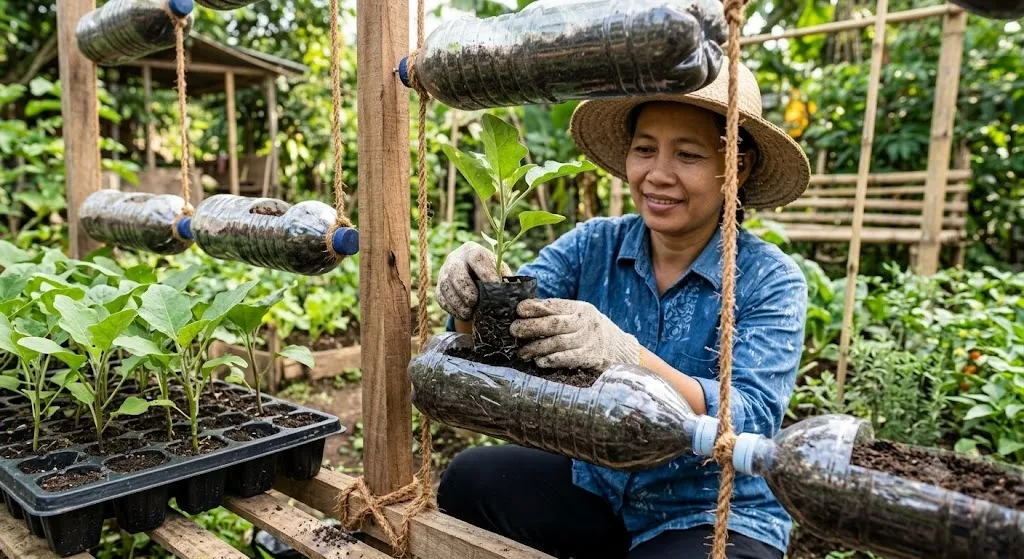
sowing eggplant seeds (AI Generated)
Eggplant seeds should not be directly planted in permanent bottles. First, perform seeding using seed trays, small polybags, or other used containers. Seeds usually start to germinate in about 5–10 days if the moisture of the medium is well maintained.
The seedlings are ready to be transplanted when they have about 4–6 true leaves or are approximately 3–4 weeks old. When transplanting the seedlings, do so carefully to avoid damaging the roots. Plant the seedlings in the center of the bottle, then gently compact the medium so that the plants stand firm without excessively pressing on the roots.
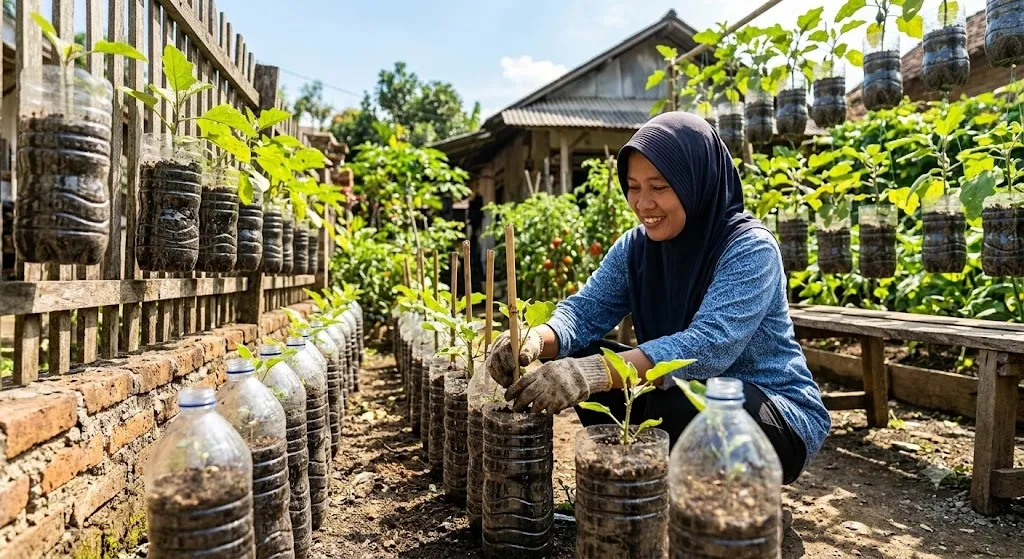
under the scorching sun (AI Generated)
Eggplant is a plant that requires a significant amount of sunlight to support the photosynthesis process and flower formation. Therefore, place the planting bottle in a location that receives direct sunlight for about 6–8 hours each day, such as the front yard, open terrace, balcony, or rooftop.
If the plant is too often in a shaded area, its growth tends to be elongated but weak, the number of flowers decreases, and the fruit produced becomes scarce. Rotate the position of the bottle periodically if the light comes from only one direction so that all parts of the plant receive even light exposure.
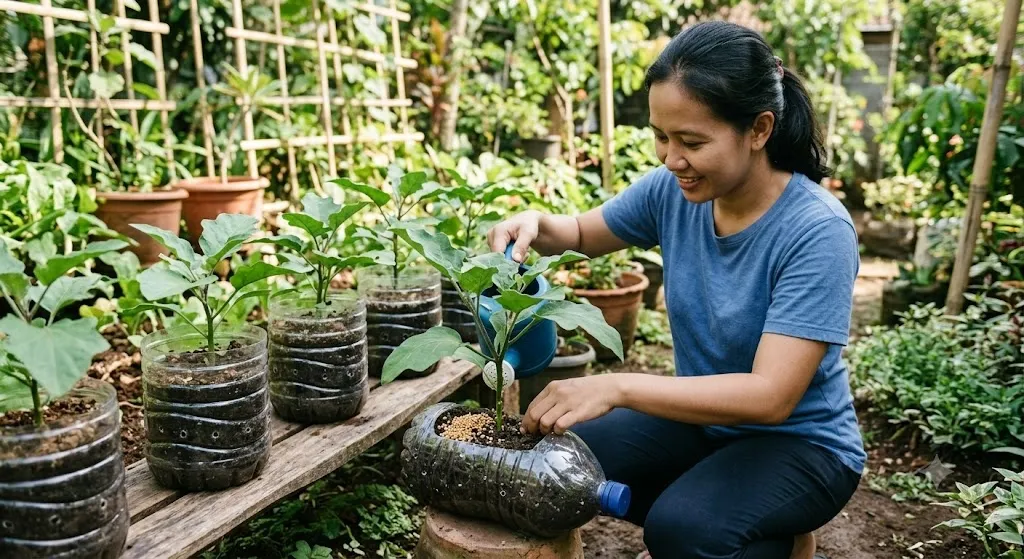
regular watering (AI Generated)
Because the volume of growing media in the bottle is smaller compared to open land, its moisture also decreases more quickly. Water the plants every morning or evening depending on the weather conditions. During the rainy season, watering can be reduced to prevent the media from becoming too wet, which could trigger root rot.
In addition to watering, plants require additional nutrients regularly. Provide liquid organic fertilizer, compost, or mature manure every two to three weeks. If using inorganic fertilizer, apply according to the recommended dosage to avoid salt buildup that can harm the plant's roots.
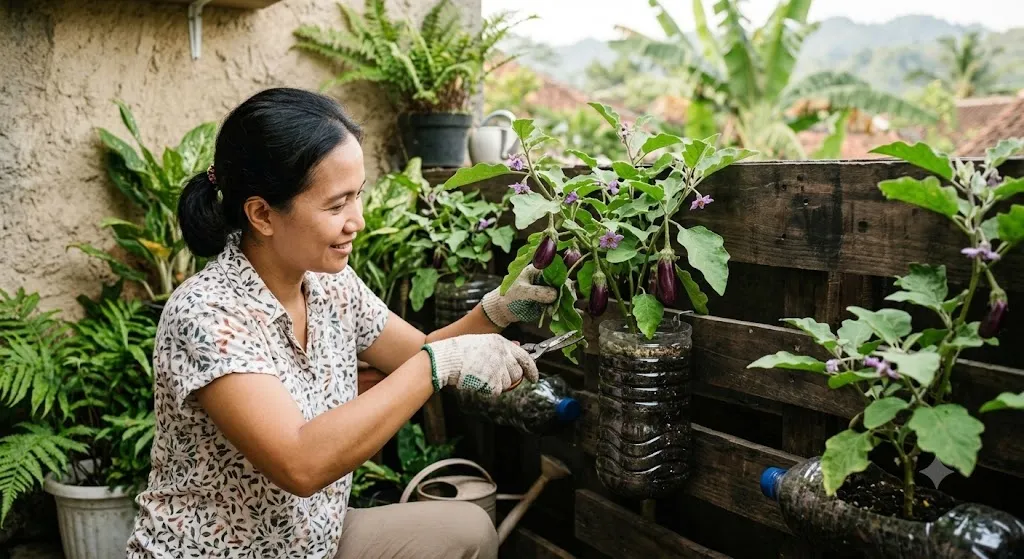
pruning sick leaves (AI Generated)
Care does not stop once the plants grow large. Old yellowing leaves, dry branches, or parts of the plant affected by disease should be pruned immediately so that the plant's energy can be more focused on producing flowers and fruits.
Check the plants regularly to detect the presence of aphids, caterpillars, or mites early on. Control can be done manually by removing visible pests or using natural pesticides made from ingredients like garlic, neem leaves, or lemongrass. Keeping the planting area clean also helps reduce the risk of disease attacks.
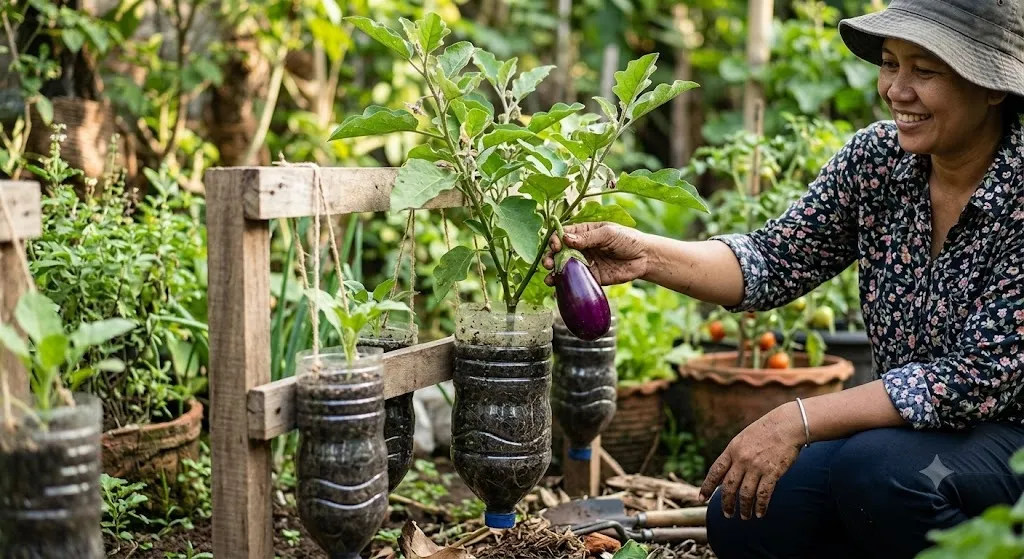
harvest 90 days after planting (AI Generated)
Eggplant plants generally start producing fruit about 60–90 days after planting, depending on the variety and growth conditions. Fruits that are ready to be harvested usually have a bright color according to their type, a shiny skin surface, and a size that has reached its maximum but the seeds are not too old yet.
Use sharp scissors or a knife when harvesting to ensure that the fruit stems are cut cleanly without damaging the plant's branches. Regular harvesting can stimulate the emergence of new flowers, allowing fruit production to continue for a longer period. With consistent care, a single eggplant plant in a used bottle can still produce a satisfying harvest.
1. Can all types of plastic bottles be used to grow eggplant?
Yes, but it is best to use bottles that are at least 5 liters in size to provide more space for the roots.
2. How long does it take for eggplant to start bearing fruit after being planted?
Generally, about 60–90 days after planting, depending on the variety and care.
3. Do eggplants in used bottles need fertilizing?
Yes. Regular fertilization every 2–3 weeks helps maintain the growth and productivity of the plants.
4. How long do eggplant plants need sunlight?
Ideally, 6–8 hours of direct sunlight every day.
5. Why should the bottle have holes at the bottom?
Drainage holes serve to remove excess water so that the roots do not easily rot.
(kpl/mda)
Cobain For You Page (FYP) Yang kamu suka ada di sini,
lihat isinya
A complete list of recommended time travel themed movies to fix mistakes. Synopsis reviews, cast, and relevant latest film categories for Indonesian viewers.
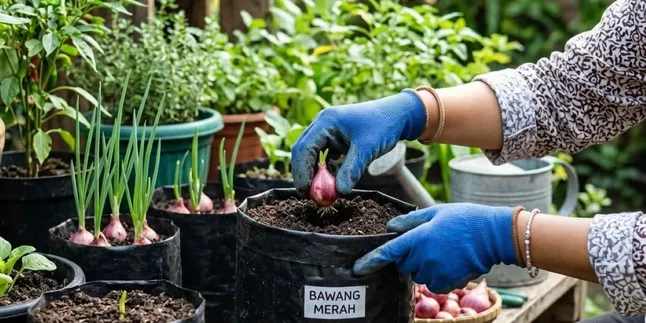
Planting red onions in small polybags can be a solution for home gardening. Check out 7 ways to ensure the bulbs grow large and are ready for harvest quickly.
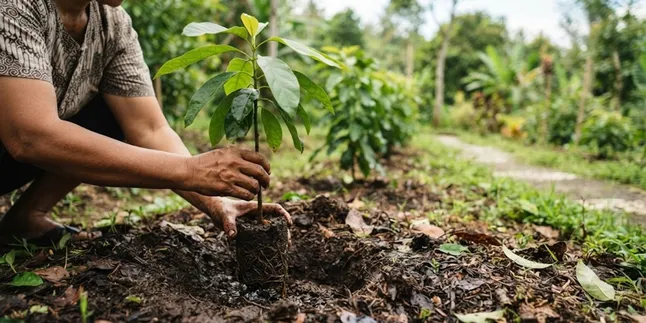
Discover effective steps in planting an avocado tree in a pot for quick fruiting with this guide.
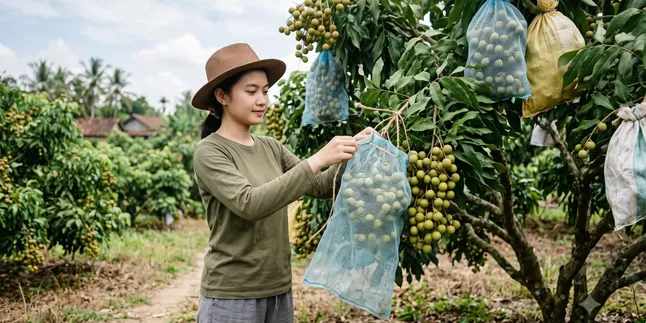
Don't just plant! Discover the secrets of how to grow longan to yield abundant fruits using booster methods and targeted routine care here.
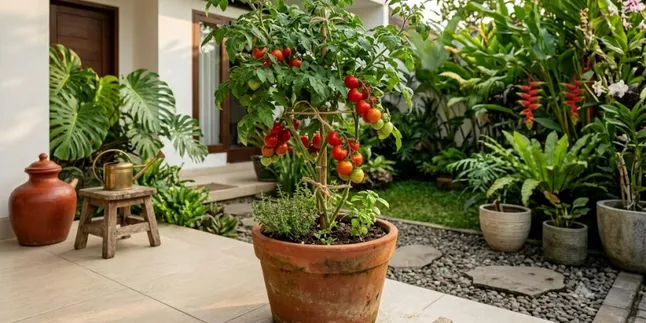
Growing tomatoes in small pots is a smart solution for limited land. Follow the complete guide from pot selection, variety, planting media, to care for a bountiful harvest.

A series of touching and emotional films about single fathers, especially when a father has to take on the role of a single parent.

Discover 10 recommendations for heartwarming pet-themed movies that teach us to care more for our pets.

A series of Korean films themed around school and bullying that present stories full of conflict, struggle, and deep emotions.

Movies without villains often offer a different viewing experience, yet still manage to deliver deep tension and excitement.

Discover recommendations for Indian films with social themes and caste critiques that hit hard, from true stories to inspiring dramas that raise issues of discrimination and the struggle for justice.

Villain characters in films are often more captivating and memorable than the main characters. Dive into the reasons behind the complexity, charisma, and unique motivations that make them pop icons.

Discover recommendations for movies about aliens living on Earth with unique stories, from disguises, friendships, to exciting and action-packed science fiction dramas.
