Kapanlagi.com - For hijab users, finding a rough or fuzzy fabric surface on their favorite hijab is certainly an annoying moment as it can ruin the overall appearance. This phenomenon is actually a natural process of fabric fibers breaking down due to friction, but it is often seen as a sign that the hijab is no longer wearable. Fortunately, there are effective and safe ways to remove fuzz from hijabs to restore the fabric's softness without having to throw it away.
The issue of pilling or the appearance of fiber clumps does not discriminate; it can affect materials like voal, paris, and even polycotton which are most commonly used daily. Understanding the right care techniques not only saves the hijab collection of KL Lovers but also significantly extends the lifespan of the textile material. Here are ways to remove fuzz from hijabs from various sources, Wednesday (12/8/2026).
1. Why Can Scarves Get Fuzzy?

Before diving into cleaning methods, it’s important to understand our "enemy." In the textile world, this phenomenon is called fabric pilling. An in-depth study titled "Pilling of Textiles: Causes and Remedies" published on ResearchGate (2016) by textile researchers explains that pilling occurs through four stages: fiber loosening (fuzz formation), ball formation (entanglement), growth (growth), and release (wear-off).
For scarves, friction is the main culprit. The area under the chin (where the pin is attached) and the shoulders (where the scarf rubs against clothing or bags) are the most vulnerable zones. The scientific journal "Influence of Pilling on the Quality of Flax Single Jersey Knitted Fabrics" (2022) mentions that fabrics with a loose knit structure (like some types of cheap voile) are more prone to fiber migration to the surface.
Removing fuzz from scarves requires extra care compared to thicker clothing like sweaters. Here are tested methods listed from the safest to those requiring special expertise.
2. 1. Use of Fabric Shaver (Electric Fabric Shaver)
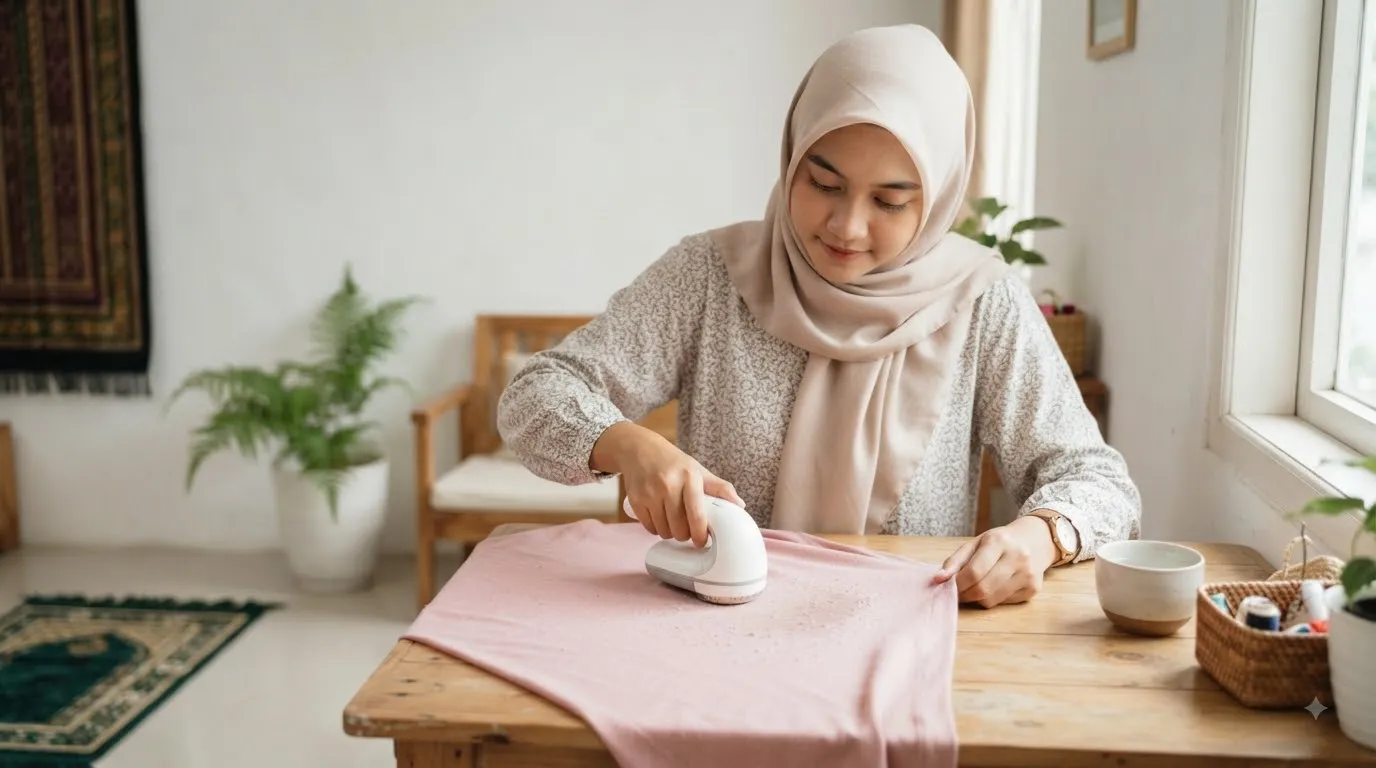
This is the most professional and safe method recommended by many textile experts. Fabric shaver works by cutting off the protruding fiber clumps without pulling the main thread.
- How to Use: Lay the scarf flat on a hard surface (like an ironing board). Turn on the device and slowly move it in a circular motion over the fuzzy area. Do not press too hard to avoid puncturing thin fabric.
- Advantages: Very effective for removing fine fuzz from scarves made of polycotton or voile that are flat.
3. 2. Manual Razor Technique (Disposable Razor)
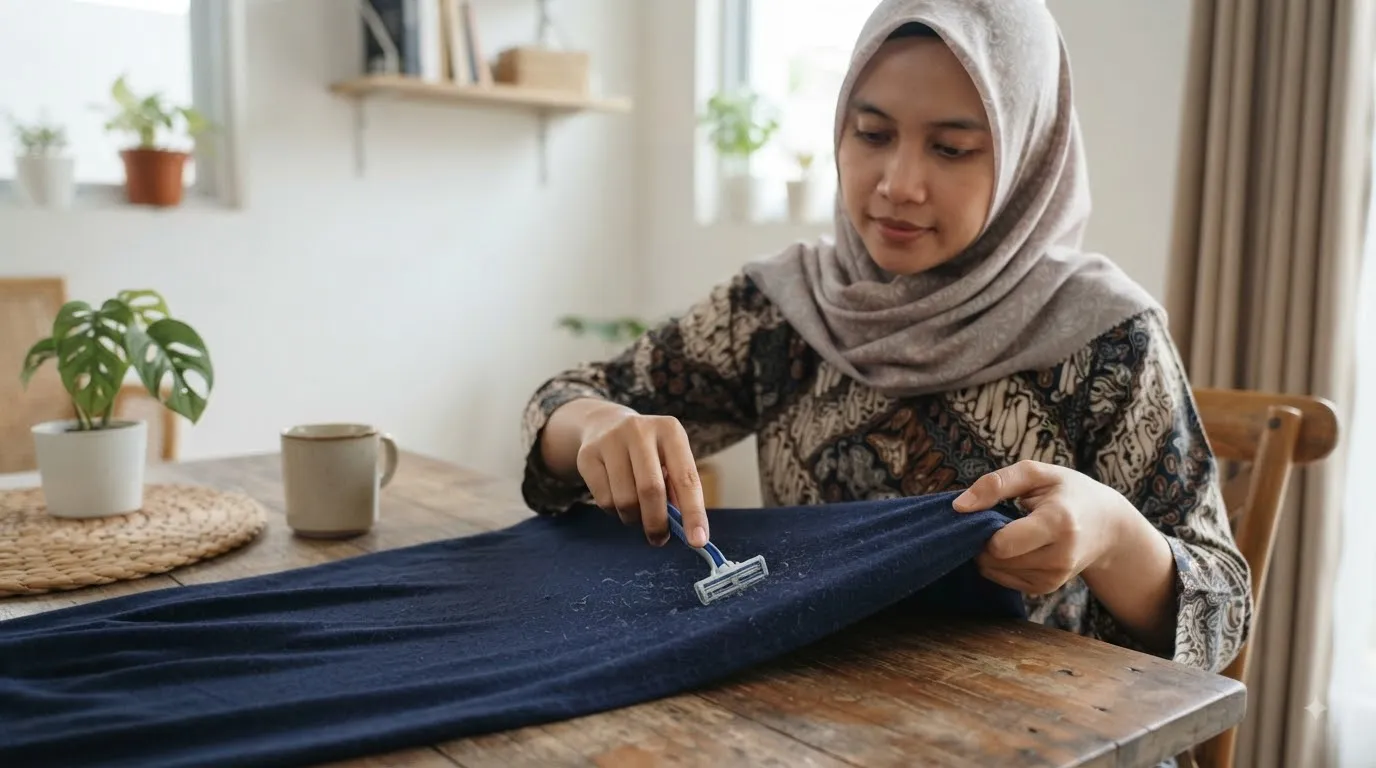
If you do not have an electric tool, a new razor can be an alternative. This method is cited by the leading lifestyle site, Vogue, in its article "How to Remove Pilling From Clothes" (2024), which recommends using the razor carefully to "scrape" off the fine fuzz.
- Technique: Pull the fabric of the scarf taut. Angle the razor in the direction of the fabric fibers at about a 15-30 degree angle. Make short, light strokes.
- Warning: Avoid this method on scarves made of satin or silk, as one wrong stroke can break the shiny filament thread.
4. 3. Dishwashing Sponge (Rough Side)
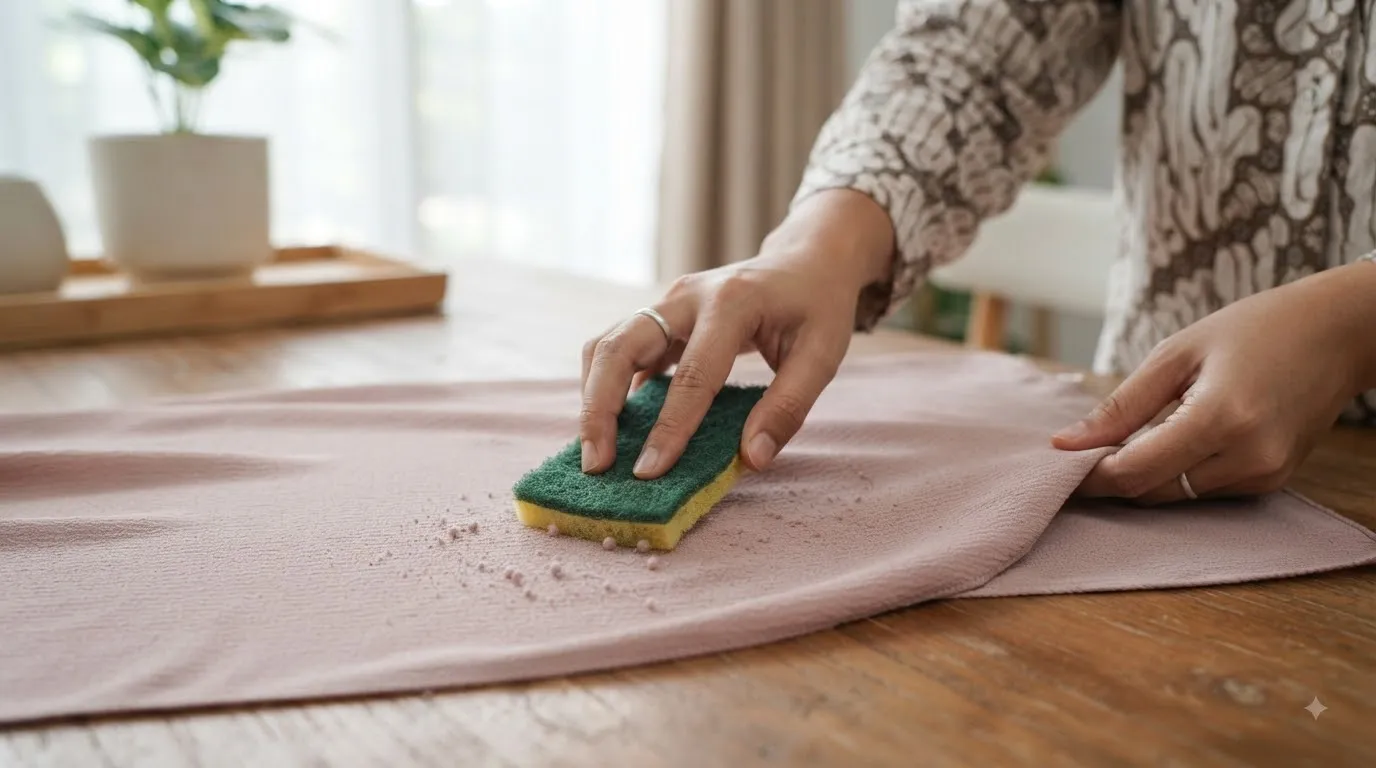
This is a unique trick that is rarely discussed but effective for light pilling on slightly textured materials like crepe.
- How to Use: Use the green side of the sponge that is still new and dry. Gently rub it on the fuzzy area. The abrasive texture of the sponge will catch the clumps of fibers and lift them from the fabric's surface.
- Note: Make sure the sponge is completely dry and free from soap.
5. 4. Nail Clippers for Precision Detailing
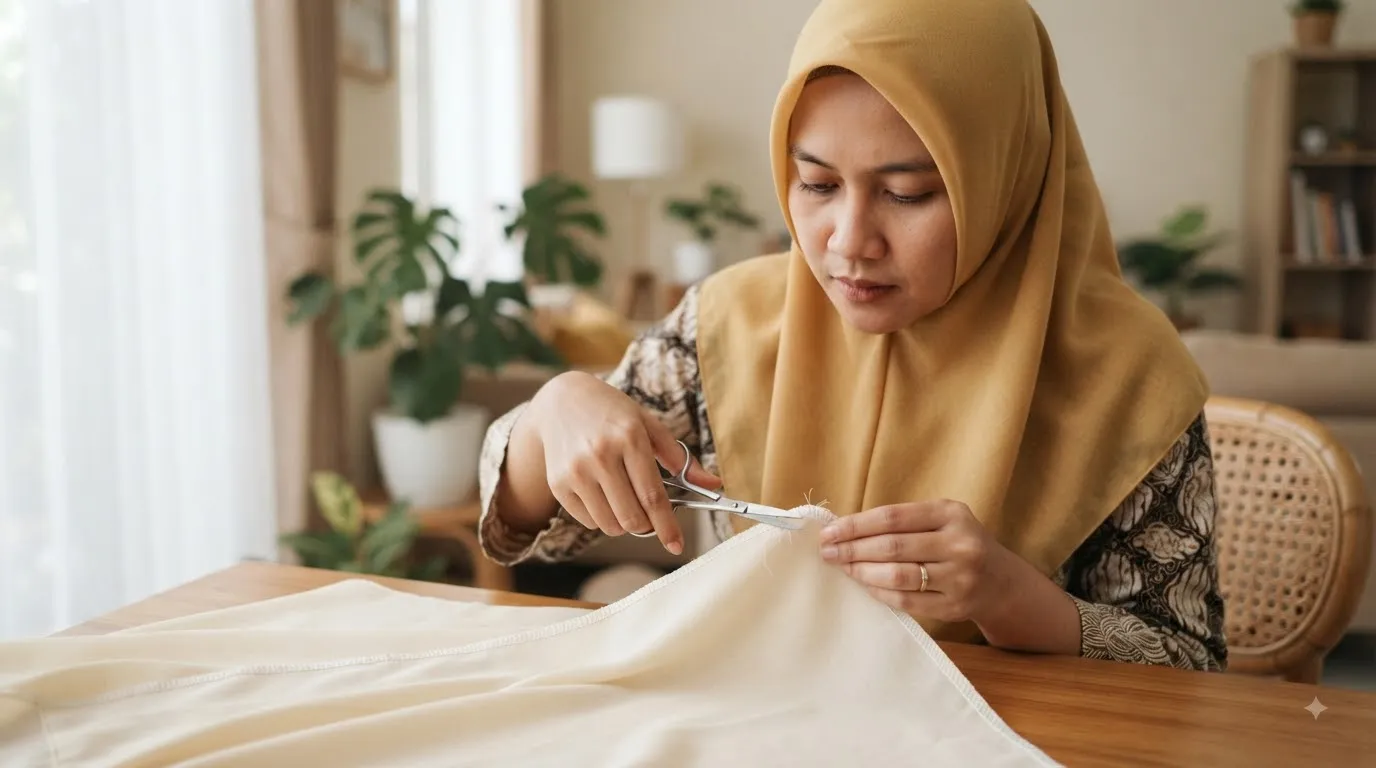
For fine hairs that appear in the seam edges or neci, using a large tool can risk cutting the thread.
Use small nail clippers or thread scissors to cut one by one the large clumps that are bothersome. This is an application method for removing fine hairs from the scarf that requires high patience but provides the most detailed results.
6. Prevention: The Key to a Long-lasting Hijab
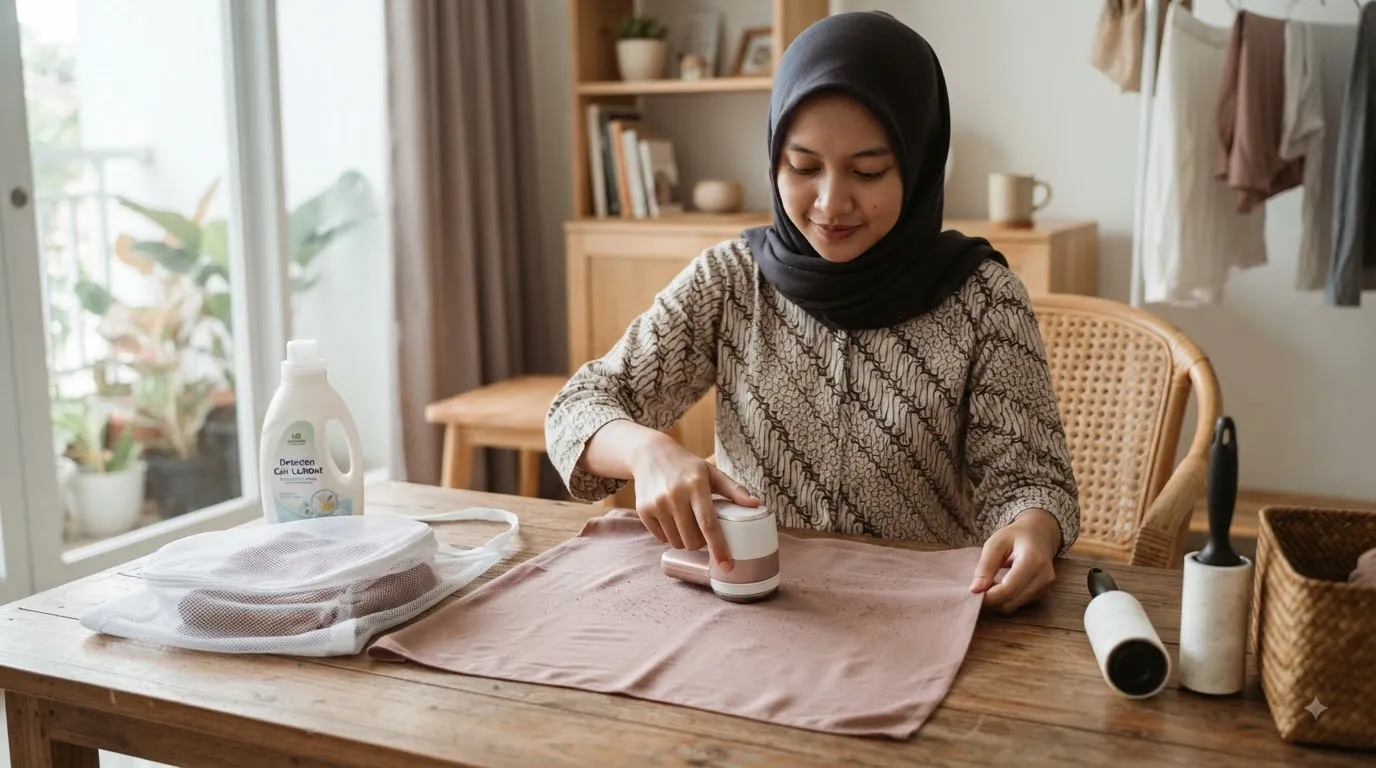
Prevention is always better than cure. Based on research from the MDPI journal titled "Analysis of the Interdependence of Surface-Induced Pilling" (2025), chemical and mechanical treatments during washing significantly affect the formation of pilling.
- Avoid Harsh Powder Detergents: Powder detergent particles can be abrasive. Use a gentle liquid detergent. Some sources recommend detergents with the enzyme cellulase, which can naturally break down loose microfibers before they clump into small balls.
- Inside-Out Washing Technique: Always turn the hijab inside out when washing. Let the inside of the hijab receive friction from the washing machine, so the outside remains smooth.
- Use Laundry Net: Never mix hijabs directly with rough fabrics like jeans or towels. Place the hijab in a mesh bag to minimize friction between fabrics.
- Avoid Excessive Fabric Softener: Although it sounds counterintuitive, some studies show that excessive use of fabric softener can actually smooth the fibers, making them easier to come out of the thread twist and form pills.
Often, the most comfortable hijabs to wear are the ones that are old and have fibers that are starting to "break" so they are softer and easier to shape. However, visually, this is disturbing.
By routinely applying methods to remove fuzz from the hijab (for example, once a month), you can maintain the comfort of old fabric while keeping its appearance fresh as if it were just bought.
Taking care of a hijab is not just about washing and drying. Understanding the characteristics of fabric fibers and their interaction with friction is necessary.
7. Questions About Hijab Care
1. Does washing a hijab in a washing machine worsen pilling?
Yes, the spinning of the washing machine creates massive friction between clothes that causes the fabric fibers to unravel and clump together. If you must use a machine, it is essential to use the delicate/hand wash mode and place the hijab in a washing bag (laundry net) to protect it from direct friction with rough fabrics like denim.
2. Is it okay to use tape to lift fuzz from the hijab?
Tape or a lint roller is effective for lifting dust, dandruff, or pet hair that sticks, but it is less effective for pilling (fiber clumps) that are still strongly attached to the fabric. For fine fuzz caused by loose fabric fibers, you need to trim it with a razor or fabric shaver, rather than just pulling it, which can actually damage the thread structure more severely.
3. What hijab material is the most durable and resistant to pilling?
Materials such as high-quality silk satin or chiffon are usually more resistant to pilling because of their long fibers and smooth filaments. In contrast, blended materials of short natural and synthetic fibers like polycotton or viscose (rayon) have a higher tendency to pill because the ends of the short fibers can easily come out of the yarn twist during friction.
(kpl/ibr)
Disclaimer: This translation from Bahasa Indonesia to English has been generated by Artificial Intelligence.


 Follow
 Rekomendasi