

 Follow
 Rekomendasi
Profile and Interesting Facts About Chae Soo Bin That Are Rarely Known
Chae Soo Bin, a South Korean actress known for the drama I'M NOT A ROBOT, has many interesting facts and remarkable achievements.

Kapanlagi.com - After months of challenging negotiations, the world is now welcoming a glimmer of hope in the prolonged conflict between Israel and Hezbollah. In less than 36 hours, U.S. President Joe Biden and French President Emmanuel Macron are set to announce a ceasefire, a monumental step towards peace in the Middle East.
This plan is seen as a highly anticipated diplomatic breakthrough, after this conflict has claimed thousands of lives and left deep scars in Lebanon for so long. The negotiations, taking place amid escalating tensions, with massive attacks from both sides in recent days, highlight the urgency of reaching an agreement.
While hope is drawing closer, several critical issues still need to be unraveled before the desired peace can be realized. Let’s take a look at the latest developments regarding this globally spotlighted ceasefire, as reported by Kapanlagi.com from various sources, Tuesday (26/11).
The United States and France are now key actors in efforts to ease tensions between Israel and Hezbollah. In a hopeful move, President Joe Biden and Emmanuel Macron are preparing to announce a ceasefire agreement that has gone through intensive negotiations with the help of chief mediator, Amos Hochstein.
"We are strongly encouraging that this be achieved soon," said John Kirby, the US National Security spokesperson, in a statement quoted by Reuters.
Meanwhile, the French presidency confirmed significant progress, stating that negotiations have reached the final stage and are just waiting for the green light from several related parties.
In a move that could reshape the geopolitical landscape, Israel and Lebanon have finally reached an important agreement that includes the withdrawal of Israeli military forces from southern Lebanon and the deployment of regular Lebanese troops along the border within 60 days.
Moreover, a committee consisting of five countries, led by the United States, will be formed to ensure that the ceasefire proceeds as planned.
However, this agreement is not without controversy, particularly regarding Israel's right to attack southern Lebanon if threats from Hezbollah re-emerge. Although Lebanon initially rejected that clause, intense negotiations succeeded in easing tensions at the last moment.
"The cabinet meeting on Tuesday will focus on granting approval for the text of the agreement," said a senior Israeli official, signaling new hope for both countries.
Amid ongoing diplomatic efforts, the situation on the ground is heating up. Last weekend, a massive attack by Israel shook Beirut and claimed the lives of at least 29 people, while Hezbollah retaliated by launching 250 rockets into Israeli territory.
Michael Herzog, Israel's Ambassador to the US, is optimistic that an agreement is close to being reached, although there are still significant challenges to face.
"We are moving towards an agreement, but there are several urgent issues that need to be resolved," he stated.
In an atmosphere of rising tension, Israeli Minister of Security, Itamar Ben-Gvir, asserted that Hezbollah must be confronted with military force until total victory is achieved.
This statement aligns with the firm remarks of Prime Minister Benjamin Netanyahu, who reminded that the existing agreement is not yet fully final, even emphasizing, "It is not too late to stop this agreement," through his social media account.
On the other hand, Hezbollah is unwilling to back down even if it loses several key leaders due to attacks from Israel; their retaliatory strikes prove that the military strength of this group remains impressive, despite being under increasing diplomatic pressure.
This ongoing conflict has devastated Lebanon, particularly in the southern region and the outskirts of Beirut, where civilians have become the main victims and many have been forced to leave their homes in search of safer places
Meanwhile, Israel is also not free from threats, with Hezbollah rockets continuously targeting the border areas.
A Middle East security analyst emphasized, "The losses suffered by both sides highlight the urgency of a ceasefire as a preliminary step towards achieving stability."
In a hopeful move, U.S. President Joe Biden and French President Emmanuel Macron are preparing to announce the long-awaited ceasefire within the next 36 hours.
Although the final decision is still awaiting the green light from all parties involved, this positive signal offers new hope for a better peace.
This agreement marks a new chapter in the relationship between Israel and Lebanon, where Israel will withdraw its troops from southern Lebanon, while regular Lebanese forces will be deployed at the border to maintain stability.
In addition, an international committee has been established to monitor the implementation of the ceasefire, an important step towards more lasting peace in this long-tensioned region.
The main challenge faced is creating an agreement to stop attacks from both sides, while easing tensions arising from differing views on Israel's right to retaliate if threats emerge.
The southern region of Lebanon, especially Dahiyeh, is now plagued by severe damage that shakes the lives of its residents. Many inhabitants are forced to leave their homes, while others fall victim to an increasingly tense situation.
A mood of mourning and panic envelops the area, depicting how difficult the conditions are that the local community must face.
(kpl/rmt)
Cobain For You Page (FYP) Yang kamu suka ada di sini,
lihat isinya
Chae Soo Bin, a South Korean actress known for the drama I'M NOT A ROBOT, has many interesting facts and remarkable achievements.

Davina Karamoy is an Indonesian actress and singer who started her career in 2018. Her name skyrocketed thanks to the web series 7 DAYS BEFORE 17 YEARS OLD.

Maudy Ayunda surprises fans with a collaborative song with Iwan Fals titled City Poetry, depicting the struggles of life in urban areas. This song was released on November 25, 2024, with a touching acoustic pop vibe.
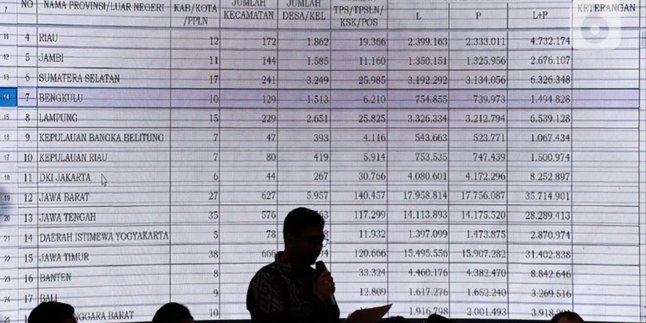
Checking the Voter List for the 2024 Regional Elections is now more practical. With this guide, you can ensure your name is registered in the Permanent Voter List just by using an Android phone. Follow the simple steps through the KPU website or WhatsApp and prepare yourself to participate in the elections.

Nikita Willy has attracted attention after sharing a moment of Baby Issa learning to climb stairs with the guidance of a professional trainer. Many netizens praised her parenting style, while others questioned this step.

Raffi Ahmad enjoys an exciting vacation in Bali with his family, where the adorable moment of Cipung vying for Mama Gigi's attention successfully captured the hearts of netizens!

Okin stole the spotlight at Chava's birthday party, Rachel Vennya's child, with her striking appearance. Witness their exciting and unique moments at the colorful and cheerful Fantasy Land themed celebration!

Muzdalifah captured attention at her child's engagement event with a stunning appearance, wearing an elegant kebaya and glamorous makeup that added to her charm, making all eyes on her.

The Indonesian national team faces the 2024 ASEAN Cup with a new spirit, relying on young players with an average age of only 22.6 years. This generation is ready to achieve success and bring new hope for football in the homeland!

From elegant oval faces to sweet round faces, strong square shapes to graceful heart shapes, we will help you find the style that best suits and highlights the beauty of your face.

Find the perfect men's hairstyle for your face in 2025! From edgy textured crop fades to classic pompadours, each style offers its own uniqueness to enhance your appearance. Don't miss the chance to look your best with the right style!

Talitha Curtis Winn, an FTV actress known for her foreign-like appearance, has made a name for herself in the Indonesian entertainment industry and is now a food businesswoman.
