

 Follow
 Rekomendasi
7 Ways to Grow Pothos in Water for Quick Rooting, Lush Growth, and Rot Resistance
Want pothos to thrive without soil? Check out 7 ways to grow pothos in water for healthy roots, lush leaves, and rot resistance.

Weeds are one of the most annoying problems for gardeners and farmers. Besides disrupting aesthetics, weeds also compete with the main plants for nutrients, water, and sunlight. Many people immediately think of using chemical herbicides, whereas there are more natural, environmentally friendly, and sustainable ways, namely planting ground cover plants or cover crops.
Ground cover plants are types of plants that grow low and spread over the soil surface, serving to protect the soil from erosion, retain moisture, improve soil fertility, and suppress weed growth naturally. Plants from the Leguminosae family (legumes) even have the added advantage of being able to fix nitrogen from the air.
So, what are the most effective ground cover plants for controlling weeds? Check out the complete list below, as summarized from various sources, Sunday (2/8/2026).

Mucuna bracteata. Photo: IPB Digitani
Mucuna bracteata is an annual leguminous plant from the Leguminosae family that is widely used as a cover crop in oil palm and rubber plantations. This plant is dubbed a powerful weed competitor.
Its advantages in suppressing weeds include super fast growth, capable of growing 10–30 cm per day, so within a short time it can cover the entire surface of the soil. Additionally, its rapid creeping tendrils allow this plant to extend an average of 20 cm within 4 weeks after planting, effectively covering the ground tightly and leaving weeds with no space or light to grow. This plant is also shade-tolerant under the lush canopy of plantations and contains phenolic compounds that make it unattractive to pests and livestock.
An additional advantage of this plant is its ability to fix high nitrogen and improve soil organic matter through biomass decomposition.
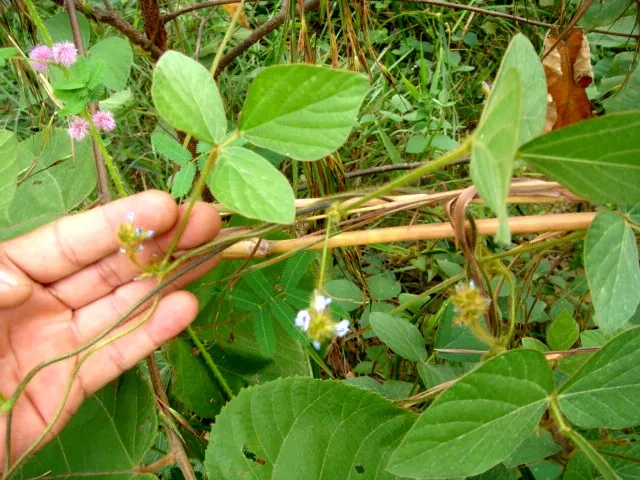
Pueraria javanica. Photo: Flickr
Pueraria javanica is a ground cover legume that originates from tropical America and Australia, later spreading to Southeast Asia. This plant has a fairly deep root system, making it drought-resistant.
Its advantages in suppressing weeds include the ability to grow rapidly and form dense mats. The deep root system also helps maintain good soil structure. Additionally, after being cut, the decaying biomass will serve as an effective natural mulch to suppress the growth of new weeds.
Centrosema pubescens is a ground cover legume that has been widely used in Indonesian plantations, including in pepper and palm oil fields.
Its advantages in suppressing weeds have been proven to reduce the dominance of the weed Bidens pilosa by up to 36.16%. This plant can also help maintain stable soil temperature and moisture. According to scientific studies, this plant can increase the content of P, K, Ca, and Mg in the soil by up to 100%, 100%, 43.6%, and 48.3%, respectively.
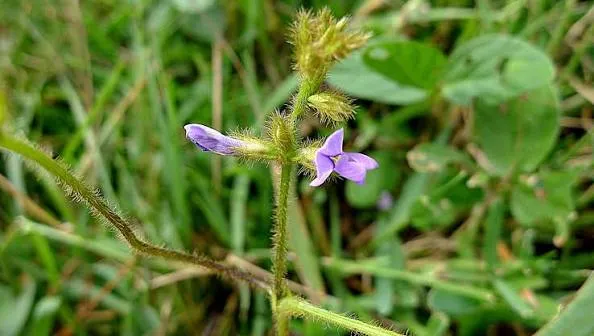
Calopogonium mucunoides. Photo: Wikimedia Commons
Calopogonium mucunoides is a legume from tropical regions that can grow quickly to form a mat and cover the ground up to 50 cm thick.
Its advantages include very rapid growth, which immediately creates a dense green carpet. The soil surface can be effectively covered to prevent weeds from receiving sunlight. Additionally, this plant is very easy to propagate through seeds or cuttings.
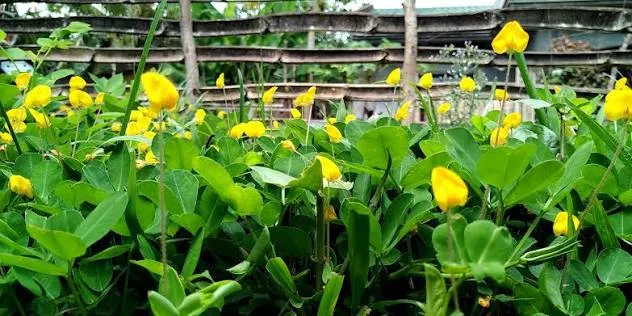
Arachis pintoi. Photo: Wikimedia Commons
Arachis pintoi, also known as pinto grass or pinto bean, is a perennial ground cover legume that grows low and spreads to form a dense green carpet.
Its advantages in suppressing weeds include the formation of a dense mat that effectively holds back weeds, as well as its drought-tolerant nature once established. As a legume, this plant can improve soil nitrogen levels through symbiosis with Rhizobium bacteria, making it very suitable for use as a biomulch for various types of plants.

Crotalaria juncea. Photo: Wikimedia Commons
Crotalaria juncea or orok-orok is a leguminous plant that can be grown alongside corn crops.
Its advantage lies in its root system, which does not disturb or compete with the root system of the main crop. A population density of around 80,000 plants per hectare has been proven to effectively disrupt weed growth without causing excessive competition with the main crop.

Tunggak Beans. Photo: Wikimedia Commons
Based on research, pigeon pea and peanut are very good to use as cover crops in corn cultivation fields.
Their main advantage is that they effectively suppress weed populations and growth without causing nutrient competition with corn plants. These plants also function well in preventing erosion and naturally adding soil nutrients.

Green Beans. Photo: Facebook.com/Bolo Tani
Green beans have also proven to be very suitable as cover crops due to their good adaptability in various agricultural lands.
Their advantages have been shown to effectively suppress weed populations and growth significantly. In addition, this plant grows harmoniously without competing disadvantageously with the presence of surrounding main crops.

Strawberries. Photo: Wikimedia Commons
For yard or garden scales that require aesthetics as well as weed-cleaning functions, the following plants are very effective to rely on:
Strawberries: their dense foliage can naturally suppress weed growth.
Radishes: besides suppressing weeds, they also improve soil structure and enrich nutrients.
Lettuce: provides ground cover that maintains moisture and suppresses weeds.
Water Lettuce (Pistia): used as a natural mulch to suppress weeds in agricultural fields.
Q: What are ground cover plants and what are their main benefits?
A: Ground cover plants are low-growing plants that spread across the soil surface. Their main benefits include: naturally suppressing weed growth, preventing erosion, retaining soil moisture, improving soil fertility, and reducing dependence on chemical herbicides.
Q: Why are plants from the Leguminosae family superior as ground covers?
A: Leguminosae plants (legumes) have the ability to fix nitrogen from the air through symbiosis with Rhizobium bacteria in root nodules. This means they can naturally fertilize the soil without additional nitrogen fertilizers.
Q: Which ground cover plants are most effective at controlling weeds?
A: Mucuna bracteata is considered the most effective because it grows very quickly (10–30 cm per day) and can cover the entire soil surface in a short time.
Q: Can ground cover plants interfere with main crops?
A: Not all. Some plants like Crotalaria juncea (sunn hemp), cowpeas, and peanuts do not interfere with the root systems of main crops. However, the selection of species and planting distance should still be considered.
Q: How do you correctly plant Mucuna bracteata?
A: The best time to plant is during the rainy season with an ideal rainfall of 1,000–2,500 mm per year. High plant density will accelerate land coverage and increase the effectiveness of weed control.
Q: Can ground cover plants be used in home gardens?
A: Absolutely! For home scale, you can use strawberries, lettuce, radishes, or flowering ground cover plants like lantana or wedelia, which also serve as ornamental plants.
Q: How long does it take for ground cover plants to cover the land?
A: Mucuna bracteata, for example, can cover the soil surface in a short time due to its vine growth reaching 20 cm in the first 4 weeks. Other plants such as Calopogonium mucunoides also grow quickly, forming a thick mat.
Q: Can ground cover plants reduce herbicide use?
A: Yes. With perfect ground cover, weed growth can be suppressed by 80–100% during the life cycle of the ground cover plants, thus significantly reducing the need for chemical herbicides.
(kpl/mab)
Cobain For You Page (FYP) Yang kamu suka ada di sini,
lihat isinya
Want pothos to thrive without soil? Check out 7 ways to grow pothos in water for healthy roots, lush leaves, and rot resistance.

A collection of the 20 best war films between nations featuring spectacular battles, complex military strategies, and humanistic stories.

Need some soothing entertainment? Here are 15 movies that are perfect for watching when overthinking, featuring touching, inspiring stories full of life lessons.

Discover the most interesting Chinese xianxia drama recommendations that are guaranteed to keep you glued to the screen. From eternal love stories to epic adventures, get ready to be amazed.

Prepare yourself for an exhilarating night with these 12 thrilling movies about meteor disasters.

Enjoy the deliciousness of salted caramel icebox cake, a no-bake dessert that combines the sweetness of caramel and the savory touch of salt. An easy recipe for a new taste experience.

Japan has a unique philosophy in managing money that focuses on patience, consistency, and peace of mind.
Discover 8 effective ways to make aloe vera multiply quickly in your home garden. Check out the complete guide here.

After a breakup, Korean dramas can be the best companions for healing. Discover K-drama recommendations that encourage you to move on, love yourself, and find new hope.

Explore the legendary world of Chinese kungfu films! From the action of Bruce Lee to Jackie Chan, check out the list of the most iconic martial arts cinema that stands the test of time.

Want to dye your hair without bleaching? Check out safer methods, expected results, and care tips.
The benefits of black kencur are believed to help with hypertension, toothaches, and maintain overall health naturally.
