

 Follow
 Rekomendasi
How to Plant Red Onions from Sprouting Bulbs, Follow These 7 Easy Steps
Discover a complete and sequential guide on how to plant red onions from sprouting bulbs in polybags, complete with care tips.

Kapanlagi.com - Does the face really need toner is a question that often arises as skincare routines become longer. Among cleansers, serums, moisturizers, and sunscreens, toner is often considered a mandatory step that should not be skipped. However, the needs of each skin type are different, and the function of modern toners has also changed significantly compared to similar products in the past.
Toners now come in many forms and formulations. Some primarily function to hydrate, soothe the skin, remove leftover dirt, and even provide exfoliating effects with ingredients like AHA or BHA. Because of this, toners can no longer be viewed as a single type of product with the same function for everyone.
The question then is not just whether toner is good or not, but whether the skin actually needs it. The answer is surprisingly more flexible. Toner can provide certain benefits, but that doesn't mean everyone has to use it for their skin to remain healthy, Thursday (3/9/1016).

Does the face really need toner (AI generated)
The short answer is not always. The skin on the face generally does not require toner as a primary condition for remaining healthy.
Dermatologist Zoe Diana Draelos, MD, in Dermatology Times, explains that the use of toner is not specifically necessary for maintaining skin health. According to her, toner was originally developed for purposes different from the modern function of toner.
In the past, alkaline-based soaps and water with high mineral content could leave residues on the skin after washing the face. Alcohol-based toners were then used to help remove those residues. As facial cleansing products have become gentler and everyday living conditions have changed, that initial function has become increasingly irrelevant.
Toner then persisted as part of the skincare industry and evolved into products with much more diverse formulations. This means that the presence of toner in current skincare routines is more related to the additional functions that someone wants to achieve, rather than because the skin biologically needs toner.
This view is also in line with the explanation from the Cleveland Clinic. In an article about facial toner, the medical institution describes toner as a water-based product that is generally used after cleansing the face and before applying moisturizer. Modern toners can provide benefits such as hydration, soothing the skin, helping to lift residue, and supporting the use of subsequent skincare products.
Thus, toners are better viewed as complementary products, not basic necessities.
One of the reasons toners are often considered essential is that in the past, this product was closely associated with the process of cleansing the face.
According to Draelos in Dermatology Times, toners were originally used to help remove residue left after using certain soaps. Some modern toners can still help to remove leftover makeup or oil after the cleansing process.
However, toners should not replace facial cleansers in a daily routine.
Facial cleansers are designed to lift dirt, excess oil, sunscreen, makeup, and various residues from the surface of the skin. Toners, depending on their formulation, provide additional functions after that process.
The Cleveland Clinic explains that toners can help remove dirt or leftover makeup that may still be present after washing the face. Its function is more as an additional step rather than a replacement for cleansers.
Therefore, someone who is already using an appropriate facial cleanser and feels comfortable after washing their face does not necessarily need to add toner.

Does the face really need toner (AI generated)
If toner is not a mandatory requirement, why does this product remain a part of many skincare routines?
One answer is the development of formulations. Today's toners are no longer synonymous with alcohol-based liquids that make the skin feel very tight after use.
The Cleveland Clinic explains that modern toners generally emphasize ingredients that moisturize and soothe the skin. Some products even contain ingredients like hyaluronic acid and glycerin to help increase the moisture levels in the skin.
There are also toners designed with more specific functions. Certain products contain niacinamide, antioxidants, AHA, BHA, or other ingredients aimed at specific skin issues.
This change has made toner a kind of product category that is very broad. Two bottles of toner from different brands can have almost opposite purposes. One product may be formulated to provide hydration, while another product is designed for exfoliation.
Therefore, reading the ingredients becomes much more important than just looking at the label "toner."
Not all toners provide the same benefits. The function of the product greatly depends on the active ingredients and formulation used.
Water-based toners can provide additional moisture to the skin's surface. Cleveland Clinic states that some toners contain humectants like hyaluronic acid or glycerin that help improve hydration.
This type of toner can be a good choice for people with skin that feels dry or easily experiences tightness after washing the face.
However, toner is not a substitute for moisturizer. Moisturizers still play an important role in helping to maintain skin moisture.
Some toners contain ingredients designed to provide a soothing sensation. Aloe, for example, can be found in several toner formulations.
For sensitive skin, product selection should be more careful. Cleveland Clinic recommends that those with sensitive skin pay attention to the content of fragrances, dyes, and other ingredients that may trigger irritation.
A cooling or tingling sensation after using toner does not always mean the product is working better. Products that cause a stinging sensation on the skin should be evaluated, especially if the discomfort lasts for a long time.
Certain toners are made for oily and acne-prone skin. Draelos in Dermatology Times notes that astringents can be used to help lift sebum that remains after the cleansing process.
Products with salicylic acid are also often targeted for skin experiencing excess oil and clogged pores.
However, removing as much oil as possible is not the main goal of skincare. The skin still needs lipid components to maintain its protective function. Products that are too harsh can actually make the skin feel dry and uncomfortable.
Toners can also serve as a vehicle for exfoliating ingredients such as alpha-hydroxy acids or beta-hydroxy acids.
Draelos mentions glycolic acid as one of the common ingredients used in toners with exfoliating functions. Cleveland Clinic also explains that toners containing AHAs like glycolic acid or lactic acid, as well as BHAs like salicylic acid, can help unclog pores and smooth skin texture.
This effect makes pores appear smaller, but it does not mean that pore size actually changes permanently. According to Cleveland Clinic, pore size is largely influenced by genetic factors.
The use of exfoliating toners should also be adjusted to the skin's tolerance. Using active ingredients too often can cause the skin to experience dryness, redness, or irritation.
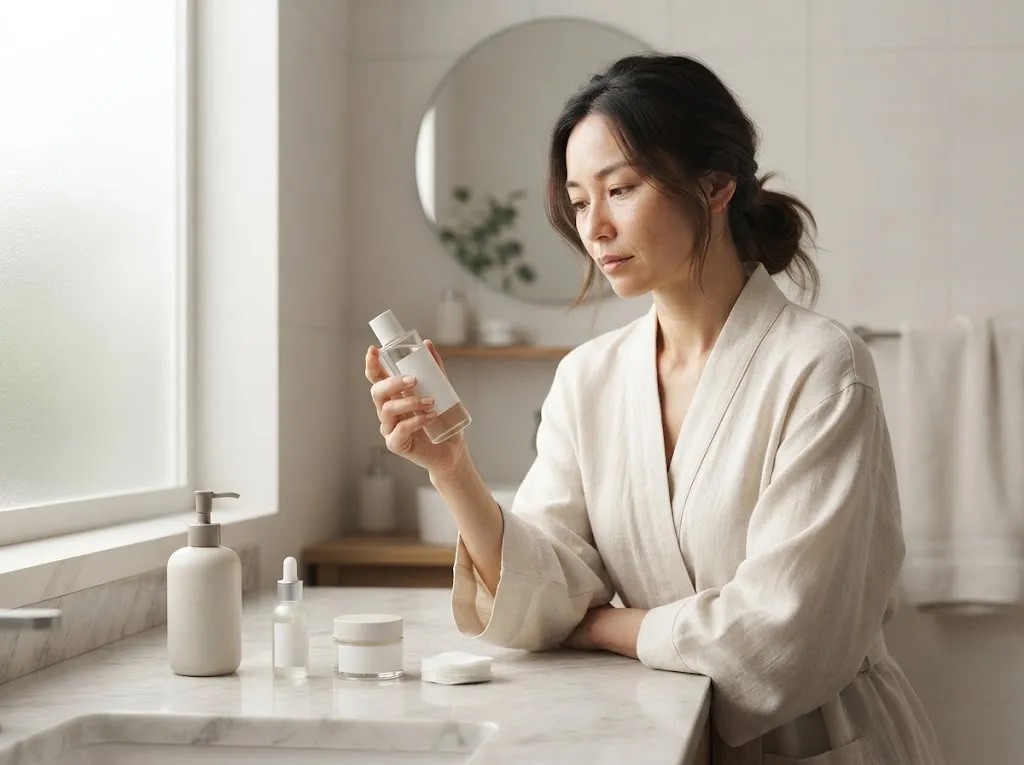
Does the face really need toner (AI generated)
No.
Toners that contain humectant ingredients can indeed increase the water content on the skin's surface, but their role is different from that of moisturizers. Cleveland Clinic explains that toner can be used as part of the preparation before the next skincare products.
Moisturizers are still needed to help maintain the skin's condition after the hydration process.
A simple sequence could be facial cleanser, toner if needed, serum or other treatment products, then moisturizer. In the morning, sunscreen becomes the next important step.
For someone looking to simplify their routine, toner can actually be one of the steps considered for removal if it does not provide clear benefits.
Toner makes more sense to use when the product has a function that aligns with the skin's needs.
Owners of dry skin may consider a toner focused on hydration. Ingredients like glycerin or hyaluronic acid can be more relevant choices compared to toners with high alcohol content.
Oily or acne-prone skin may benefit from toners with ingredients like salicylic acid. However, its use still needs to be monitored as these active ingredients can cause irritation in some individuals.
Dull skin may consider using products with exfoliating ingredients or niacinamide, while skin that requires attention to signs of aging can choose formulations containing antioxidants and moisturizing ingredients.
Owners of sensitive skin should be more selective. Cleveland Clinic specifically advises caution with toners that contain many fragrances and dyes.
Not using toner does not mean that the skincare routine is incomplete.
A simple basic routine can actually include a few main steps: cleansing the face, using a moisturizer, and protecting the skin from sun exposure with sunscreen during the day.
Toner can be added if someone has specific needs that can be assisted by the product.
This is important because using more products does not automatically make the skin healthier. Every product also carries the possibility of irritation, especially if it contains active ingredients used excessively.
Therefore, the question whether the face really needs toner should be answered by looking at the skin's condition and the purpose of use, rather than following the assumption that toner is a mandatory step.
If toner is indeed suitable for the skin's needs, its use is relatively simple.
Cleveland Clinic recommends using toner after cleanser and before products with heavier textures. Toner can be applied using hands, cotton pads, or sprayed directly if the product is designed in spray form.
Toner does not need to be rinsed.
For toners that only function to provide hydration, using it once or twice a day can generally be adjusted according to skin comfort. Products with active ingredients like AHA or BHA should be used more cautiously. Beginners can start with a lower frequency to see the skin's response.
It is also important to pay attention to combinations with other products. If someone is already using several exfoliating products or active ingredients, adding an exfoliating toner without considering the overall routine can increase the risk of irritation.
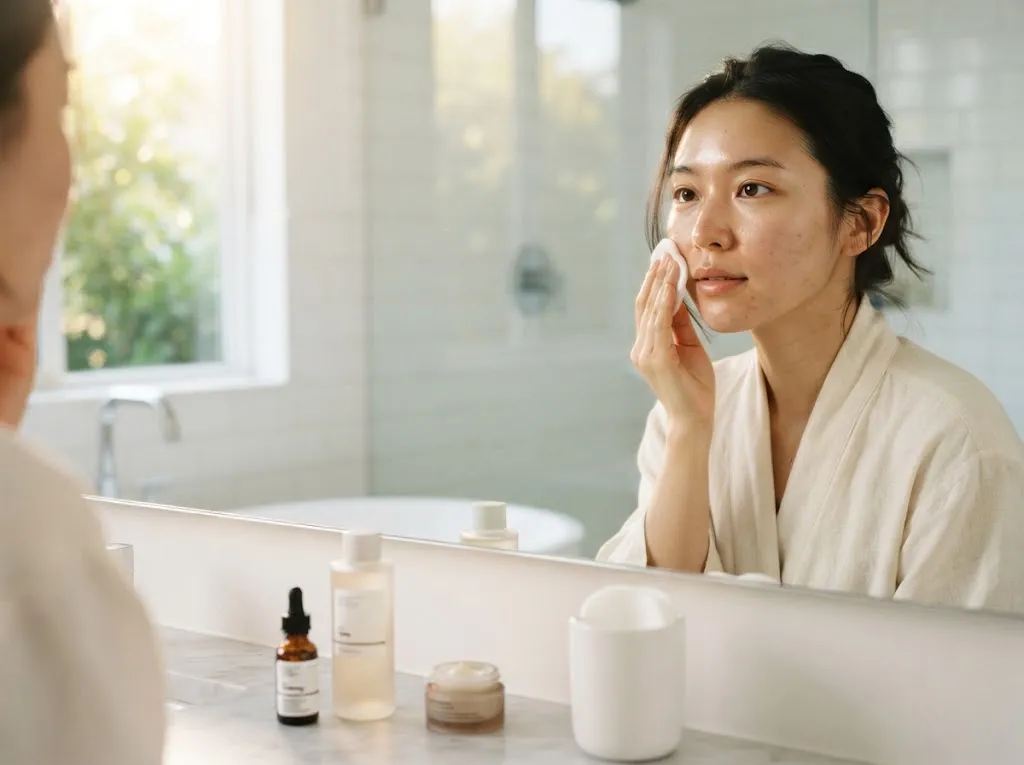
Does the face really need toner (AI generated)
No. Toner is not a mandatory product for everyone.
Draelos explains in Dermatology Times that toner is not necessary for maintaining skin health. Cleveland Clinic also shows that modern toners can provide various benefits, but these benefits greatly depend on the formulation and the individual skin needs.
In conclusion, toner should be treated as optional but can be useful.
If the skin already feels healthy and comfortable with just a cleanser, moisturizer, and sunscreen, there is no reason to force toner into the routine. Conversely, if the skin needs additional hydration, oil control, gentle exfoliation, or certain active ingredients, toner can be a practical step.
What matters most is not how many skincare steps are taken, but whether each product has a clear function and is well tolerated by the skin.
No. Toner is not a necessary requirement for maintaining skin health. The frequency of use can be adjusted according to the type of toner, active ingredient content, and skin tolerance.
Yes. If the basic routine such as cleansing the face, using moisturizer, and applying sunscreen meets the skin's needs, toner does not have to be added.
No. Certain toners can indeed help provide hydration, but moisturizer has a different function in helping to maintain skin moisture.
It can be, but choose formulations carefully. Cleveland Clinic recommends that those with sensitive skin avoid toners that contain a lot of fragrances and dyes. Toners with strong active ingredients should also be used gradually.
Both serve different functions. Toner can provide hydration or additional benefits depending on its ingredients, while serum is usually formulated with a concentration of active ingredients aimed at specific skin issues. Not everyone needs both. The choice should be tailored to the skin's needs and the simplicity of the routine one wants to maintain.
References
Draelos, Z.D. — Are Facial Toners Necessary?, Dermatology Times.
Cleveland Clinic — Do You Need a Face Toner?
Cleveland Clinic — Guide to Facial Acids.
Cleveland Clinic — Proper Skin Care Product Order.
(kpl/yni)
Cobain For You Page (FYP) Yang kamu suka ada di sini,
lihat isinya
Discover a complete and sequential guide on how to plant red onions from sprouting bulbs in polybags, complete with care tips.

Check out 7 ornamental plants that are suitable for planting in shallow pots to beautify your home's corners. A contemporary aesthetic solution for limited spaces!

Students who are victims of bullying rise up against it. This series of dramas presents inspiring stories about their struggles to take revenge cleverly and strategically.

Explore a variety of baked cheese potato cake recipes, from sweet and soft versions, classic savory dishes, to delicious practical patty creations.

Protect your plant collection from pest attacks! Learn the important steps to separate infected plants to prevent spreading to others, from identification to care.

How to create a pot area that is less attractive to snails and slugs with simple steps to keep the plants safe.

Find out the causes of holes and curling in citrus leaves, ranging from caterpillars, snails, to the leafminer pest that often attacks.

Discover effective ways to arrange plates and glasses in the kitchen to keep them neat, save space, and look more aesthetic. Starting from sorting items to using special racks.

10 popular movies about villains getting karma, from betrayal to endings that feel very satisfying.

Recipe for glutinous rice cake filled with coconut and brown sugar, a popular traditional snack also known as Kue Bugis or Awug-Awug, with a chewy texture and a sweet, rich filling that tempts the palate.

Discover nine dolphin and ocean life themed movies that touch the heart, complete with synopses and ratings for your inspirational viewing.

Recommendations for marathon runner-themed films that can be watched to lift your spirits when you're feeling down.
