

 Follow
 Rekomendasi
The Cause of Diding Boneng's Death Revealed
Senior actor Diding Boneng passed away on Monday morning, August 3, 2026, at the age of 76. The family revealed the time of death, a 10-day hospitalization history, and the burial location.
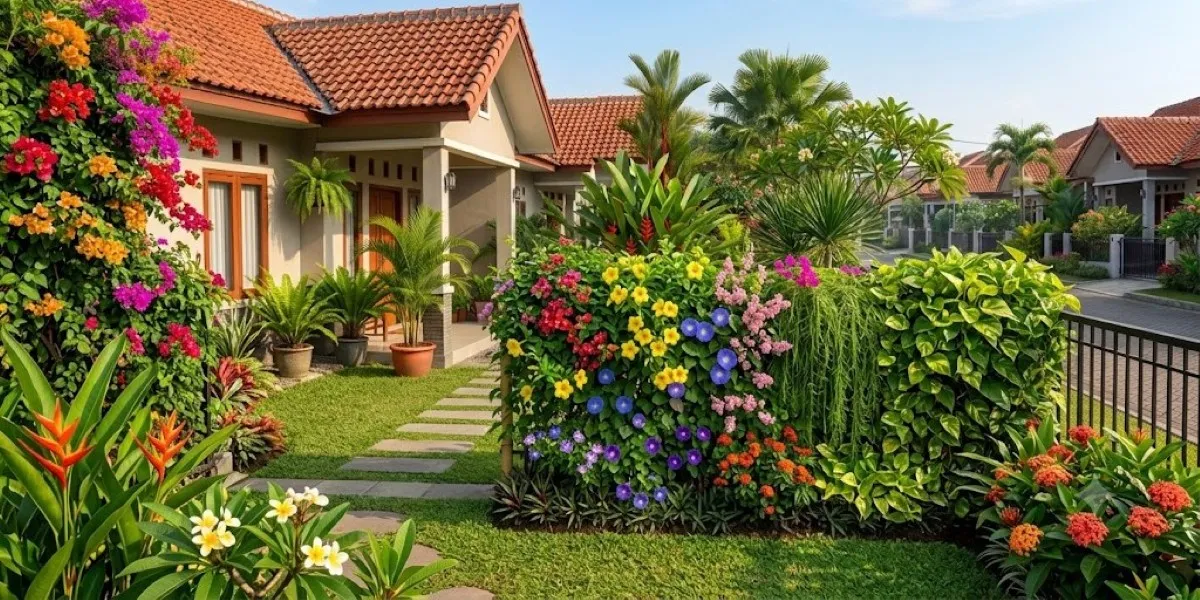
Kapanlagi.com - A green fence is one of the options to beautify the appearance of a house while also creating a cooler atmosphere. By creating a green fence from climbing plants, the boundary area of the house can transform into a natural element that is not only pleasing to the eye but also helps create a shadier and more comfortable environment.
A lush and healthy green fence can be achieved through the selection and care of the right climbing plants. With proper planning and maintenance, a green fence has the potential to become an integral part of the home landscape design, providing a calming natural atmosphere for its inhabitants.
This guide will discuss various important aspects of creating a green fence using climbing plants. Each step, from selecting the type of plants to routine maintenance, is designed to help you create a green fence that grows optimally and provides maximum benefits for your home. Check out the complete guide on how to create a green fence from climbing plants below, summarized by Kapanlagi.com from various sources, Monday (3/8/2026).
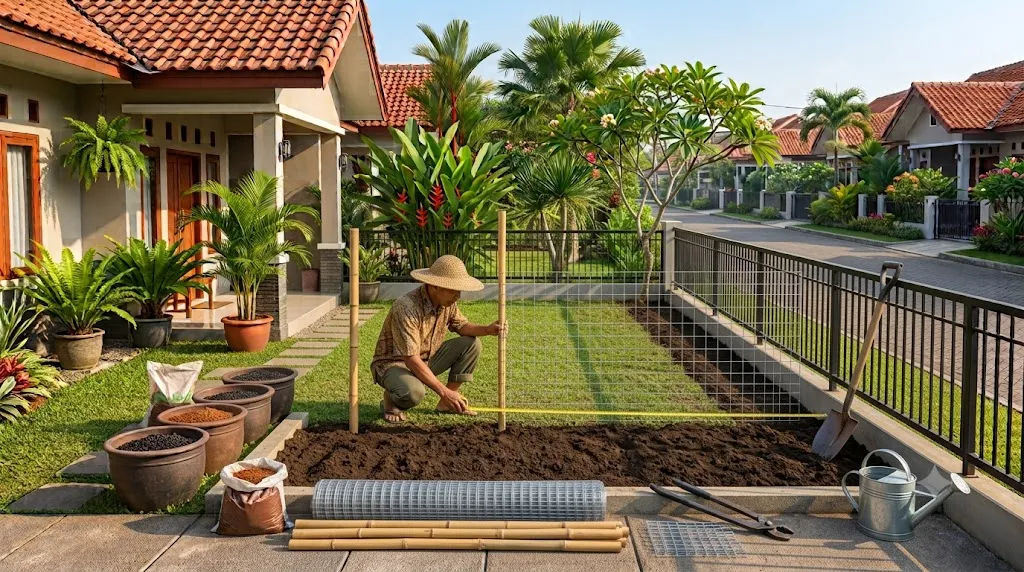
How to Make a Green Fence from Climbing Plants. (AI Generated)
The crucial first step in building a green fence is determining the planting location and preparing an appropriate support structure. This location determination is very important as it will affect the subsequent stages and the overall growth of the plants. Ensure that the selected area receives adequate sunlight, as plants need it for photosynthesis and growth.
The support structure plays a vital role as a climbing medium for the plants. Climbing plants require media such as trellises, canopies, walls, or fences so that their stems can extend and wrap around easily. Therefore, this structure must be strong enough to support the weight of the plants that will continue to grow, while also being flexible to accommodate their growth patterns.
You can create a trellis using wire or bamboo as support for climbing plants. When placing the plants on the support or trellis, it is important to leave a gap between the trellis and the wall. This aims to prevent excess moisture on both the plants and the wall, which could negatively impact both.
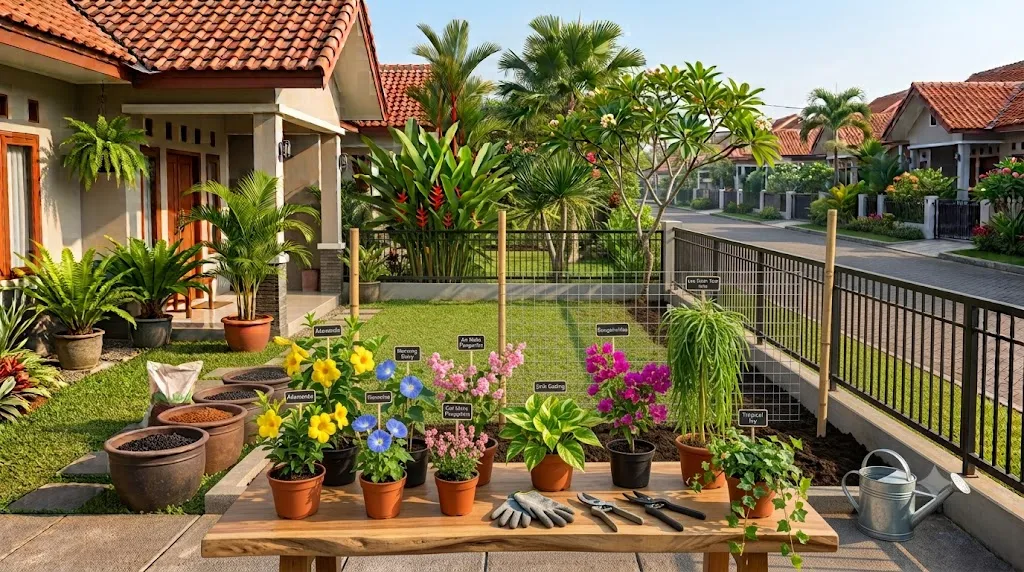
Fast Growing Climbing Plant Types. (AI Generated)
The selection of climbing plant types is a key factor in the success of the green fence you will create. There are many varieties of climbing plants to choose from, tailored to personal taste, specific needs, and environmental conditions at home. Some climbing plants are known for their high growth rate and good adaptability to various conditions.
Some options for climbing plants that are known to grow quickly and withstand hot conditions include Alamanda, Morning Glory, Bridal Tears, and Lee Kuan Yew. Golden Pothos is also an easy-to-care-for climbing plant that shows fairly rapid growth. For those who desire a fence with vibrant flowers, Bougainvillea with its striking colors can be an interesting option.
It is important to understand the biological characteristics of each plant before planting them. Some types of climbing plants, such as Creeping Dollar or Tropical Ivy, have very strong adhesive roots and can potentially damage walls if not managed carefully and correctly.
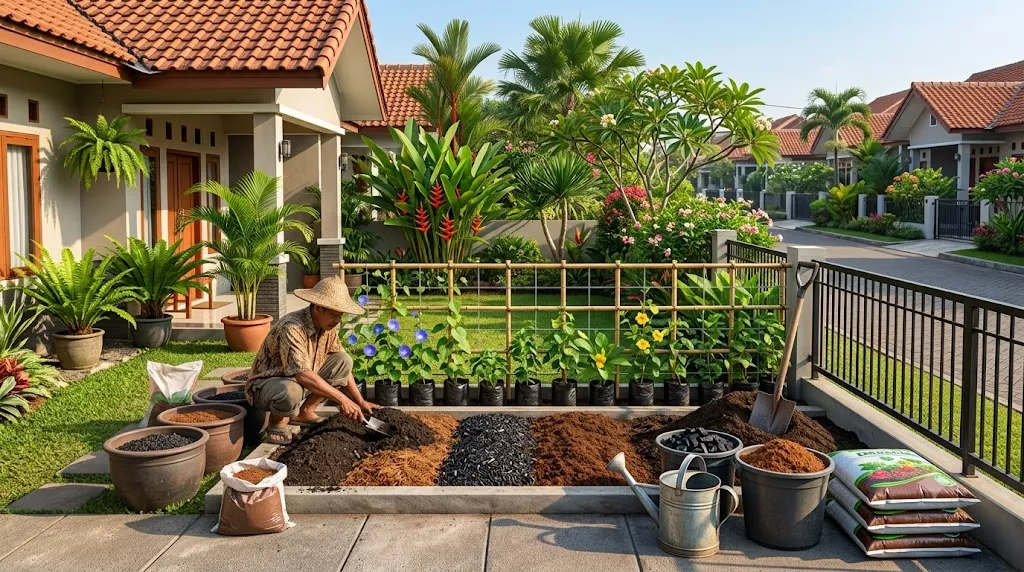
Growing media. (AI Generated)
Quality planting media is an important foundation that supports root growth and optimal nutrient absorption for plants. Climbing plants require planting media that can retain water well, while at the same time having efficient drainage. Media that is too compact can hinder root development, while overly sandy soil tends to be less capable of retaining the moisture needed.
A mixture of garden soil, mature compost, and burned husk can be an ideal choice for planting media, allowing roots to develop more optimally. Adding organic fertilizer before the planting process is highly recommended to meet the plant's nutritional needs from the start of its growth. With a healthy root system, the plant will more quickly form strong new stems and branches.
For planting done in pots, cocopeat planting media can be a very good alternative. This cocopeat planting media is made from coarse coconut husk fibers, which are known to have balanced water retention and aeration capabilities.
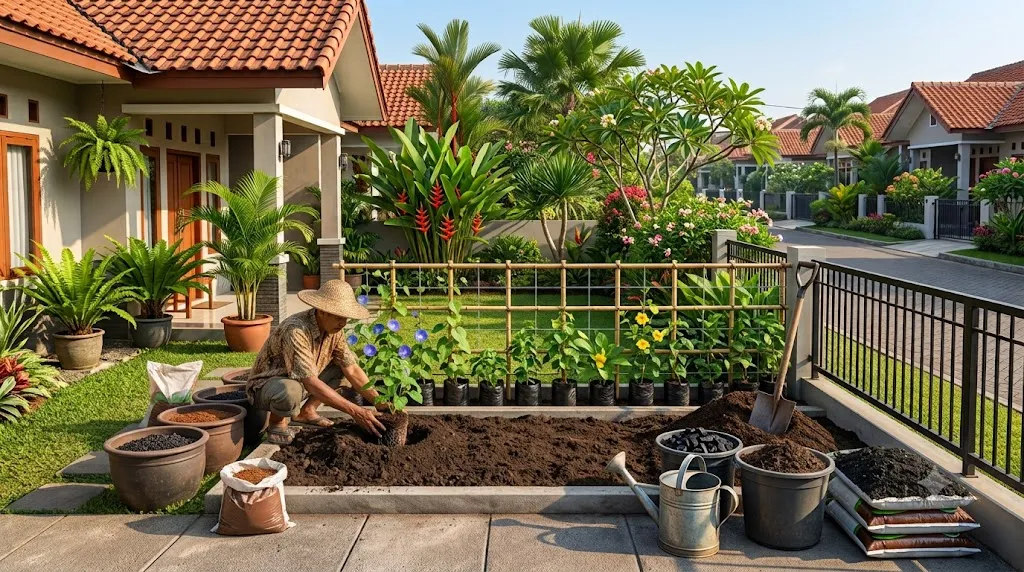
Proper Seedling Planting Techniques. (AI Generated)
The seedling planting process must be done carefully to ensure that the plants can adapt well to their new environment. Start by opening the polybag on the plant seedlings, then clean some of the soil attached to the roots, but do not remove it entirely. Next, place the seedlings in the prepared planting medium or into a pot, placing broken tiles at the bottom of the pot for drainage.
If the seedlings are planted directly in the ground, avoid planting them too close together so that the roots do not compete for nutrients as they grow larger. Gently untangle the plant's roots to facilitate more effective nutrient absorption. After that, cover the planting hole with soil that has been mixed with compost, ideally in a 2:1 ratio.
Ensure that the newly planted seedlings receive adequate sunlight exposure. Sufficient sunlight availability is essential to encourage rapid and healthy plant growth.
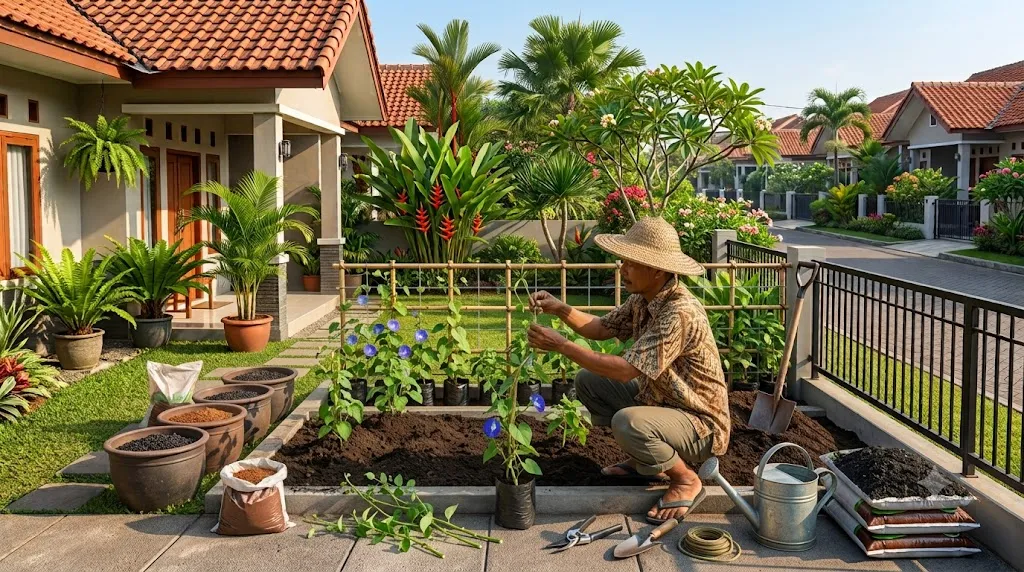
Control of Plant Climbing Direction. (AI Generated)
After the planting process, initial care and guidance of the plant's growth direction become crucial for the success of the green fence. Climbing plants will naturally grow following the available climbing media. Therefore, direct the plants to climb on the provided support structures, such as trellises or wires, and not directly on the wall surface.
Controlling the growth direction of climbing plants is the key to ensuring that the plants grow according to the desired design. This guidance also serves to prevent the plants from damaging sensitive parts of the building. You should regularly tidy up the climbing paths of the plants so that they do not grow in areas of the house that should not be covered.
Some types of climbing plants may not require tie support to climb, but others need to be tied manually. This tying is necessary to achieve a neat and perfect climbing shape according to the support structure.
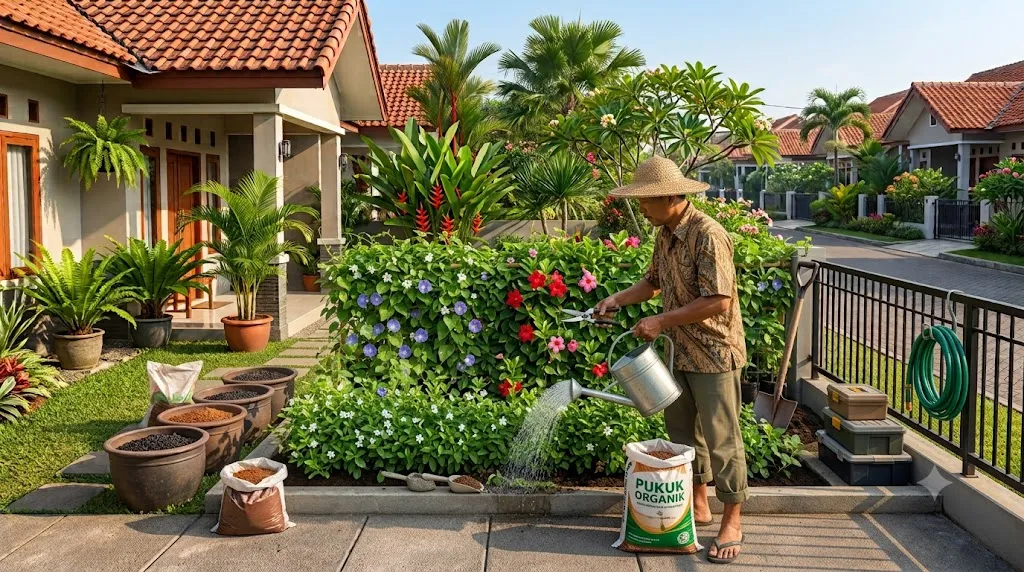
Routine Plant Maintenance. (AI Generated)
Routine maintenance is an essential element that includes watering, fertilizing, and pruning, to maintain the health and density of green fences. Watering should be done regularly, especially during the dry season, but it is important to avoid overly soggy soil conditions. Watering should be done once or twice a day, ideally in the morning and evening.
Fertilize periodically to support the growth of climbing plants. Organic fertilizers or NPK fertilizers with doses appropriate to the plant's needs can be applied every few weeks or once a month. Sufficient nutrients will greatly help accelerate the vegetative growth of the plants.
Regular pruning is one of the most important aspects of caring for climbing plants. Pruning helps maintain the shape of the plants to keep them tidy and controlled while encouraging the growth of more flowers. The more frequently they are pruned, the denser the growth of the climbing plants will be.
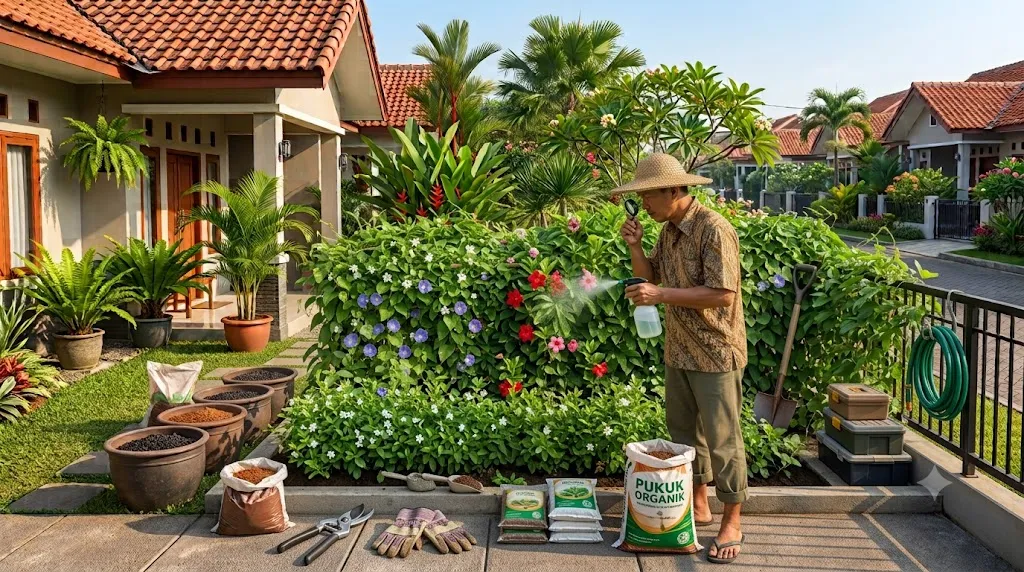
Pest and Disease Management for Climbing Plants. (AI Generated)
Although some types of climbing plants are known to be resistant to pests, regular inspections remain a necessary step. The presence of pests is indeed difficult to avoid in the activity of planting, as there is always the potential for troublesome pests that can damage your plants.
Regular inspections for potential pests such as aphids or fungal infections are crucial to ensure that the plants remain healthy. To eradicate pests, you can spray pesticides once a month, according to the usage instructions. The resistance of Passiflora to pest attacks makes it a favorite choice among growers.
Some other types of climbing plants are also classified as very strong and have high resistance to attacks from caterpillars and leaf fungi, thus requiring minimal handling.
How long does it take for a green fence to form?
The time required varies depending on the type of plant, but some fast-growing climbing plants like Morning Glory or Bridal Veil can cover a fence in a relatively short time.
What climbing plants grow quickly for fences?
Some climbing plants known for growing quickly for fences include Alamanda, Morning Glory, Bridal Veil, Lee Kuan Yew, and Golden Pothos.
Does a green fence require a lot of maintenance?
A green fence requires routine maintenance such as watering, fertilizing, and pruning, but not every day. Pruning is key to prevent the plants from growing wildly.
Can a green fence be planted in pots?
Yes, some types of climbing plants can be planted in pots, especially if the climbing medium is well-prepared.
How can I prevent climbing plants from damaging walls?
Choose plant types that do not have aggressive adhesive roots, use trellises or supports with a gap from the wall, and perform routine pruning to control the direction of growth.
(kpl/rao)
Cobain For You Page (FYP) Yang kamu suka ada di sini,
lihat isinya
Senior actor Diding Boneng passed away on Monday morning, August 3, 2026, at the age of 76. The family revealed the time of death, a 10-day hospitalization history, and the burial location.

Senior actor Diding Boneng passed away at the age of 76. His career journey began in theater in 1973, leading to iconic roles with Warkop DKI.
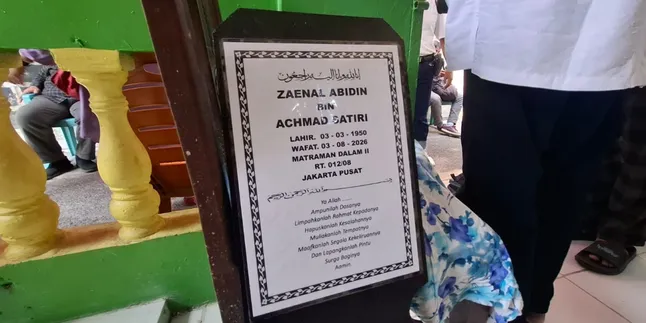
The body of Diding Boneng is laid to rest in Matraman Dalam, Central Jakarta. Mourners are present to offer prayers, while the family awaits the burial schedule.
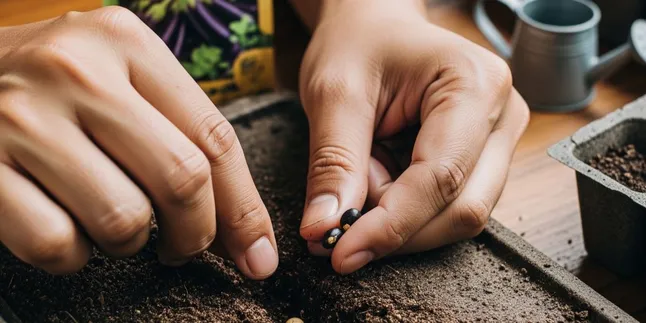
Want to harvest your own purple eggplant at home? Check out how to plant purple eggplant from seeds for lush growth, quick fruiting, and easy practice.

Senior actor Diding Boneng passed away on August 3, 2026, at the age of 76 due to asthma. The news was confirmed by Sanggar Perkasa. His career was filled with iconic roles.

In 2025, KapanLagi.com had the opportunity to visit the late Diding Boneng's house in the Matraman Dalam area of Central Jakarta. His house suffered total damage due to collapse.

Discover four parenting patterns that can shape your child's development and personality while learning how to recognize the unique needs of each individual.

Discover the signs of physical and mental strength that will prepare you to face various life challenges with confidence.
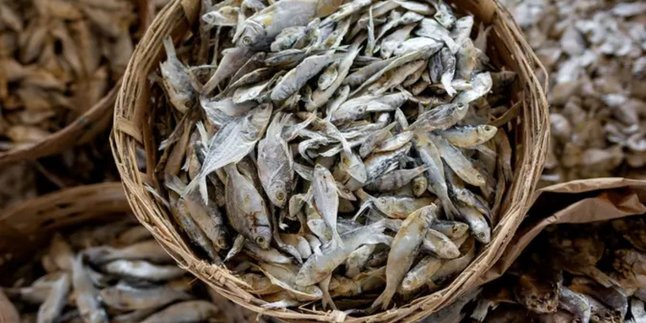
Discover easy and effective tricks to neutralize the salty taste of salted fish with simple ingredients at home!

This celebrity known for her luxury is able to take care of her 4 children alone, even though Kanye West is not very involved.
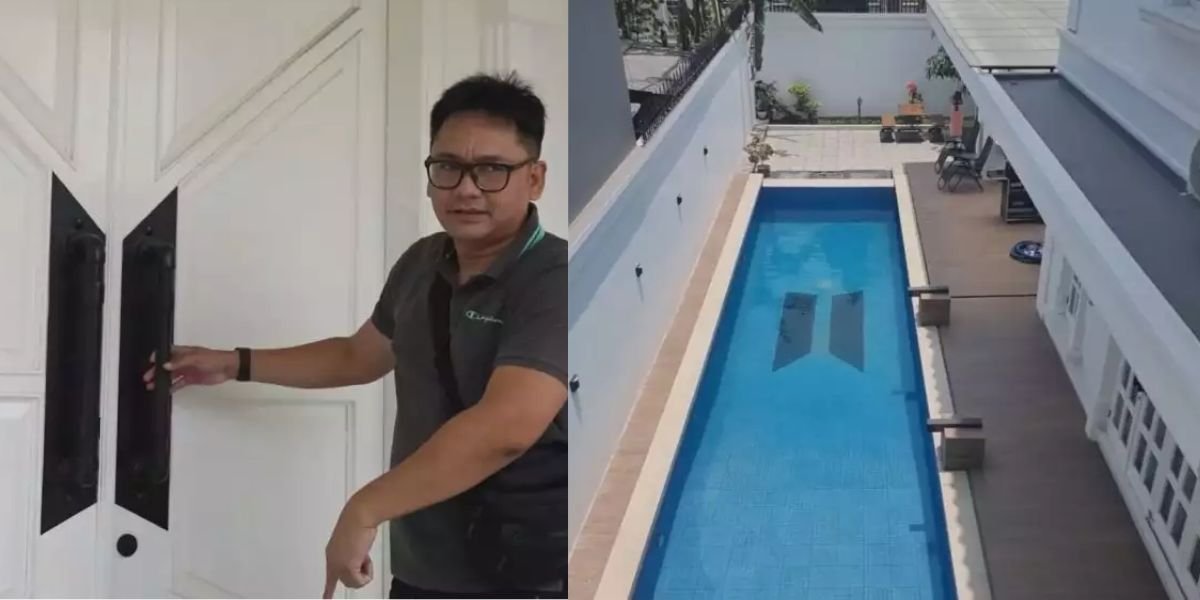
One of the ARMY or BTS fans in Depok has recently been in the spotlight. How could they not, they decorated their house with various BTS displays.

Want to have a healthy and ideal body like Hollywood artists? Let's take a look at the exercise routines of these beautiful Hollywood celebrities!
