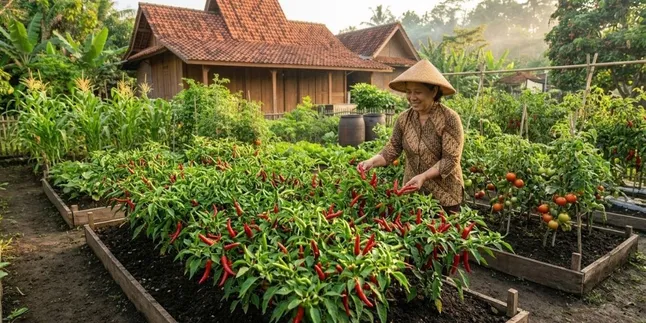
Kapanlagi.com - Types of Fruit Trees with Neat Canopies are an attractive choice for homeowners looking to create a beautiful yet productive garden. Not only do they produce harvestable fruit, but some fruit trees also have a well-structured canopy shape, enhancing the appearance of the yard.
Unlike wild-growing fruit trees with irregular branching, certain types have a more orderly branching character. With a bit of regular pruning, their canopy shape remains beautiful and does not make the yard look cluttered.
When combined with grass, ground cover plants, or flowering ornamental plants, fruit trees with neat canopies can become the focal point of the home garden. Here are some of the best options worth considering, Wednesday (29/7/2026).
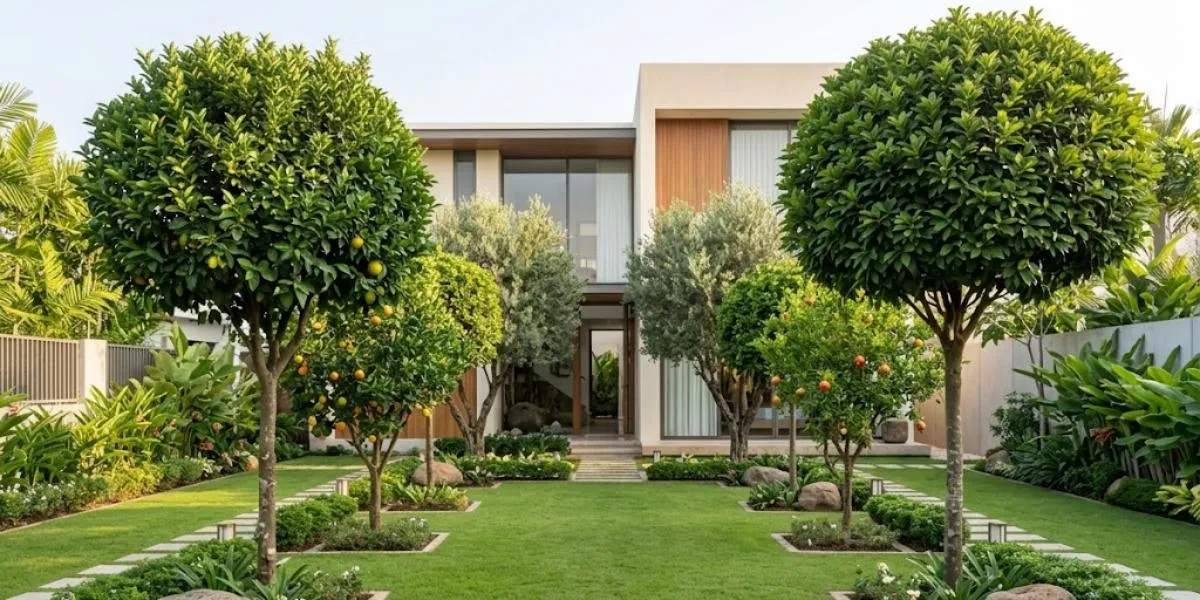
1. 1. Orange Tree, Round Canopy That Is Always Attractive
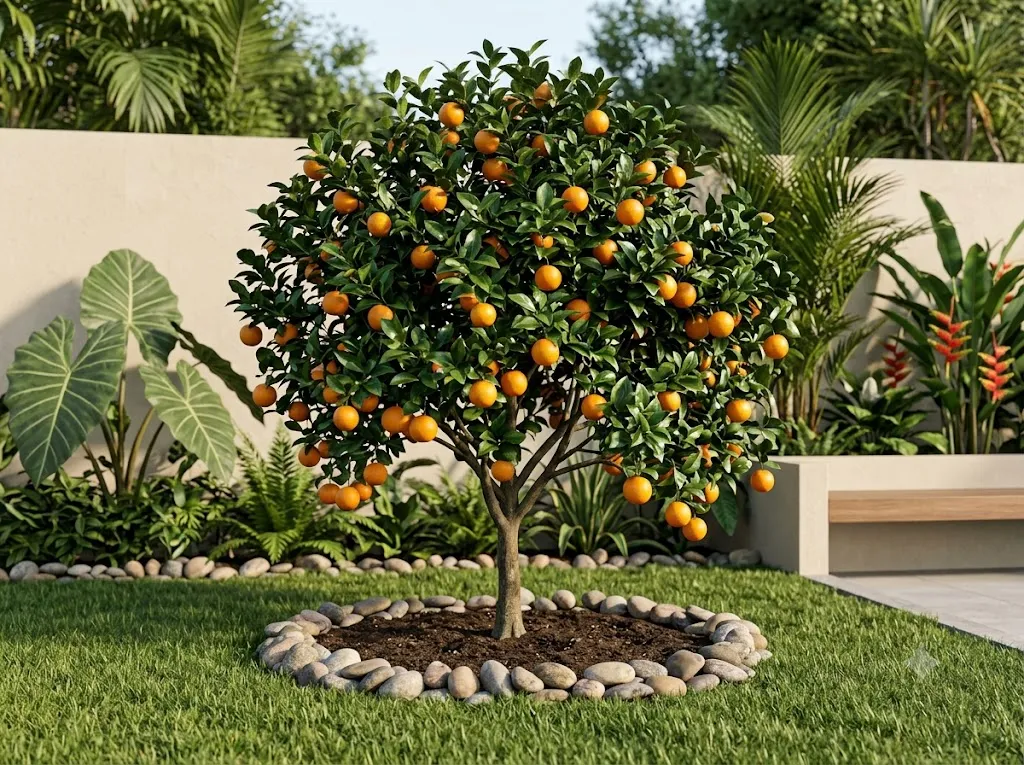
Orange Tree, Round Canopy That Is Always Attractive (AI generated)
Orange trees are one of the most popular choices for home gardens. Various types of oranges, such as nagami oranges, calamondin, lemons, and limes, have relatively orderly branching.
Naturally, the canopy of the orange tree forms a round or oval pattern with glossy green leaves that grow closely together. When bearing fruit, the bright yellow or orange color creates a beautiful contrast with the foliage.
Besides being visually appealing, orange trees are also quite easy to care for. Regular fertilization every month and light pruning are sufficient to maintain the canopy's symmetrical shape.
Many people also plant oranges in large pots (tabulampot), making them suitable for home gardens that are not too spacious.
2. Sapodilla, Elegant with a Pyramid-Shaped Canopy
If you desire a shaded yet classic garden atmosphere, sapodilla is a hard choice to beat.
This tree is known for its dense conical or pyramid-shaped canopy that looks neat throughout the year. Its leaves are small, glossy, and closely arranged, giving a calming green impression.
It is no wonder that sapodilla has often been planted in palace environments and traditional home gardens due to its elegant appearance.
In addition to its high aesthetic value, the sapodilla fruit can also be consumed when ripe. With light periodic pruning, its canopy shape remains maintained without requiring complicated care.
3. Pomegranate, A Beautiful Light Branching
Pomegranate is a fruit tree that has slender branching, making its canopy look light and not too wide.
This characteristic makes pomegranate suitable for planting in medium to small yards. Its small leaves combined with striking red-orange flowers provide a unique charm before the fruit appears.
When the pomegranate fruit begins to ripen with a shiny red color, its appearance further beautifies the garden.
Because its growth is not too aggressive, pomegranate is also relatively easy to shape through light pruning every few months.
2. 4. Olive Tree, Minimalist and Modern
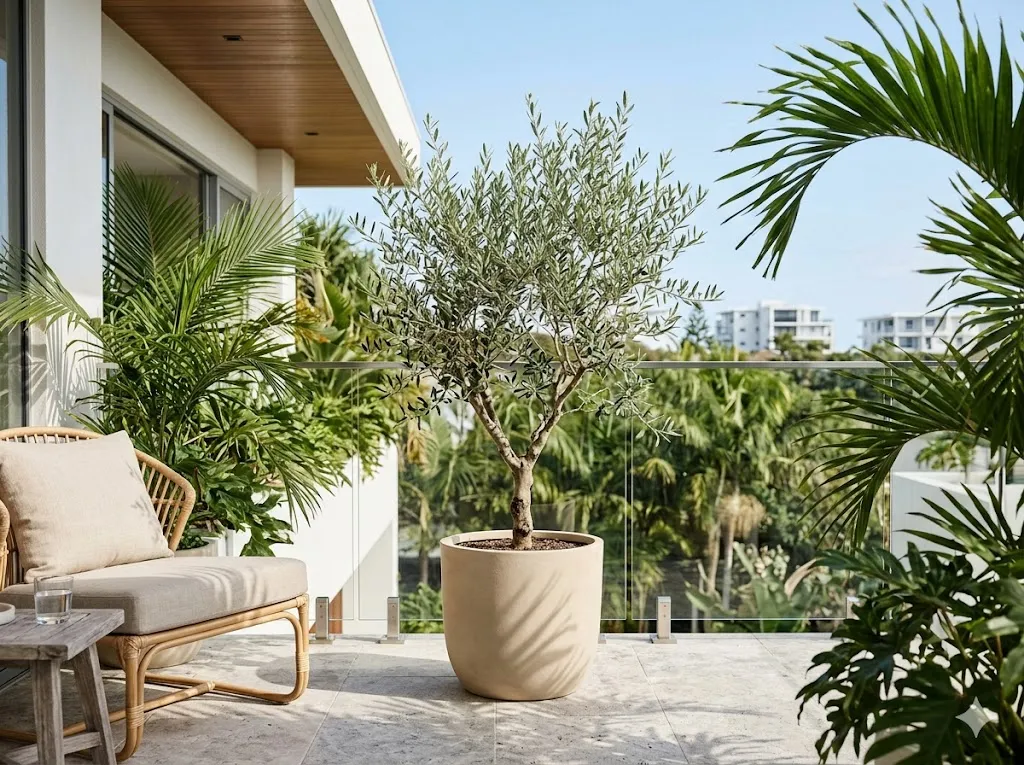
Olive Tree, Minimalist and Modern (AI generated)
Although not as popular as other fruit plants in Indonesia, the olive tree has a very artistic shape.
Its leaves are small and silvery green, while the trunk tends to be slender with not too dense branching. This character makes the olive tree very suitable for decorating minimalist or Mediterranean-style homes.
This plant can also be planted in large pots, making it flexible to place on terraces or front yards.
Its fruits are indeed small, but they still have economic value because they can be processed into olive oil, which is known for its many benefits.
5.Dwarf Apple, Beautiful in a Pot
For lovers of unique fruit plants, dwarf apple is worth adding to the collection.
Through grafting techniques, apple trees can grow in a more compact size, making them suitable as ornamental fruit plants.
During the fruiting season, small red apples hang among the green foliage, creating a very interesting view.
In addition to being a natural decoration, dwarf apples can also be easily moved as they are usually planted in large pots.
6.Kalamansi and Lemon, Compact for Minimalist Yards
Besides regular sweet oranges, kalamansi and lemon have a more compact tree size.
Their branches grow orderly with dense leaves, forming a beautiful canopy. When the fruits begin to ripen, the bright yellow color provides a natural accent to the garden.
Both are also known to be easy to care for, needing only full sunlight, regular watering, and monthly fertilizing.
Because of their size, these two types of oranges have become favorites among residents of minimalist homes.
3. 7. Cherry, Shady but Still Looks Neat
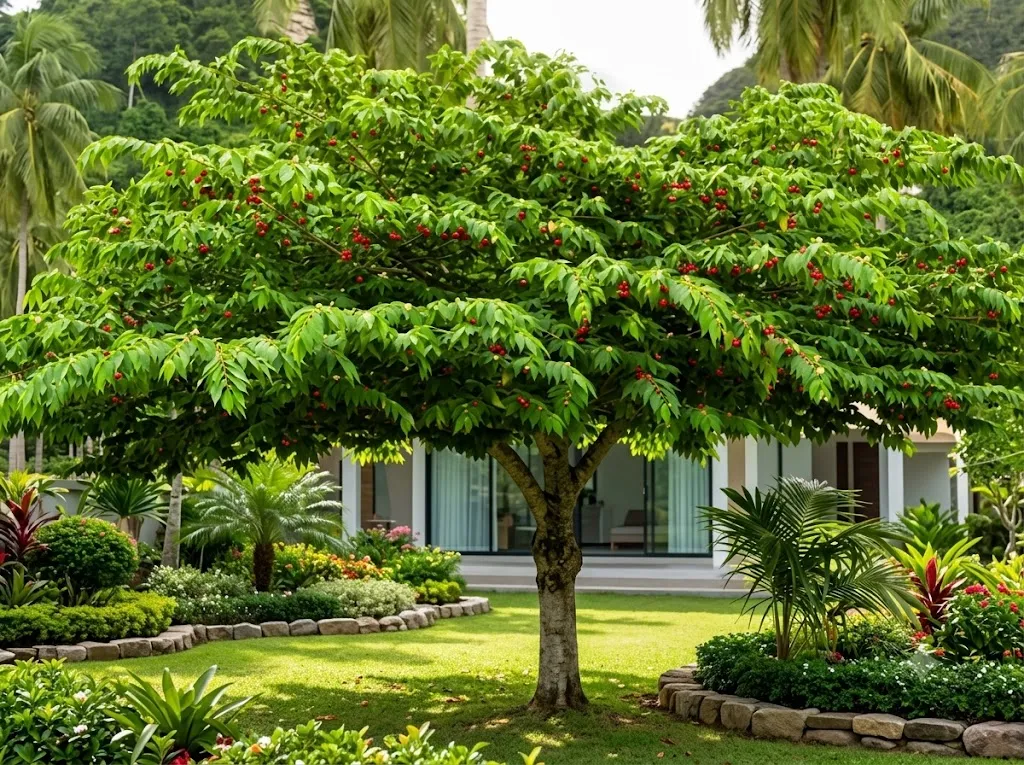
Cherry, Shady but Still Looks Neat (AI generated)
Cherry or talok is known as a shade tree that is easy to grow.
If regularly pruned from a young age, its branches can be shaped into a more symmetrical form, resulting in a neat canopy.
Its dense leaves can provide shade in the yard. Meanwhile, the small red fruit will attract birds that come to visit the garden.
In addition to beautifying the landscape, cherry is also known as a tree that is quite resistant to hot weather.
Tips for Keeping Fruit Tree Canopies Neat
Having a naturally beautiful canopy is not enough. Its shape still needs to be maintained to always look attractive.
Some simple steps that can be taken include:
Prune Regularly
Cut branches that grow inward or cross each other to maintain good air circulation.
Avoid Too Many Branches
Too many close branches make the canopy look messy and reduce lighting to the inside of the tree.
Provide Balanced Nutrition
Fertilizing according to needs helps keep leaf growth healthy without triggering excessive branch growth.
Choose a Location with Sunlight
Most fruit trees require at least six hours of sunlight every day to grow proportionally.
Use Large Pots for Container Gardening
If planted in pots, use an adequate size so that the roots can develop optimally and the canopy grows balanced.
Inspiration for Combining Fruit Trees with Home Gardens
To make the yard look more aesthetic, neatly canopied fruit trees can be combined with various garden elements.
For example, an orange tree flanked by a patch of green grass and white coral stones to create a fresh impression. A pomegranate can serve as a focal point near a footpath with the addition of brightly colored flowers.
Meanwhile, the sapodilla is very suitable to be placed as the main tree in the corner of the yard because its symmetrical canopy can provide a cool and elegant impression.
If space is limited, use several container plants such as lemon, calamondin, or olive arranged in a row along the terrace. Such simple arrangements make the yard look neat, productive, and easy to maintain.
Ultimately, choosing Types of Fruit Trees with Neat Canopies is an ideal solution for anyone who wants to create a home garden that is not only green but also has high aesthetic value. With a well-organized canopy, trees like oranges, sapodilla, pomegranate, olive, dwarf apples, and cherries can beautify the yard while providing harvests that are beneficial for the family.
4. Q&A About Aesthetic Fruit Trees
1. What fruit tree is most suitable for a minimalist home garden?
Lemon, calamondin, pomegranate, and dwarf apple are ideal choices because they have relatively compact sizes and easily shaped canopies.
2. How to keep the canopy of fruit trees neat?
Perform regular pruning, remove overlapping branches, provide fertilizer as needed, and ensure the plants receive enough sunlight.
3. Can neatly canopied fruit trees be grown in pots?
Yes. Orange, lemon, calamondin, olive, pomegranate, and dwarf apple are some types that are very suitable for pot cultivation.
4. Do all fruit trees require pruning?
Most fruit trees still need light pruning to keep the canopy shape symmetrical, ensure good air circulation, and optimize fruit production.
5. Which fruit tree is the most aesthetic when bearing fruit?
Orange, pomegranate, dwarf apple, and calamondin are among the most attractive because they have brightly colored fruits that contrast with green foliage, enhancing the beauty of the garden.
(kpl/yni)
Disclaimer: This translation from Bahasa Indonesia to English has been generated by Artificial Intelligence.


 Follow
 Rekomendasi