Stimulating mango trees to fruit quickly needs to be done by paying attention to the condition of the tree and the care provided. Many mango trees grow lush but have not yet produced fruit due to various factors, ranging from the age of the plant, pruning, to unmet nutritional needs.
To help the tree enter the fruiting phase more quickly, care is not enough to rely solely on watering or fertilization. The selection of seeds, the arrangement of branch growth, and the timing of fertilizer application also play a role in stimulating the emergence of flowers that will later develop into fruit. With proper handling, the chances of mango trees bearing fruit can increase.
For those who want to achieve more optimal harvests, KapanLagi will discuss various ways to stimulate mango trees to fruit quickly, starting from basic care, cultivation techniques, to steps that can be applied so that the tree grows healthy and more productive, Tuesday (28/7).
1. Selection of Superior Varieties and Seeds
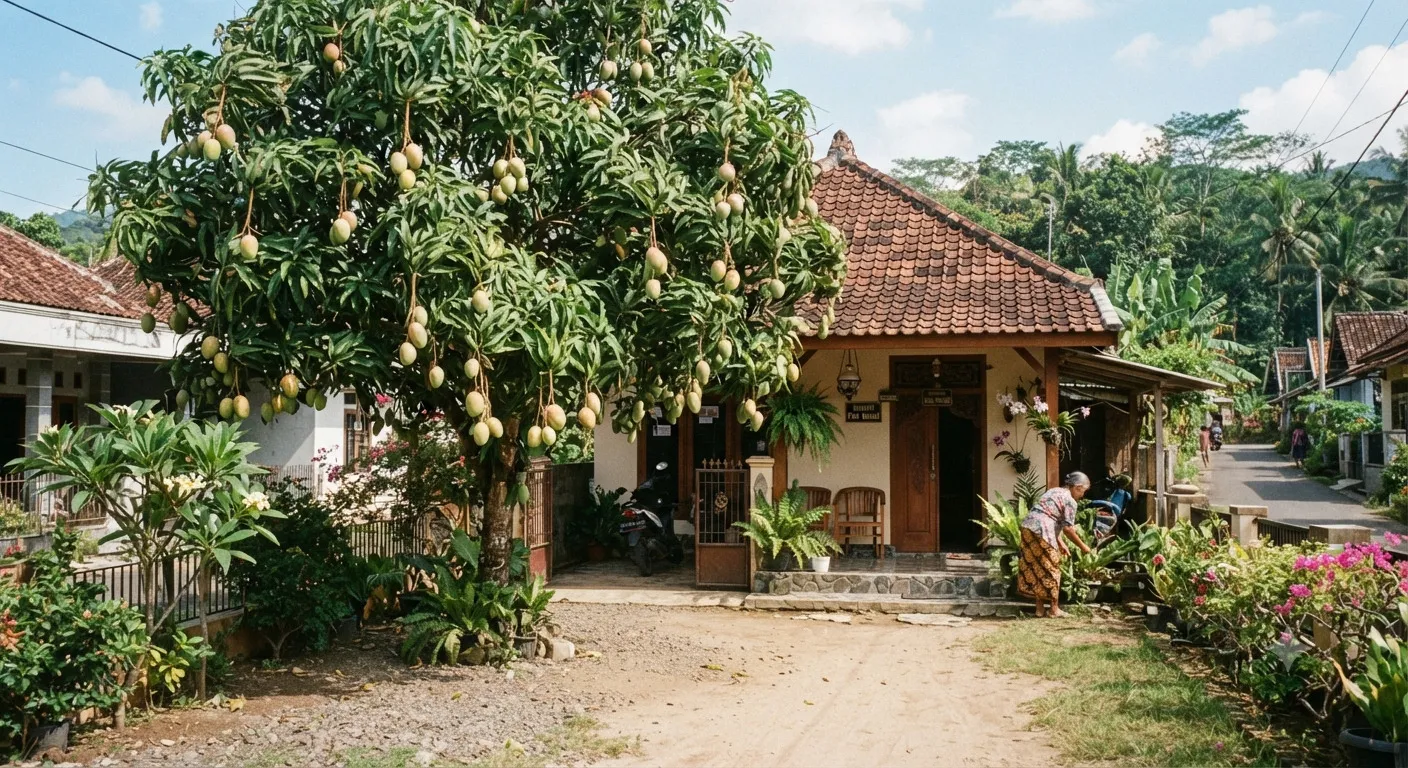
Illustration of a mango tree - image generated by AI
The selection of mango varieties that are suitable for the climate and environment is very important for optimal growth. You need to pay attention to the initial steps that can be taken as follows:
- Select seeds such as Arumanis or Gedong Gincu to increase the chances of successful cultivation. Quality seeds have good physical characteristics, such as a sturdy stem and healthy leaves.
- Ensure the age is ideal, between 6 to 12 months and free from pests. Choosing seeds from trusted sellers can also ensure their quality.
- Seeds from grafting or budding tend to bear fruit faster compared to seeds from seedlings, so investing in superior seeds is very important.
The quality of the seeds is an important foundation for good growth and fruit production.
2. Prepare the Land and Planting Media
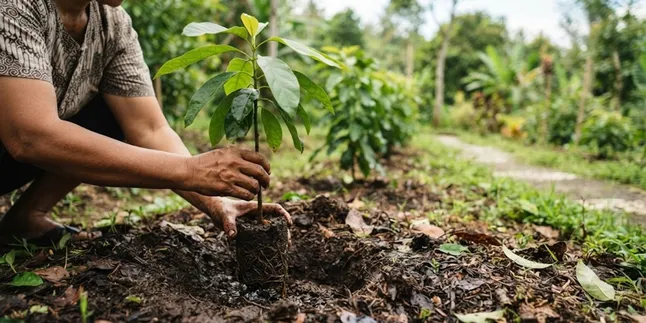
Good land preparation is a determining factor for the success of mango cultivation. Loamy soil with good drainage greatly supports root growth. The land preparation process includes plowing and creating planting holes of appropriate size. The planting holes should be left open for some time to receive sunlight.
After that, the holes are filled back with soil mixed with organic fertilizer. Planting should be done at the beginning of the rainy season to ensure water availability. The right planting distance also needs to be considered so that the plants do not compete for nutrients.
With proper land preparation, the roots of the mango tree can grow strong. This is an important step in how to stimulate mango trees to bear fruit quickly and produce abundant harvests.
3. Provide Essential Nutrients Through Regular Fertilization
Providing the right nutrients through regular fertilization is crucial to stimulate mango trees to bear fruit quickly. Mango plants require fertilizers rich in phosphorus and potassium to support flower formation. NPK fertilizers with a balanced formulation can accelerate the flowering and fruiting process.
Fertilization is carried out according to the growth phase of the plant. Base fertilizers can be applied after the harvest period. During the flower formation phase, fertilizers containing phosphate and potassium can be applied to support growth.
Balanced and regular fertilization ensures that the plants have enough energy to transition from vegetative to generative growth. In this way, the chances of obtaining a good harvest increase significantly.
4. Pruning Techniques for Productivity
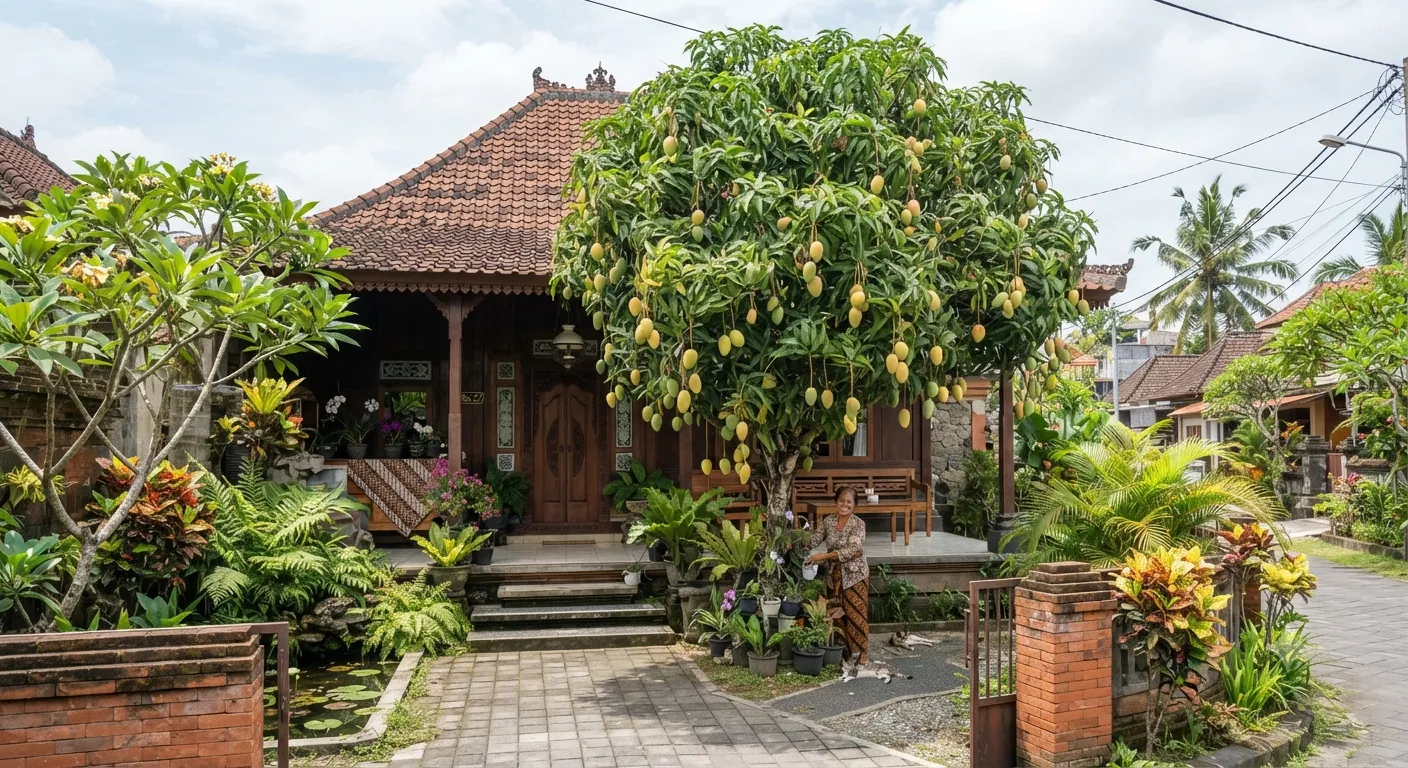
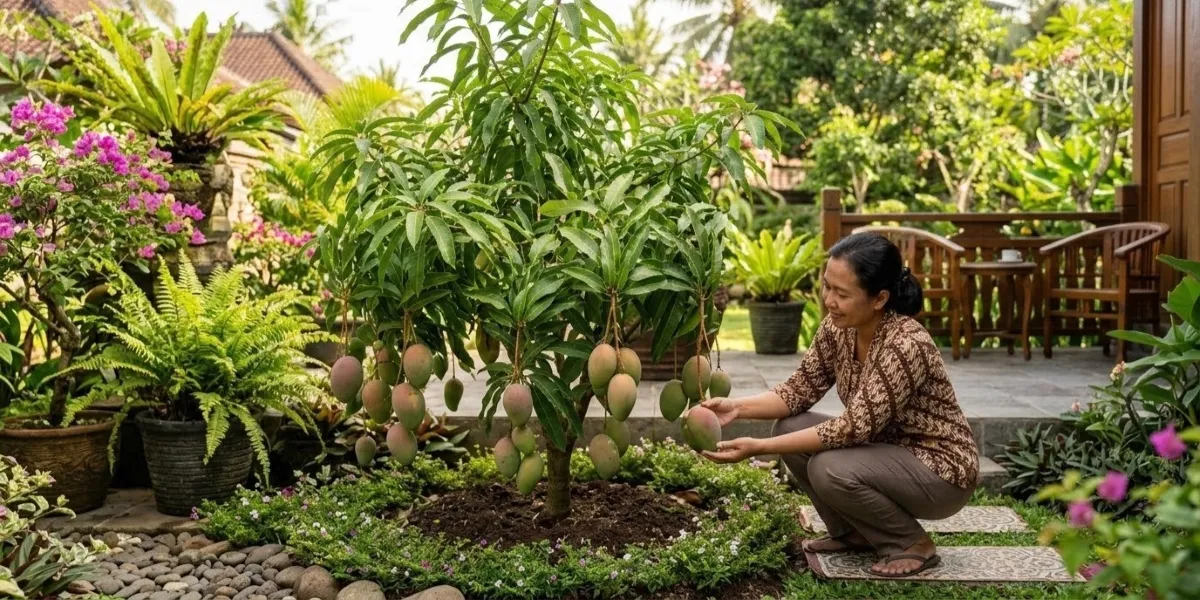
Illustration of a mango tree in front of a house - AI Generated
Pruning is an important step in mango cultivation to improve tree health. Pruning helps redirect the plant's energy to produce fruit. You need to pay attention to the following:
- Ensure the removal of unproductive branches and water shoots that do not produce fruit during routine pruning.
- Do it at the best time, such as after the mango harvest season. Proper pruning can stimulate the growth of healthy new branches.
- Always monitor the mango tree as a benchmark for productivity and to produce more fruit.
By performing proper pruning, growers can increase their chances of a bountiful harvest. This is one effective way to encourage mangoes to bear fruit quickly.
5. Wise Use of Plant Growth Regulators (PGR)
Plant Growth Regulator (PGR) applications can be an effective method to stimulate mango trees to bear fruit quickly. PGR works by manipulating the plant's natural hormones to encourage the transition from the vegetative phase to the generative phase. One commonly used PGR is Paclobutrazol.
Paclobutrazol can be applied by drenching around the trunk. However, the plants must be healthy at the time of application. The use of PGR should be done carefully to avoid causing issues to the plants.
With wise use of PGR, growers can stimulate flowering out of season. This becomes one way to encourage mangoes to bear fruit quickly that can be tried.
6. Proper Water Management for Flower Induction
Proper water management can be a way to stimulate mangoes to bear fruit quickly. Water stress techniques can trigger flowering induction. Reducing irrigation for a certain period can make the plants strive to reproduce.
This technique is carried out by carefully reducing the water supply. However, it is important not to let the plants become too dry. Once signs of flowering appear, watering can be resumed as before.
Water stress treatment must be done meticulously. If done correctly, this technique can increase the chances of obtaining a good harvest.
7. Protection from Pests and Diseases
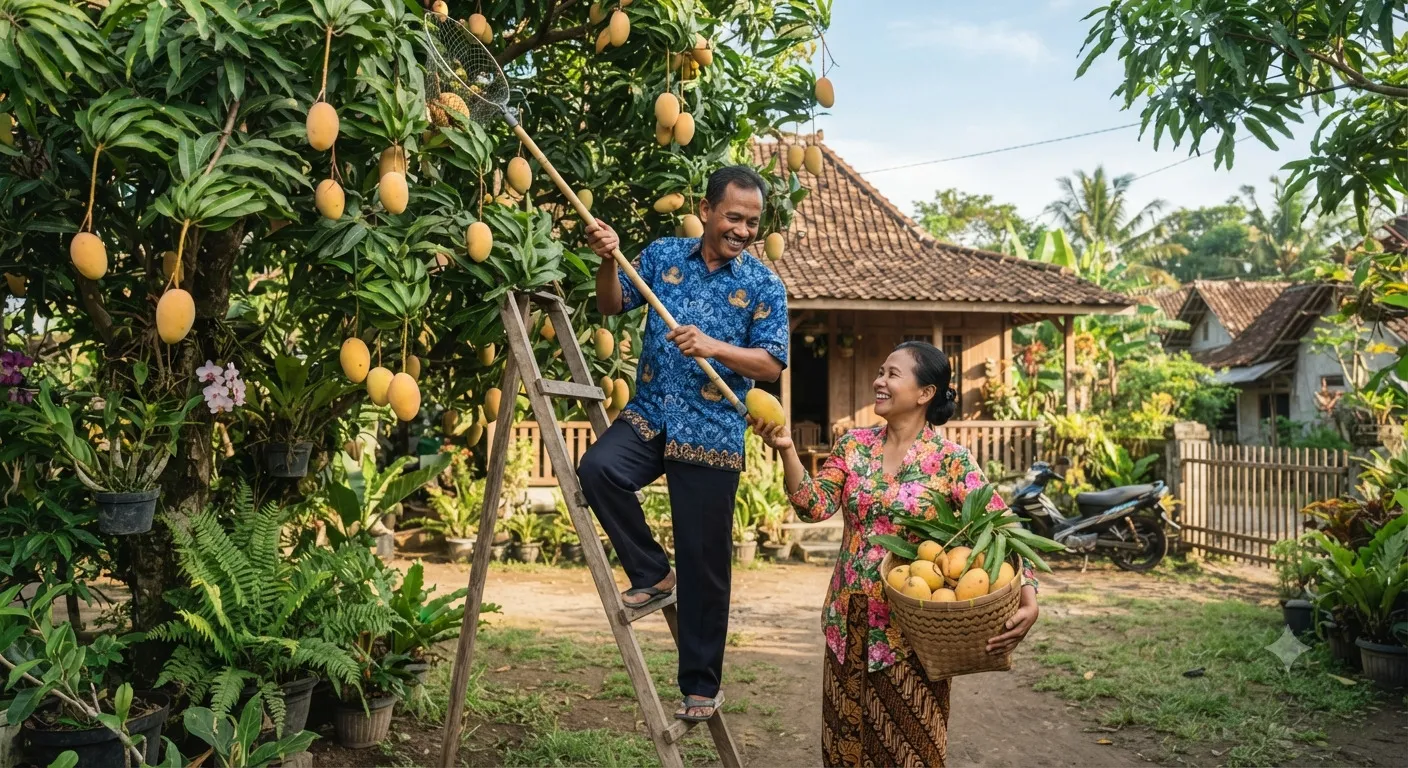
Mango harvest illustration - AI Generated
Protecting mango plants from pests and diseases is very important to ensure a successful harvest. Pests like mango planthoppers and fruit flies can damage flowers and fruit. Diseases like anthracnose can also hinder growth.
Integrated pest and disease management involves a combination of technical and biological methods. Garden sanitation by cleaning the environment of host plants is an important part of biological control.
If necessary, the use of insecticides or fungicides can be carried out according to the recommended doses. Maintaining the overall health of the tree is key to ensuring that mango trees can consistently bear fruit.
8. People Also Ask (PAA)
1. How long does it take for a mango tree to bear fruit after being stimulated?
Mango trees generally start to flower within a few weeks to a few months after consistent generative care is performed.
2. Can potted mango trees bear fruit quickly?
Potted mango trees can bear fruit as long as they receive sufficient sunlight, regular pruning, and balanced nutrition.
3. When is the best time to prune mango trees?
Pruning is ideally done after harvest or when the tree is not in the flowering phase to avoid excessive stress.
4. Do mangoes need chemical fertilizers to bear fruit quickly?
Mangoes can bear optimal fruit without chemical fertilizers if their nutritional needs are met from organic sources.
5. Why are mango trees lush but not bearing fruit?
Lush mango trees with plenty of leaves but few fruits are often caused by nutrient imbalance or inadequate care.
(kpl/rul)
Disclaimer: This translation from Bahasa Indonesia to English has been generated by Artificial Intelligence.


 Follow
 Rekomendasi